

A few months ago I watched a video in which John Lovell (a.k.a. the War Poet) interviewed a local farmer who has developed a method for keeping his farm productive with minimal water in the middle of an historic Georgia drought.
The video is worth a watch, not because it has anything truly groundbreaking in it, but more because it reminded me of a class by Beau Davidson on School of Traditional Skills on hügelkultur beds. This is an ancient northern European forestry management and agricultural practice, whereby wood is buried in the ground, usually in a dike or mound, but sometimes partially or fully below ground as well. The wood breaks down slowly over time and among other benefits this:
- Acts as a water sponge, soaking up water during the wet season, and releasing it slowly over the dry season. In our exceptionally well-drained soil (glacial till) we hope it will keep the water from just running through the ground to the sound.
- Acts as a habitat for soil microbes which provide organic matter and soil fertility.
- Can provide heat as it breaks down, if there is enough mass (e.g. really big logs), and keep the bed slightly warmer than surrounding soil.
With summers getting hotter and drier on average, I am turning through to drought prevention, not just now, but in the long term, 15-30 years down the road. Then it occurred to me that we can get logs for free, from the same place we get wood chips for free. ChipDrop.
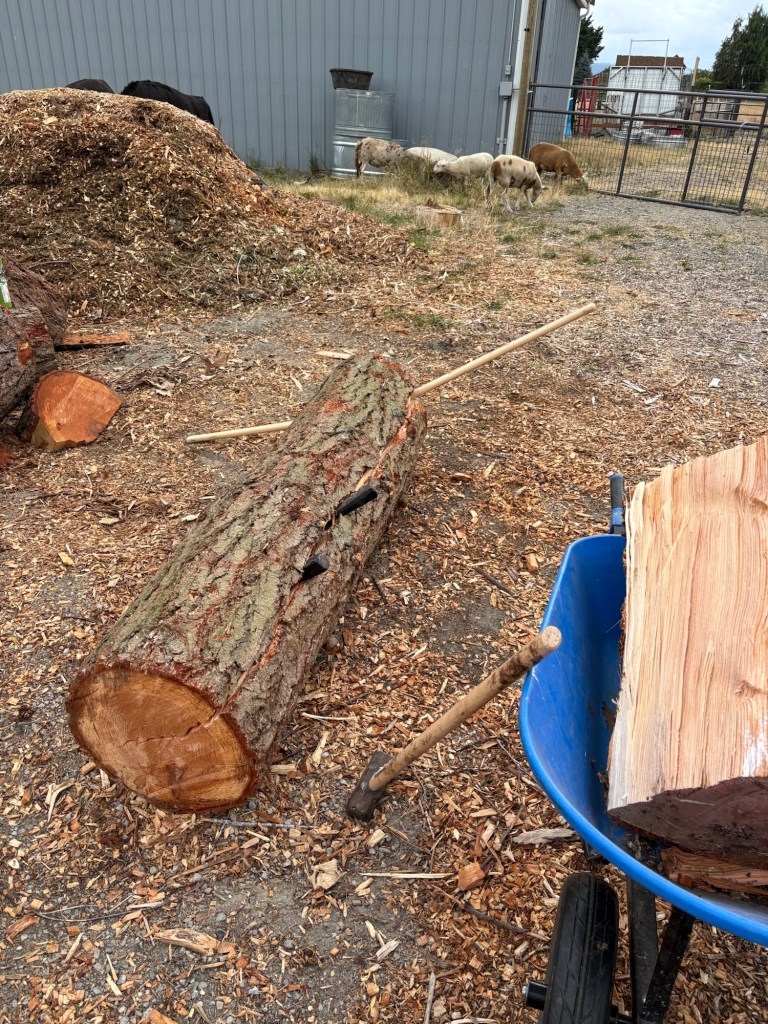
So we got a dump truck load of logs.
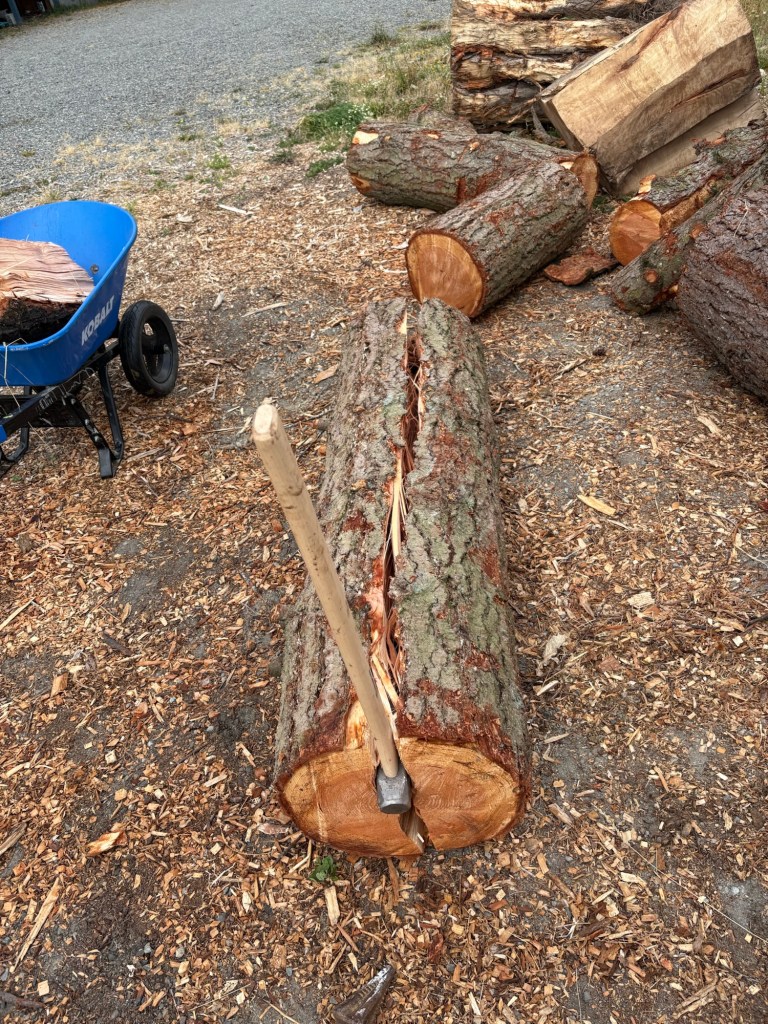
Really big logs.
So on Saturday morning, before heading up to Swiss Kids Camp, I got started splitting them down.
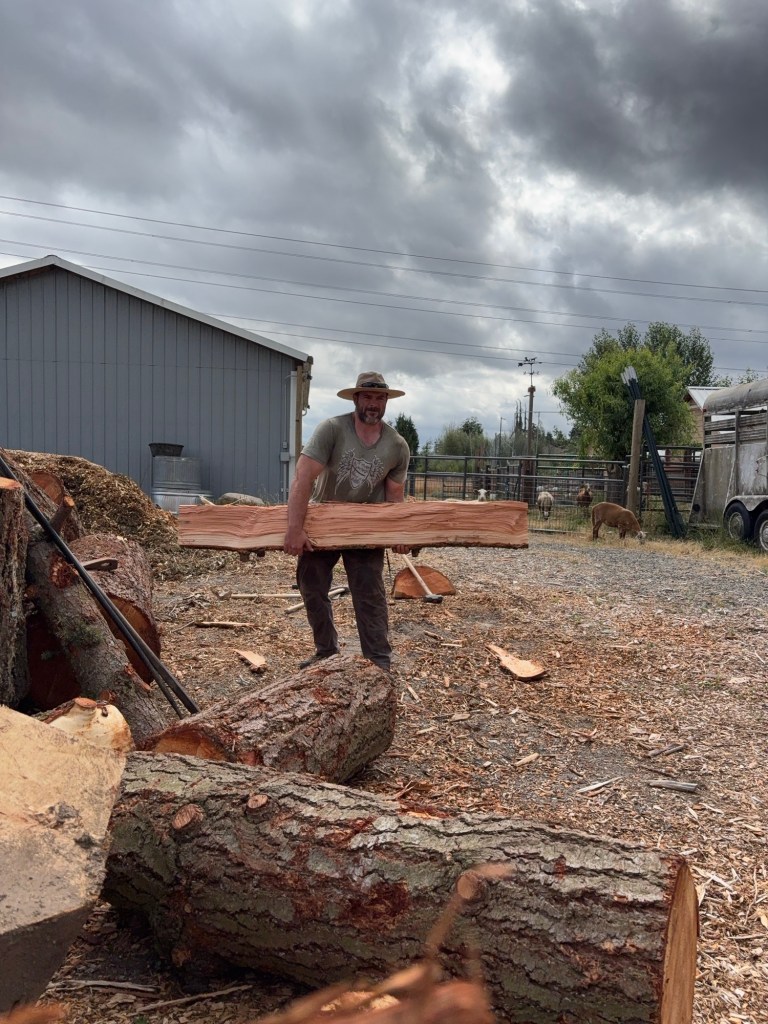
Each log gets split down to 1/6 or 1/4 wedges. These can be carried to the garden rows.
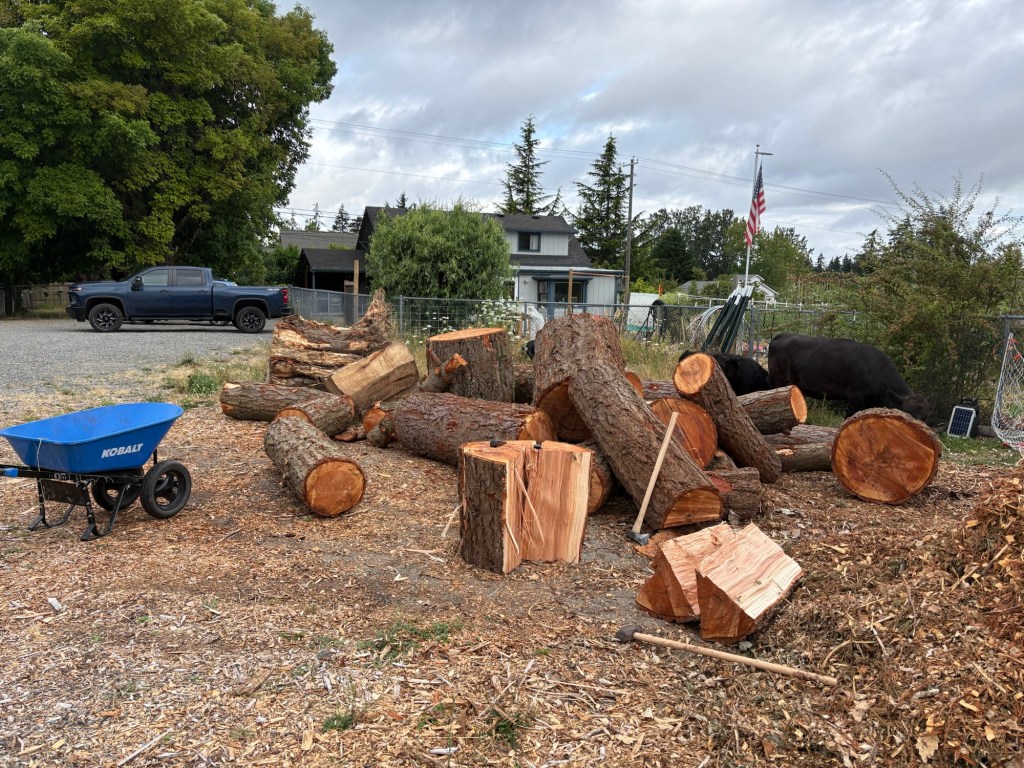
The shorter logs can be fit in a wheelbarrow.
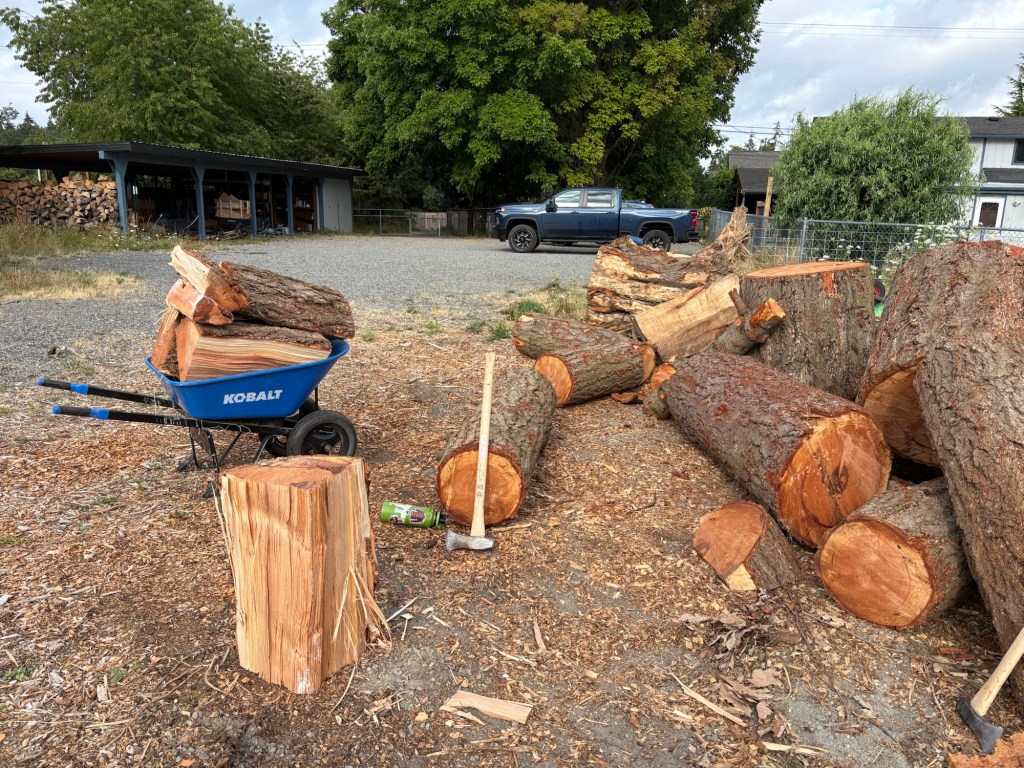
And these can be wheeled to the garden row.
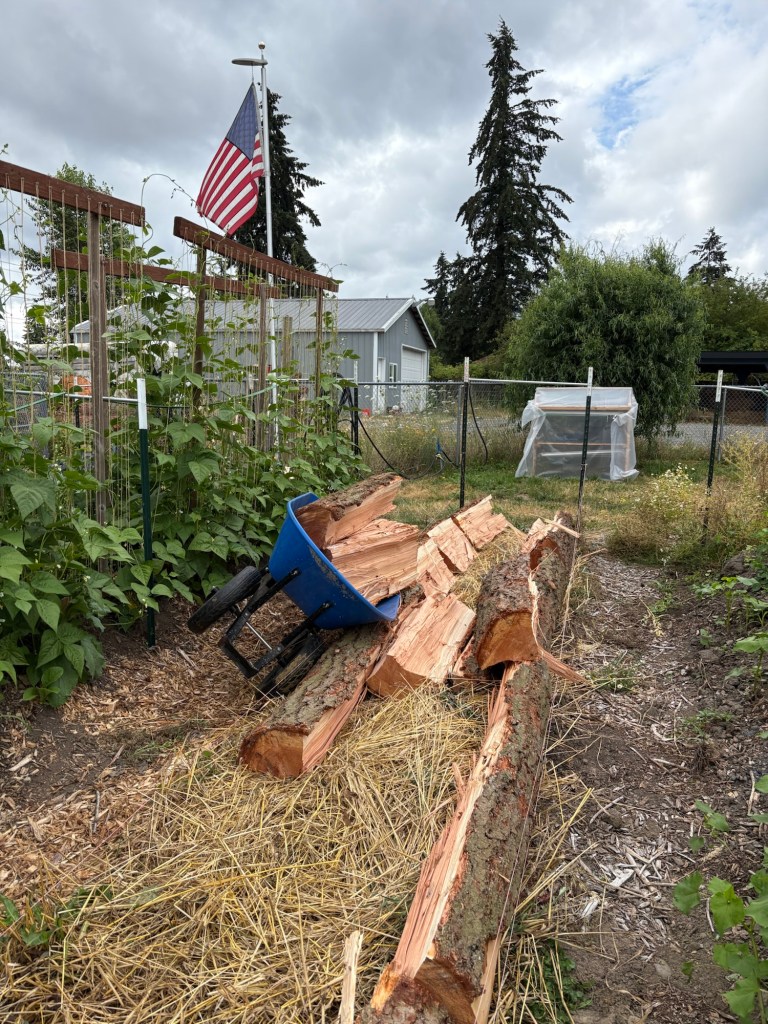
Sort of. There were a few mishaps.
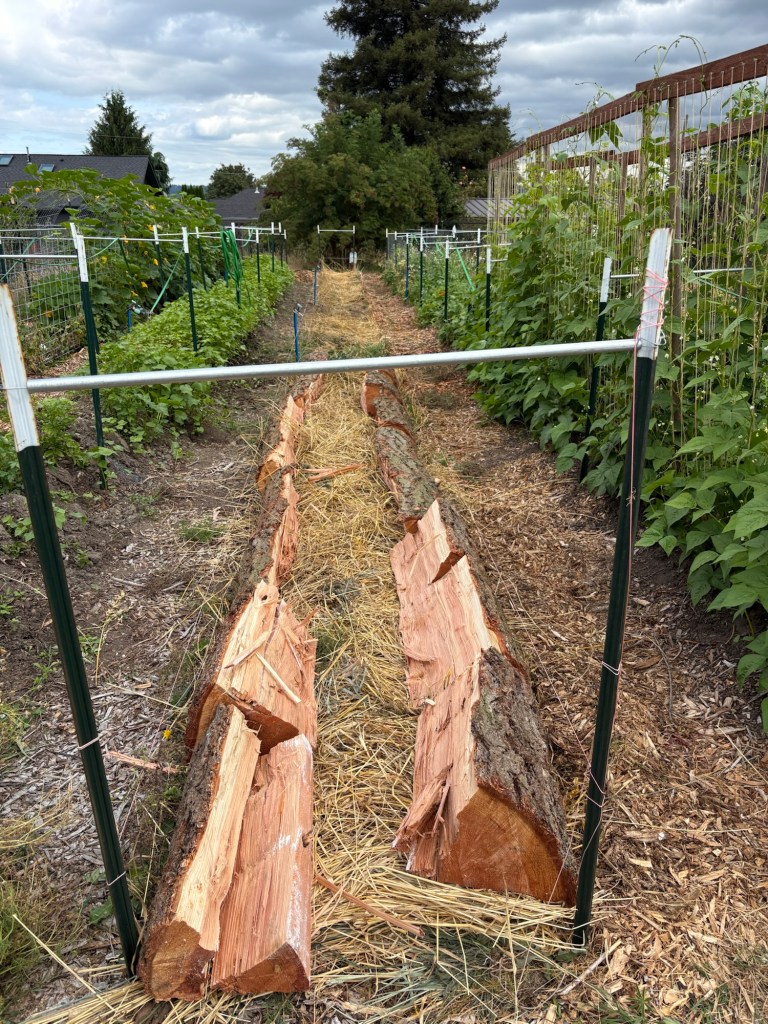
I got about a third of the row bordered in about an hour. The concept is that the larger sections will be used to create walls, and smaller logs will be buried in the center. This will create a combination of hugel and raised bed. Theoretically. I have never done this before.
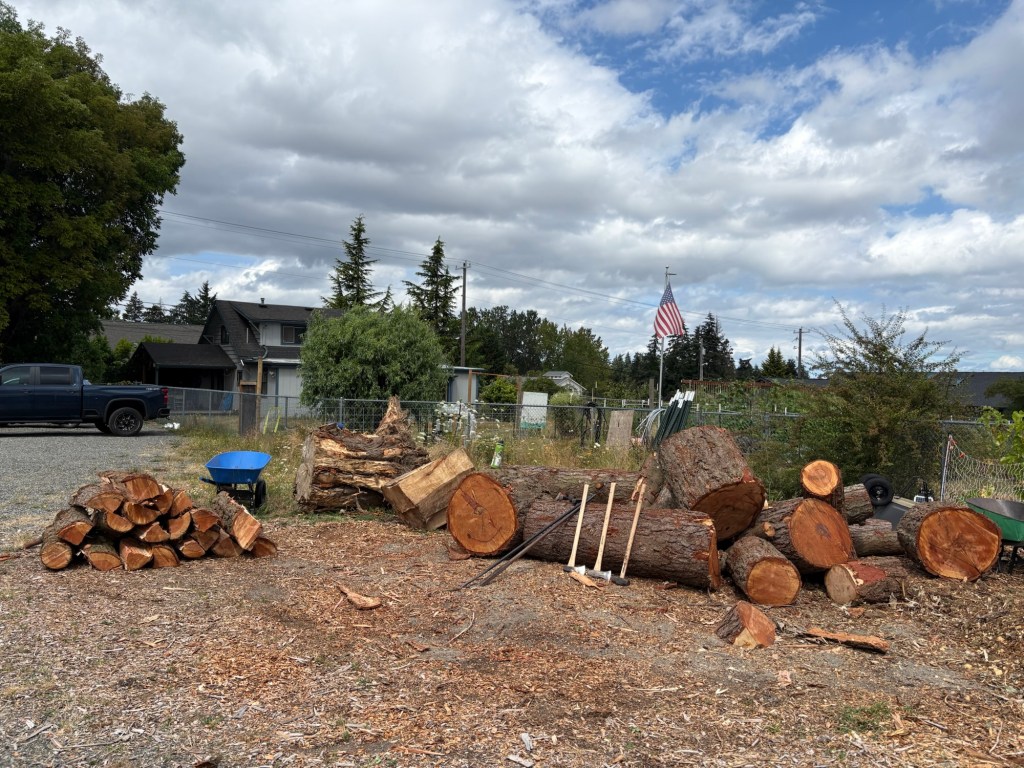
In another hour and a half I got a small pile of wedges built as well.
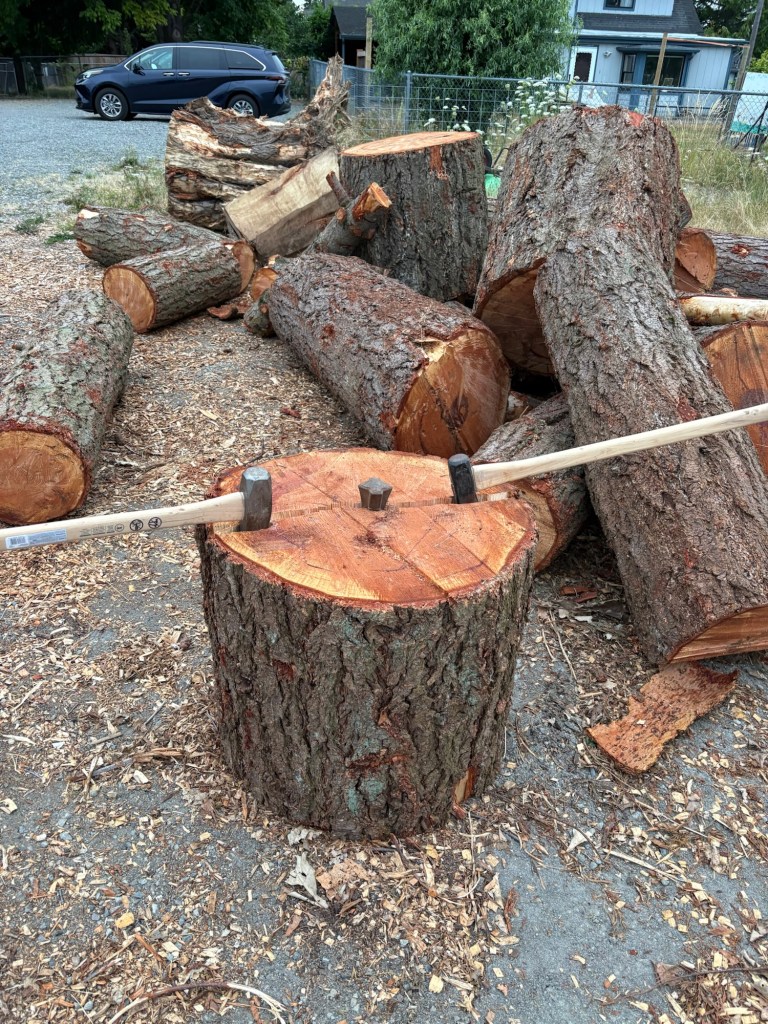
This block was a pain in the butt. It took a few hours to split.
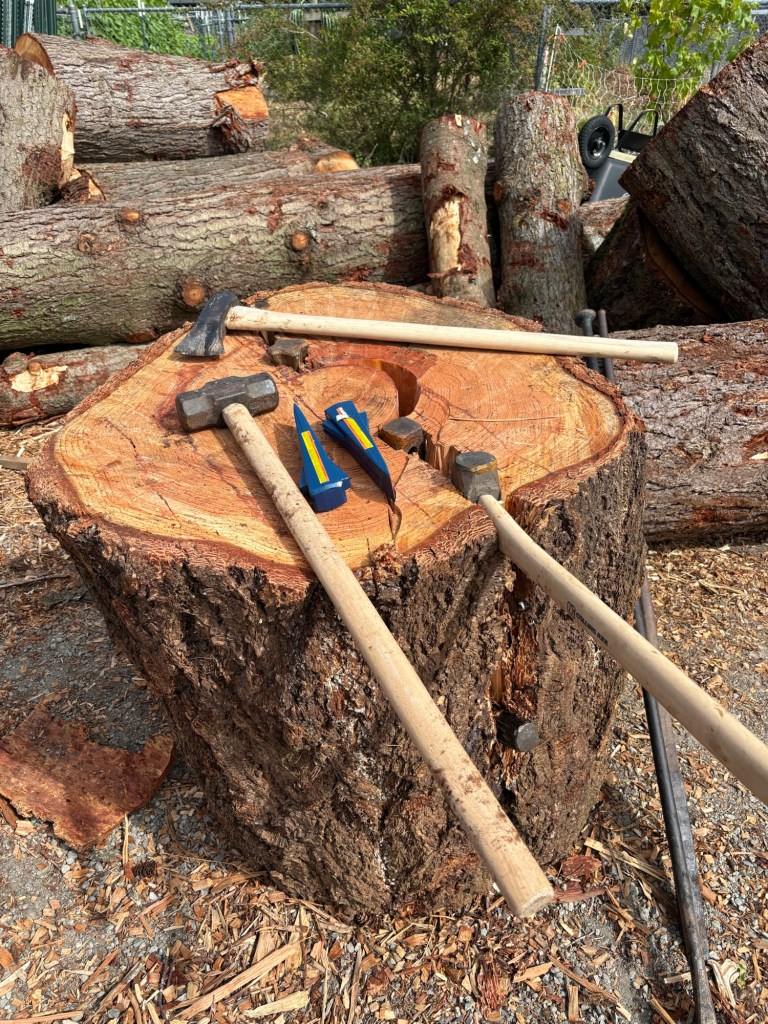
Started out in the morning, with wedging through the center, but it split around the core of heartwood.
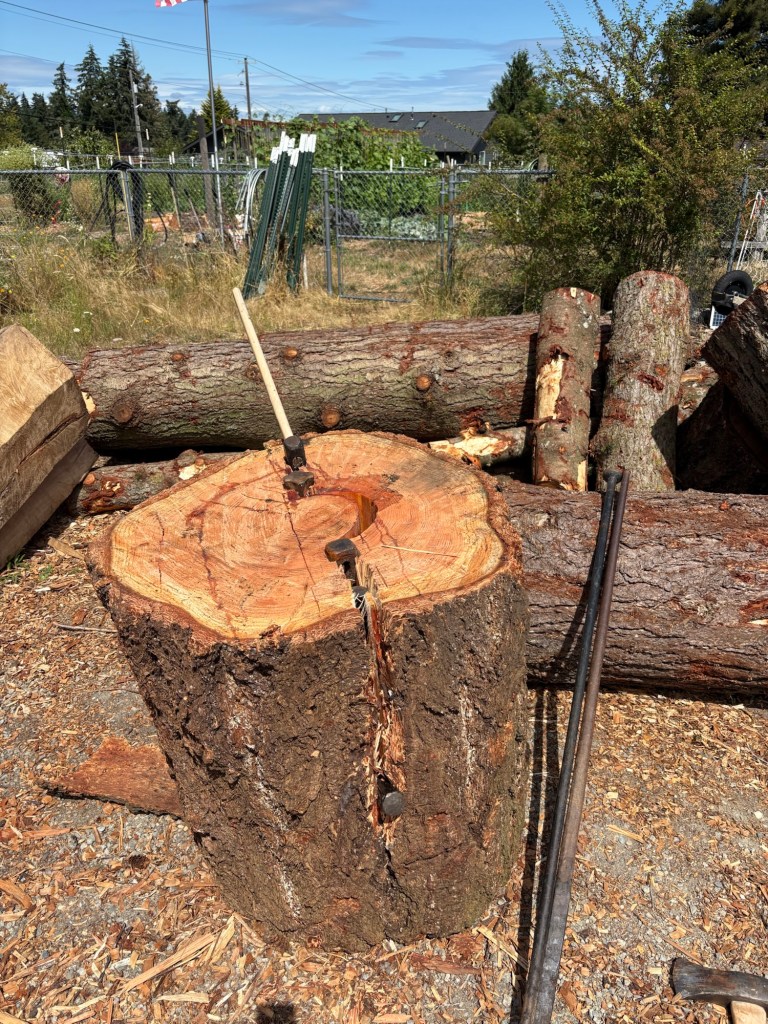
Later on in the day, I spent 15-30 minutes propagating the split down the side of the log.
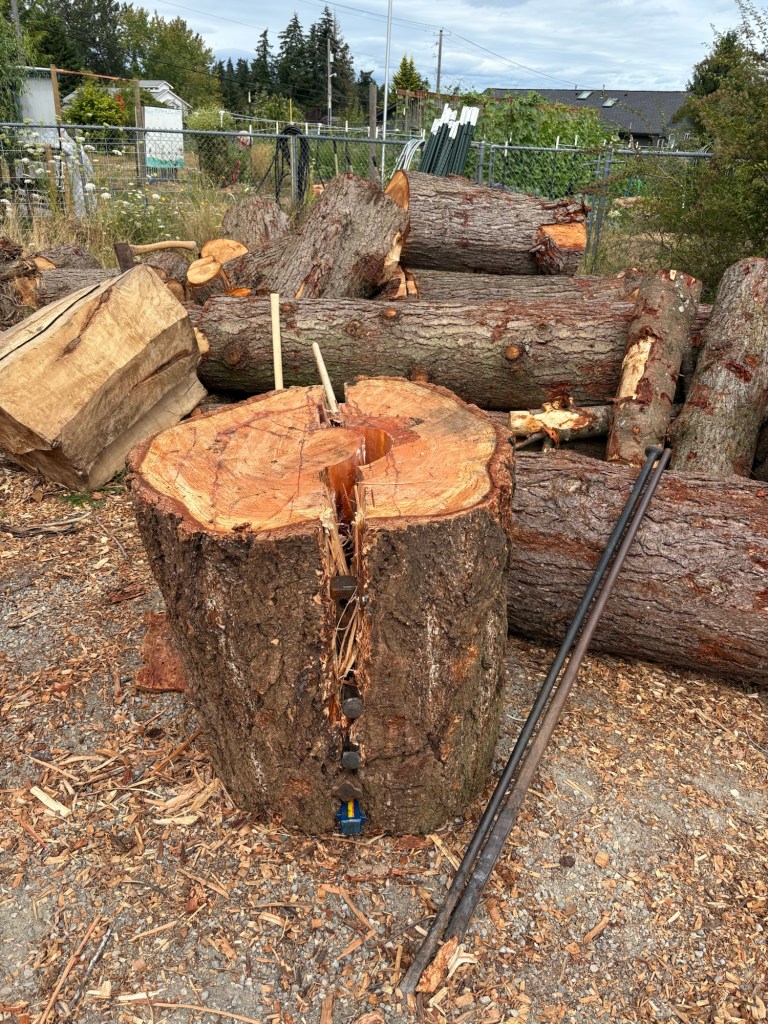
It ate up all my wedges. What I found was that the wood is still green and full of sap, so the splits tend to rebound rather than propagating. Instead of trying to beat through it, it works better to put some wedges in and drive them as far as they will go, until you can hear the cracking, and then leave it for a while to let the fibers relax and come back to it later.
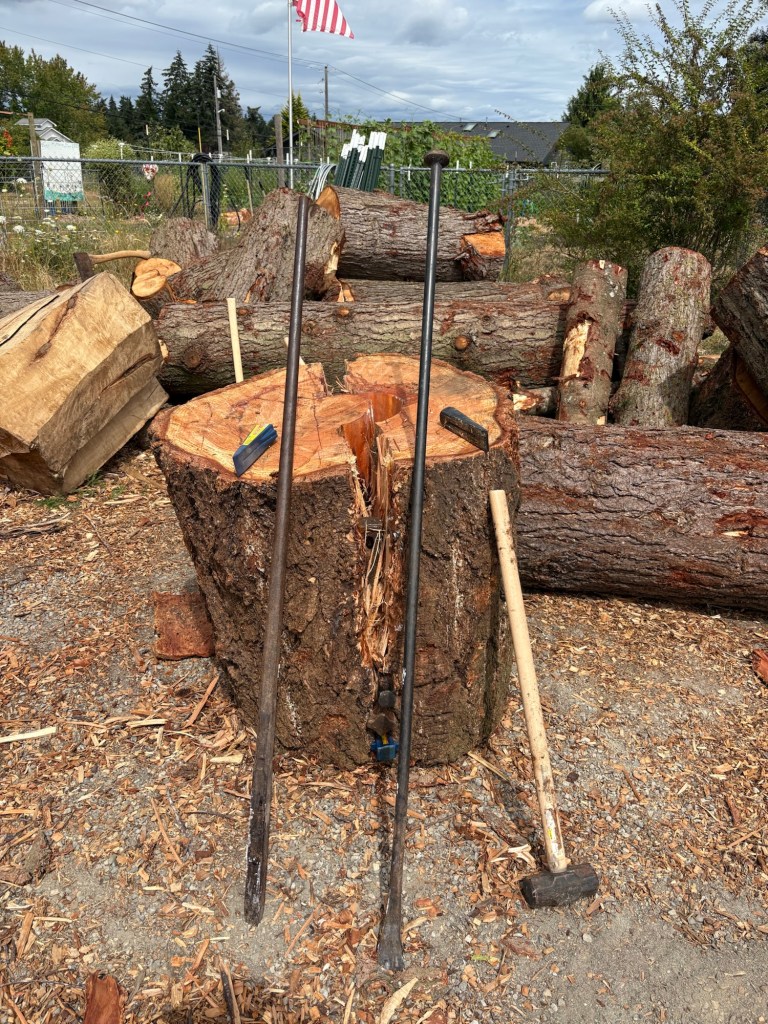
After supper we were able to propagate the crack to the bottom on both sides.
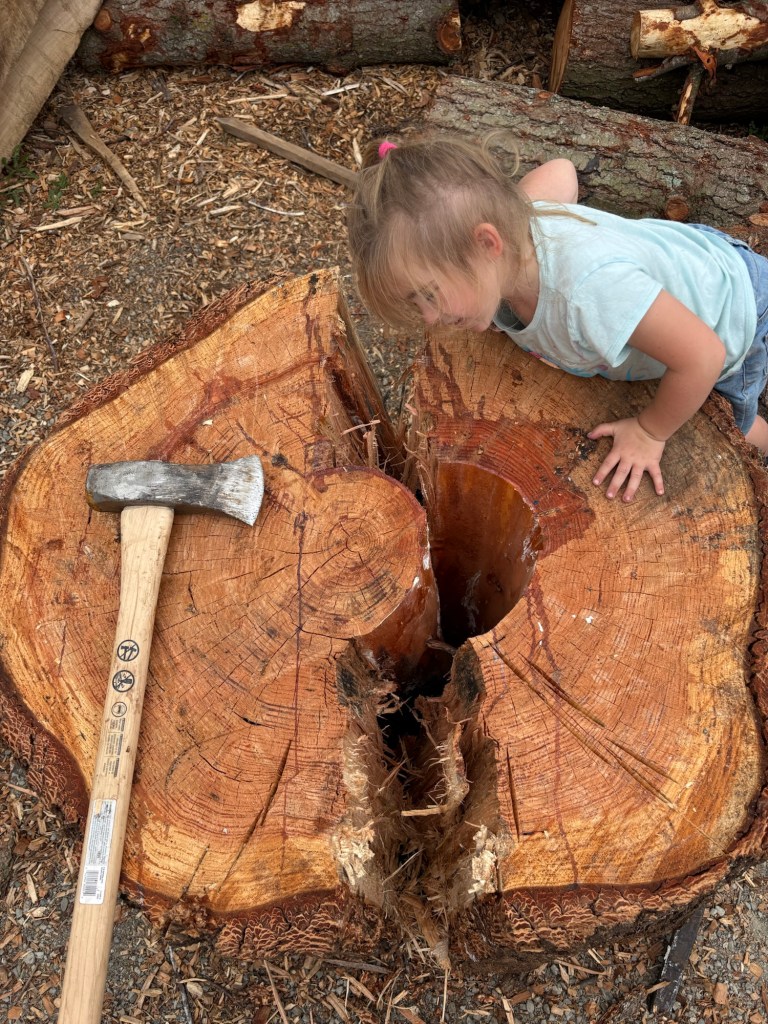
“I can see the bottom!”
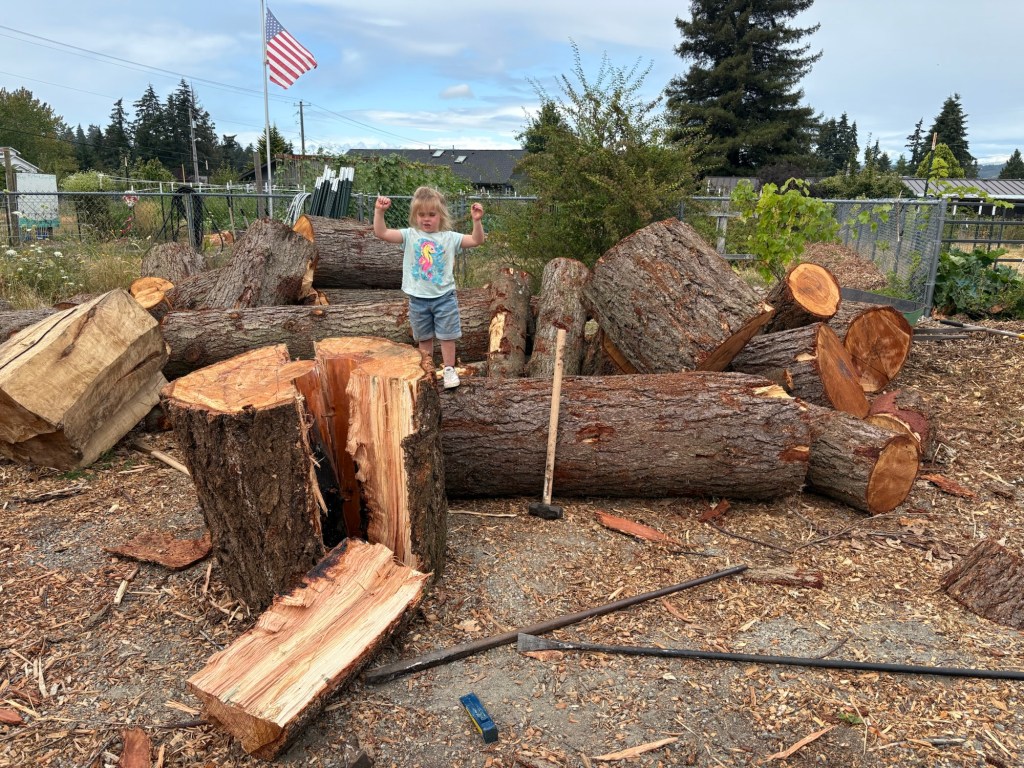
Yay! Finally got it split.
Stay tuned. In 5-10 years we should know how well this works.

 Little Farm in the Big City