

Finally got to harvesting the wheat last week, on Friday. This was a few weeks overdue. It really was ready in late June, early July. The optimal day, with that magic combination of nice weather, not too hot, no rain, and time to get to the job, with nothing more pressing that needed to be done, just didn’t occur for some reason until late July. This had some consequences as we will see.
Most importantly, the wheat lodged like crazy. That means, it bent over at ground level so, instead of being a good stand of upright stalks, it was a tangled mess of stalks in all orientations from vertical to horizontal, with most being in the 45 degree range.
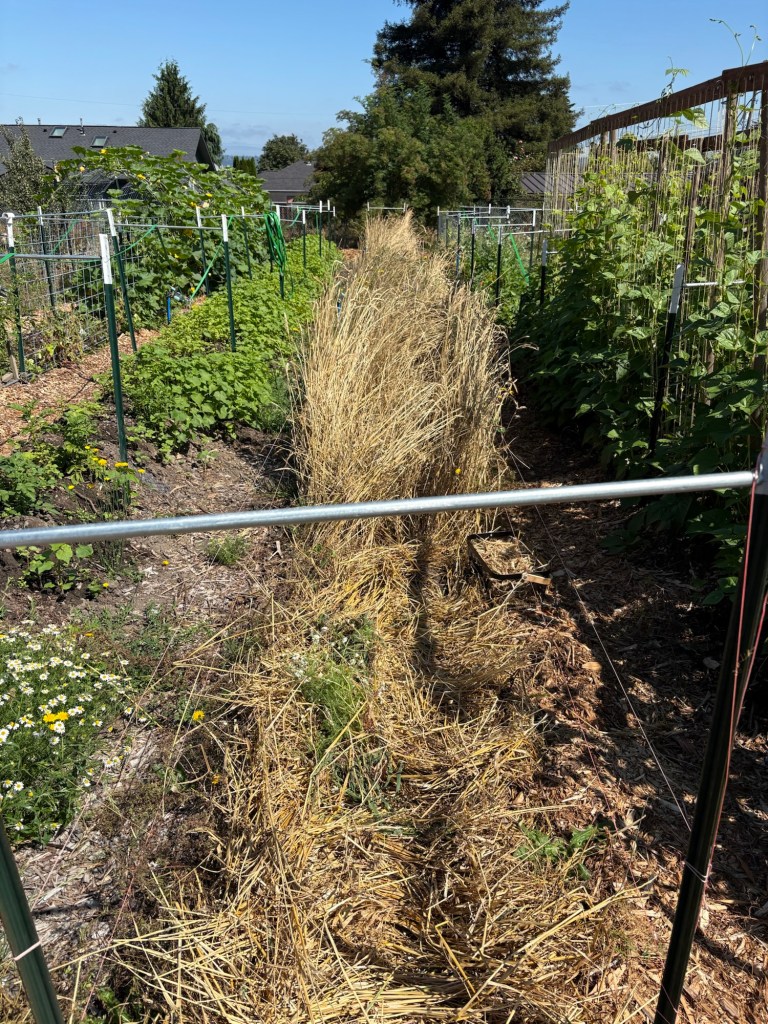
As you can see in this picture, there are good clusters of upright stalks on the outsides of the rows, but the middle section is bent over and tangled in with the right hand side of the row.
There are several reasons for this. This is our third year of growing Fife Red winter wheat, and we have had issues with lodging the last two years. Last summer we got a hail storm, and some of the wheat got knocked over that way, and we also had a vole making a trail through the middle of the row (and we more than suspect the cats followed it and made the trail even bigger. This year we had two rain showers in early July which caused the wheat heads to get heavy and overbear the stalks.
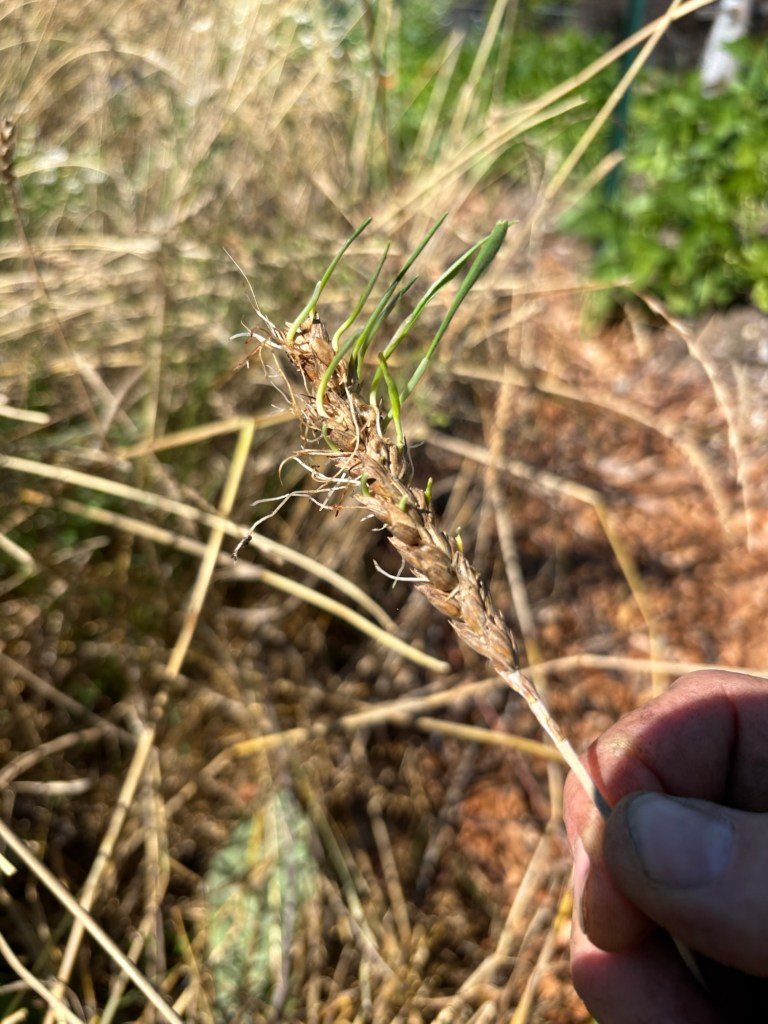
This is a seed head that was lodged all the way to the dirt, and then rained on. See it starting to sprout?
But really it was lodging as early as the beginning of June when seed heads started to form.
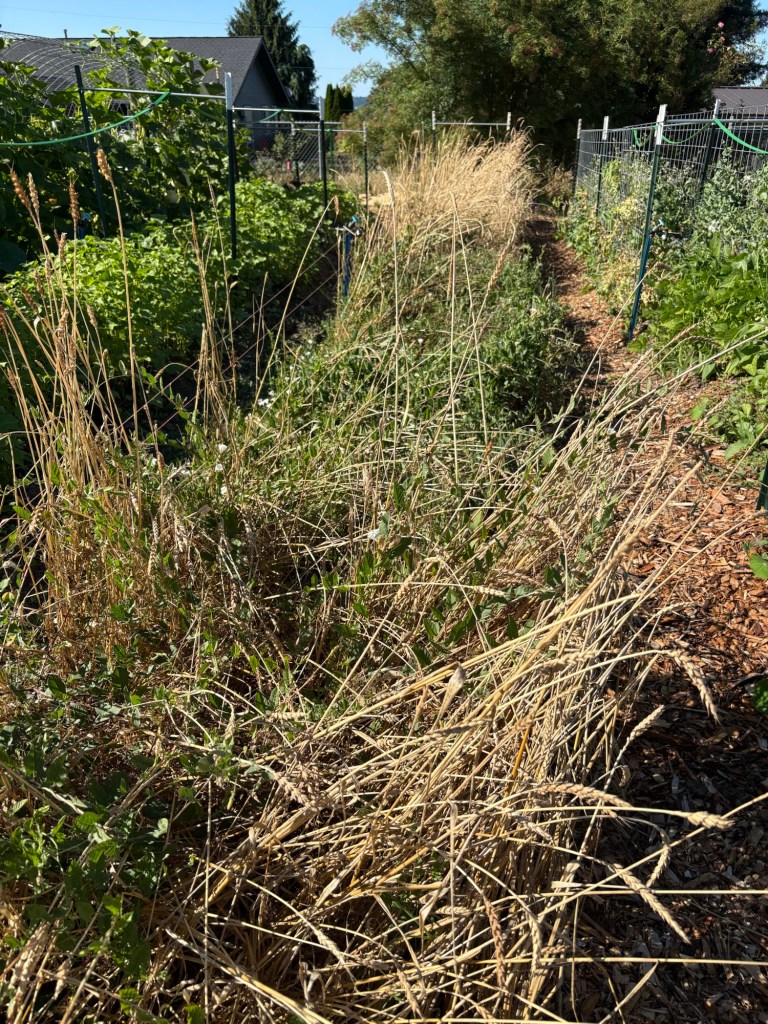
And of course, more delay means bindweed has more time to grow and that will straight up bury a wheat row.
Fife Red is particularly susceptible to this because it is a landrace heritage wheat with a tall stalk. Ours average 3-4 feet in height, although we have many that are only 18 inches, and a few that are nearly 6 feet tall. This variation is due to many factors, no doubt, but is a drawback of some heritage varieties, and is a reason why modern commercial varieties are bred to be short. Modern producers want as much energy as possible going into the seed head, and as little as possible into the stalk. If it is tall enough to be grabbed by the combine, that is tall enough.
In the old days, stray had its own uses, for hats, bedding and other things around the homestead, so more straw was not necessarily a drawback.
But if a wheat field lodges badly, that means you cannot easily harvest it with a sickle. The traditional way is to cut a bunch of stalks off at the base, and bundle them with other stalks into sheaves, and then form the sheaves into a stand called a stook or shock. However, if the wheat is all lying down, or worse, tangled amongst each other, it is impossible to get efficient sheaves, and you are left with hand-harvesting.
This is also known as gleaning, and it was what the poor and the vagrant did throughout history. You would go behind the reapers, gathering up the stalks and seed heads that the more efficient reapers left behind, the yield that was too much bother to be picked up, and that was your wheat supply.
In fact, the Mosaic law commanded land owners specifically to leave gleanings behind for the poor and vagrant, so that they would have something to glean:
When you reap the harvest of your land, you shall not reap to the very edges of your field, or gather the gleanings of your harvest. 10 You shall not strip your vineyard bare, or gather the fallen grapes of your vineyard; you shall leave them for the poor and the alien: I am the Lord your God. – Leviticus 19:9-10.
This is also what Ruth was doing when she was following behind the reapers of Boaz (see Ruth chapter 2).
And I bet the Holy Family also gleaned from time to time, since they were so poor they couldn’t even afford a lamb for the redemption sacrifice (Luke 2:24).
All of this was going through my head as I picked my way through the first 15-20 feet of the row, literally on my knees, bending each stalk down and picking the head off of it by hand. Then I got a call that Seppi had fallen down and cut his forehead. He was at Deedee and Papa’s house, so I drove up to Enumclaw to check on him. It wasn’t a terrible lac, but needed a couple of butterflies.
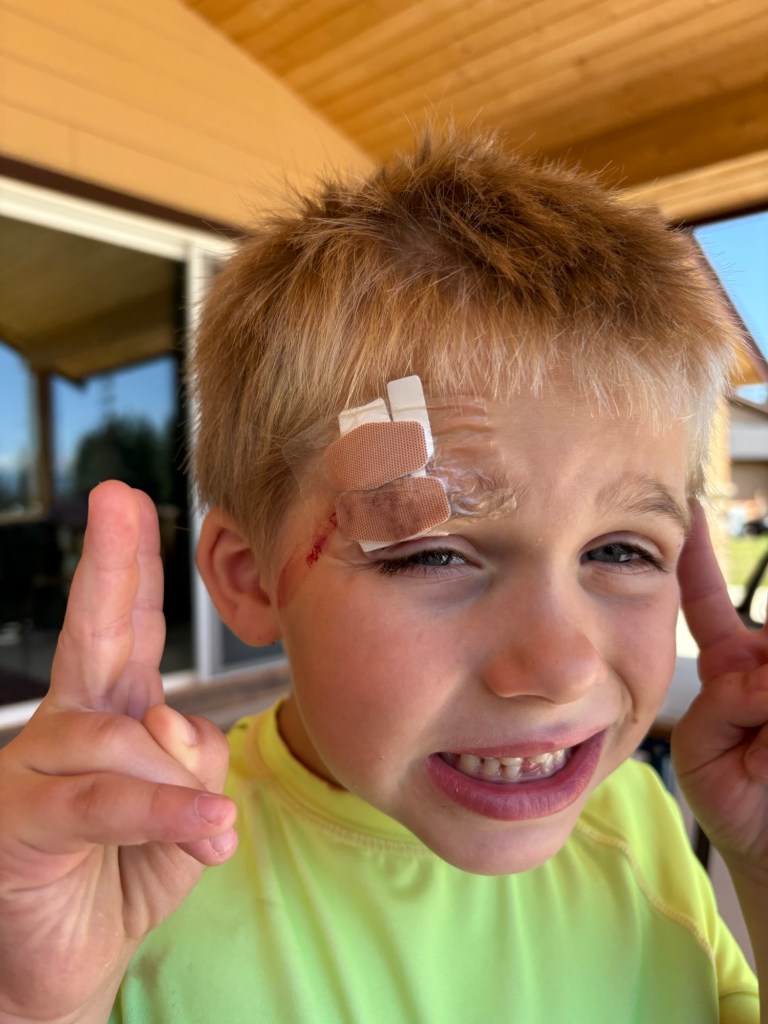
He was pretty tough about it. Because he is a man.
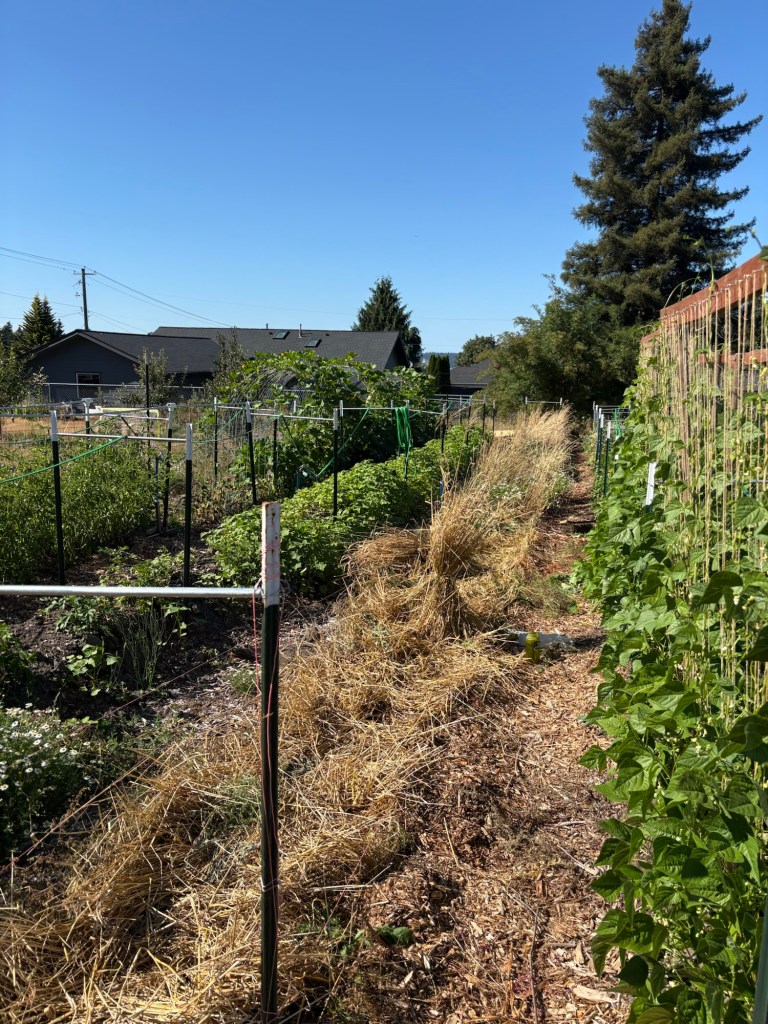
One back I came to a place where the wheat was mostly upright, so I was able to harvest with the sickle for a short distance. I kept running over that line from G. M. Hopkins, “Barbarous in beauty the stooks arise” (Hurrahing in Harvest, I believe), although nothing like enough wheat to form a stook.
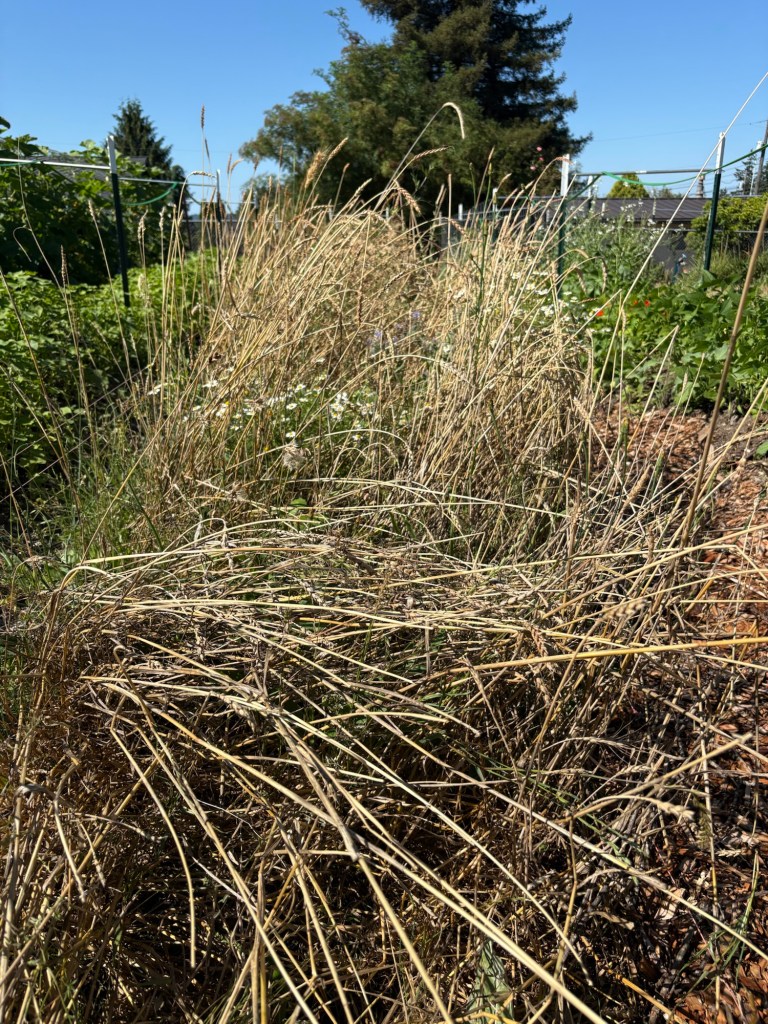
Then I came to this mess, and it was back to hand gleaning again.
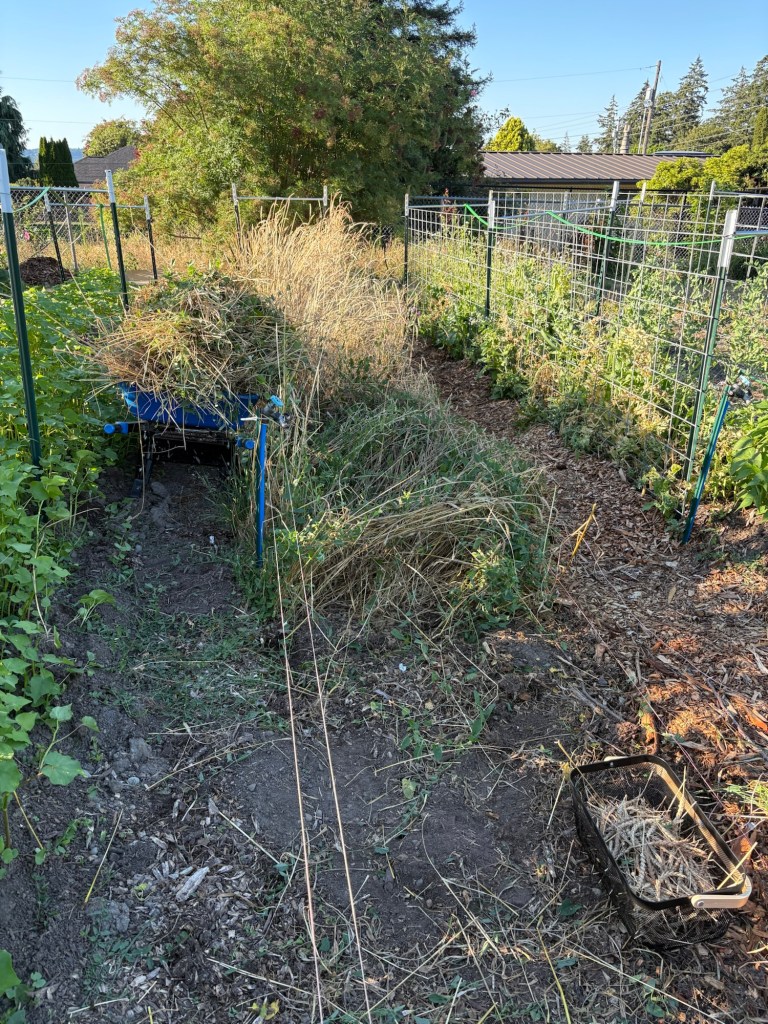
I would pull out a bundle, lay it across the wheelbarrow, bindweed and all, then go through it and pull out the seed heads, or at least as many as I could find.
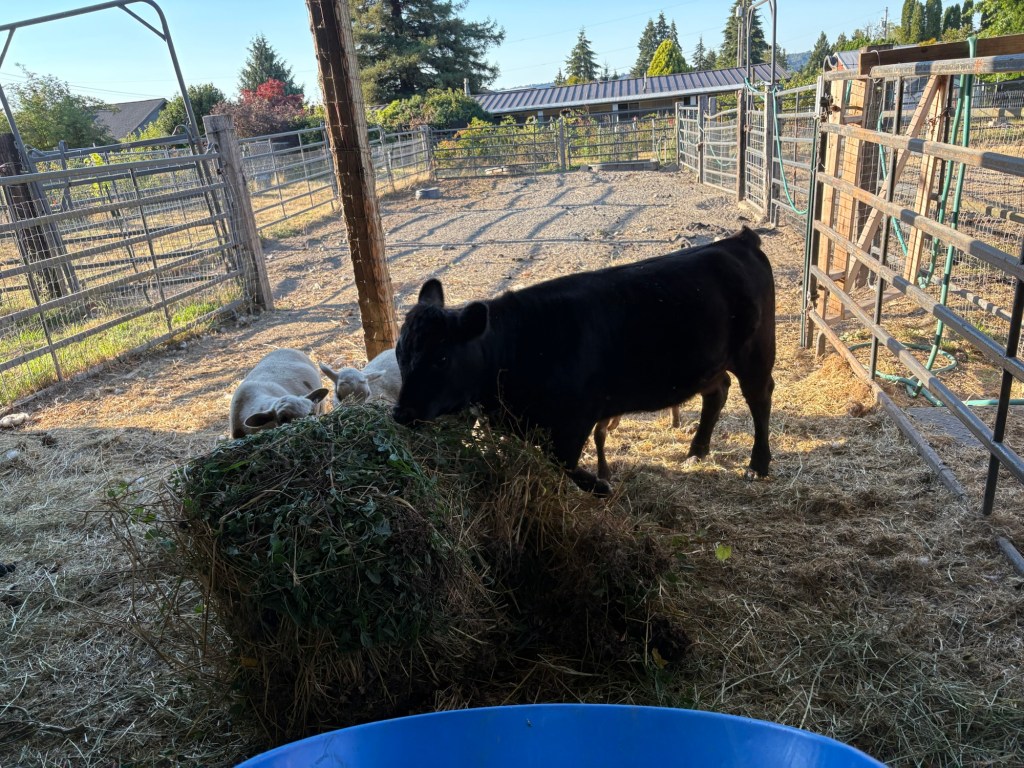
When I had a full wheelbarrow I fed it to the young stock.
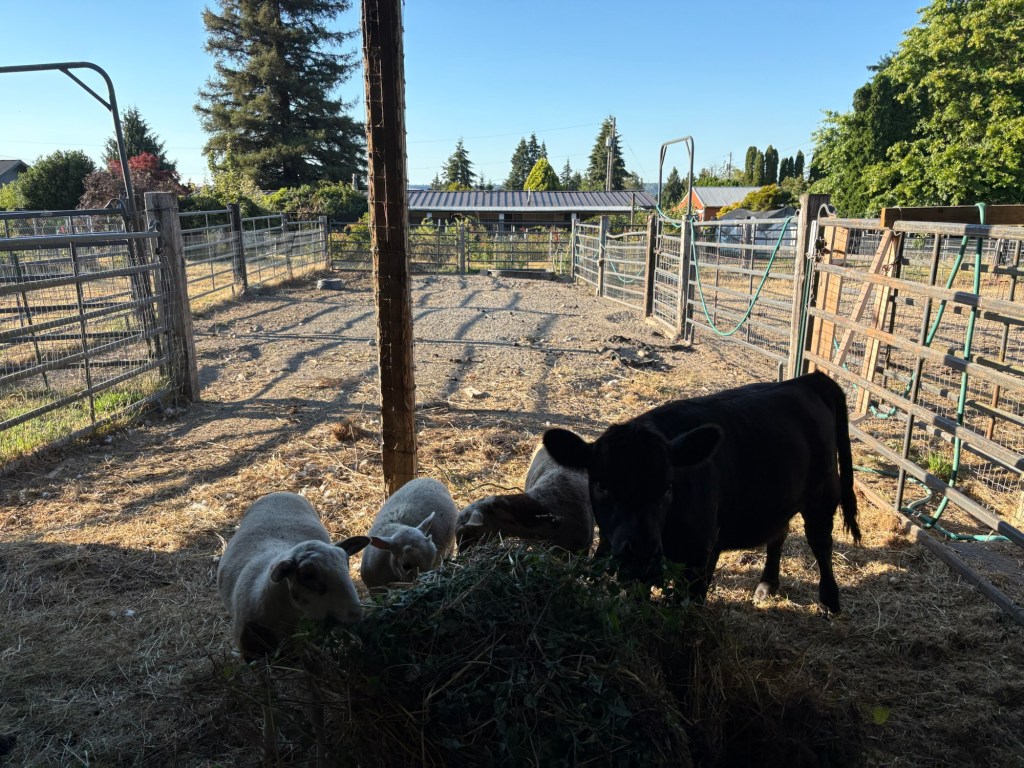
They picked through it and ate all the bindweed.
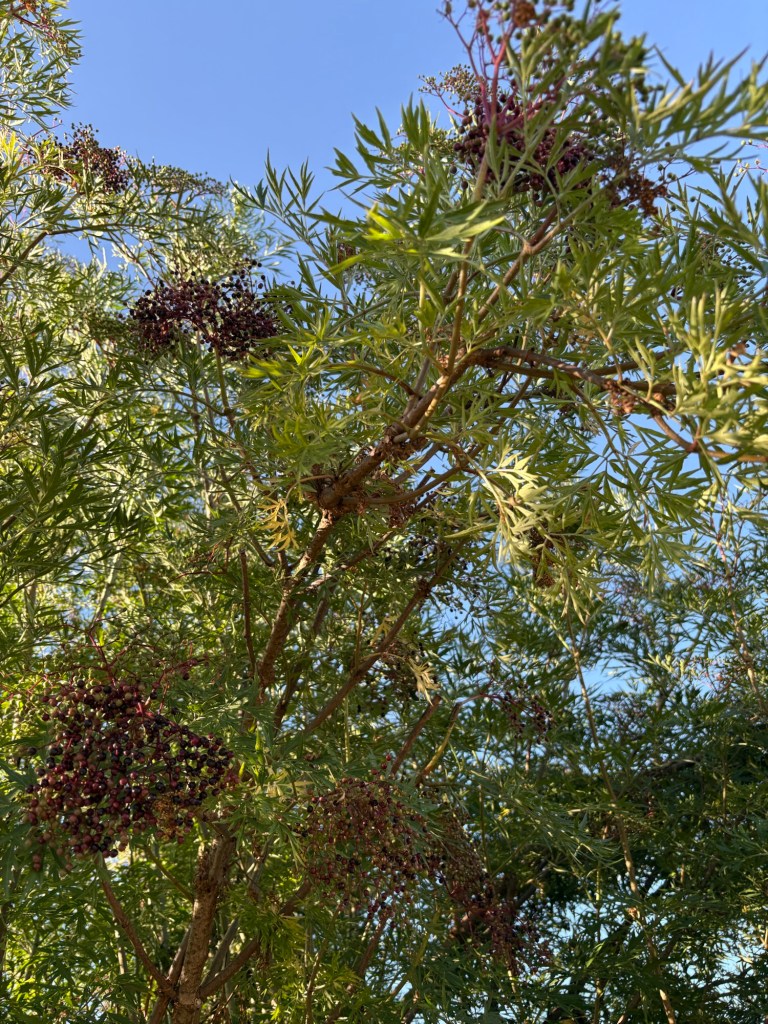
Oh look! The elder tree is starting to form berries (technically drupes, a tiny stone fruit). Those are going to be a harvest of richness in a couple of weeks.
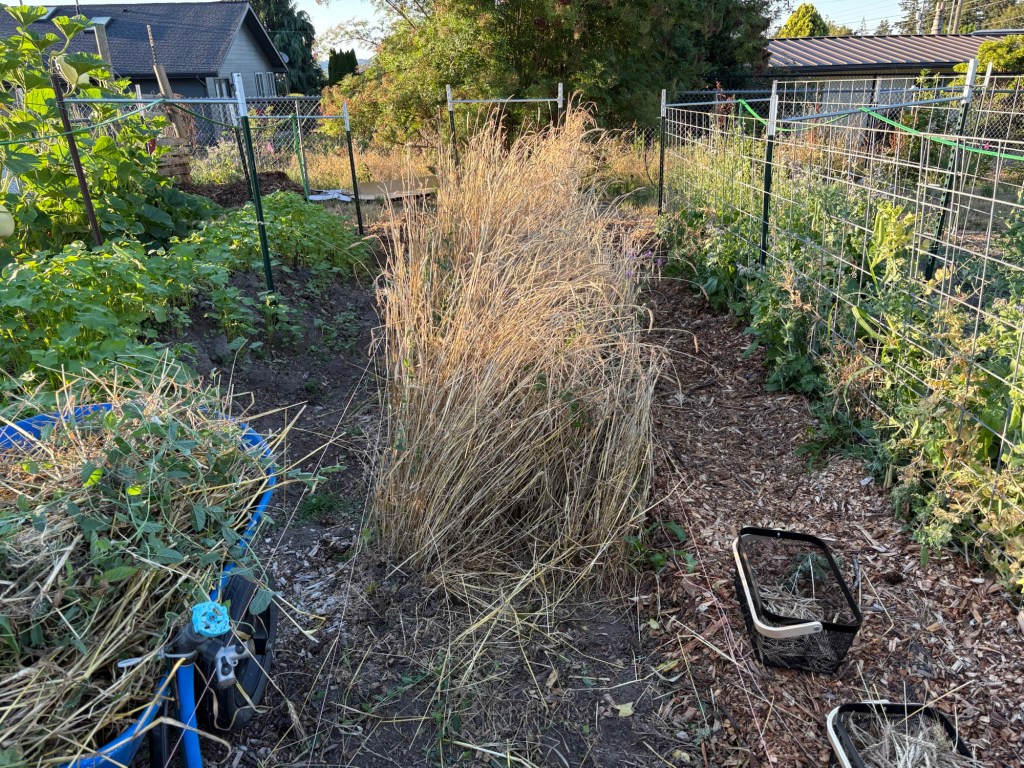
After the worst patch another good patch where I was able to make two more sheaves.
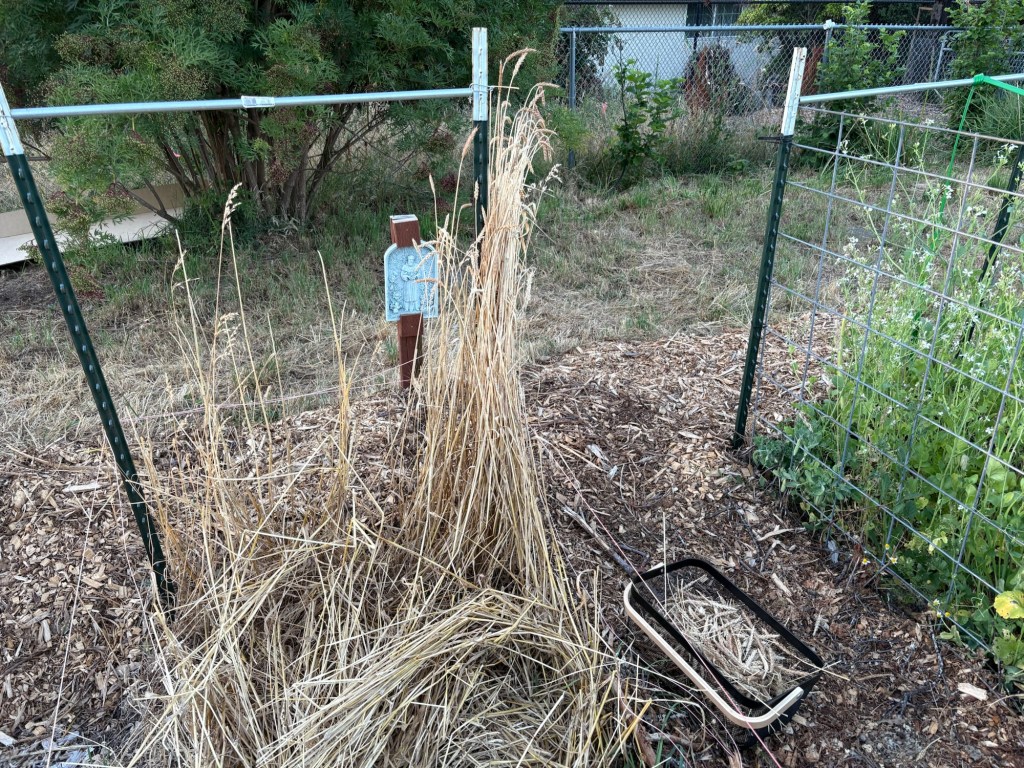
The last stand.
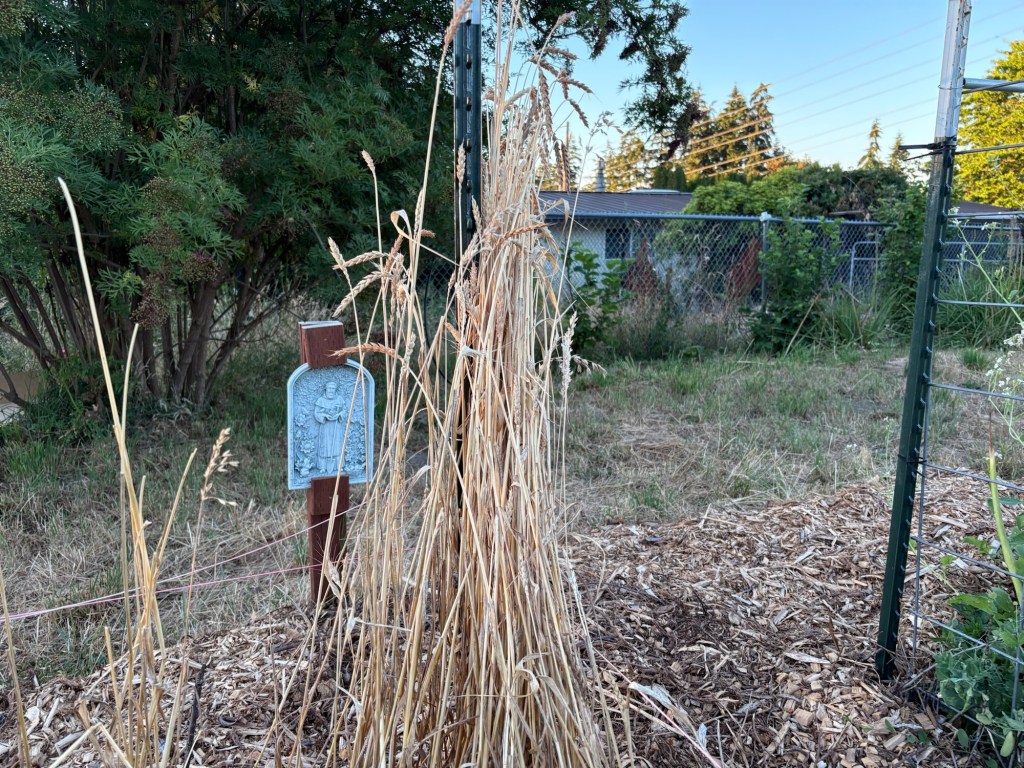
Right next to St. Fiacre.
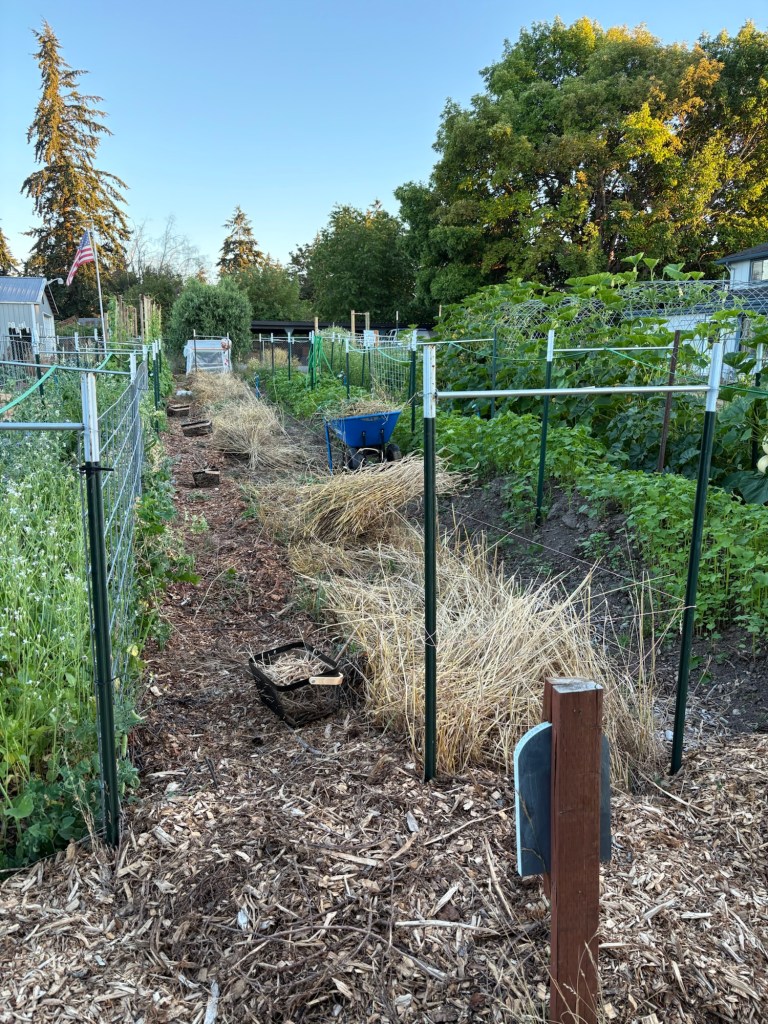
A little more than six hours of work.
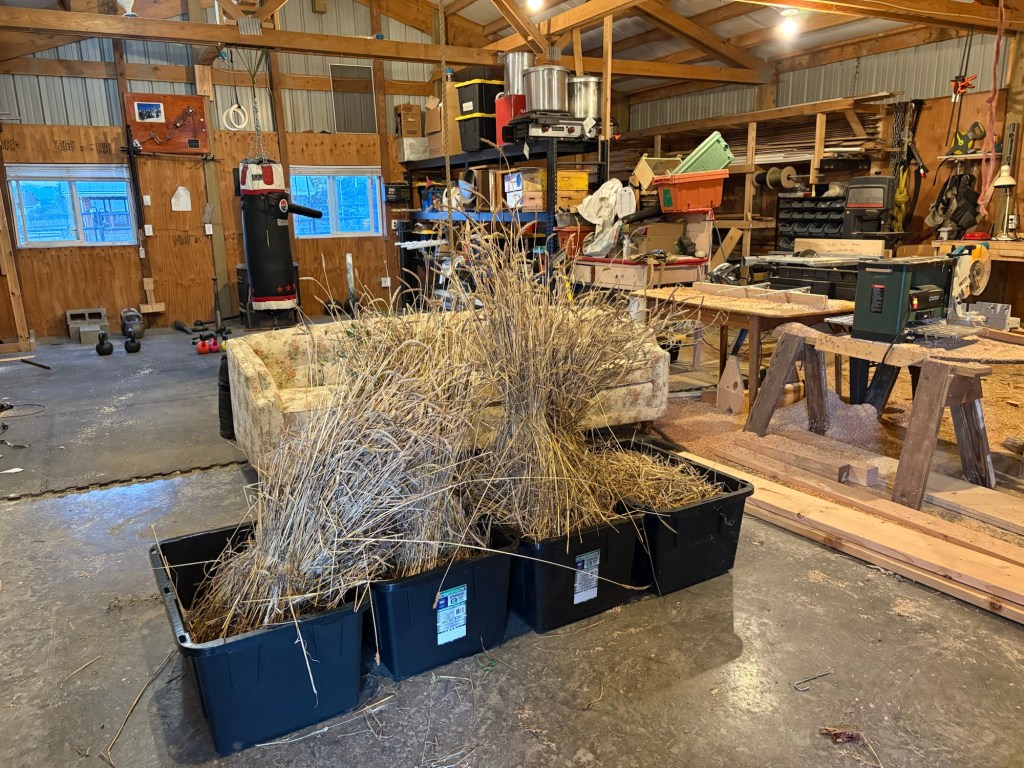
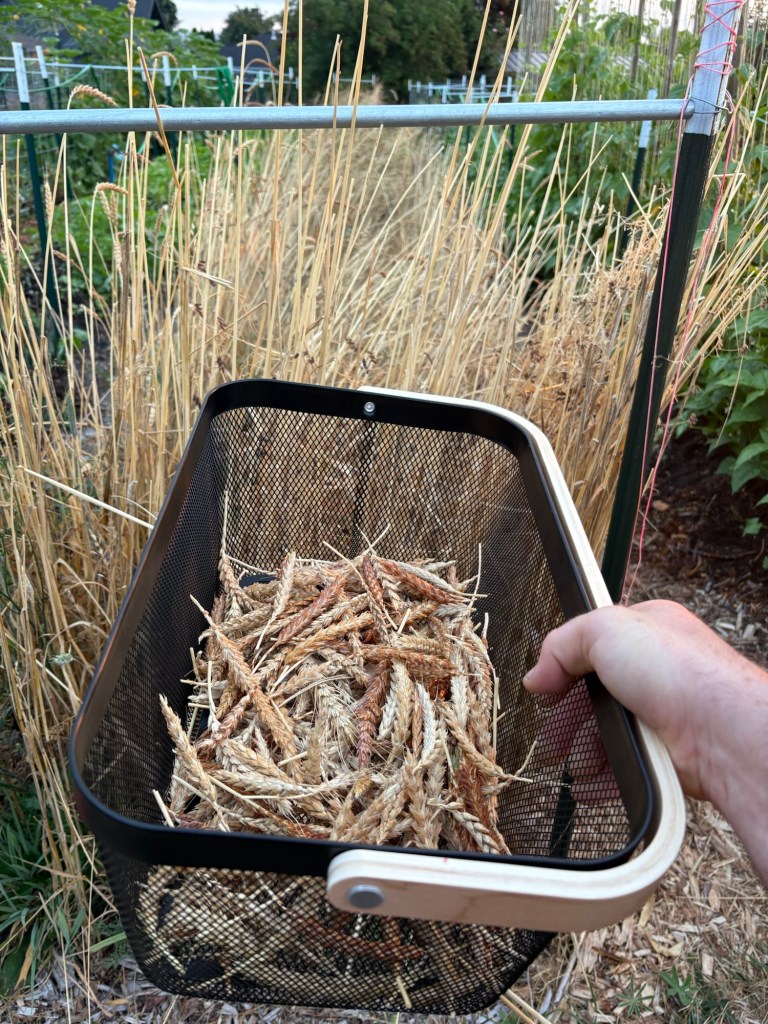
For this much wheat (the box on the right contains only seed heads, about half of which were left over from last year’s harvest.)
I don’t think we will plant wheat again this year. It is a very time intensive crop, for the return we get from it, and next year is going to be a very busy summer. If we do turn our hands to wheat again, it will likely be using a different variety, less susceptible to lodging, and we will have to have a more efficient way of processing it than threshing and winnowing by hand.

 Little Farm in the Big City