

This was Saturday, May 30th, the last day before Daddy left for National Guard orders. Getting to the thistles was a top priority, as they were starting to put on buds. But first:
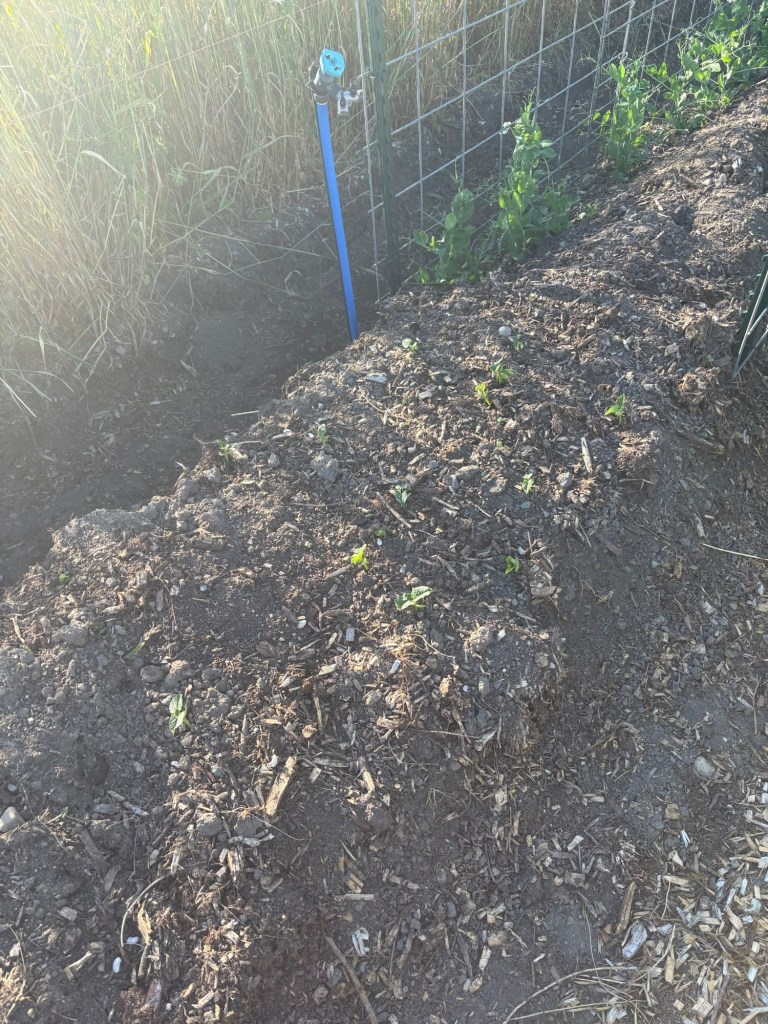
Cannellini beans!
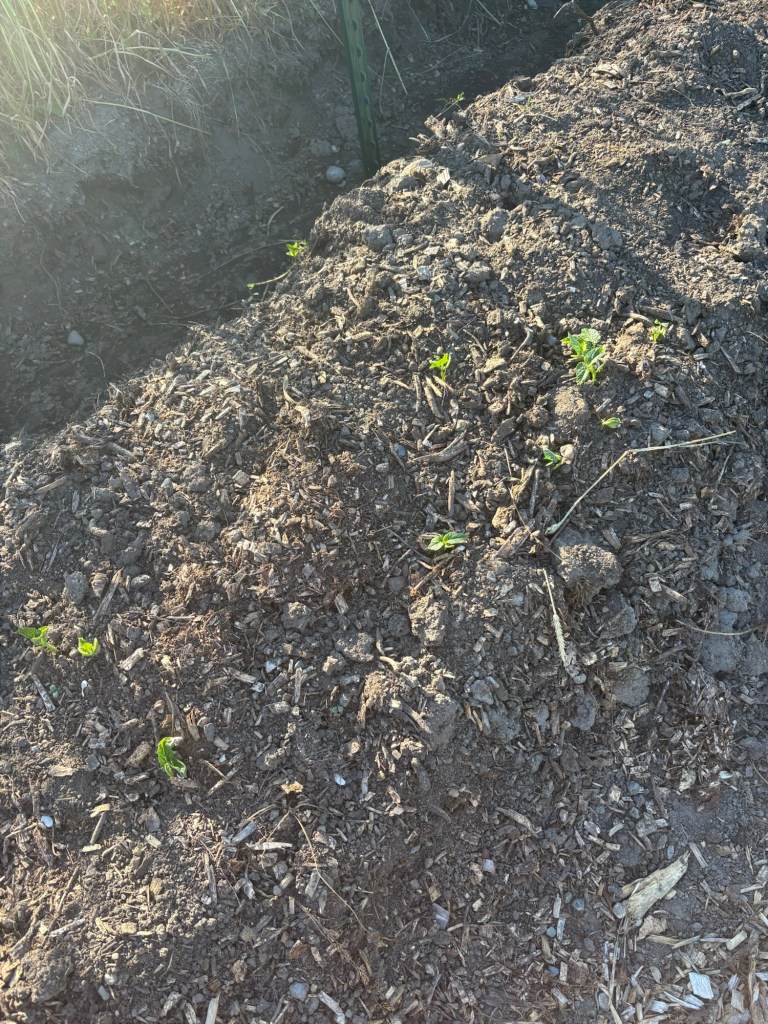
Dozens of little beanlets!
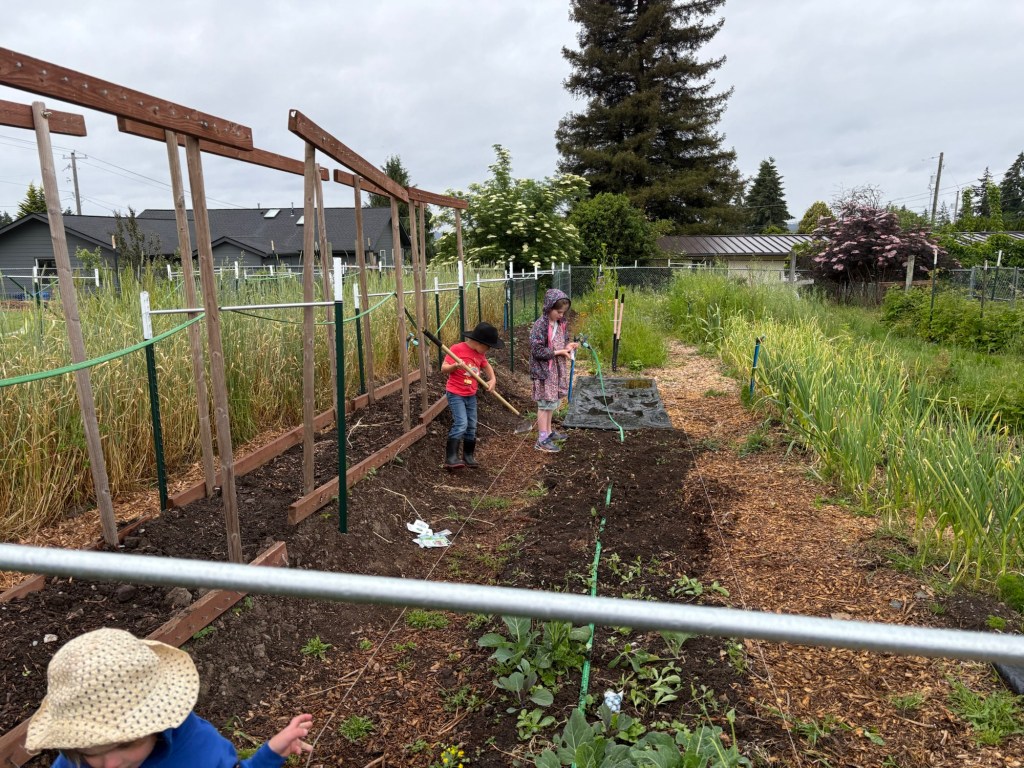
And we took a few minutes to weed out another section of row 5 and seed it with cabbage and brussels sprouts.
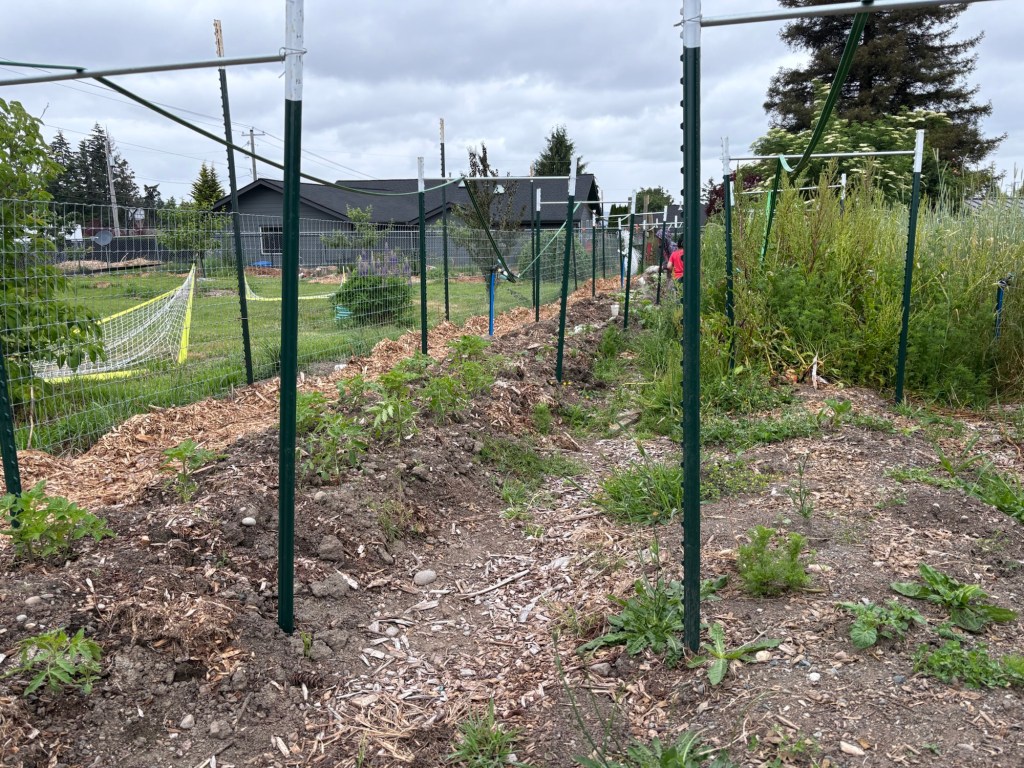
And weeded another ten feet of row 2, and put in half a dozen potatoes.
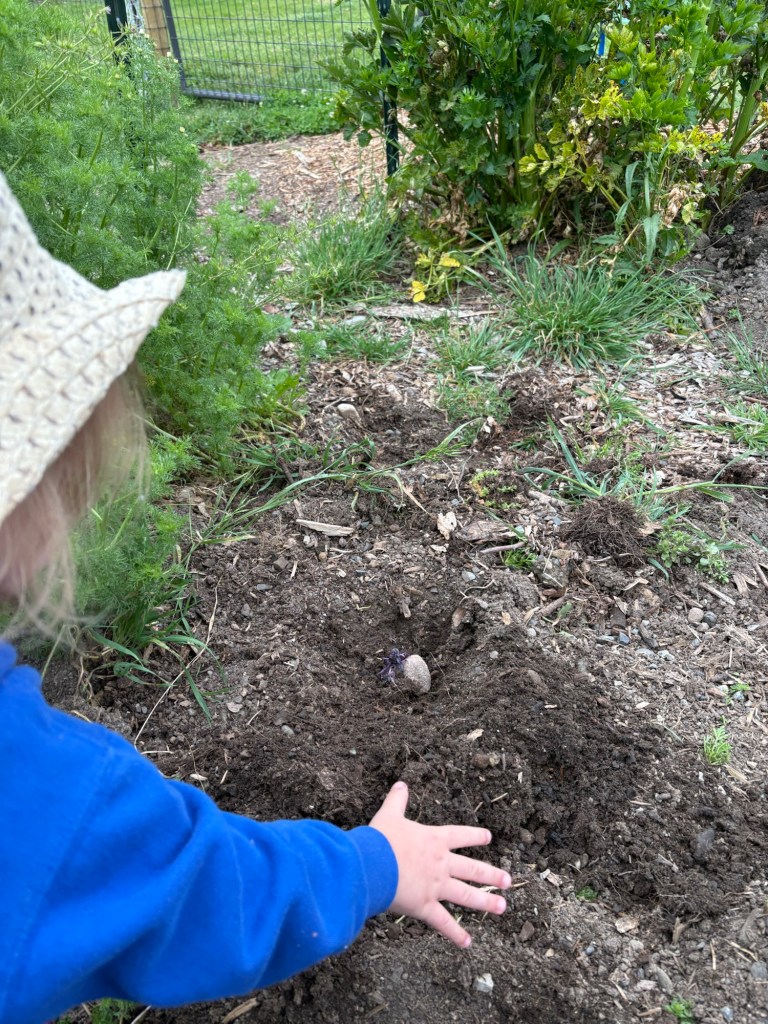
Planting potatoes is a great job for little kids, because you dig a big hole, and drop a big thing in it. Much easier to keep track of than a whole bunch of tiny seeds.
But then, it was time to tackle the thistles.
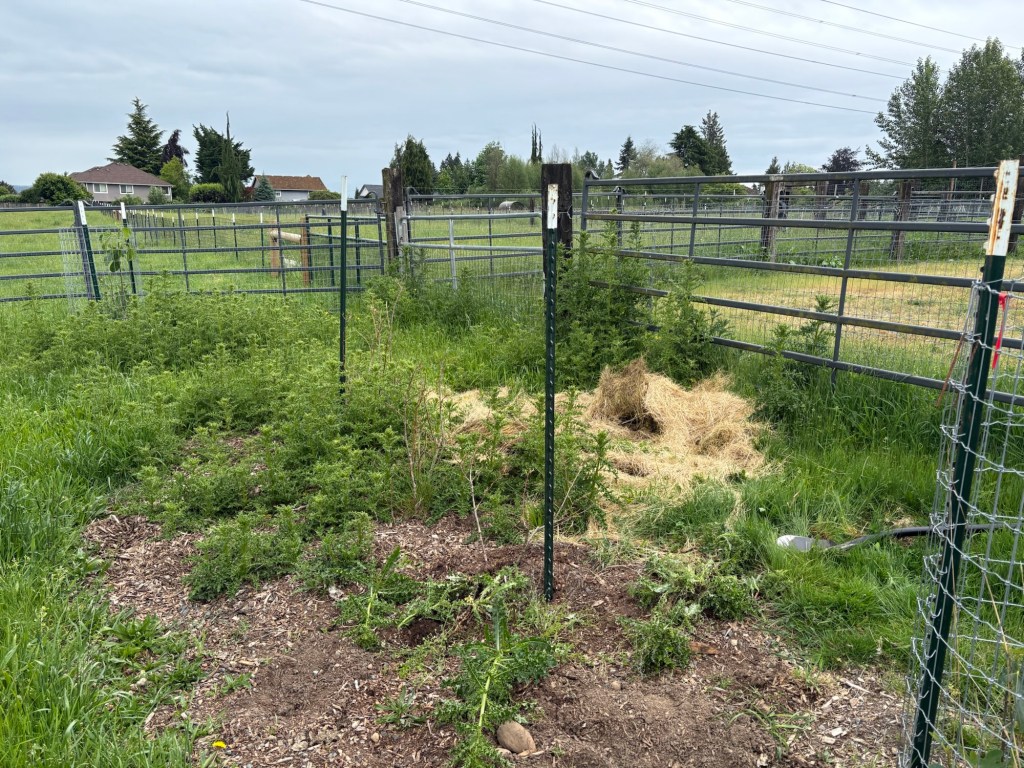
Most of our thistles are Italian thistles like this:
Or scotch thistles, like this:
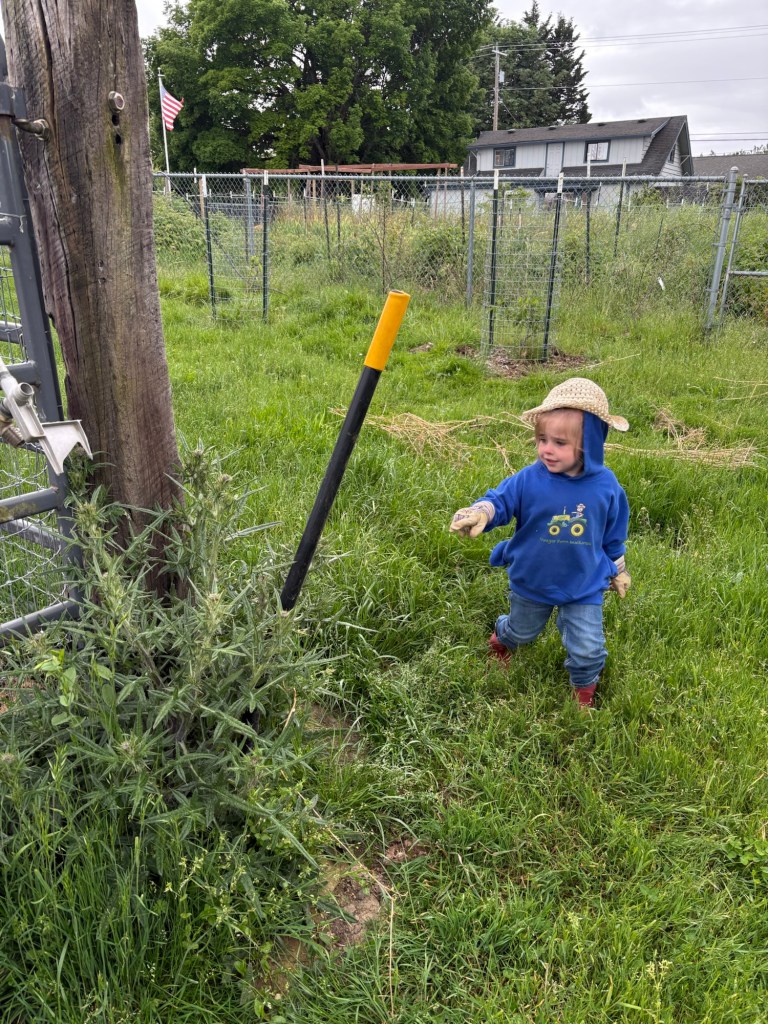
The scotch thistles are not very numerous, but they are very large and require some serious digging.
Some serious digging sometimes.
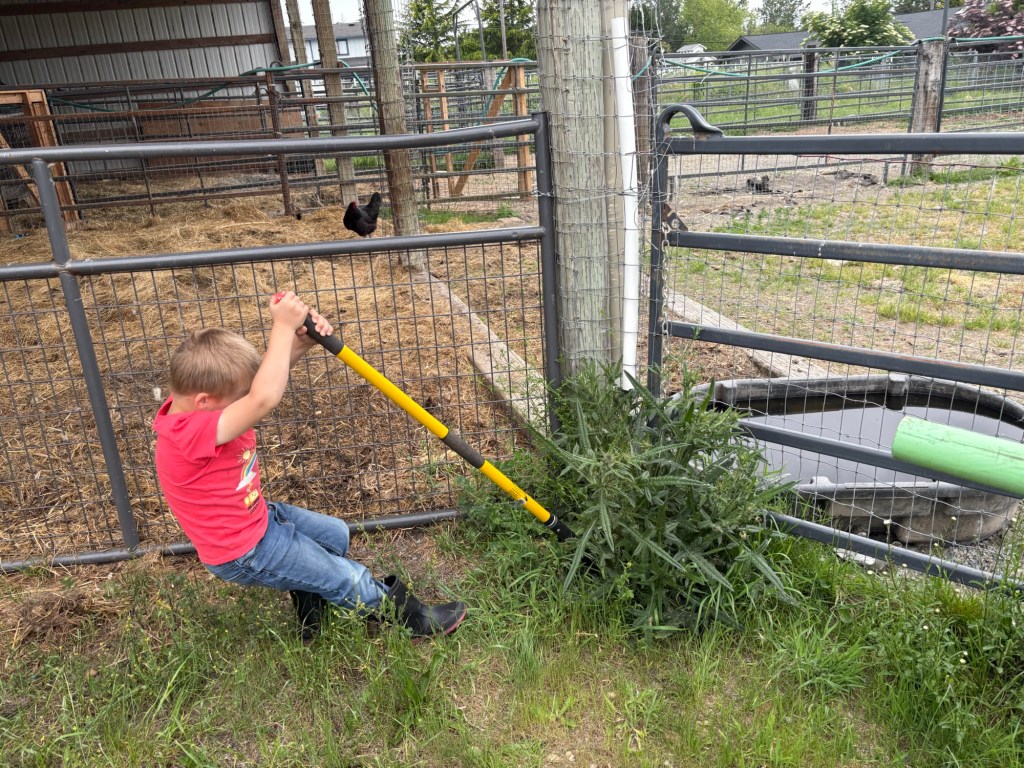
They have a robust root system, and like to grow in the corners of fence lines, but you’ll see them occasionally just out in the middle of the pasture.
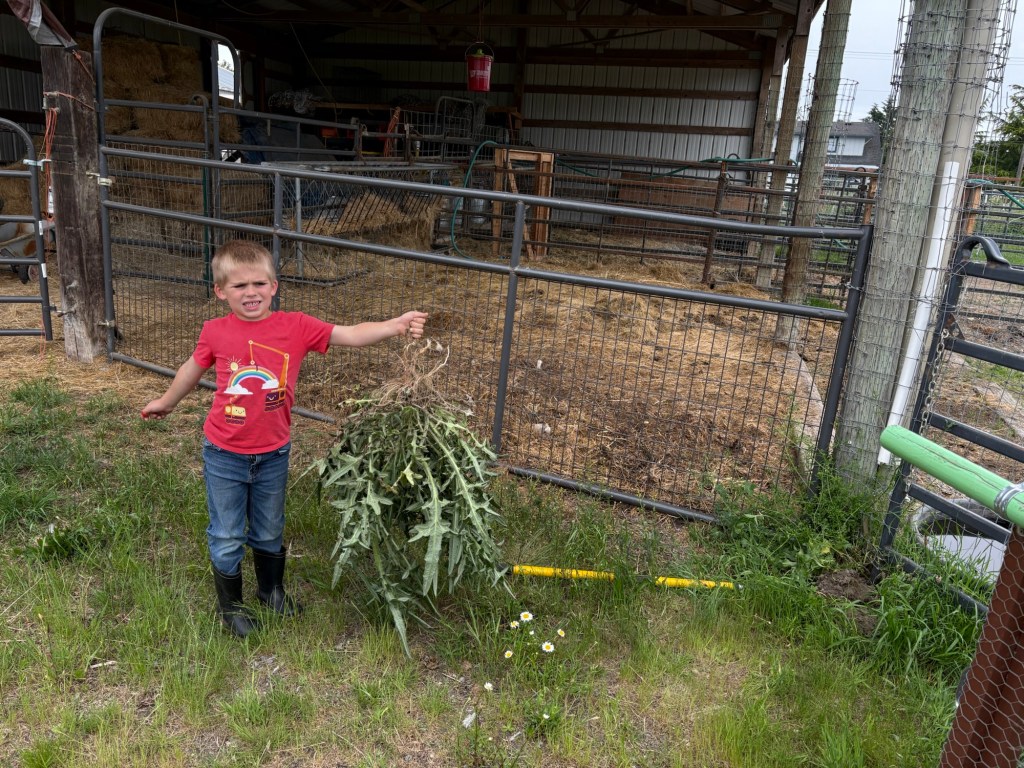
Unlike the smaller and more numerous Italian thistles, which spring up by the hundreds every year, particularly in the middle of the south pasture under the power lines, and in the west end of the north pasture and the orchard. These usually have only a single stem and a single tap root extending straight down.
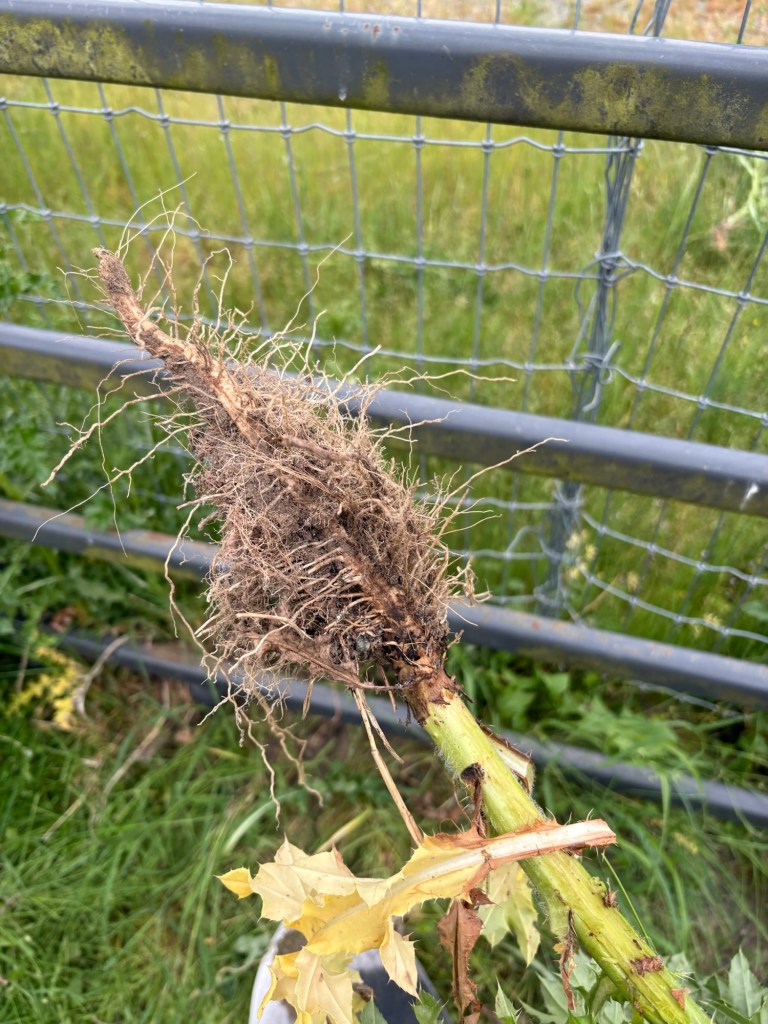
In contrast to the thistles I pulled in the pasture which had almost no root hairs in the first 6-8 inches, the ones in the orchard and along the fence line where the grass is not regularly grazed, have numerous and well-developed root hairs, and take a bit of digging to get them out. Often the stem snaps off at the ground level.
This can be a problem as it is still early in the season, and there has been a bit of late spring rain. They can easily resprout and go to seed again, and this is what we want to prevent above all.
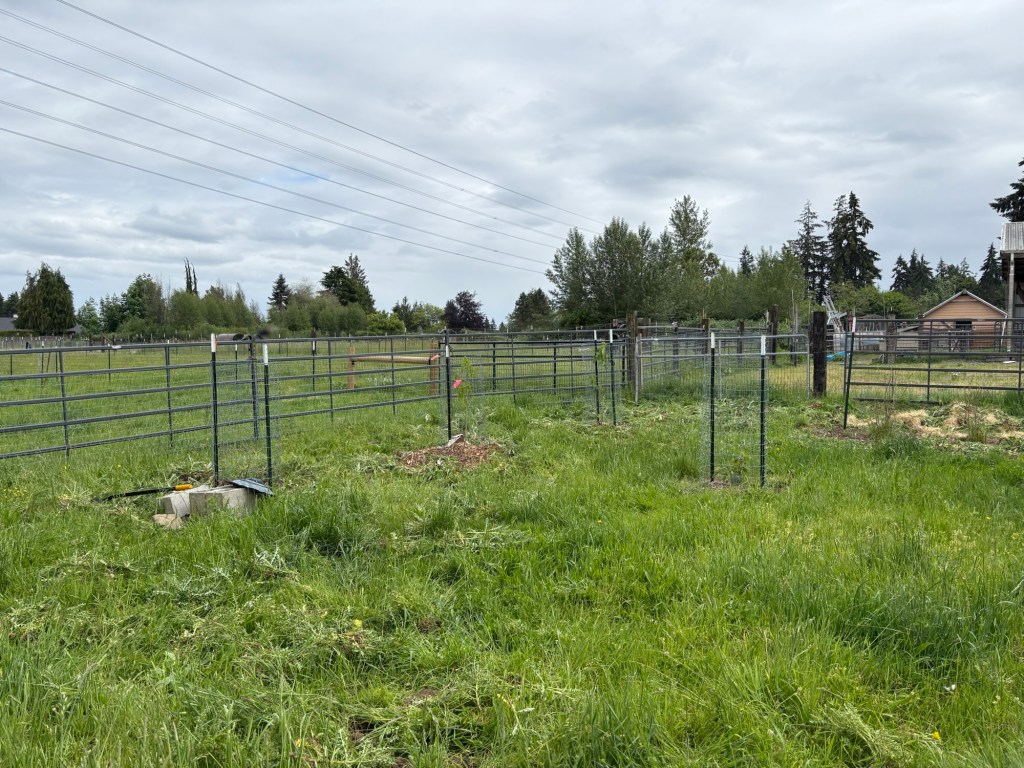
We pulled literally hundreds of them that day.
The main features of biological (as opposed to chemical) control are preventing them from seeding. The seeds don’t typically persist in the ground more than a few years (similar to hemlock, our main pasture nemesis around here), but each plant can produce thousands of seeds per season. They are typically biennial, meaning that they develop their tap root the first year, and then send all that energy into a flowering stalk the second year. Timing the cutting is all about trying to get the plant at the point where it has already invested the maximum energy into that flowering stalk, and then cutting it off, or better yet, pulling it out. Ideally it won’t have enough for a second flowering stalk, but if it is a wet year, or a wet area, it might rapidly throw up another stalk, much shorter, more branched, and flower and seed all in a week, so it’s a good idea to keep an eye on them for a couple of weeks after the initial cutting.
The best line of defense, however, is a well managed pasture. You cannot keep thistle seeds out, since they are carried by the wind, by birds, by animals, even possibly by insects. However, where the grass and forbs are well established and covering every available square inch of ground, thistle seeds will have a harder time finding a spot to establish, and will have less sunlight and nutrients available to them.
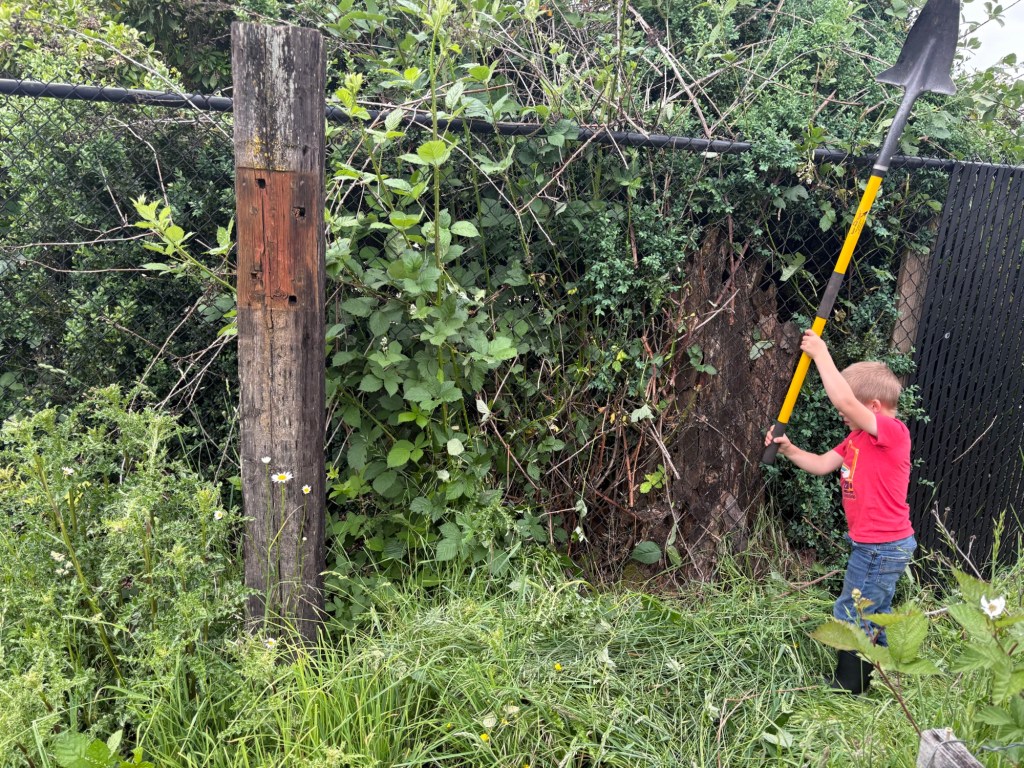
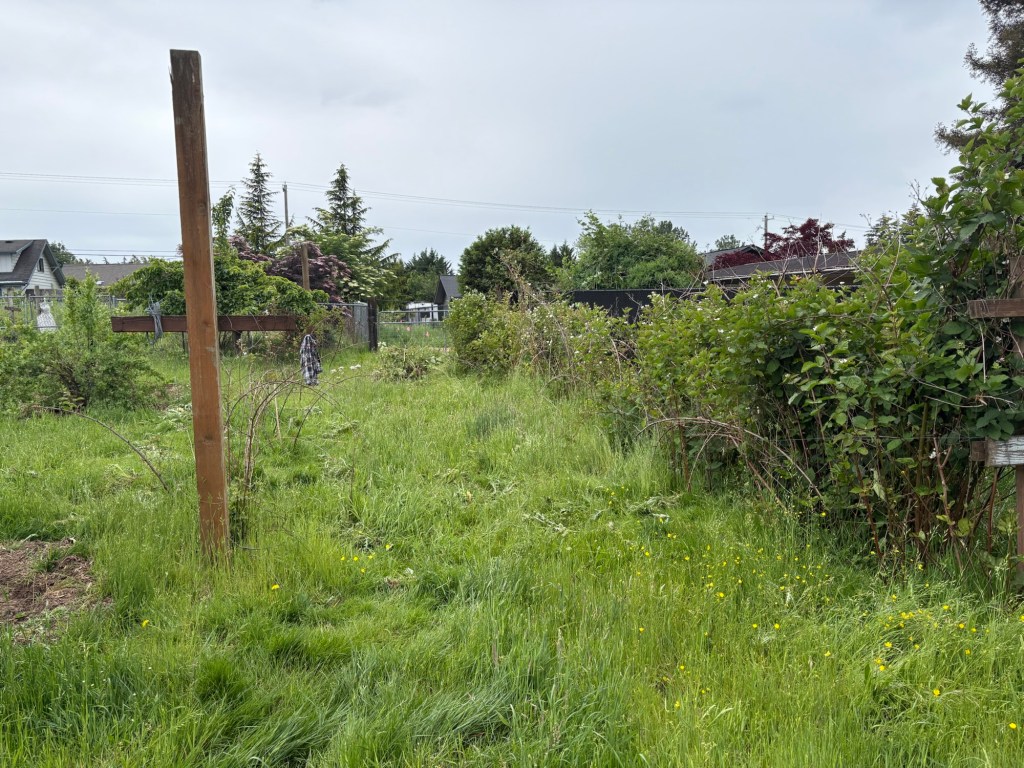
The other weed we tackled was the himalayan blackberry working its way through the fence on the north side.
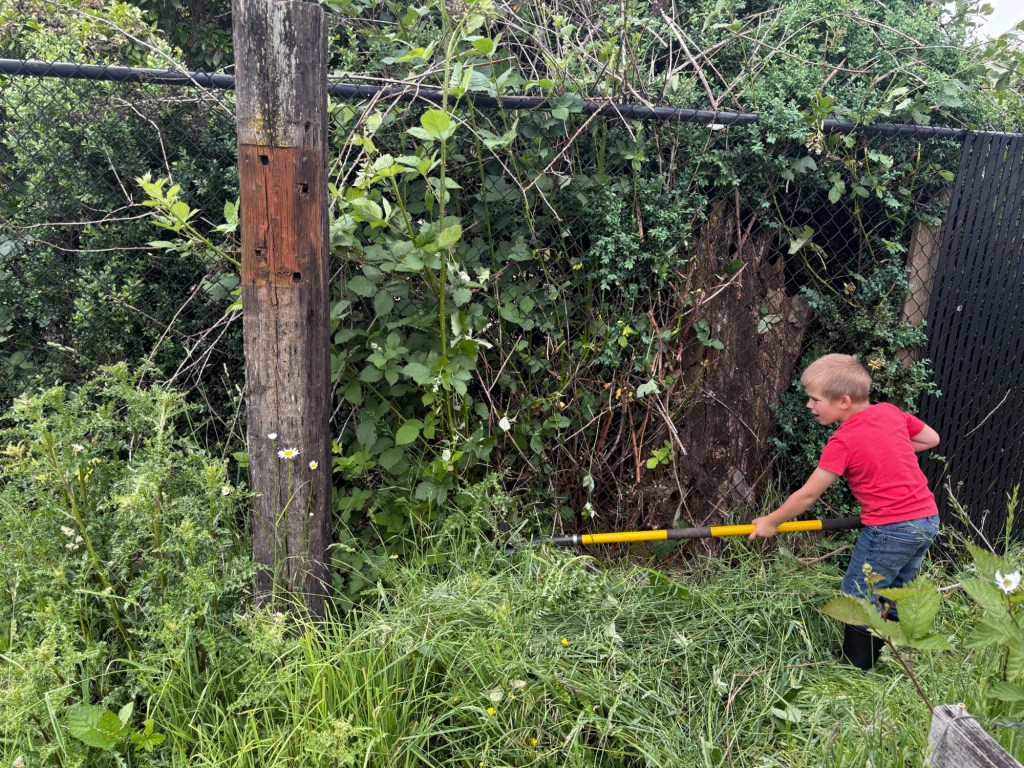
Don’t even get me started on the east end by the housing development. I think we are going to have to take a hedge trimmer to that.
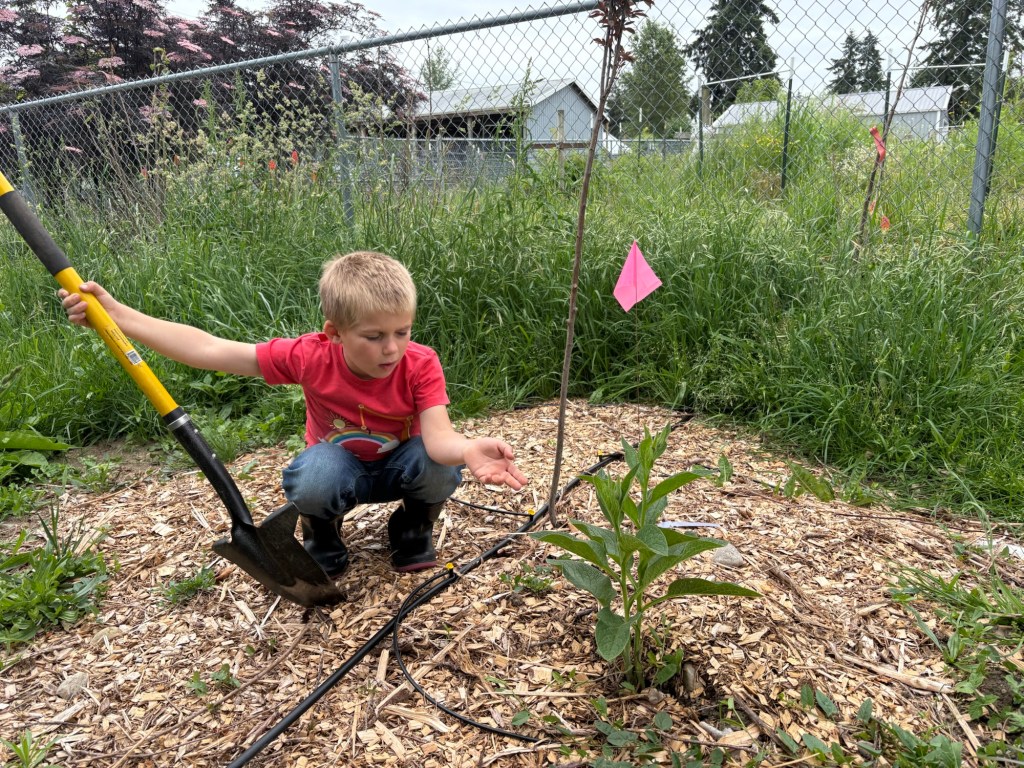
Look at this! Our comfrey is establishing nicely. And look at that beautiful little cluster of red leaves on this hollywood plum! I am very pleased with this batch of fruit trees from Raintree Nursery.
You may be wondering, what were Mommy and Evie doing while Daddy and the smaller three were doing all this gardening and weeding?
Well, they had a Mommy/Daughter date and…
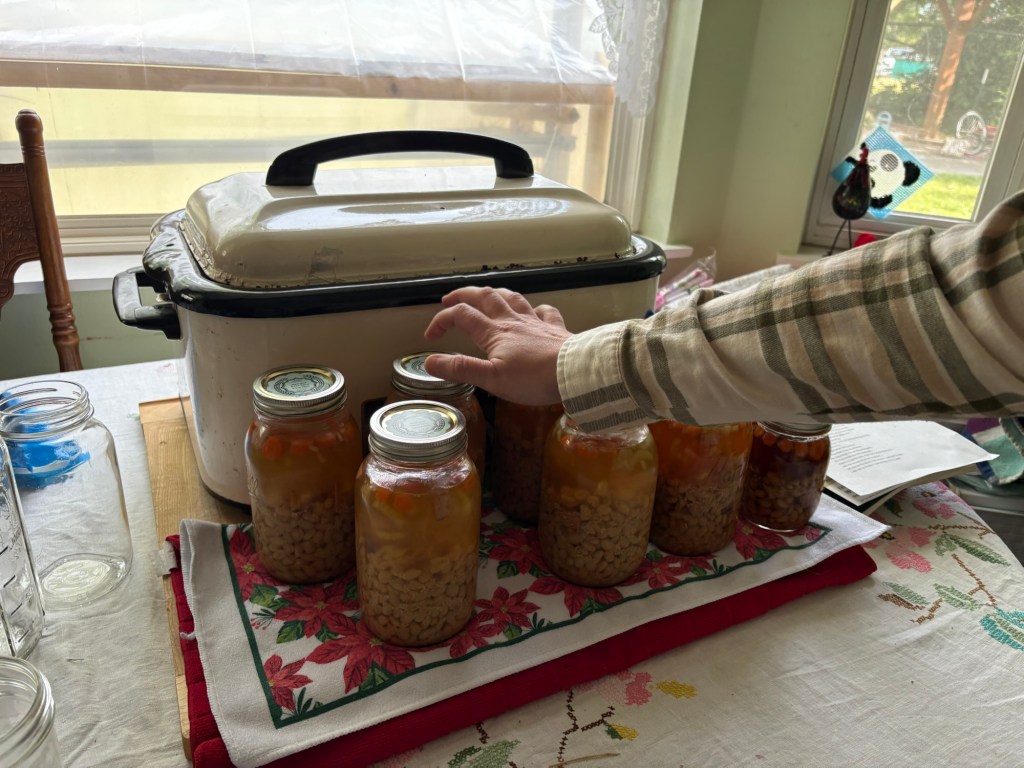
They canned ham and bean soup.
Don’t laugh. If that doesn’t sound like a fun date to you, it didn’t sound fun to Evie either, but afterwards she had to admit, “Actually, I had more fun than I expected.” And they didn’t only can soup. They ran errands as well.

 Little Farm in the Big City