

Let’s see, what day was this.
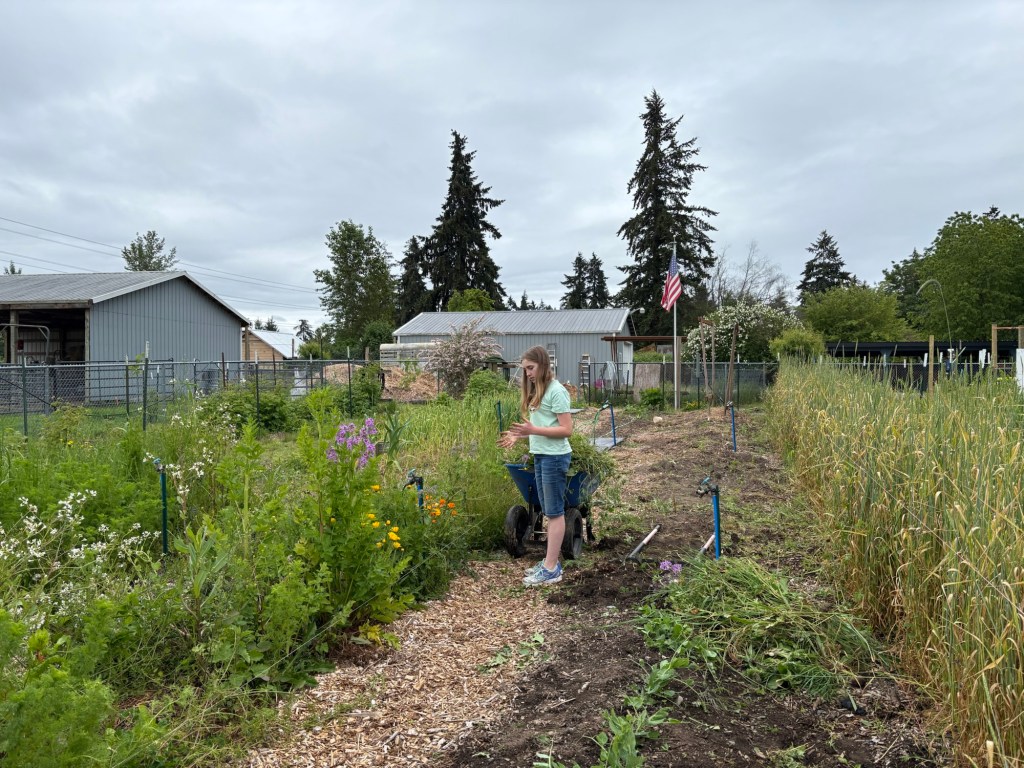
May 19th, a Tuesday. This was the day we got around to finishing the legumes row. The older girls helped out at the beginning by pulling out all the weeds to feed to the ruminants.
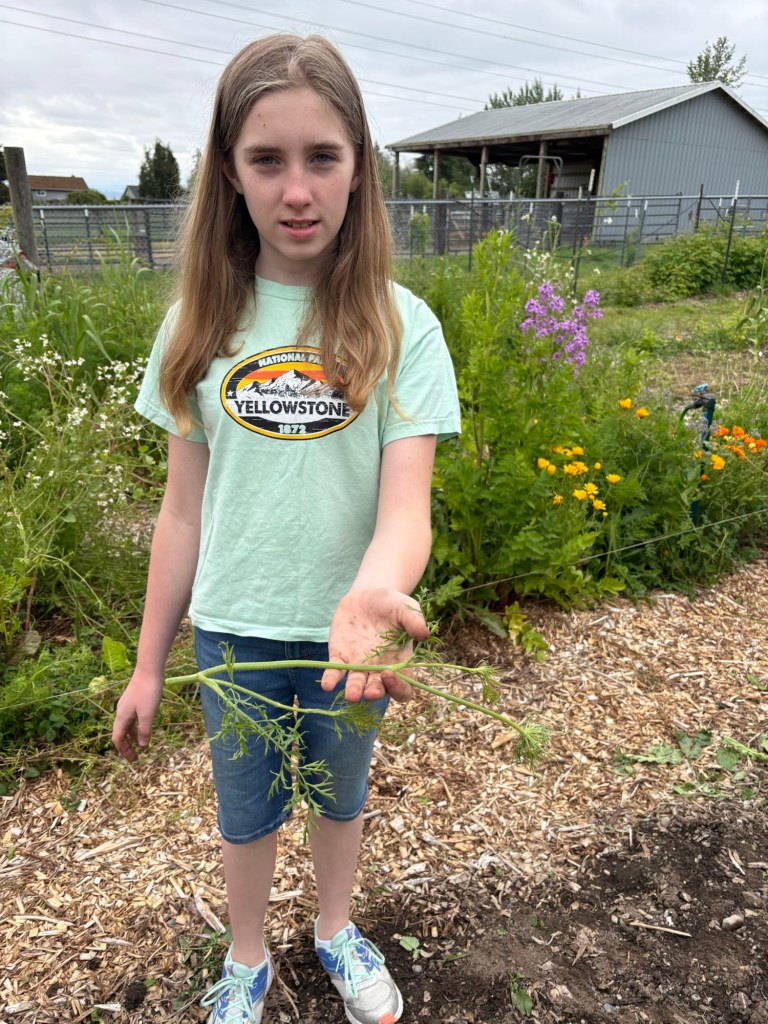
Then I got on with the digging.
As with row 1, the Tomato/cucurbit row, the first step was tossing the pathway up onto the row. For those who aren’t tracking, our garden is set up with six rows, each one 70′ long and 3′ wide. To the left (west) of each one is a pathway that is also 70′ long and 3′ wide, made of wood chips. The pathways were dumped last spring, and have broken down for a year. The bottom of the path is good quality compost, the middle is a mix of compost and partially broken down chips, and the top inch or two is wood chips. It took me about an hour and a half to go down the path with a shovel and toss it all up onto the row.
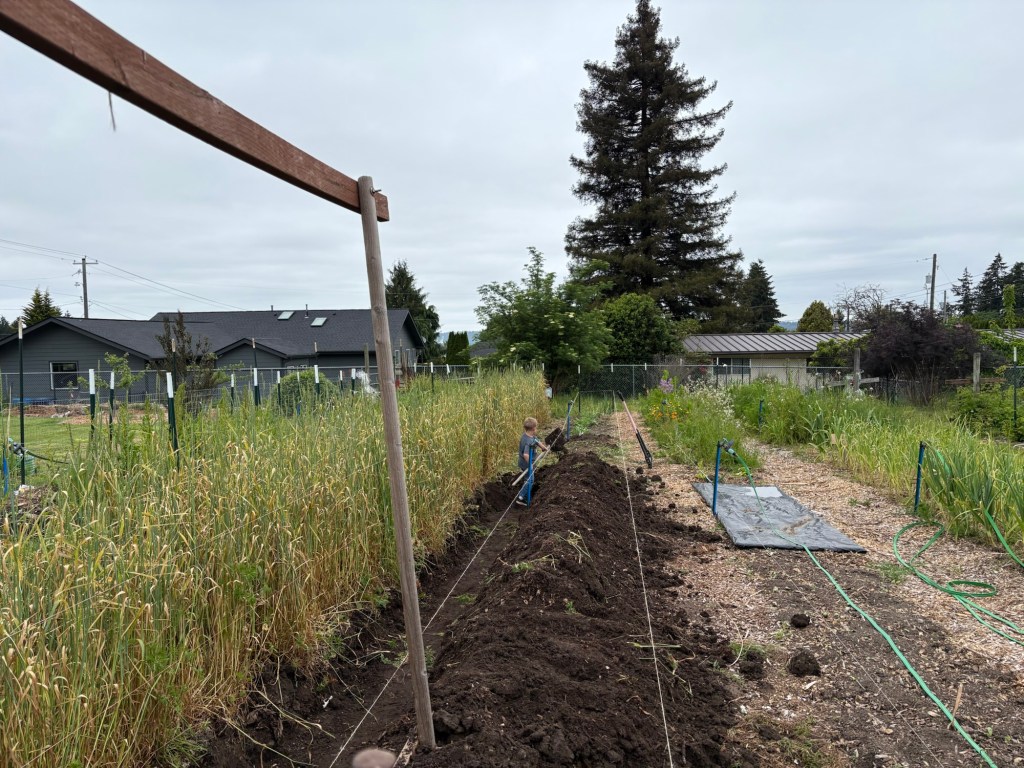
Seppi helped.
This does two things. First, if increases the depth (height) of the bed by about a foot. This is all loose, high organic matter content soil. It does not have a structure because it was just dug up and moved, but it is loose and crumbly, and the bean and pea roots should have no trouble making their way through it. Structure will establish itself over the next few months, all the more rapidly because it is sitting on top of intact beds that already have an established biome and structure.
The second effect is that it disrupts the bindweed. This is our second most troublesome weed in the garden (the most troublesome being hemlock). The hemlock is mostly under control at the moment, but bindweed likes to send its roots through the layer of dirt under the wood chips, and from their into the rows. Thus, the pathways become the reservoir of the bindweed that keeps getting into the rows. In the process of digging up the paths, we unearthed the roots of the bindweeds, which the kids can pull out of the loose dirt and toss on the intact pathways to scorch and die.
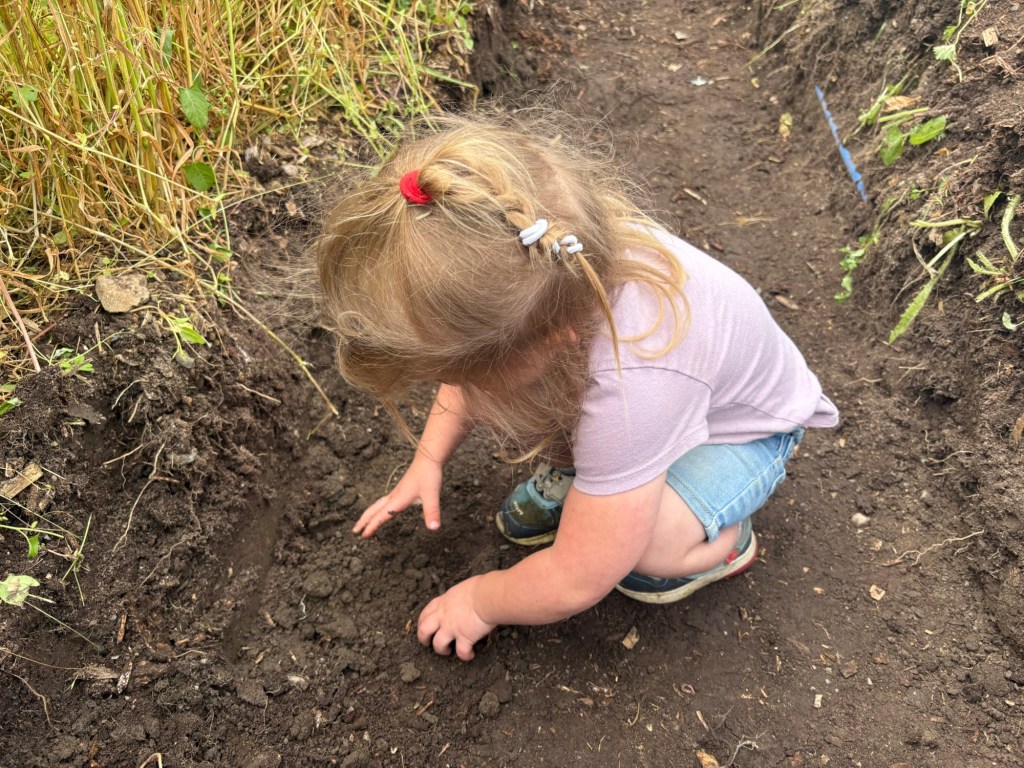
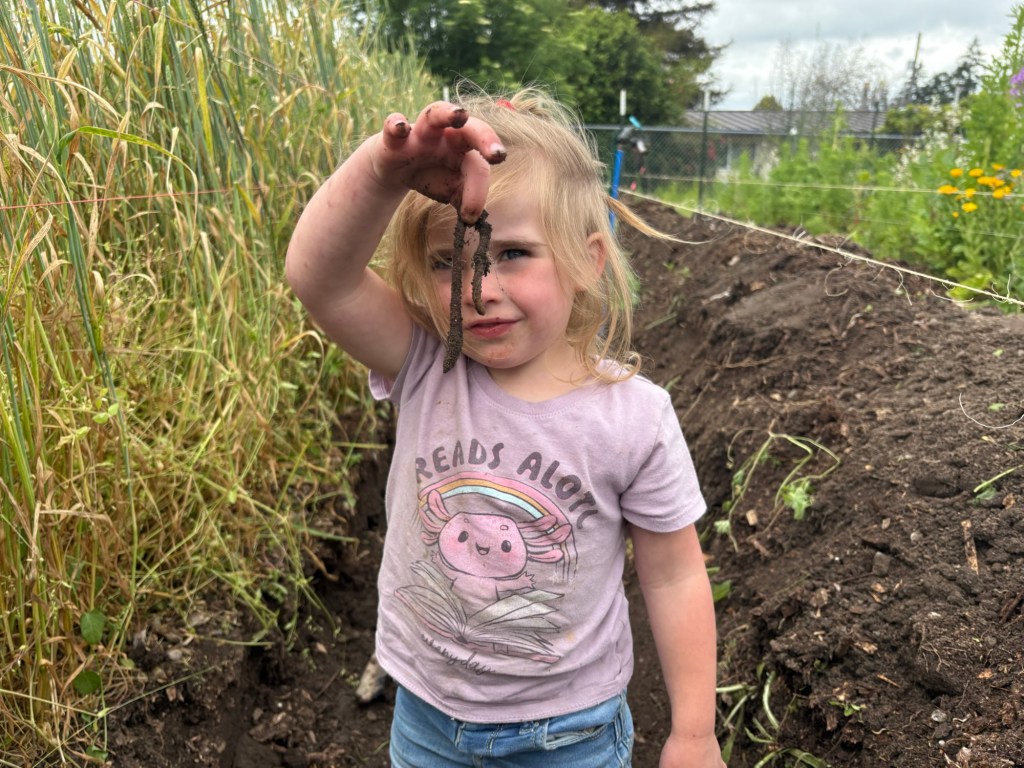
Winnie is burying the worm, so that it can go home.
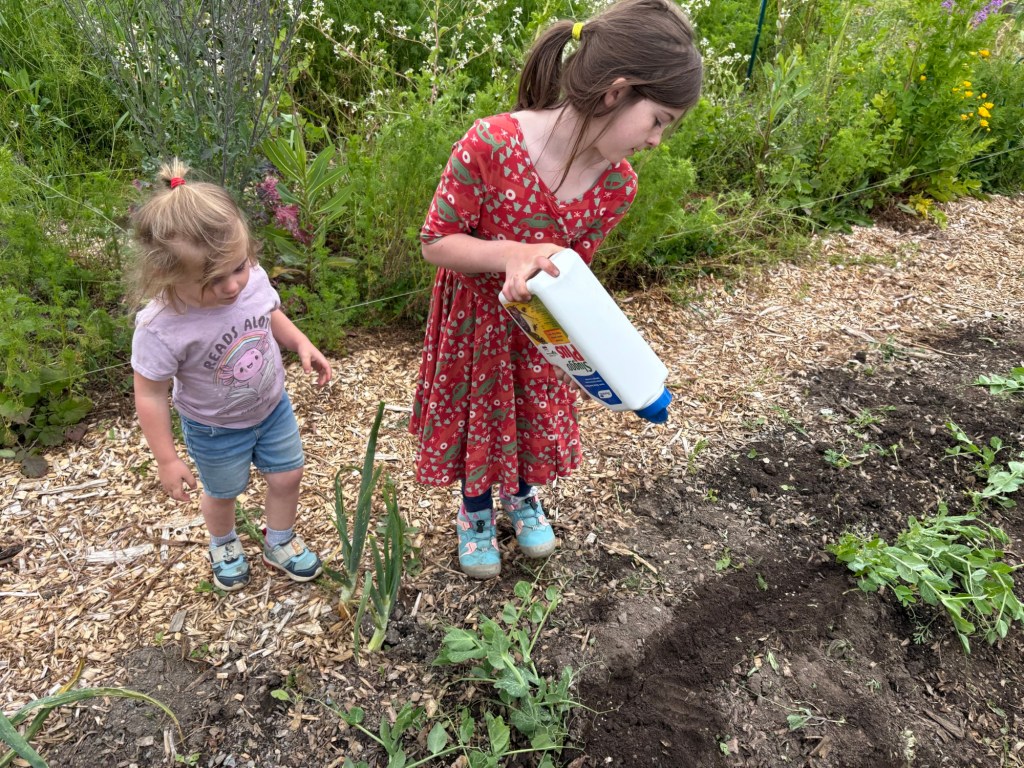
Ellie enjoys sprinkling sluggo around the plants.
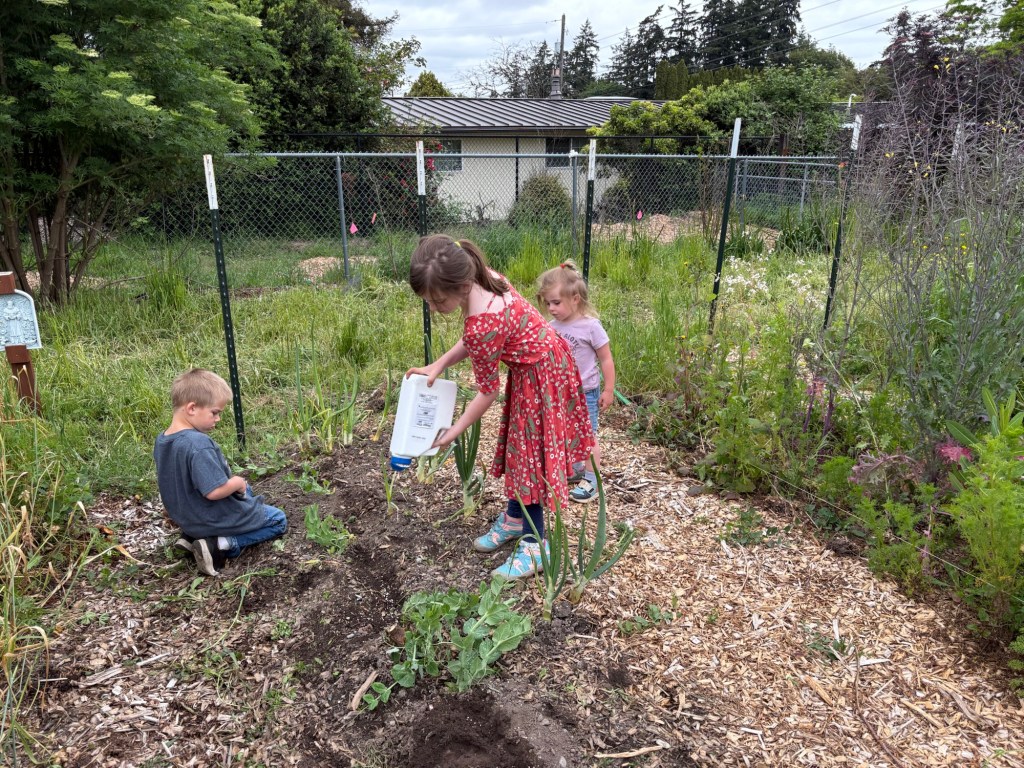
Our major springtime garden pest around here is the slug. The combination of mild winter and long, cool, wet springs, with the cover provided by mulch and the grass around the garden, makes this a very hospitable environment. Add an entire row of freshly planted brassica starts or legume sprouts, and you couldn’t think of a more inviting home.
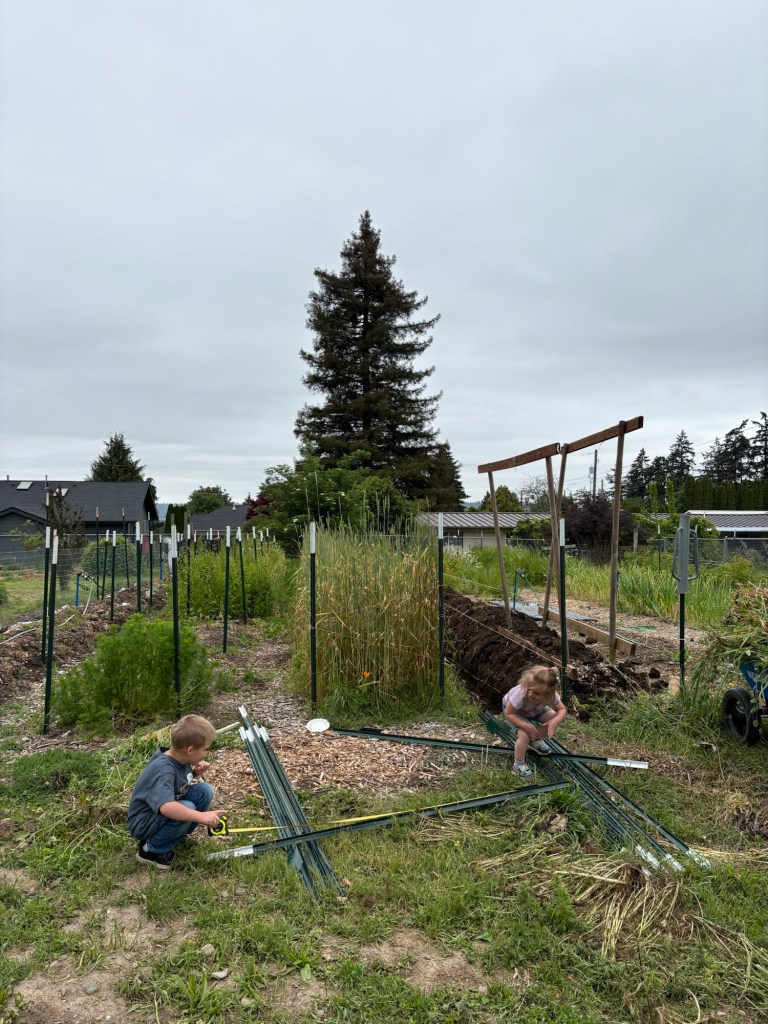
A lot like putting a pile of T-posts on the ground, with a measuring tape, and expecting the kids not to play on them.
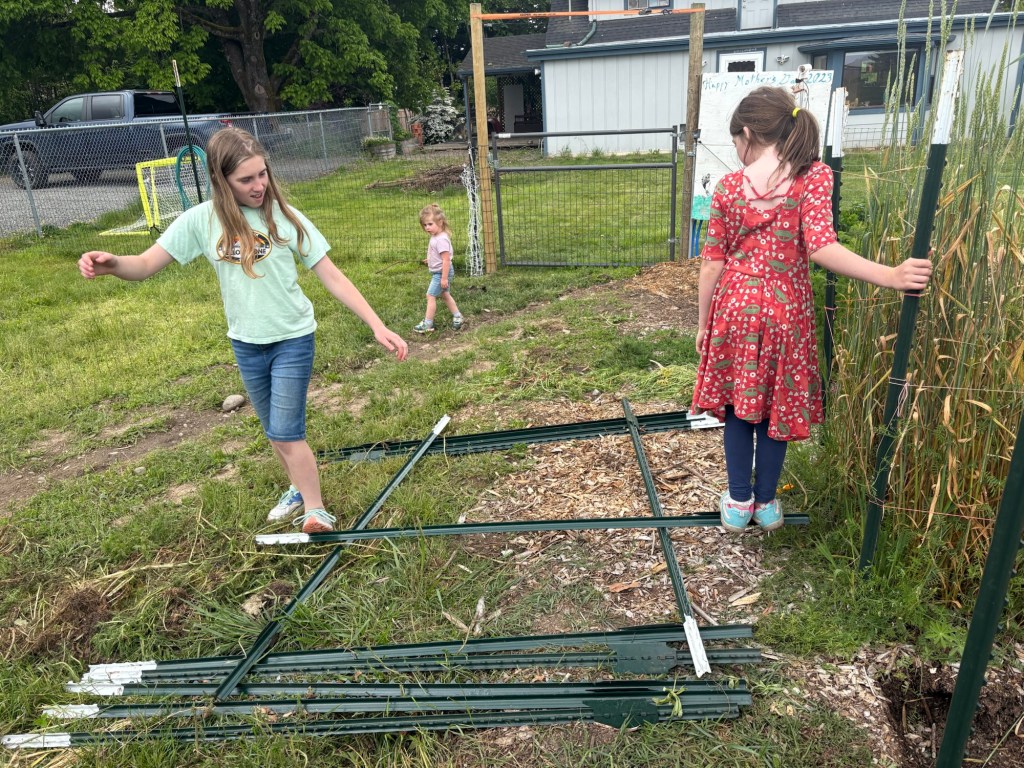
Yes, the climbed, they built, they balanced, they injured each other (very slightly). Life was good in the garden.
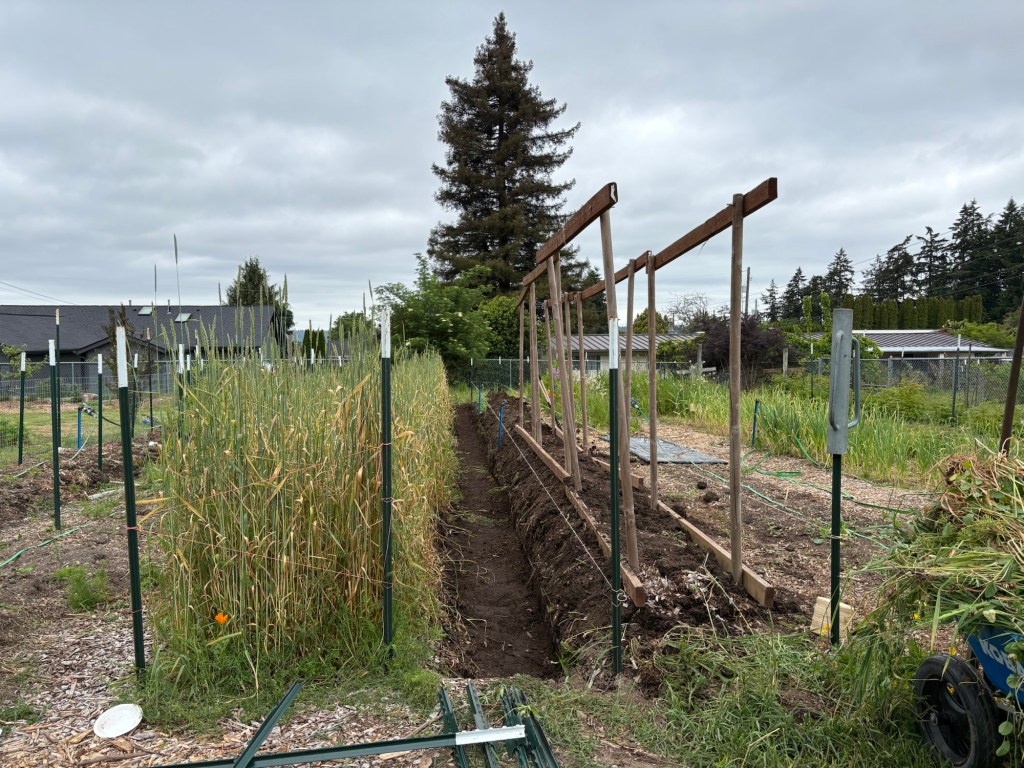
Another advantage to having the pathway up and out of the way is that it exposes the irrigation line on the west side of each row, so that I don’t have to worry about driving a T-post through the pex pipe and causing a leak.
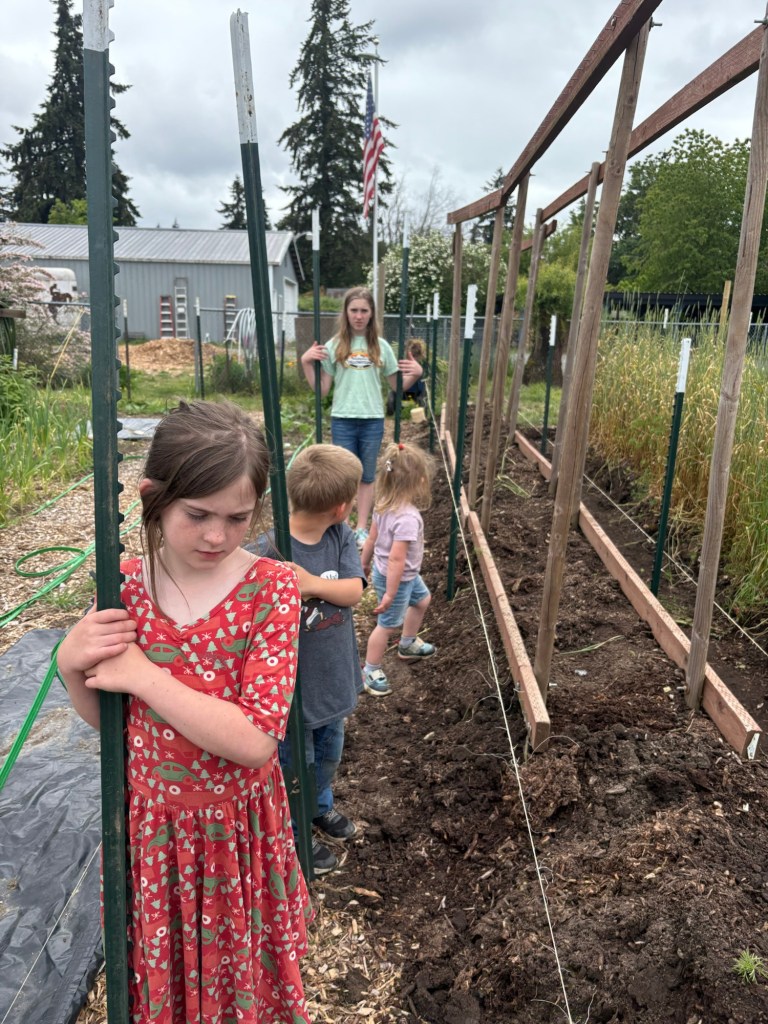
Once all the dirt was thrown up we put the trellises in place, and then set the T-posts. The kids assembly-lined behind me, each one bringing a new T-post as fast as I could measure and pound them.
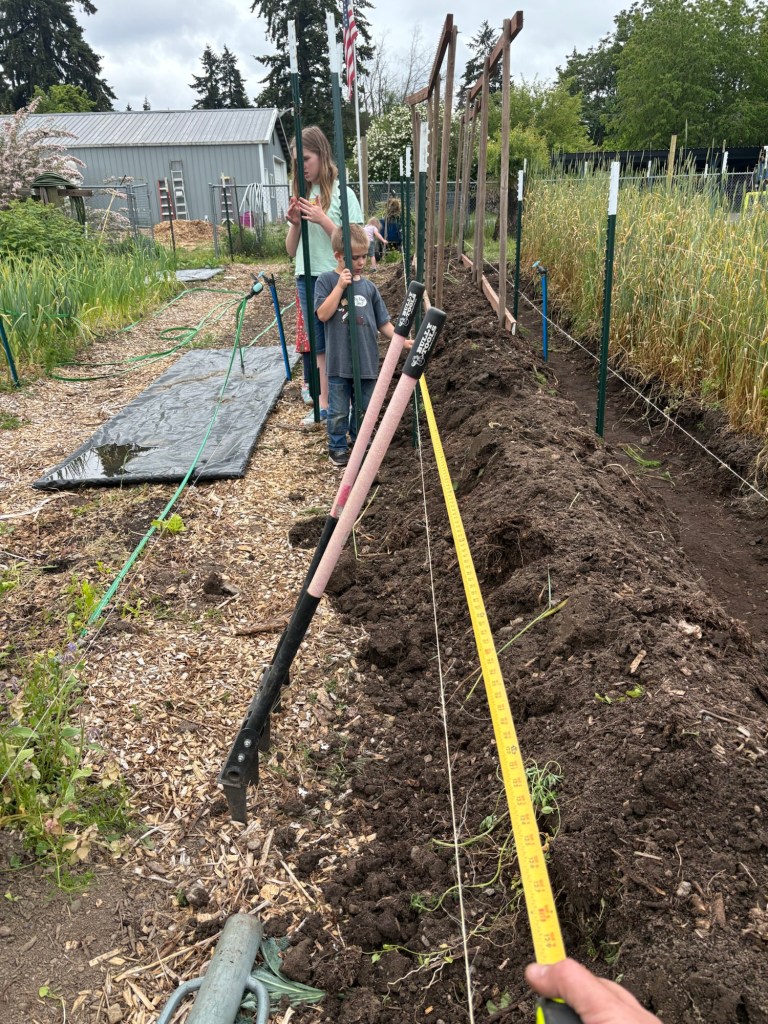
One post every 10 feet down both sides of the row.
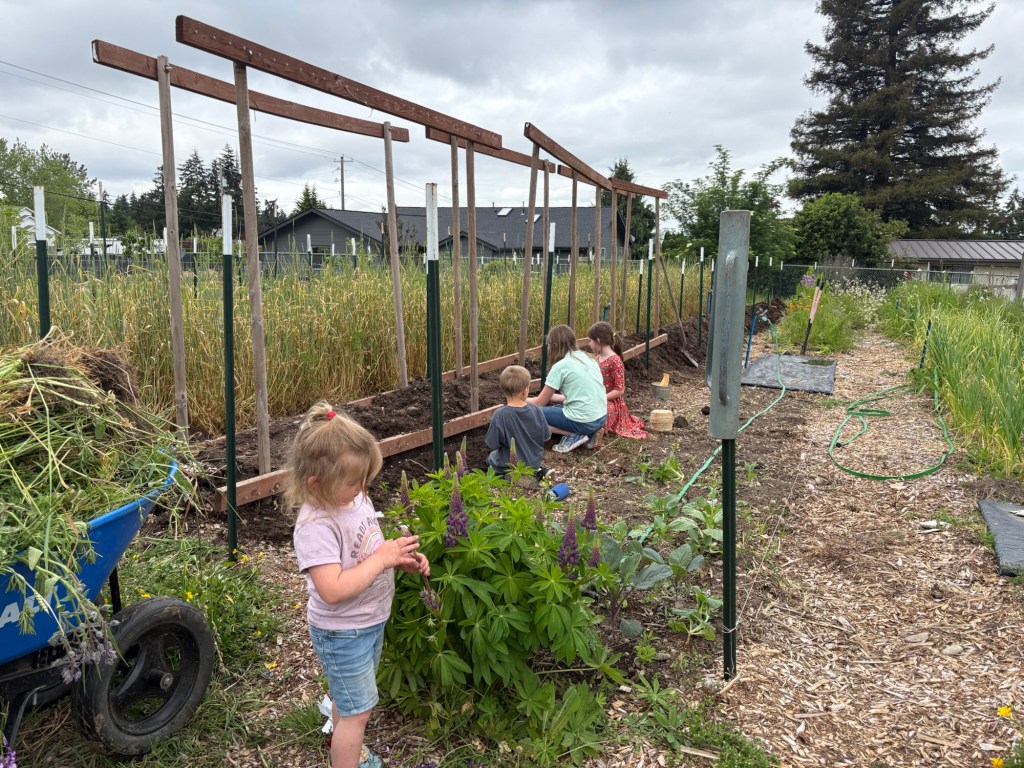
After that we planted green beans and cannellini beans.
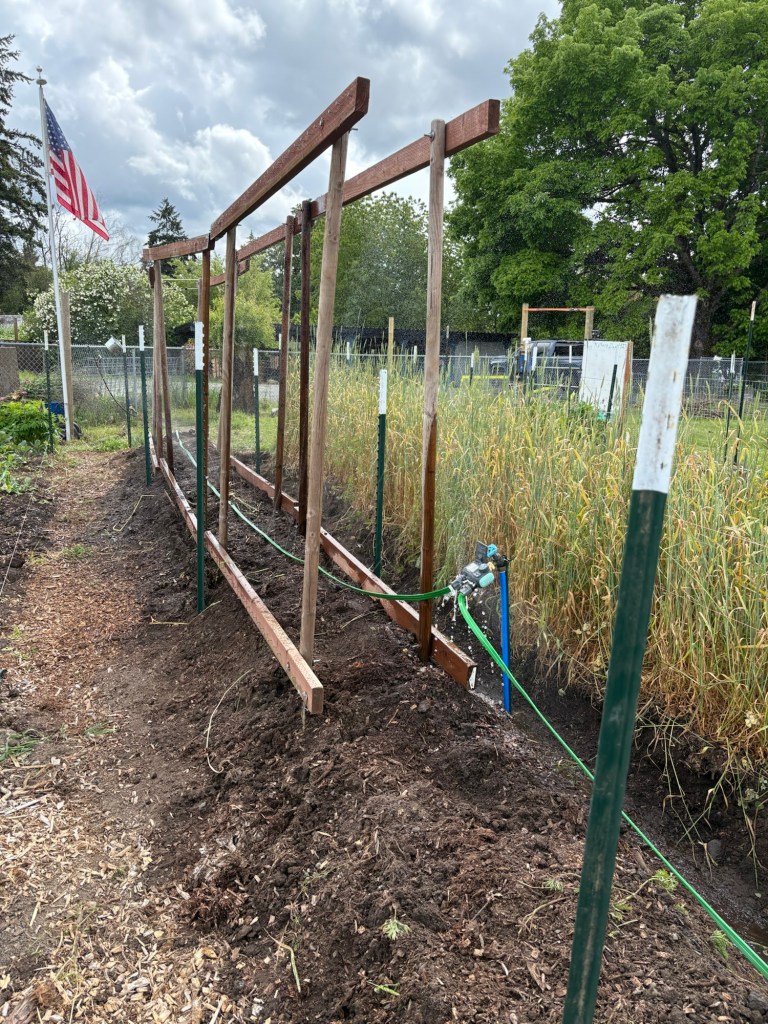
And rigged up the sprinkler hoses. I’ve noticed some of this batch of sprinkler hoses have been coming from the store without hose gaskets in them, which, predictably, causes leaks.
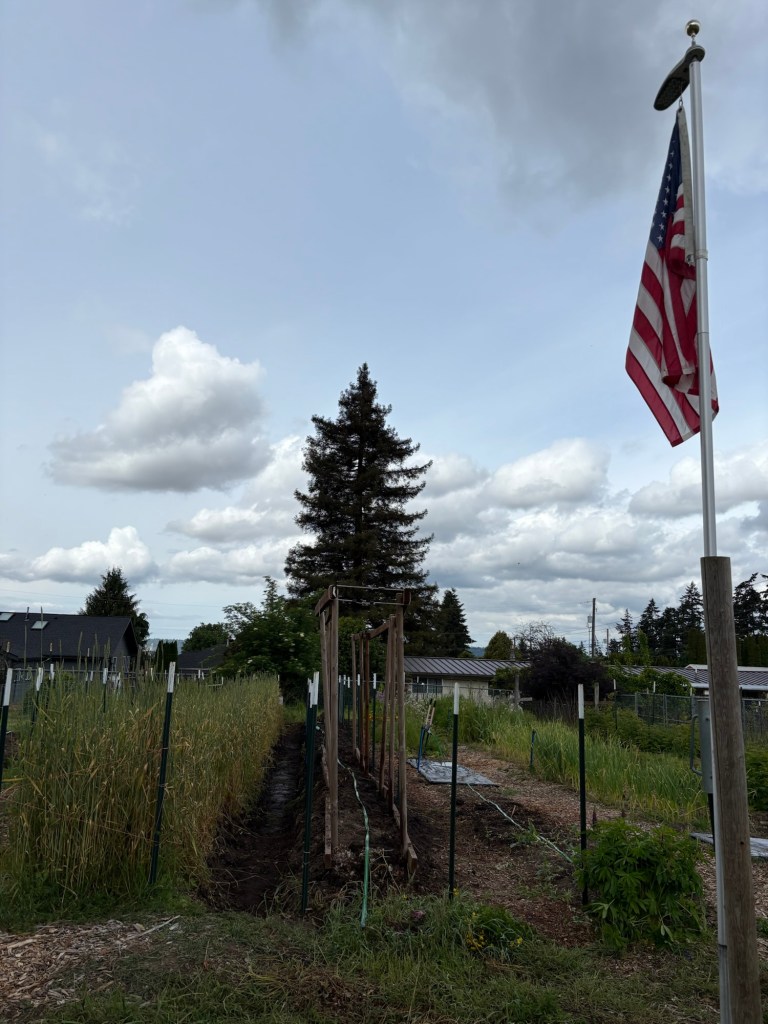
I am not sure why this picture turned out so dark, but there it is, all set up and ready to go. A little later than we would have liked, but, one of the advantages to that is that the soil temperature is already nice and warm.
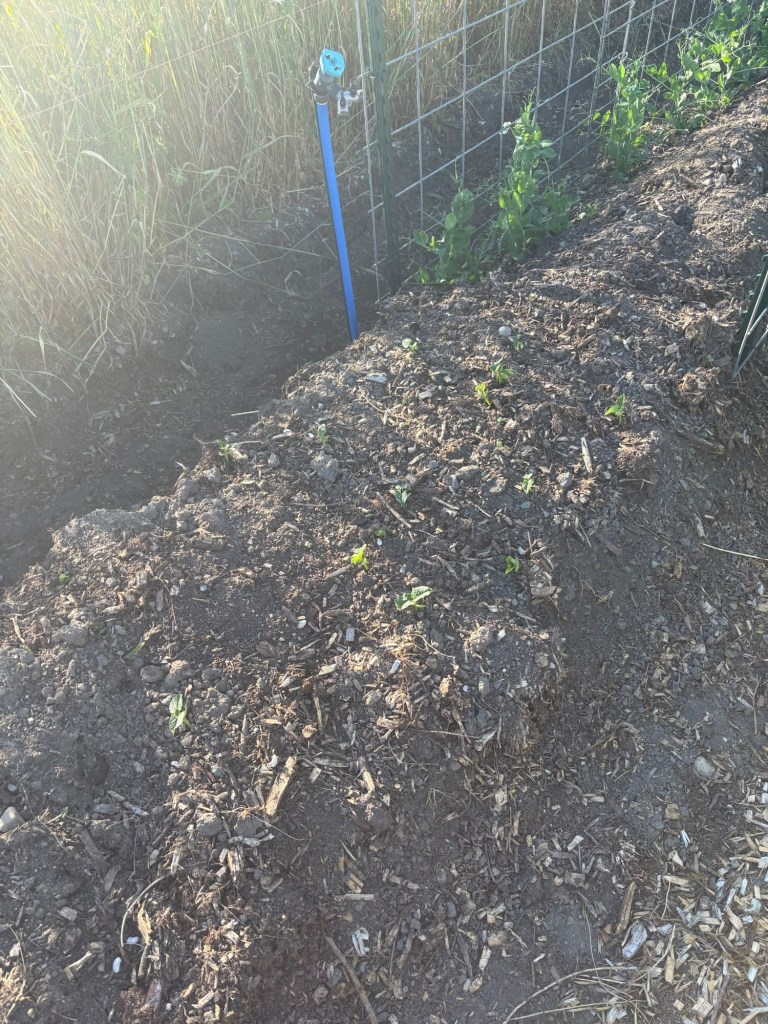
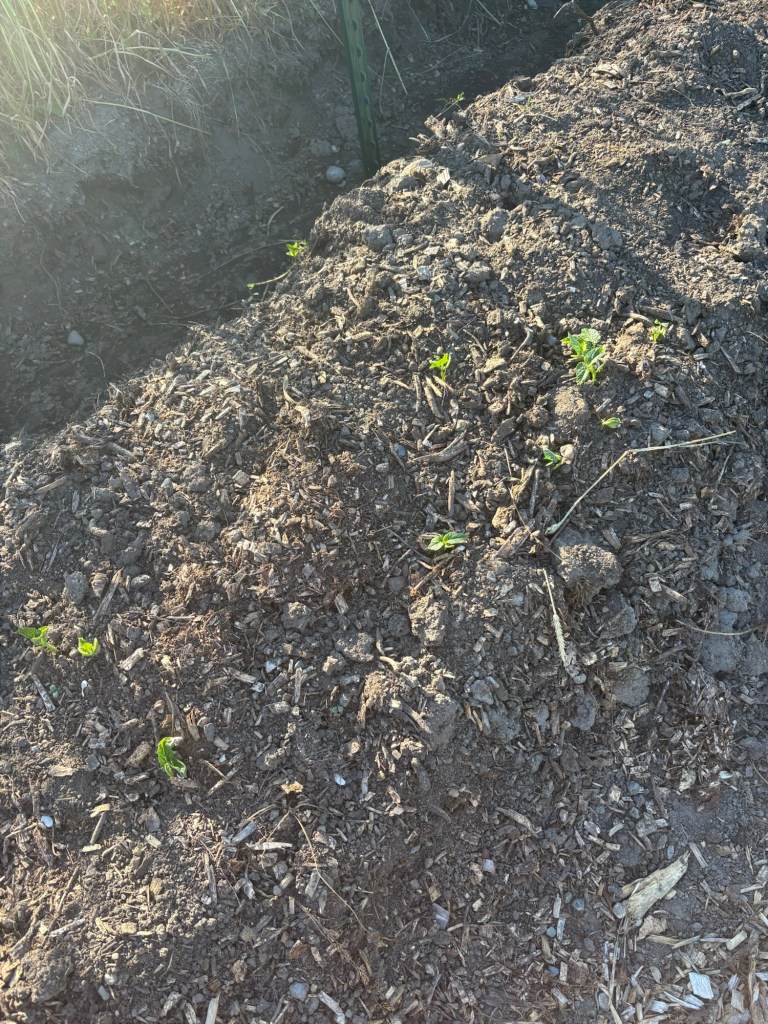
One week later, cannellini beans already up, with green beans sprouting hard behind them. Still need to get the twine up on the trellises before the beans get too far out of control.


