

The Garden Fence on the yard side has ceased to be a fence.
Originally it was an 8 foot tall “deer net.” Note to self, and anyone else who might be listening, never build a fence out of deer netting. The first snowfall will rip it to shreds. The first dog will rip through it or push under it to get at the chickens on the other side. And then you will think to yourself, “I need to reinforce this but I do not have the time or money to rip the whole thing out. I’ll just put chicken wire over top of it and it will do for now.”
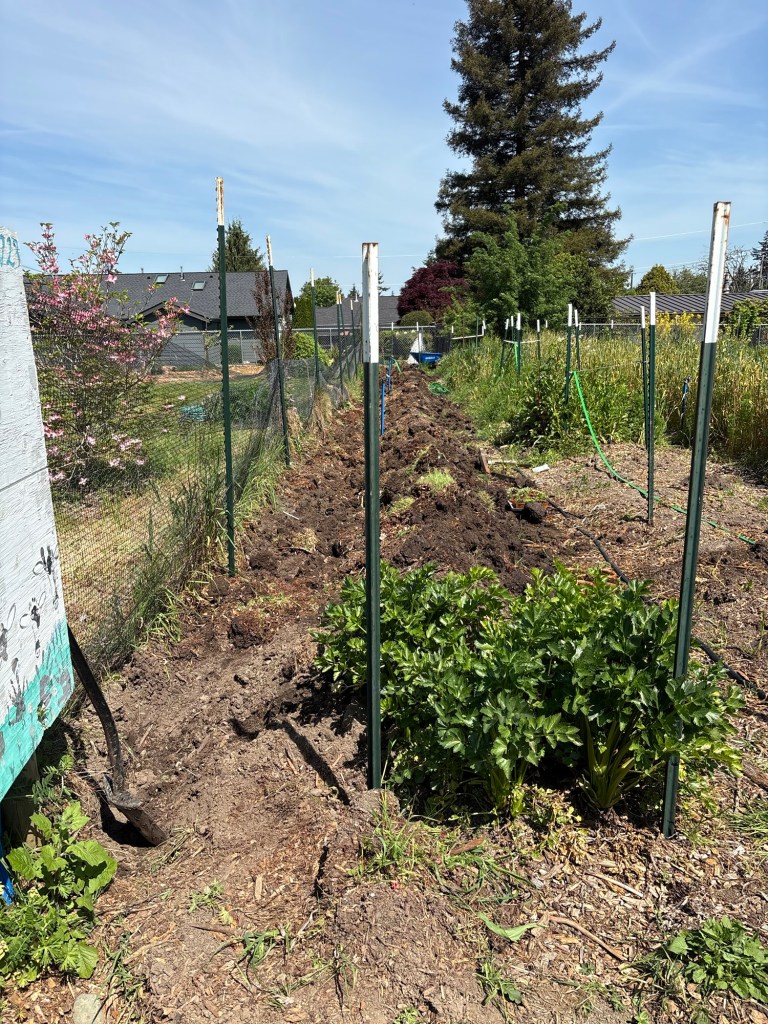
What will happen over time is that both fences will get saggier and saggier (this happens to many of our structures as they age). Chicken wire is simply not designed to support its own weight. As it sags it will form a space between the two fences, the chicken wire and the deer net. Weeds, grass, blackberries and all manner of things will start to grow in that space, out of reach of a string trimmer. This forms a source for continuous re-infestation.
With the trees we put in a few weeks ago needing irrigation, and the dry, hot spring we have had so far, it made sense to put in a hose bib in the laneway, so we wouldn’t have to supply the water in there from hoses run across the garden.
However, we don’t have any heavy machinery. At least, none heavier than about 17 stone.
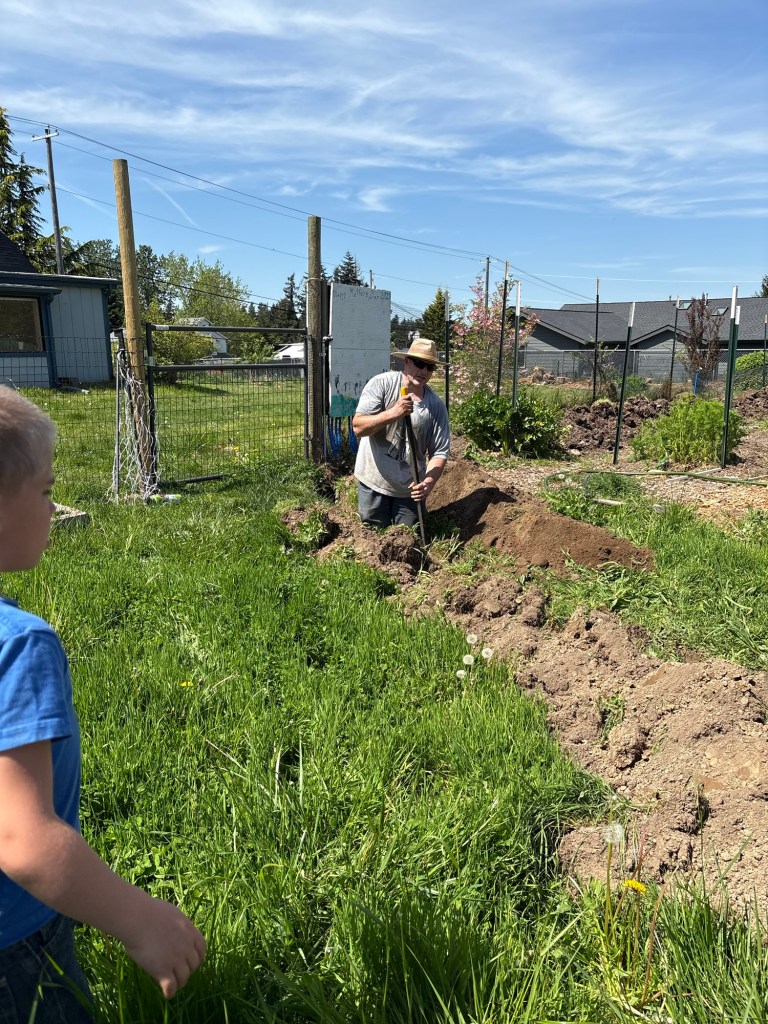
So I grabbed my trusty shovel and threw all the mulch and accumulated compost of the yard side pathway onto the first bed (tomatoes and squash this year), and got started digging down to the manifold under the Mother’s day poster. There, I found a leak.
When we initially put in that water line I had never heard of pex pipe, or frost-free hydrants. That’s why I had to rebuild the whole manifold last summer. Another issue that I delayed addressing last summer is that for the water supply line I used 1″ thin wall poly pipe. I did not know there was a thin wall or thick wall poly pipe. I thought it was all the same, until a plumber told me that that kind of pipe was only used for low pressure irrigation applications, because it would fail in 5 years or so under high pressure.
He was right. There was a drip, drip, drip at the junction of the poly pipe to the riser for the manifold. When I uncovered it more, the dirt that had been holding it in place was removed and it turned into a steady stream. So I had to turn water off to the garden completely.
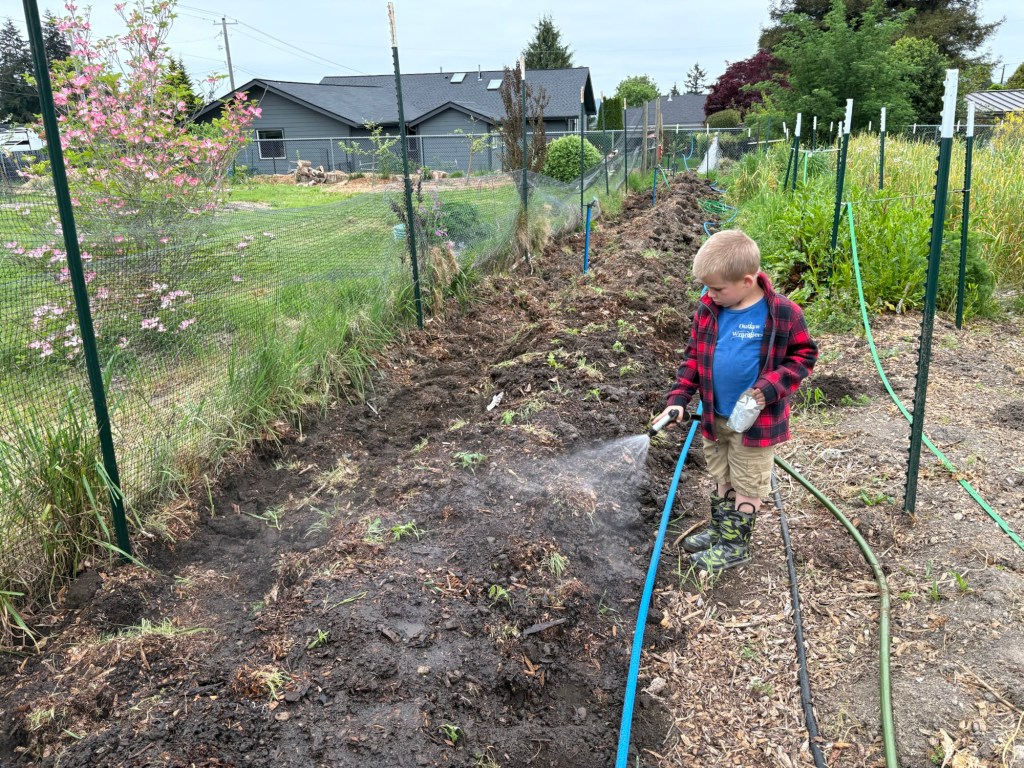
Seppi volunteered to water our new tomato plants we put in. Any excuse to spray things with a hose.
And now it was necessary to uncover and replace the existing water line.
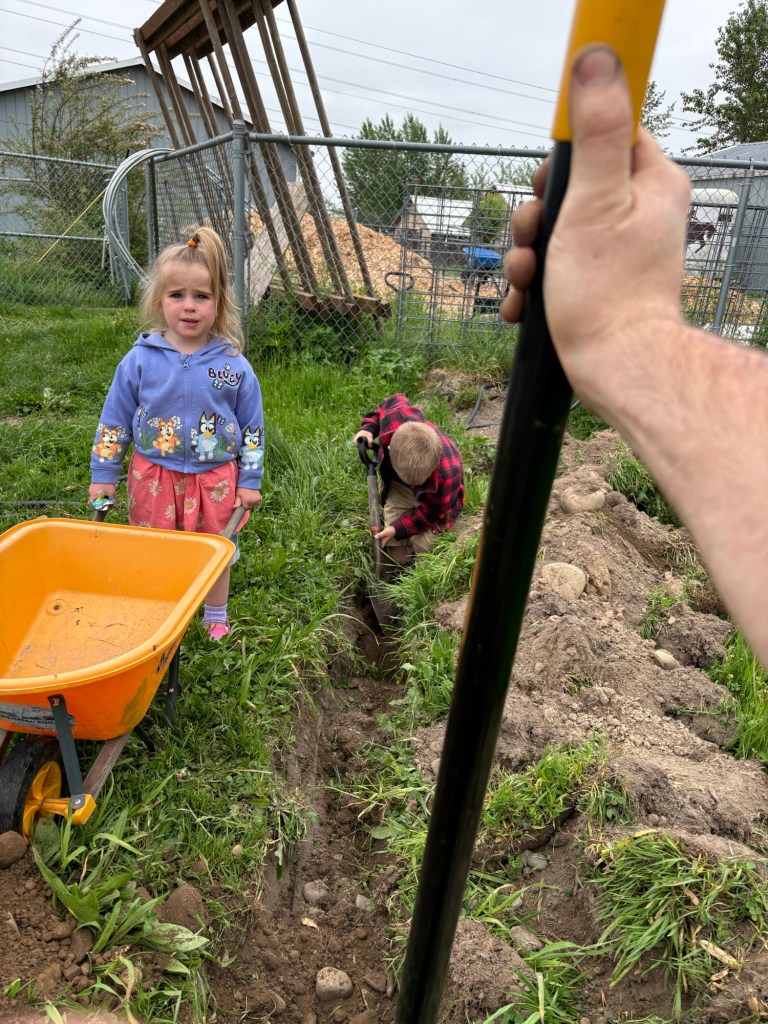
Fortunately, I have help. Here she is arguing that she is strong enough to take some more dirt in her wheelbarrow.
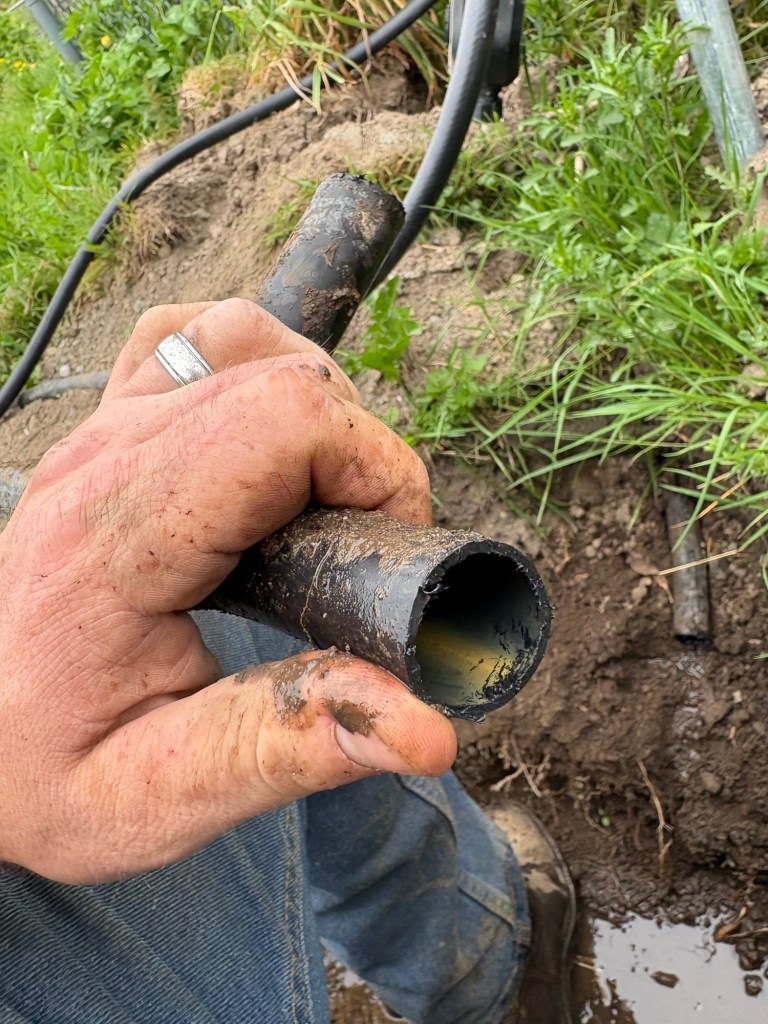
Thin wall poly-pipe. Not sure how I ever thought it would hold up.
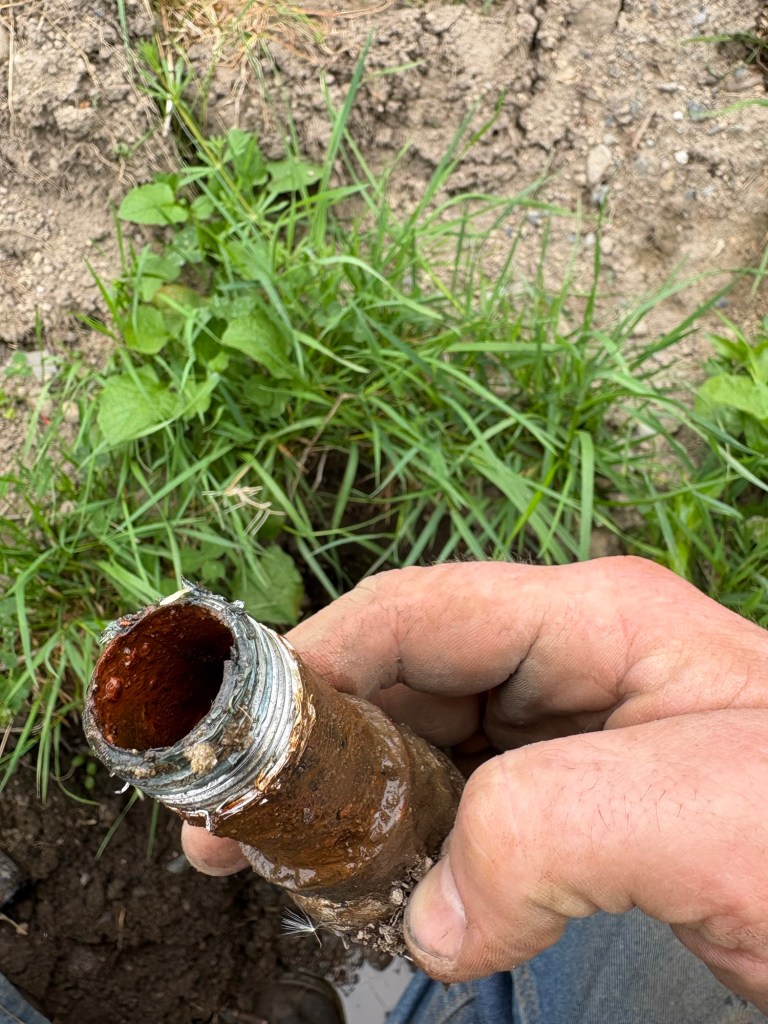
Also, bought the cheaper iron pipe at the store, not realizing it was for gas, not water, and would corrode when used for water. #YouDontKnowWhatYouDontKnow
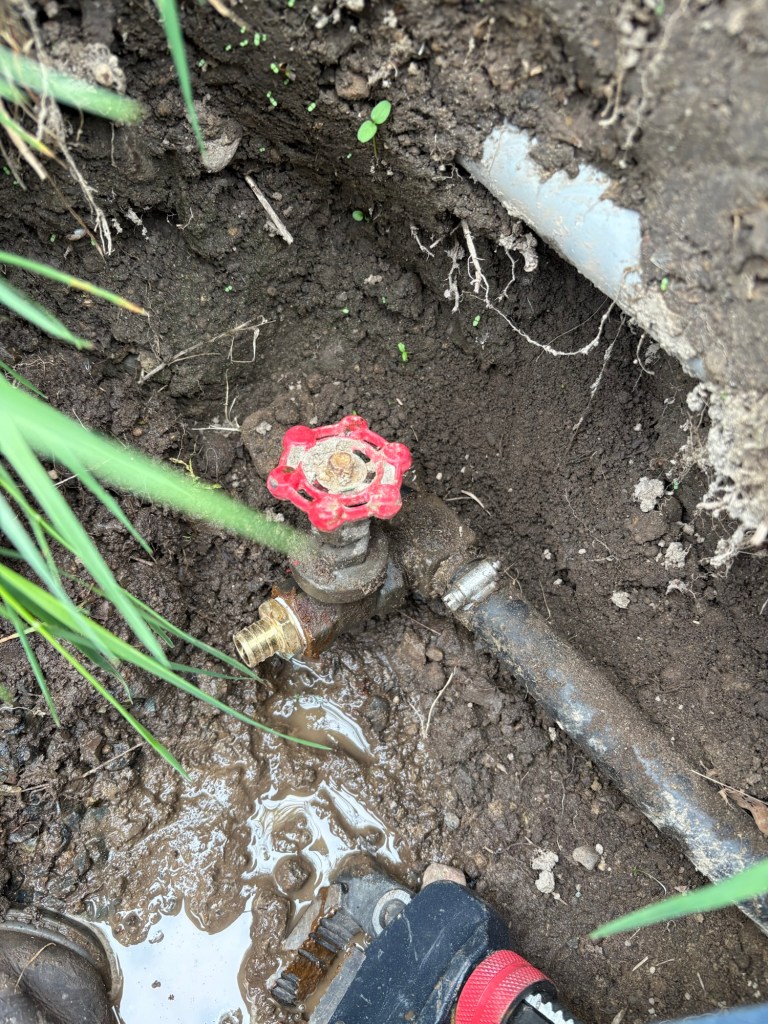
Replaced a janky, complicated series of fittings with a simple 3/4 MIP to 3/4 Pex-B adaptor.
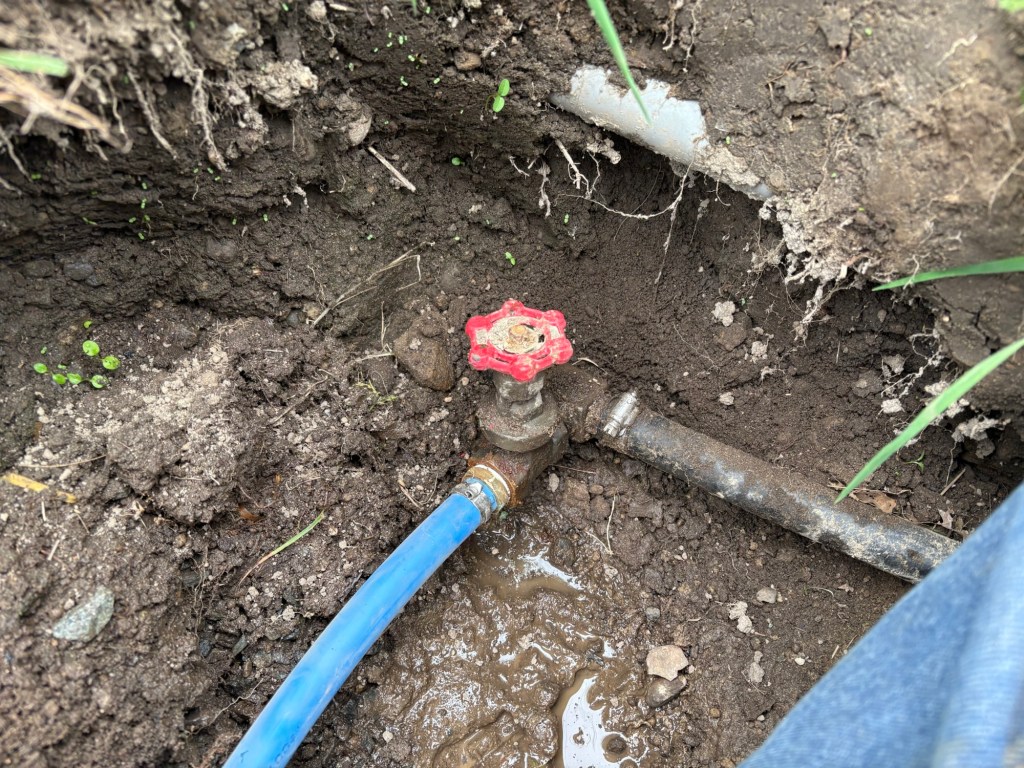
Then a simple crimp ring connection to connect the new Pex-B line to the source (The source pipe is thick wall Poly-pipe that the previous owner put in).
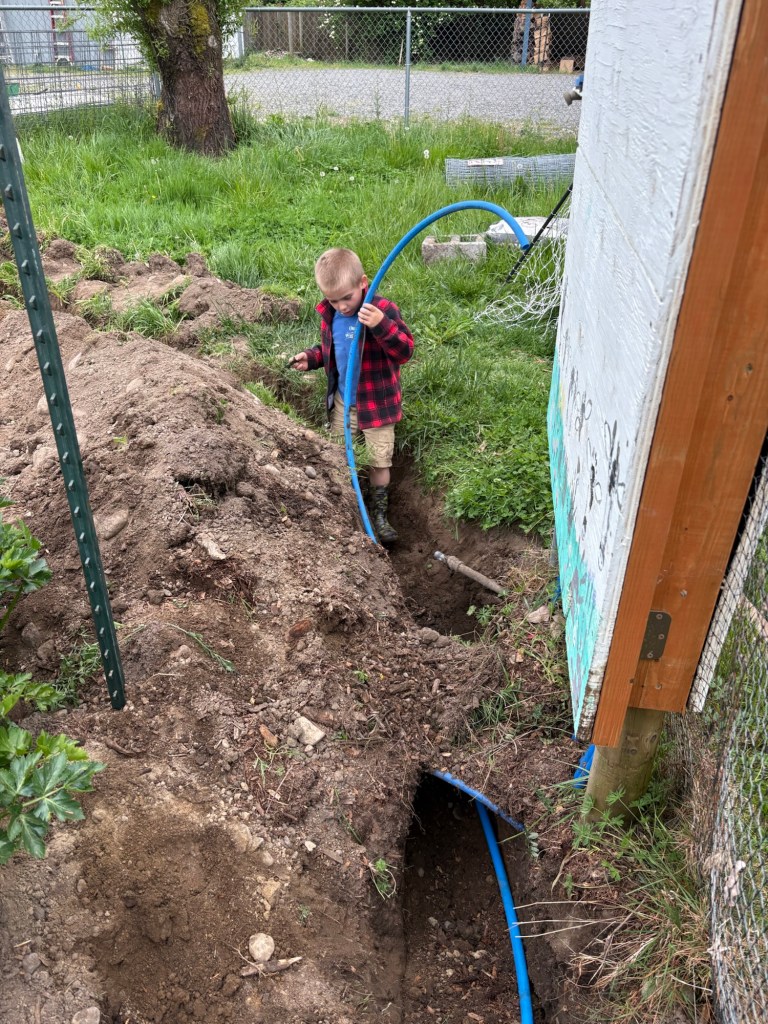
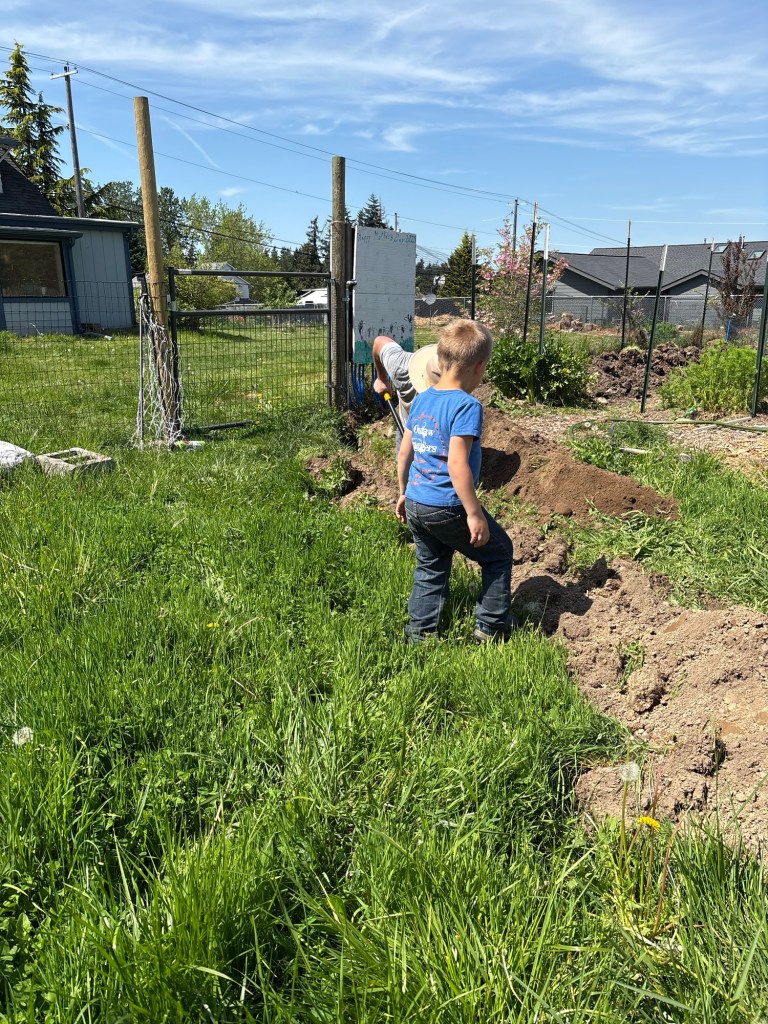
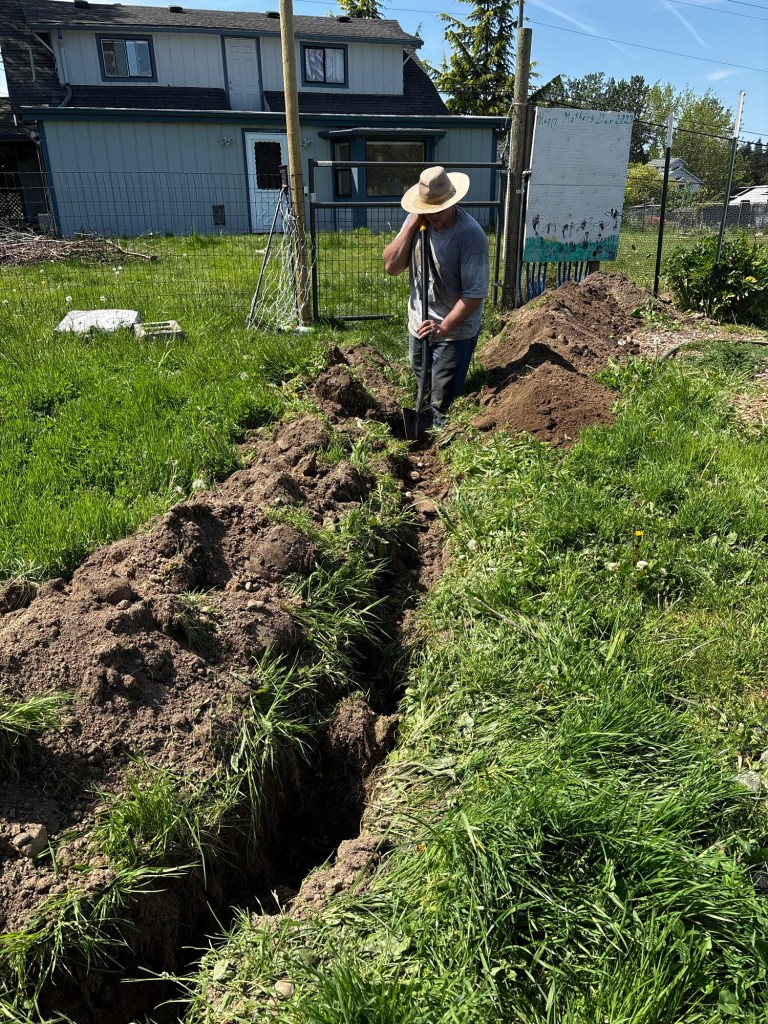
We had to dig the trench along the fence a short ways to make room for the main line that is going to take water to the food forest. Seppi helped pull it under, because he fits into tight places better than Daddy does.
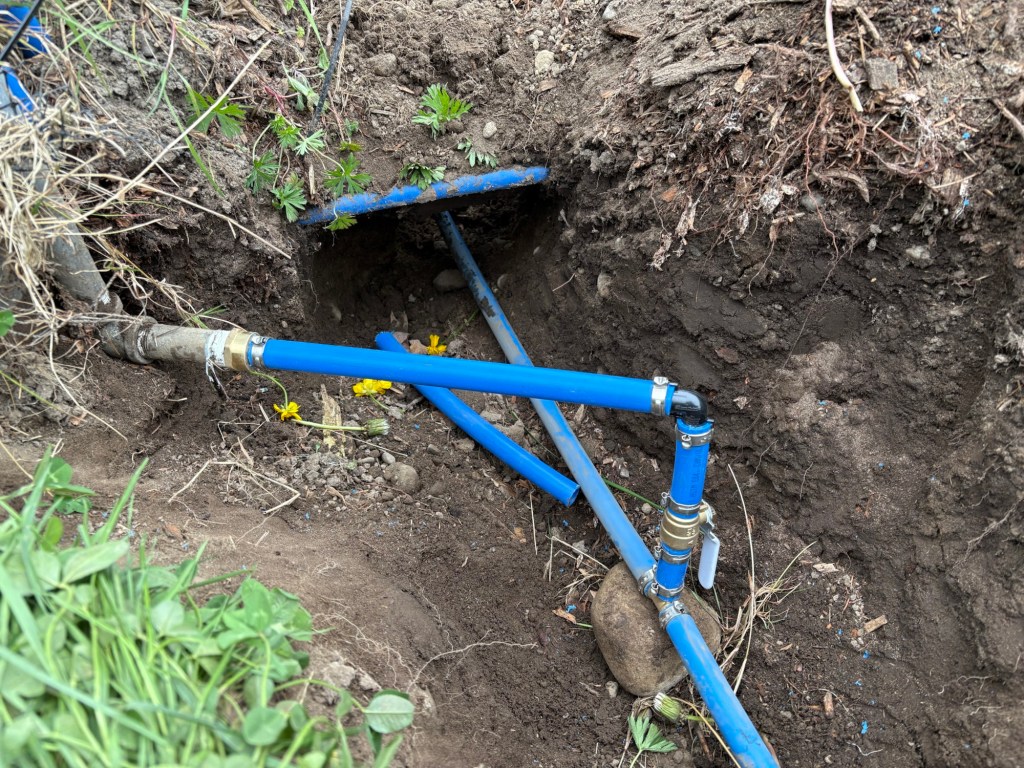
That attaches to the main line under the manifold, which we connected to the riser with shut-off valve.
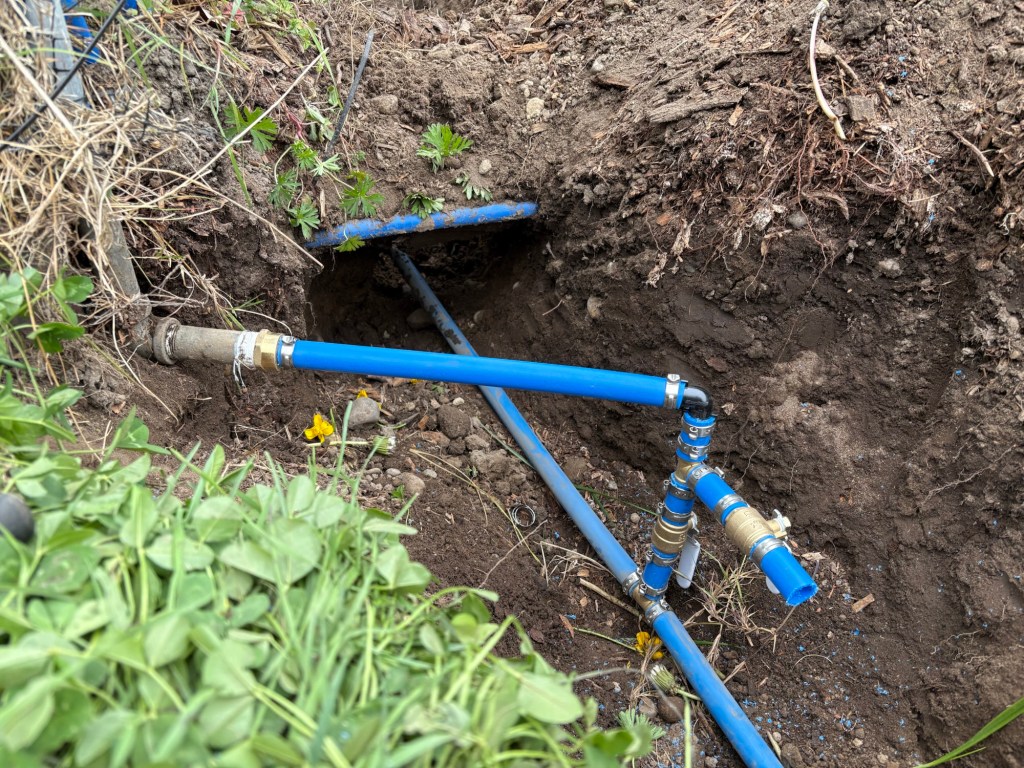
But then I remembered that the metal riser has no weep hole, so there is no way to let the water out to keep it from freezing in the winter. So I cut the pex and placed a drainage line with its own dedicated shut-off valve. This will allow us to drain the garden’s irrigation pipes in the fall as soon as the rain starts falling, which will effectively freeze-proof the garden.
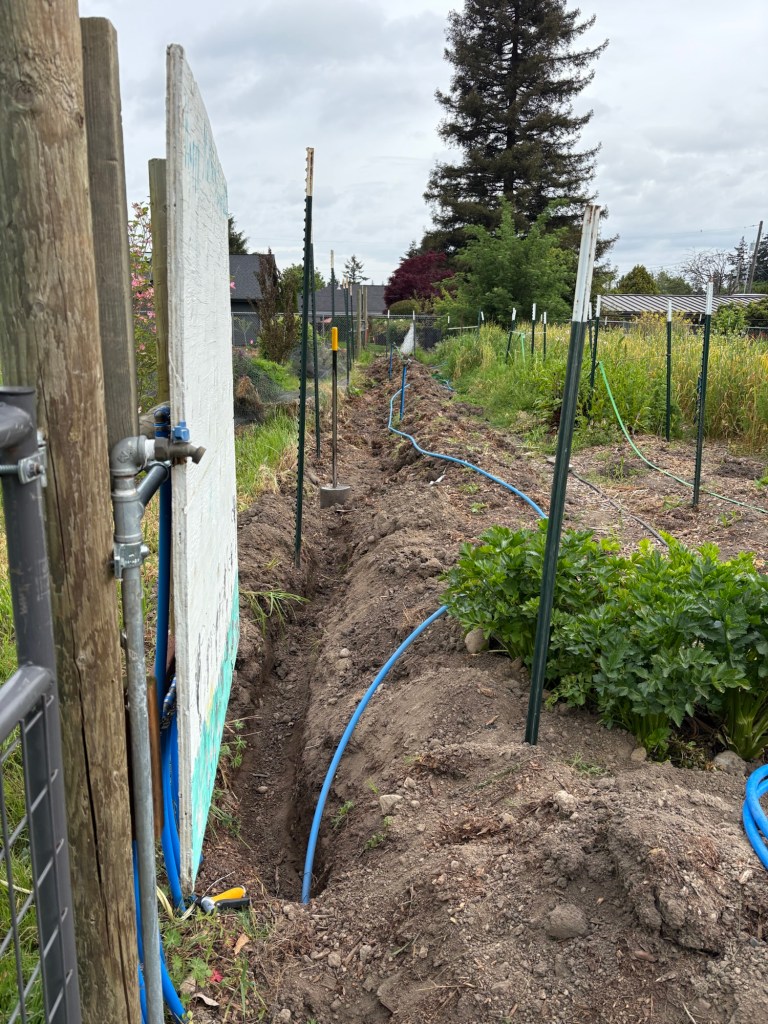
Still a lot of trench to dig, but that’s all we have time for today.
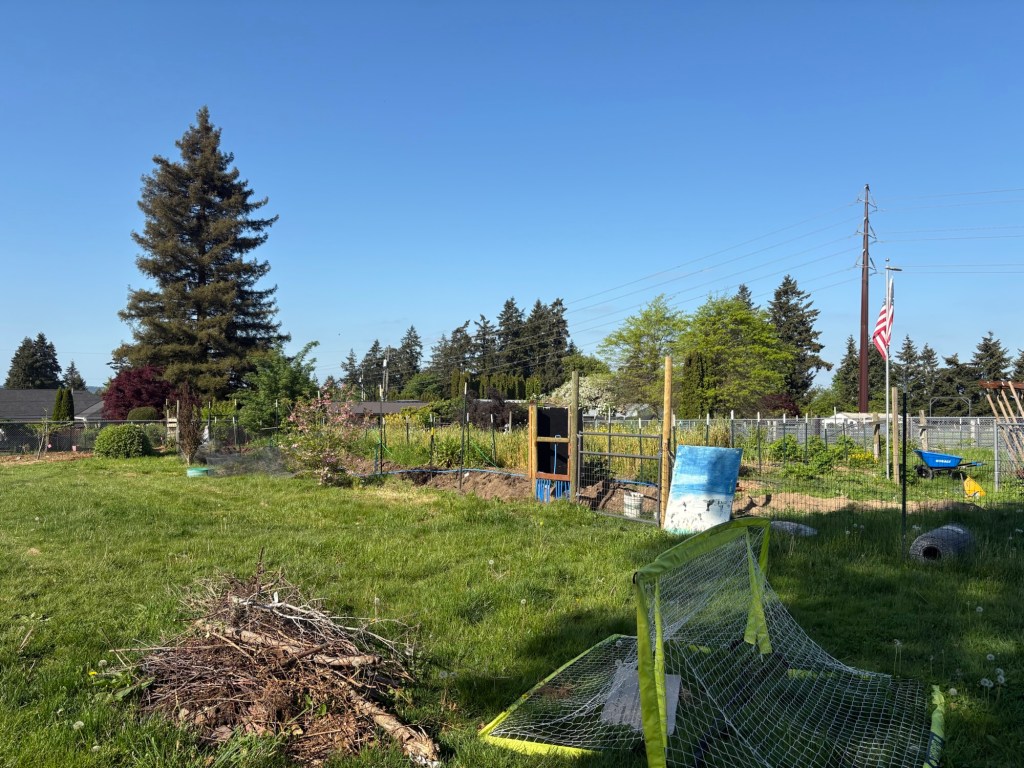
And because it is a pain to dig trench right next to a fence (that needs to be replaced anyway) we tore the fence out. This puts us in a bit of a time crunch, because the cows and sheep are supposed to be grazing around the garden in the next week or so, and we need a fence to keep that dog out while they are in there.


