

Busy Friday at the Farm. We are running so far behind schedule in the garden this year, it isn’t even funny.
Actually, it’s probably a little funny, from the correct perspective.
However, we can’t really get to the garden because other projects keep popping up that take precedence. For instance, all the trees that we put in at the end of March are at risk with not enough rain over April. They need to get their roots wet at least once a week, but the irrigation system wasn’t in, because it always rains all of April. Until it doesn’t.
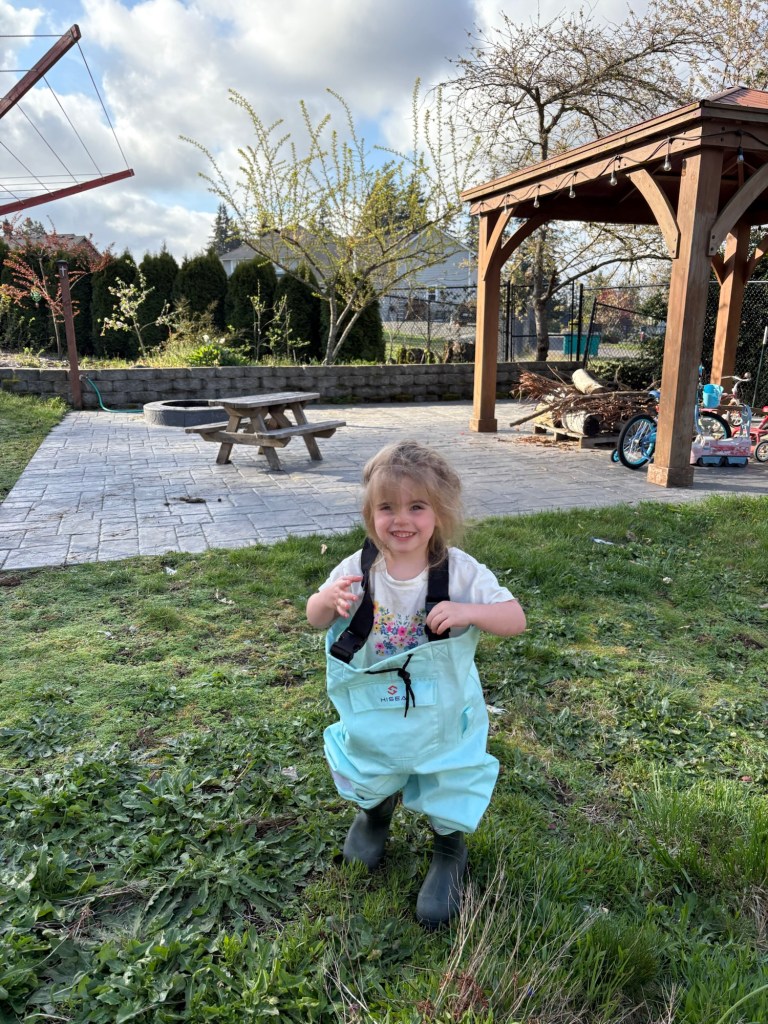
Winnie says clam digging at the beach with Deedee and Papa takes precedence.
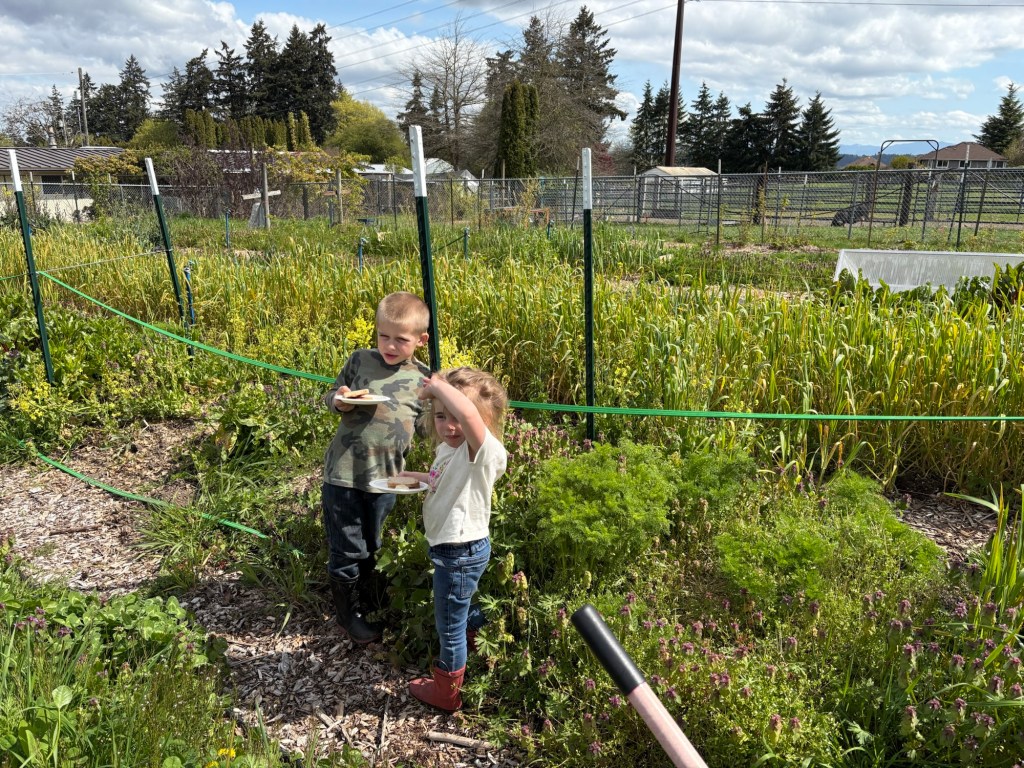
So last Friday (or was it the Friday before?) Mommy had the two oldest girls and Daddy had the younger two. Daddy and Seppi and Winnie went and bought some irrigation lines and set them up around the new fruit trees.
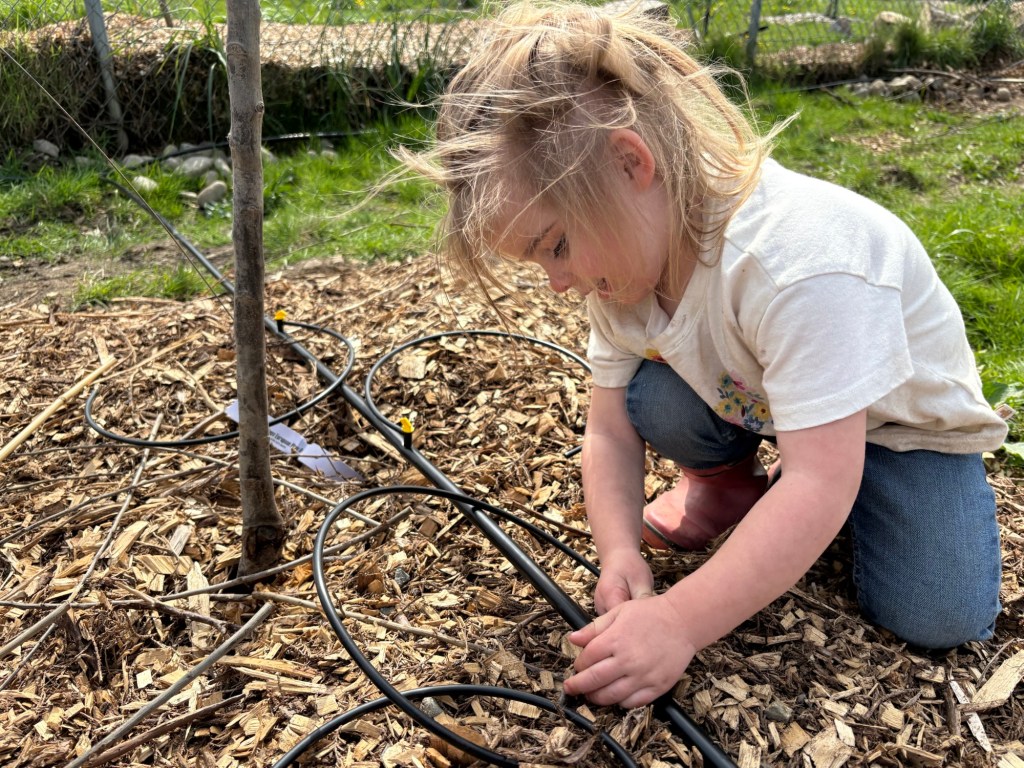
Each tree has three small drip emitters set up in a ring around it. The drip emitters are able to swivel so that as the tree grows we can swing the emitters to the outside to create a larger drip line.
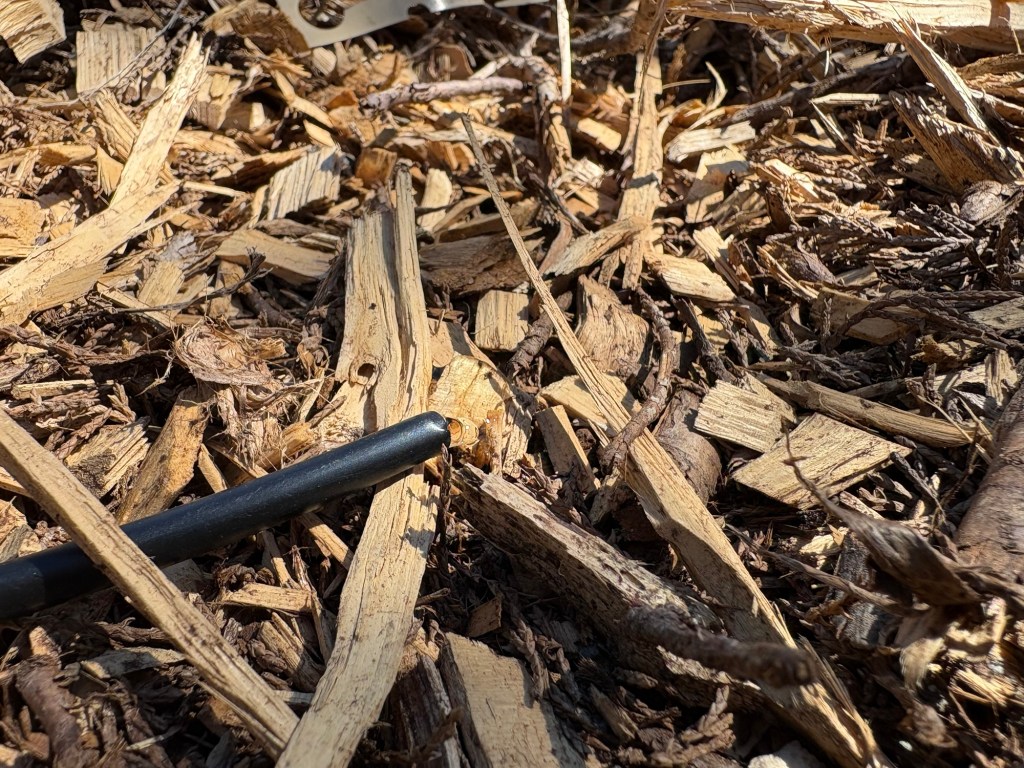
And just like that, a little stream of water. This will allow us to deep soak the roots for an hour or so once per week, forcing them to reach out and spread their roots wide and deep.
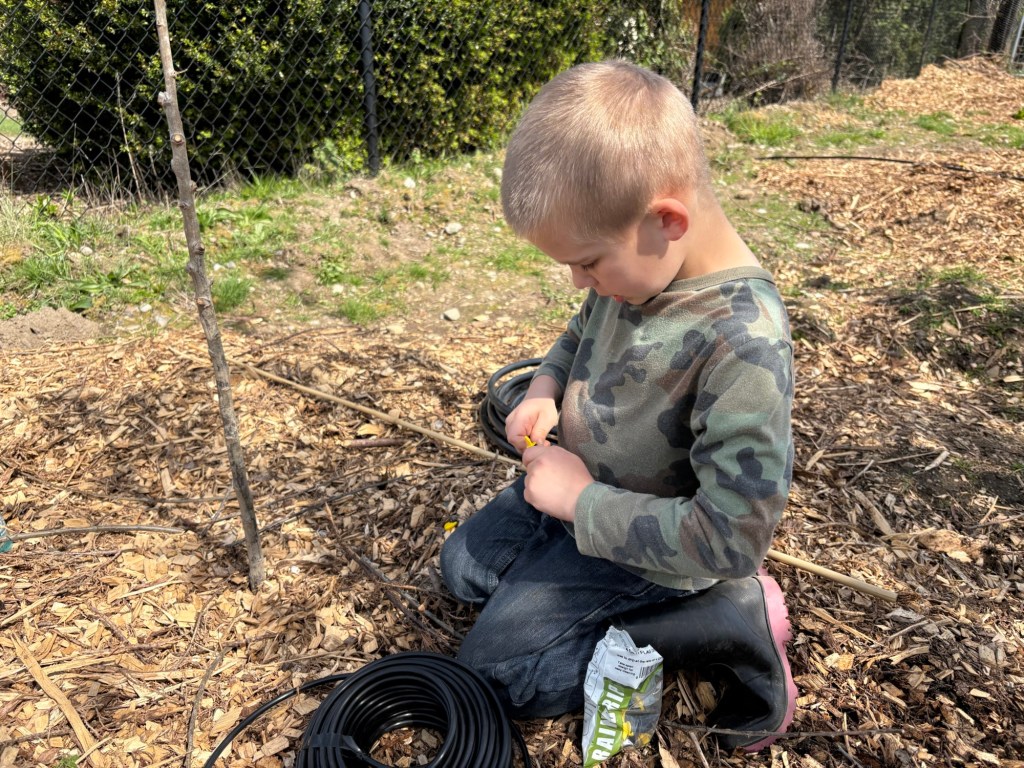
Seppi tried his hardest to get the 1/4″ line on the swivel, but he couldn’t quite yet. Still not strong enough.
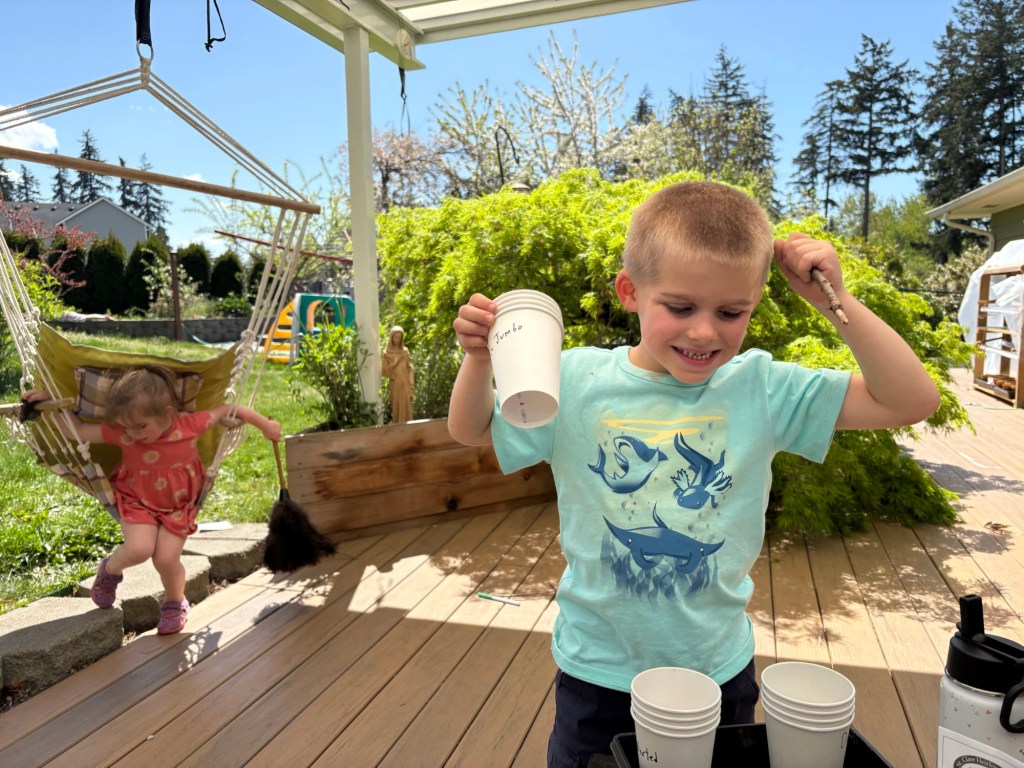
But he is more than capable of sharpening up a stick to poke holes in the paper cups we are using as our planting pots.
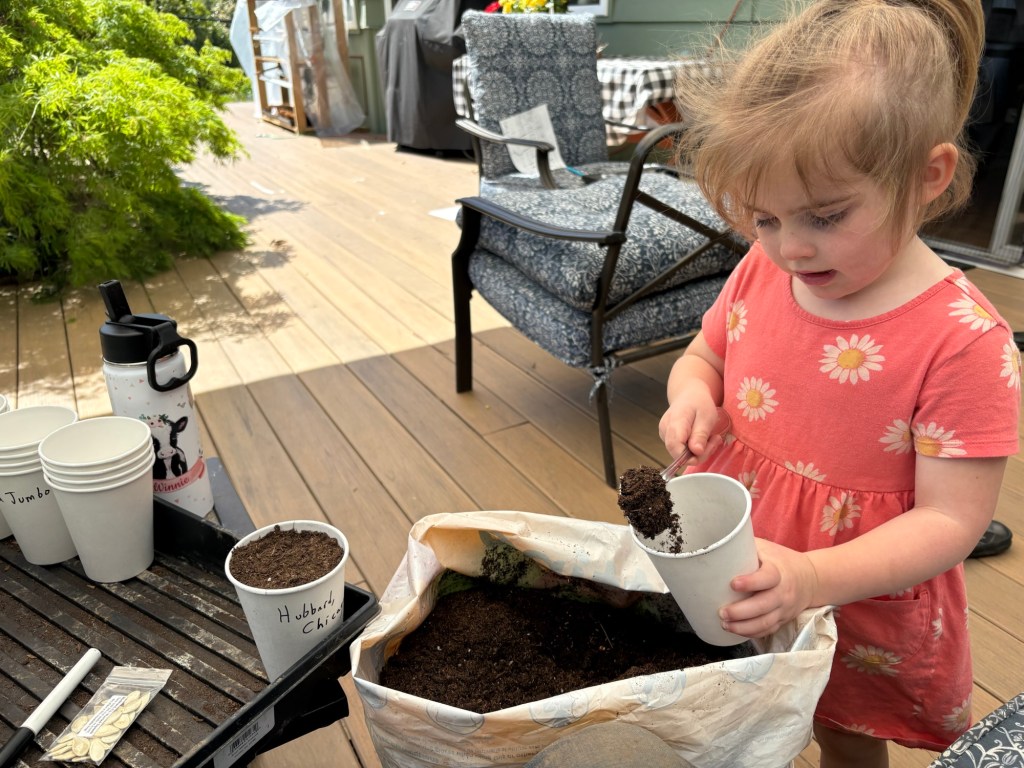
It’s time to get our cucurbits started: Pumpkins, 4 varieties of winter squash, and 8 cucumber vines.
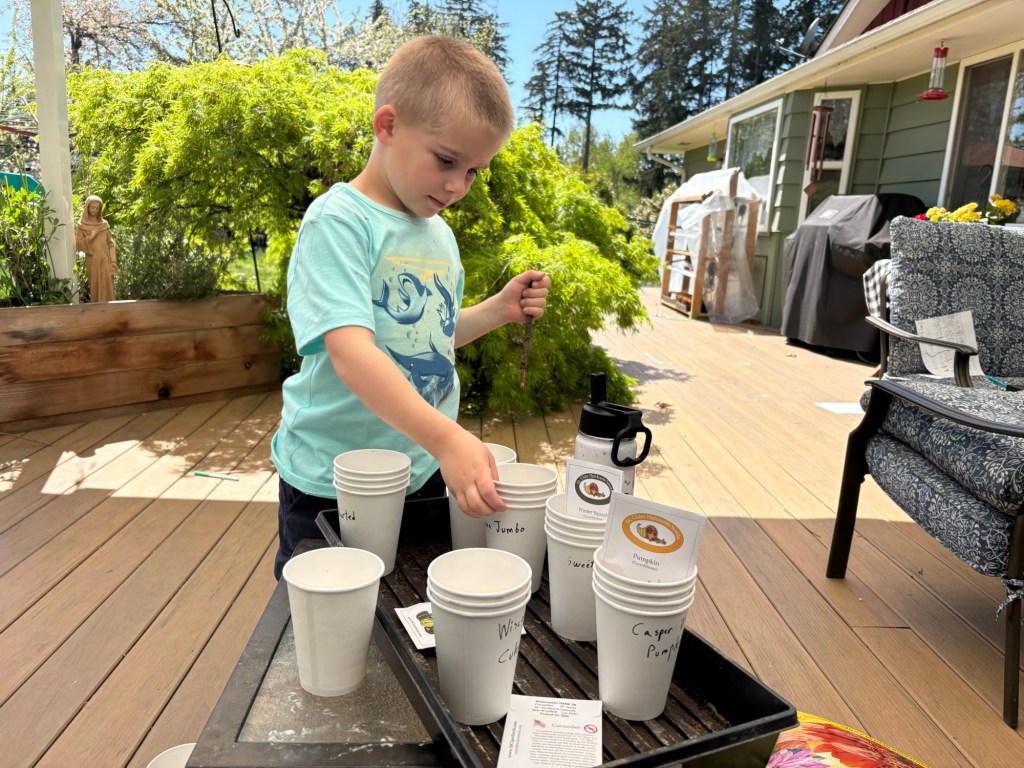
The reason for the 8 cucumber vines is for pickle making. If you only have two cucumber vines, you only have a handful of cukes in the pickling stage at any one time. Cukes don’t keep well, so unlike peas which you can harvest and keep in the fridge for a few days while waiting to get enough to be worth freezing, cukes will be not worth pickling if you don’t pickle them very quickly, within 24 hours of picking. If you leave them on the vine until you get enough of them, some will be too large and others too small, which makes an inconvenient pickle batch. Of course you can cut them to size, which we have done many times, but for a really pretty pickle jar, small to medium whole pickles are ideal. So… 8 vines, for 8x as many pickles as once, and the rest can go to friends, neighbors, or Gertrude.
We also planted some moringa seeds. More on those later.
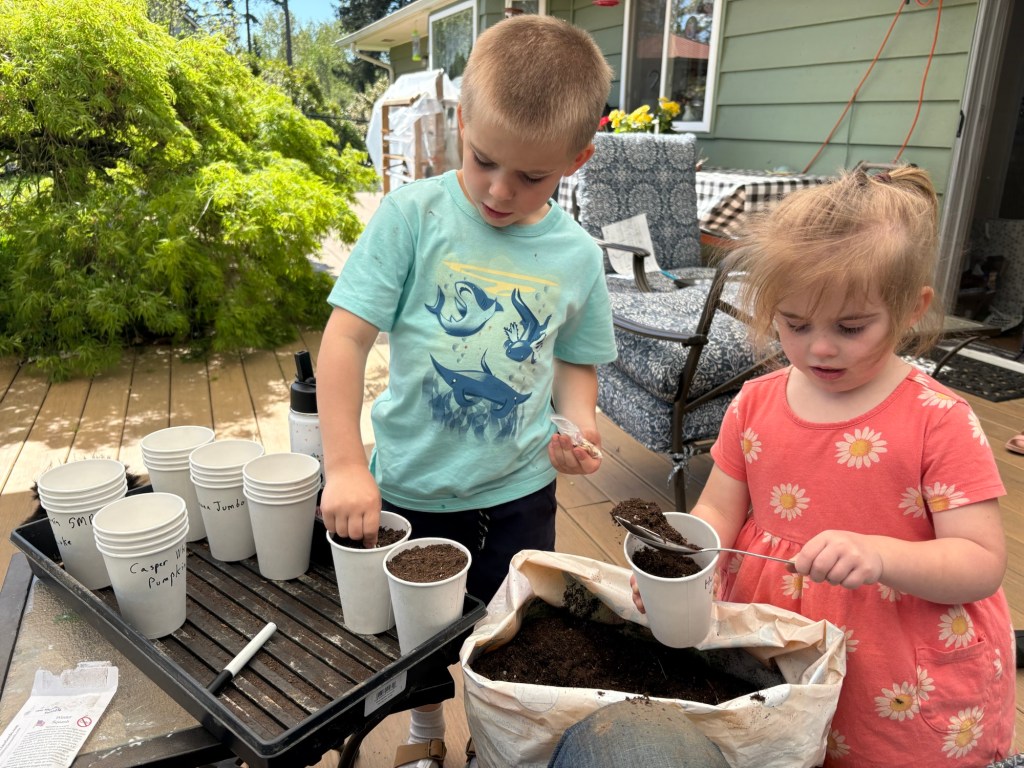
This is one of my favorite things.
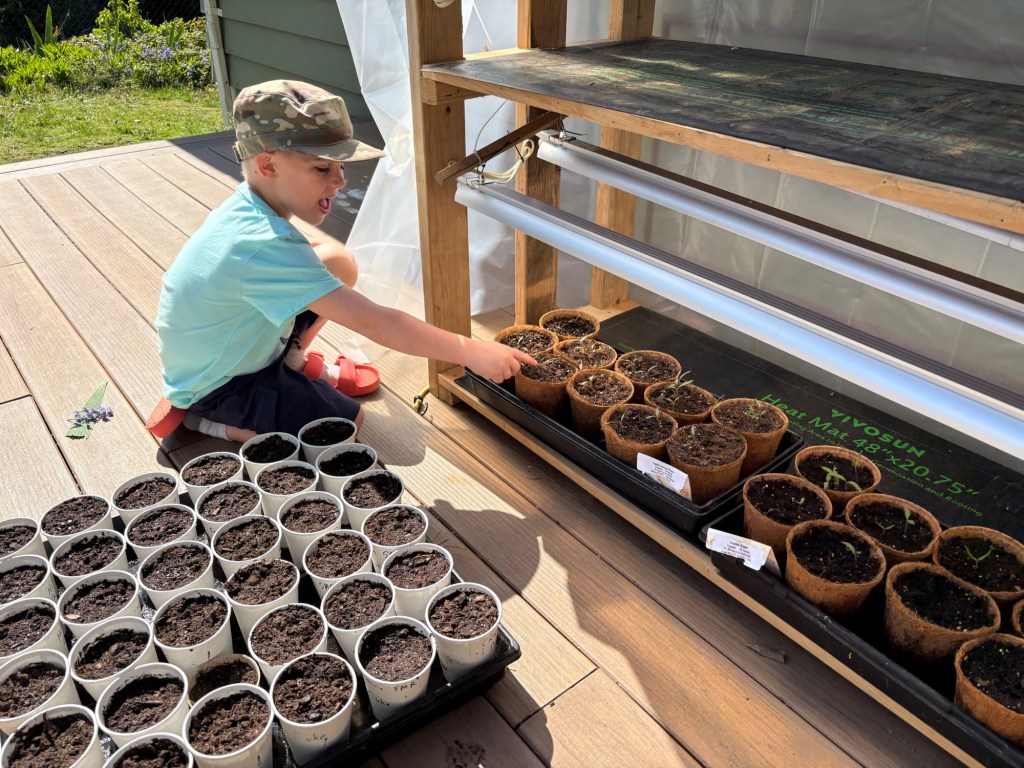
“Dad, look!”
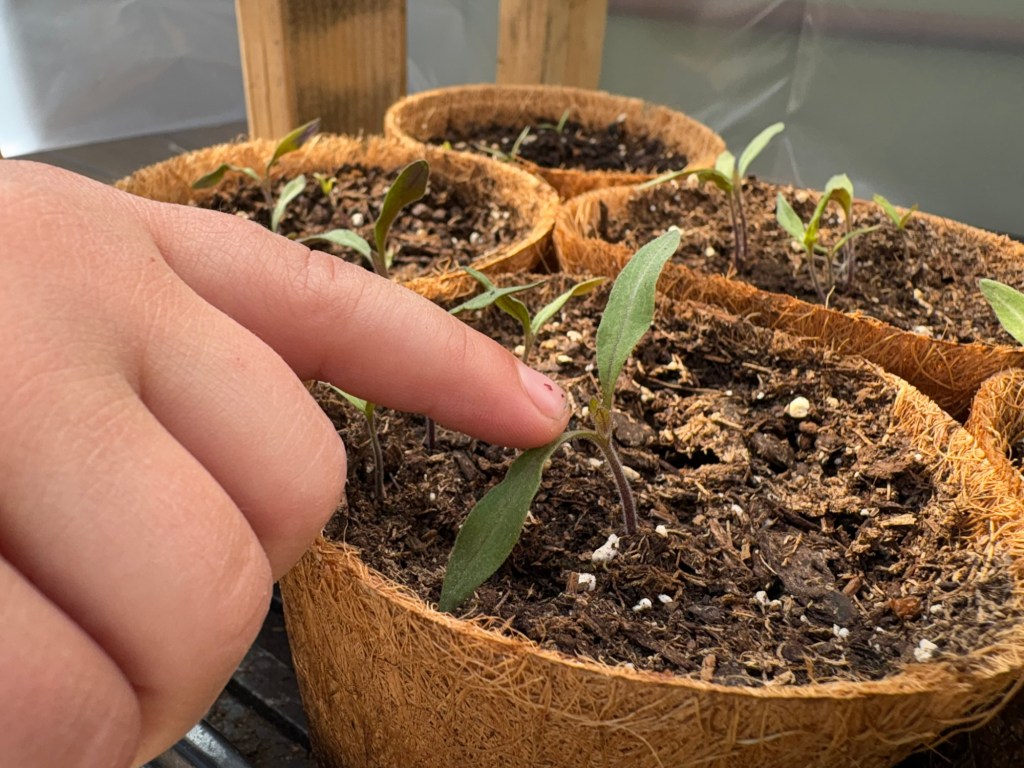
Our tomato starts are getting their first true leaves! They should be ready to go into the ground by May 15th.
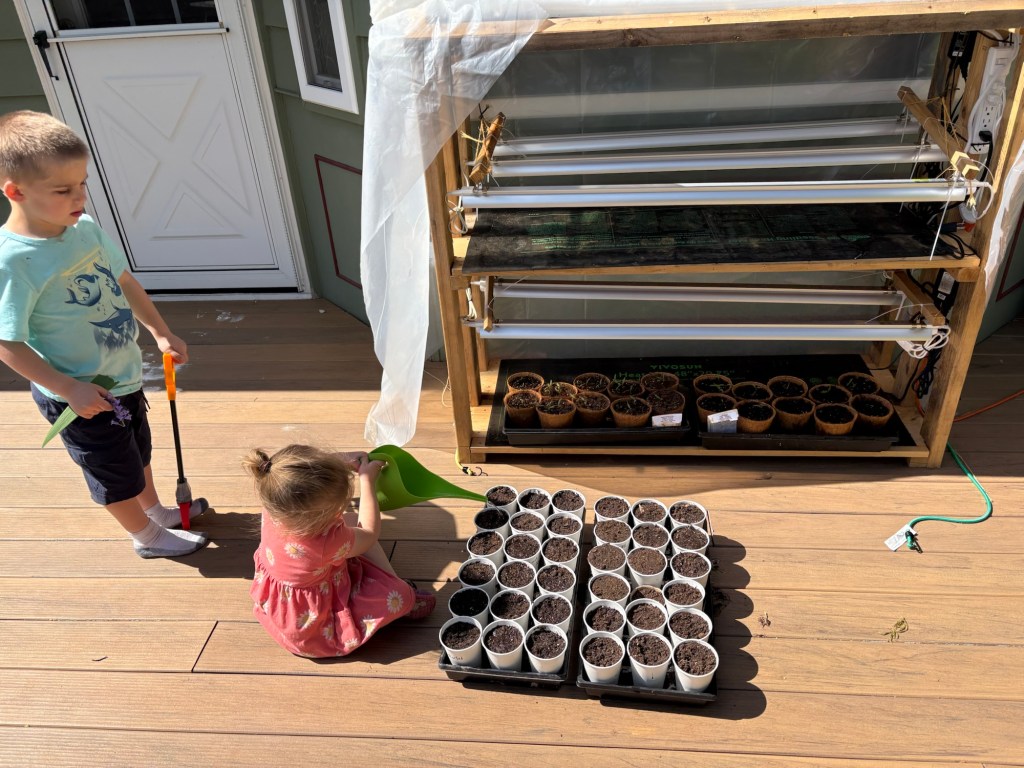
Time to give our baby plants a drink. Winnie likes to say, “Drink your water, baby plants!”
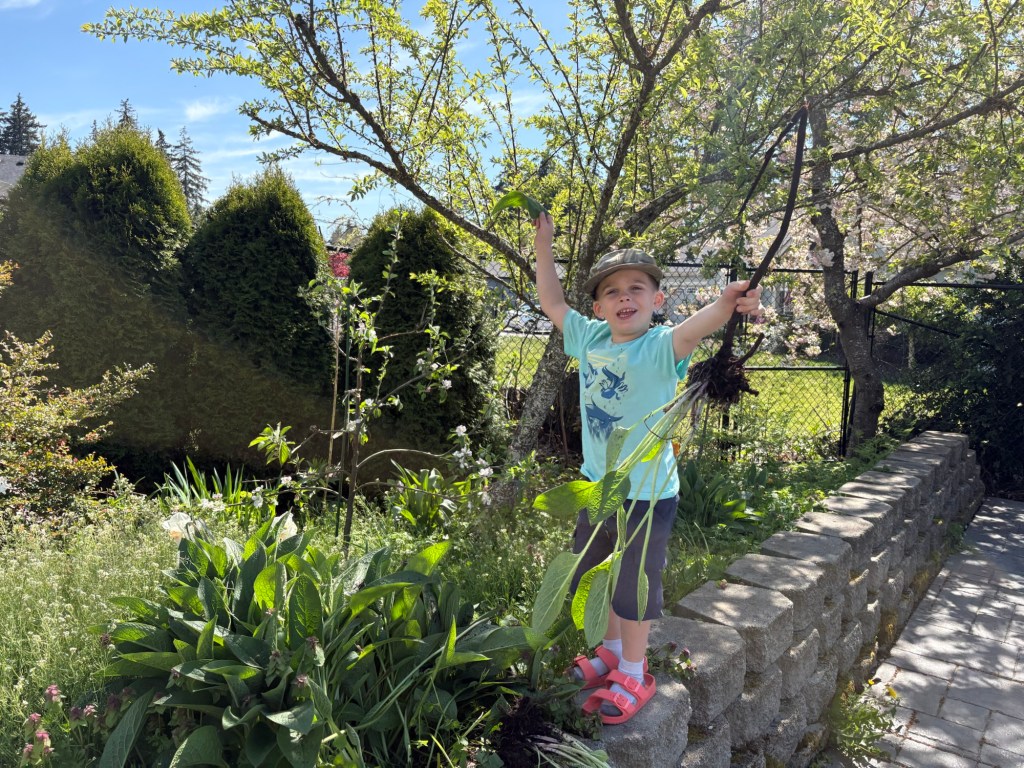
After that, Seppi helped dig comfrey roots for transplanting to the farm. He was most impressed by the length of this particular root, and was jumping around on the top of the retaining wall, waving it and yelling, “Victory in Europe! Victory in Europe!”
He’s into WWII right now.
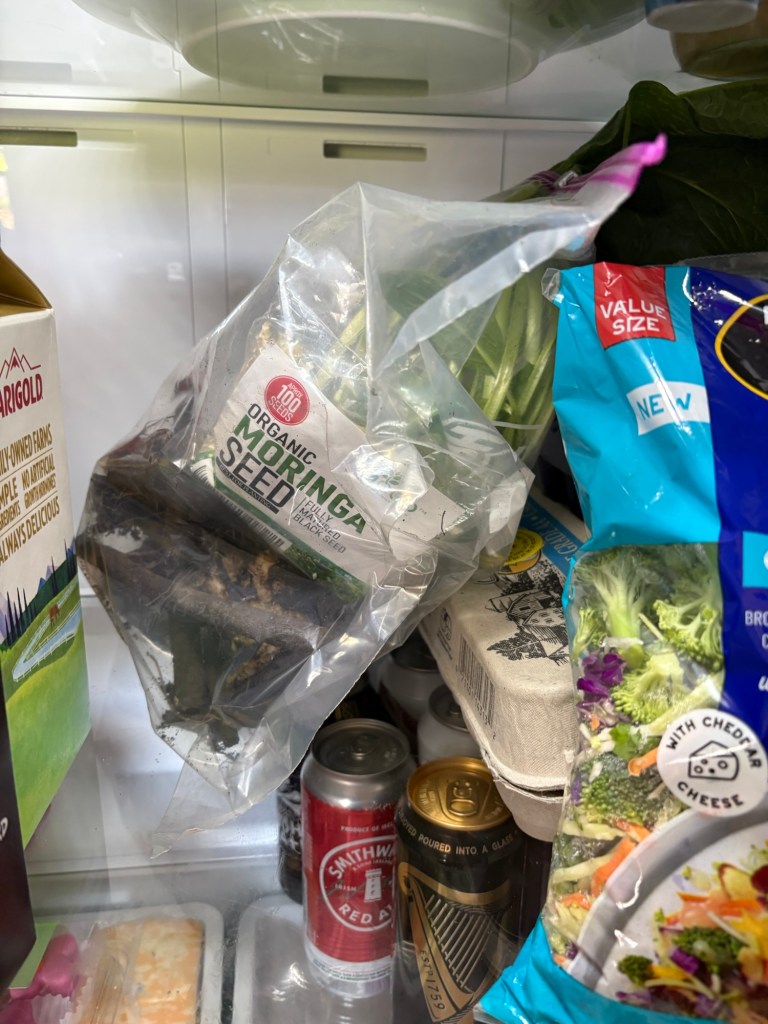
Comfrey root and Moringa seeds, waiting to go to the farm to get planted.
Moringa is a tropical tree that is known for its vigorous growth, sometimes growing 10-20 feet in its first year when started from seed. It produces abundant leaves that are high in protein and very good fodder for cattle. We are experimenting with growing it as an annual this year, because they don’t overwinter well. Likely, with our long, cool springs they won’t even establish well, but it was $8 for a hundred seeds, so why not?
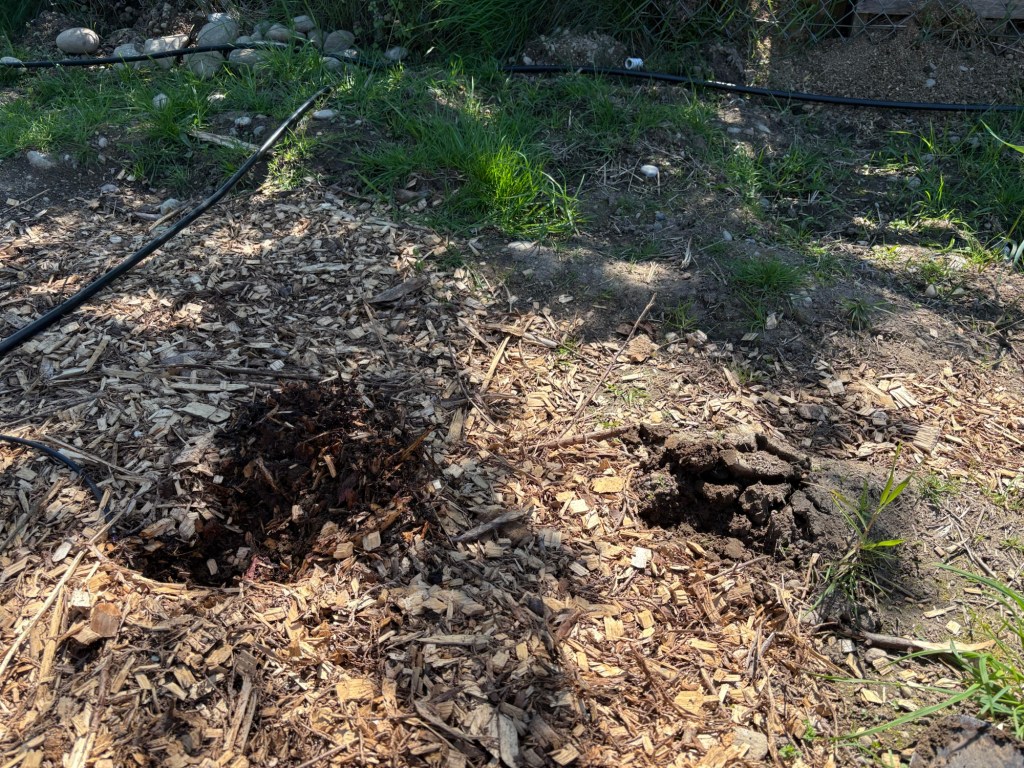
Check out the difference between soil that has been under mulch, and soil that has not, only about two feet from each other.
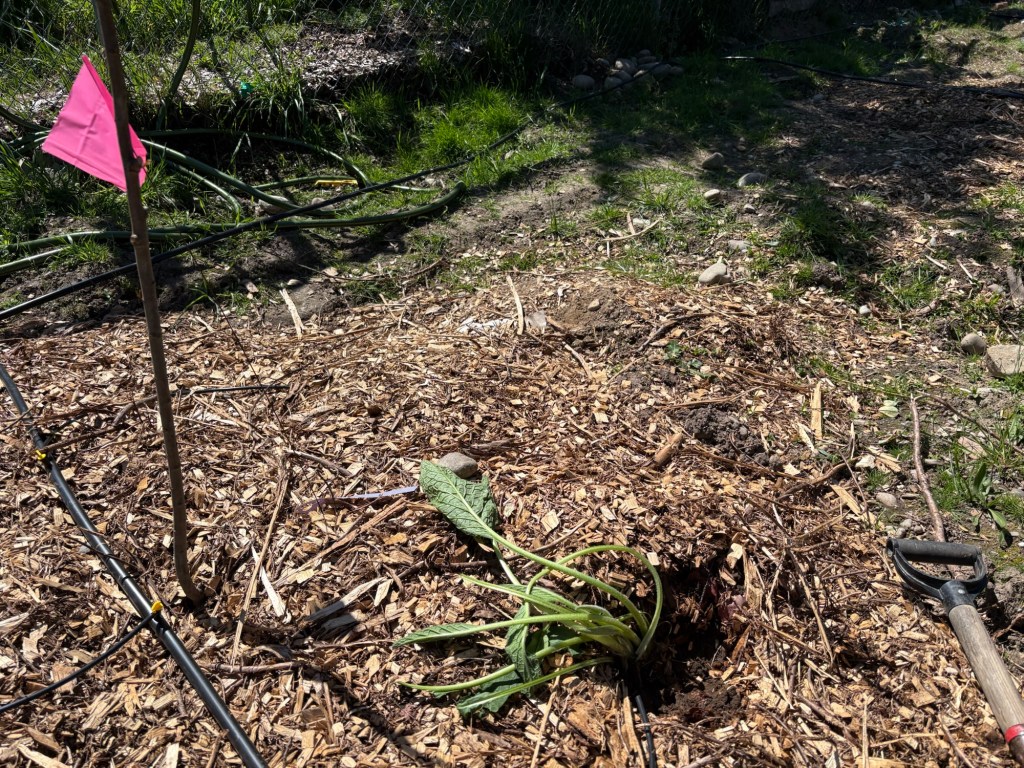
Comfrey is another great biomass producer, a workhorse in the orchard and for producing compost.
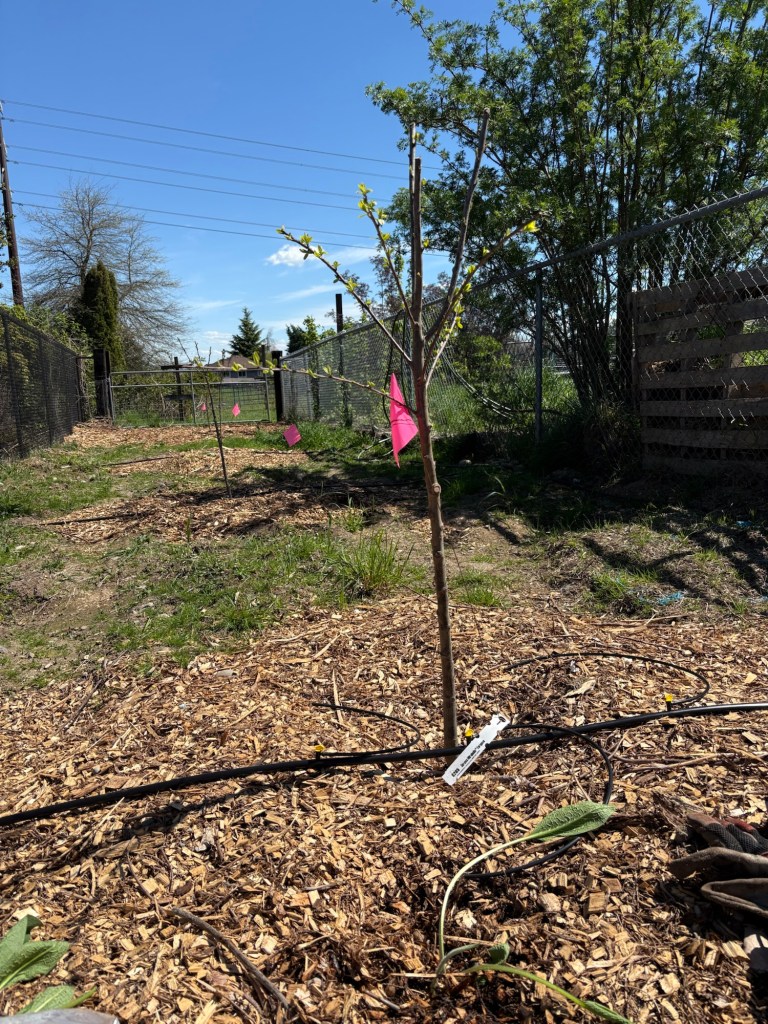
Our baby trees have leaves!
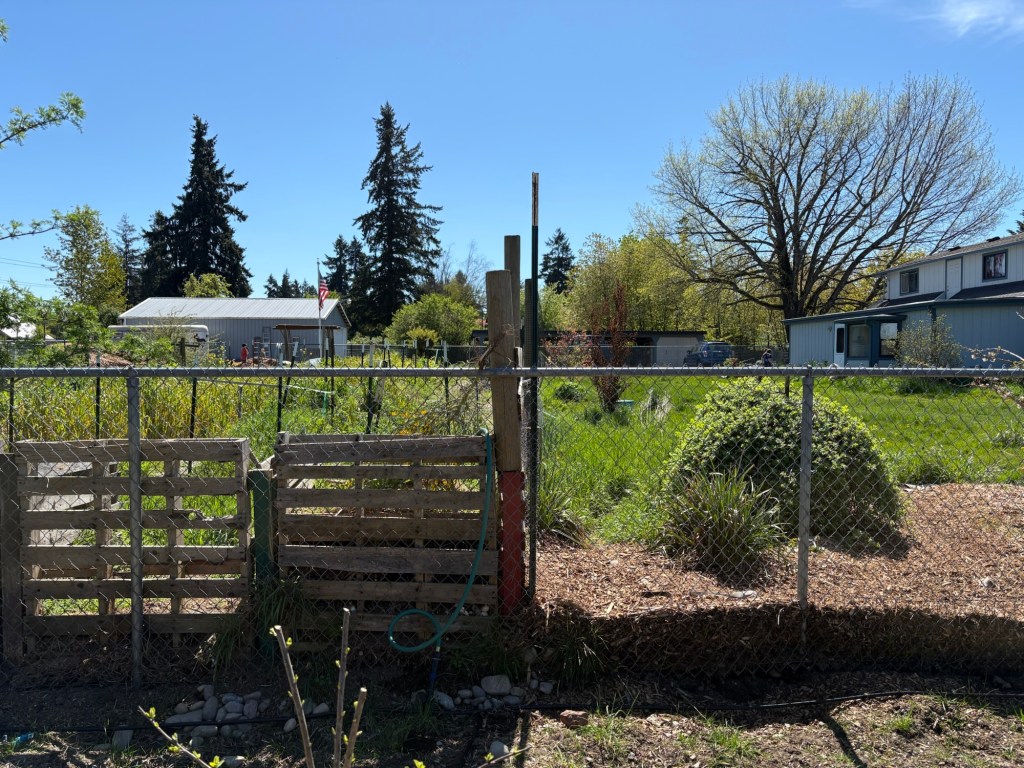
And that was as far as we got. One irrigation system in on Friday, and comfrey roots and moringa seeds planted on Saturday. A little at a time. A food forest doesn’t spring up all in one day.

 Little Farm in the Big City
1 thought on “Irrigation, Seed Starting, and Comfrey”