

We dug a ditch yesterday.
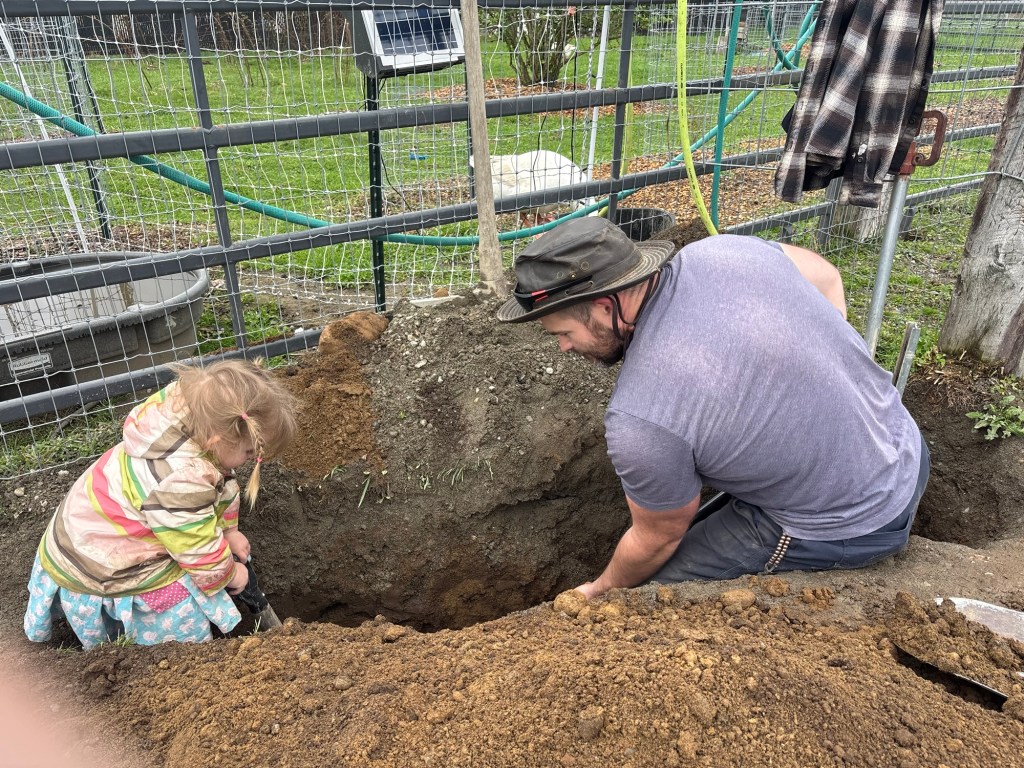
Why? Because we are the dwarfs.
And therefore we are digging a hole. (Diggy diggy hole, diggy diggy hoooooooole!)
Actually, there is more to it than that. Last year we knew that we had some leaks in the water line somewhere so we spent a good chunk of the autumn and winter with the water turned off from the municipal water supply. Instead we were drawing water for the stock from the rain barrel.
Then, this winter I broke the hydrant, and more recently, we discovered that the pump from the rain barrel is quite broken.
The pump is still on our to-do list, but with the intermittent days of nice weather we’ve been having, we have managed to do a little digging and repair work.
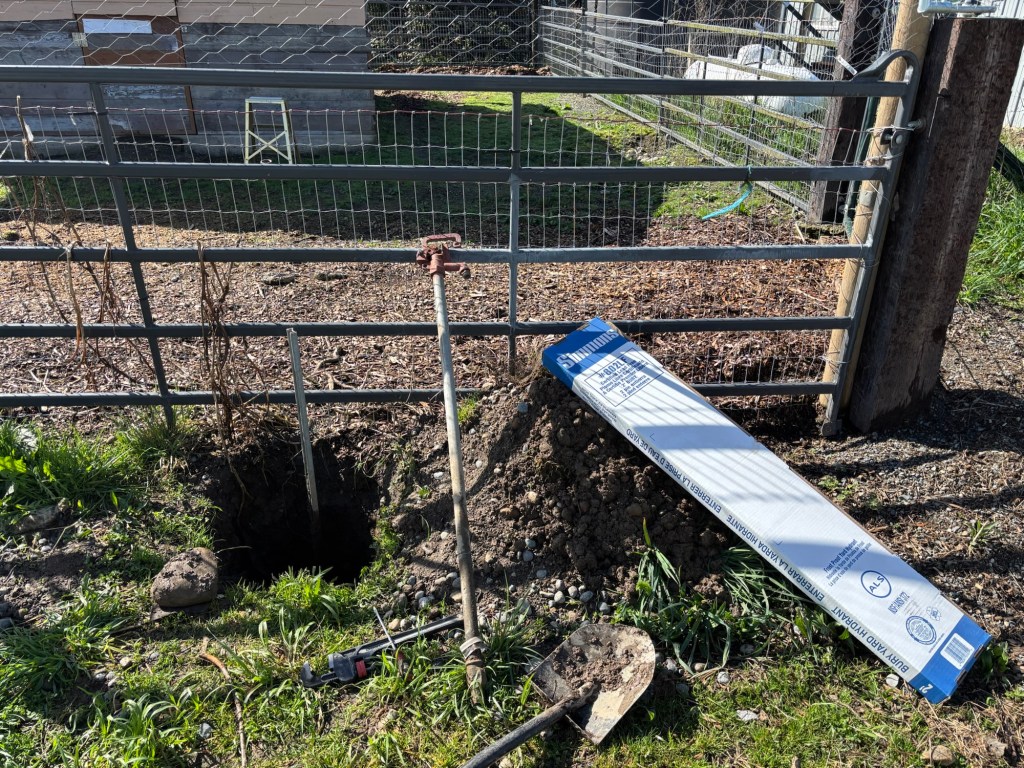
While these frost free hydrants are designed to be repaired from the surface without digging, that isn’t always possible if the lower plunger is worn out, and you can’t find a replacement parts kit.
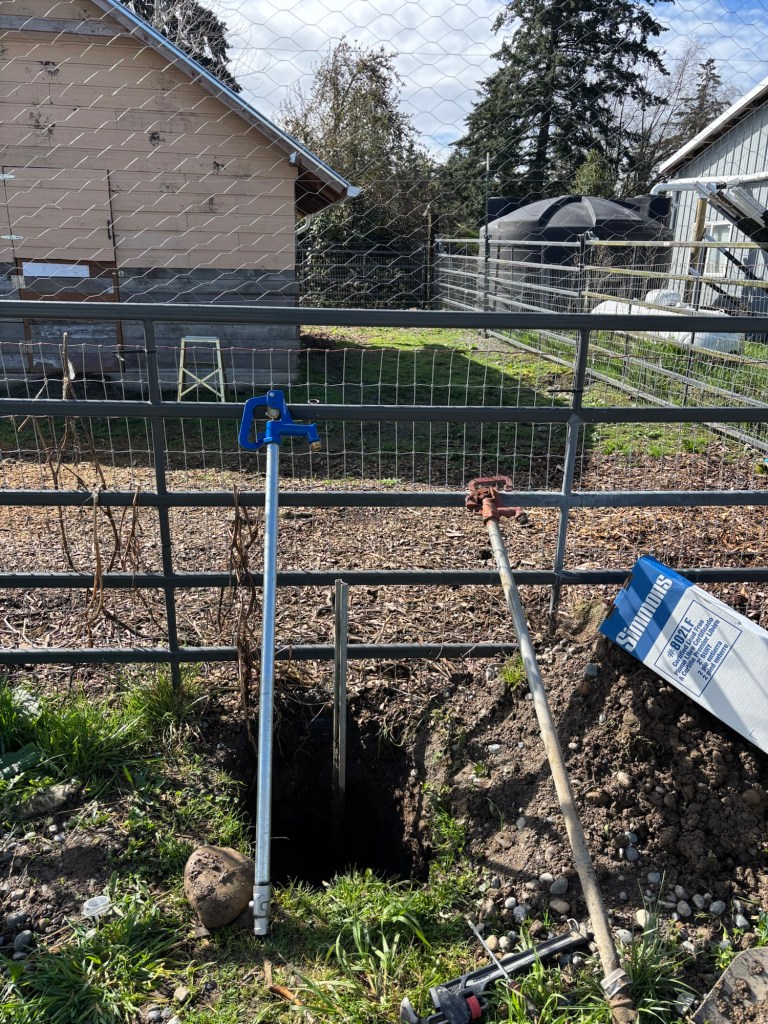
This doesn’t mean we are throwing out the old hydrant. It will go on the plumbing shelf and as we have time and money we will search the internet for repair kits. If we can repair the old ones, we will so that we have backups for the future.
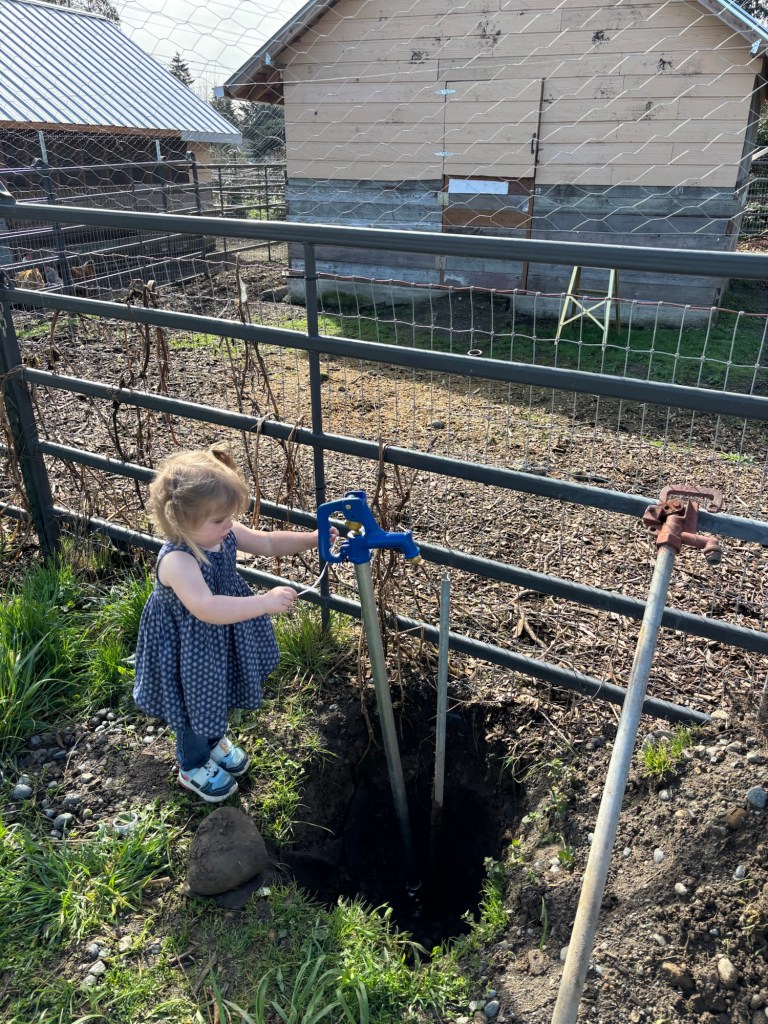
Changing out the hydrant was easy peasy. Just twist off the old one, put teflon tape on, and twist on the new one.
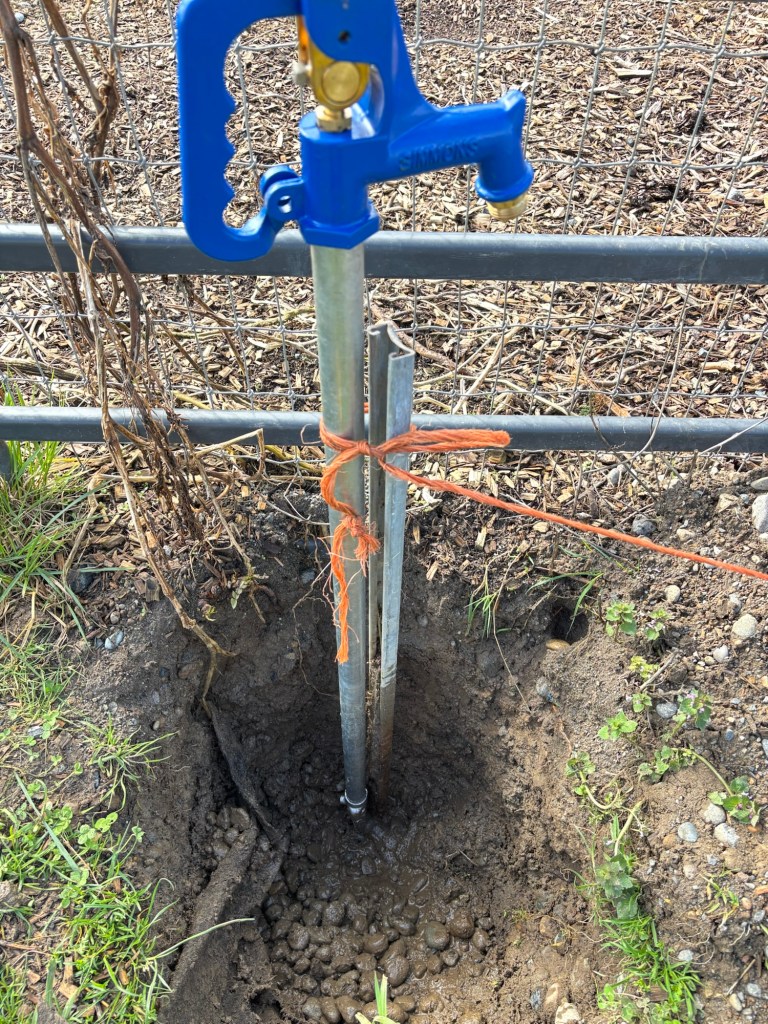
Then turn on the water and watch for an hour or so to see if it leaks (it doesn’t).
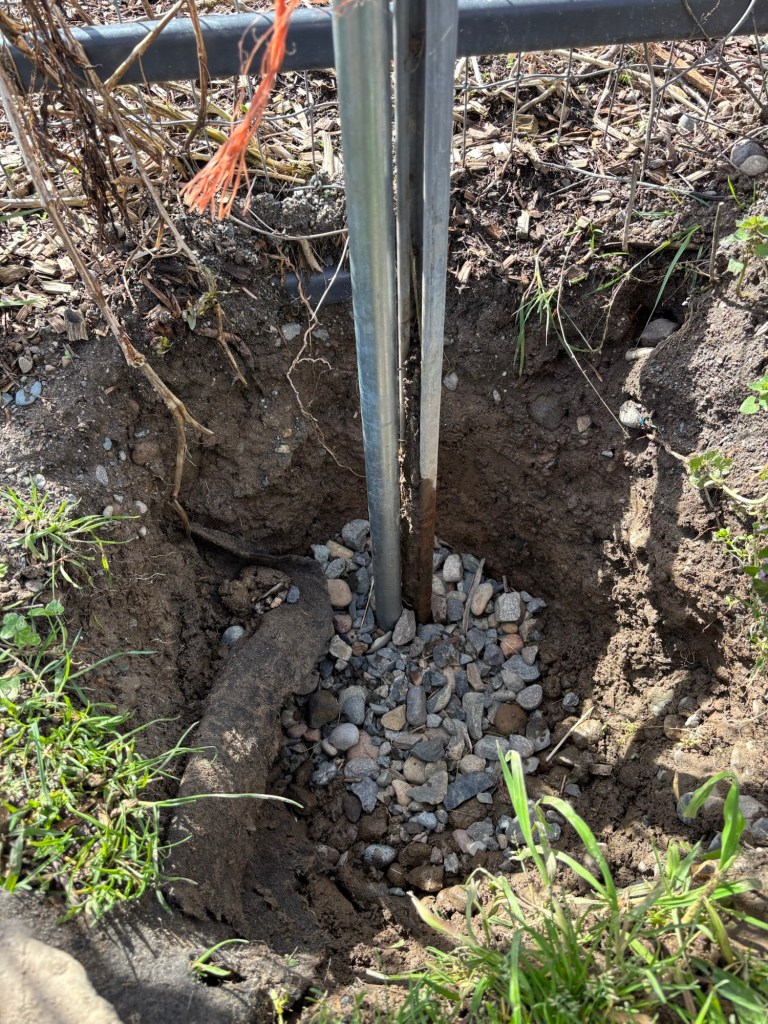
Fill in rocks around the base to give the water somewhere to drain.
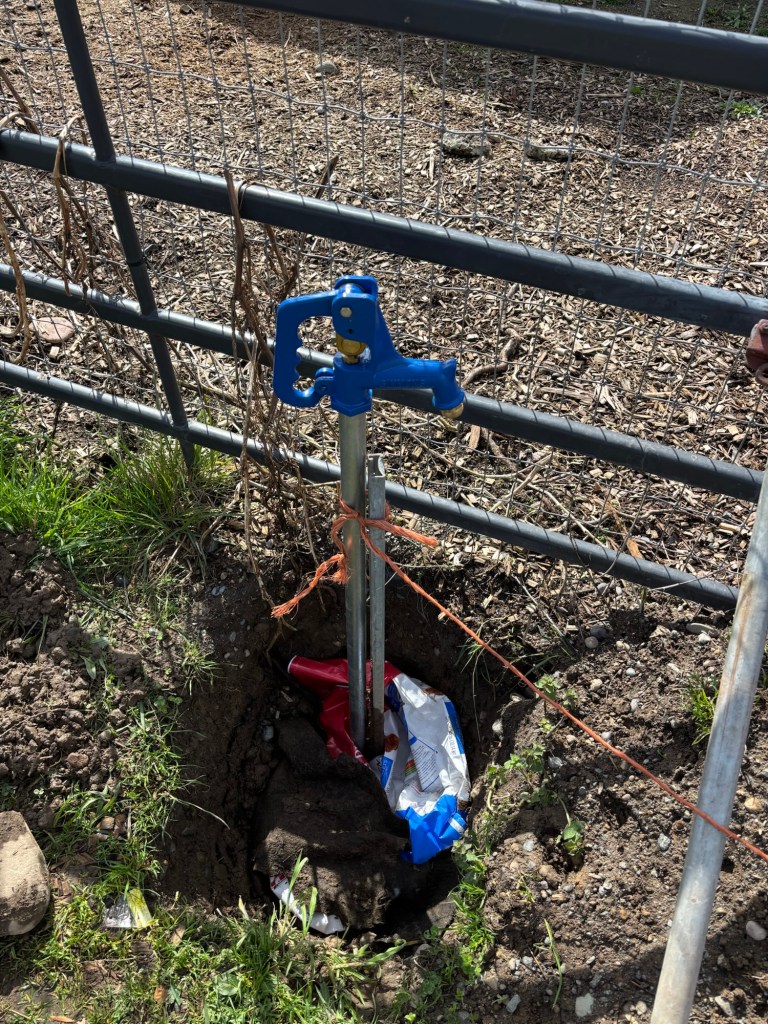
We covered the rocks with “ground cloth” a.k.a. plastic feed sacks, to keep the dirt from infiltrating down into the rocks and blocking the water from draining.
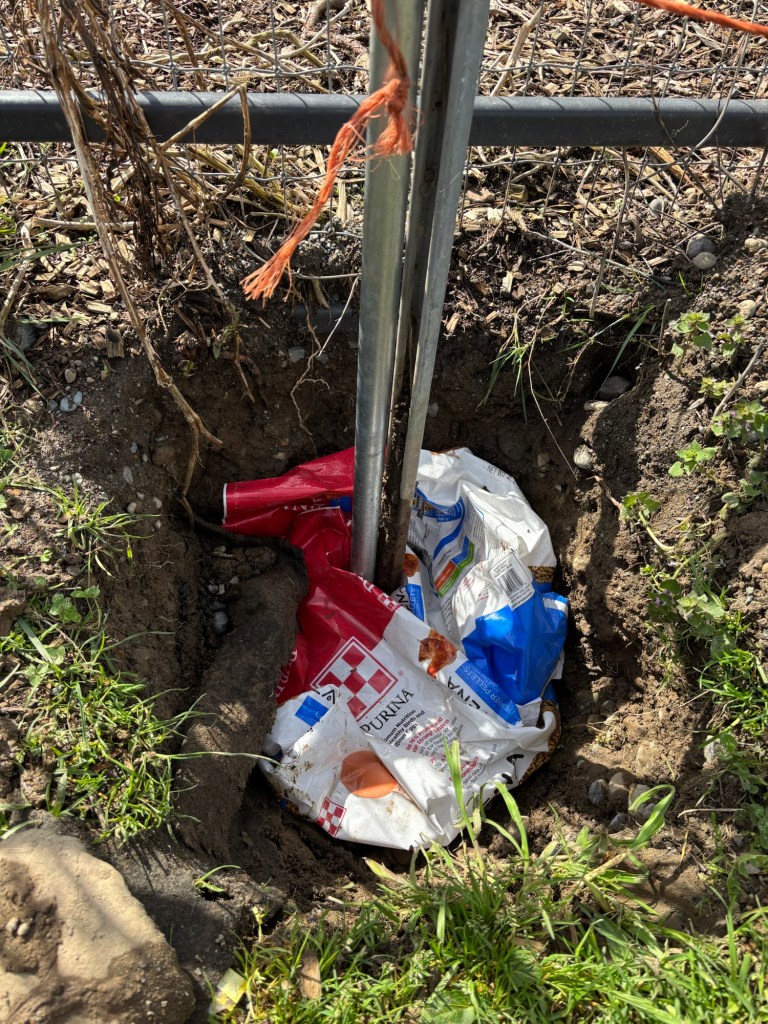
Then bury the whole thing, and…
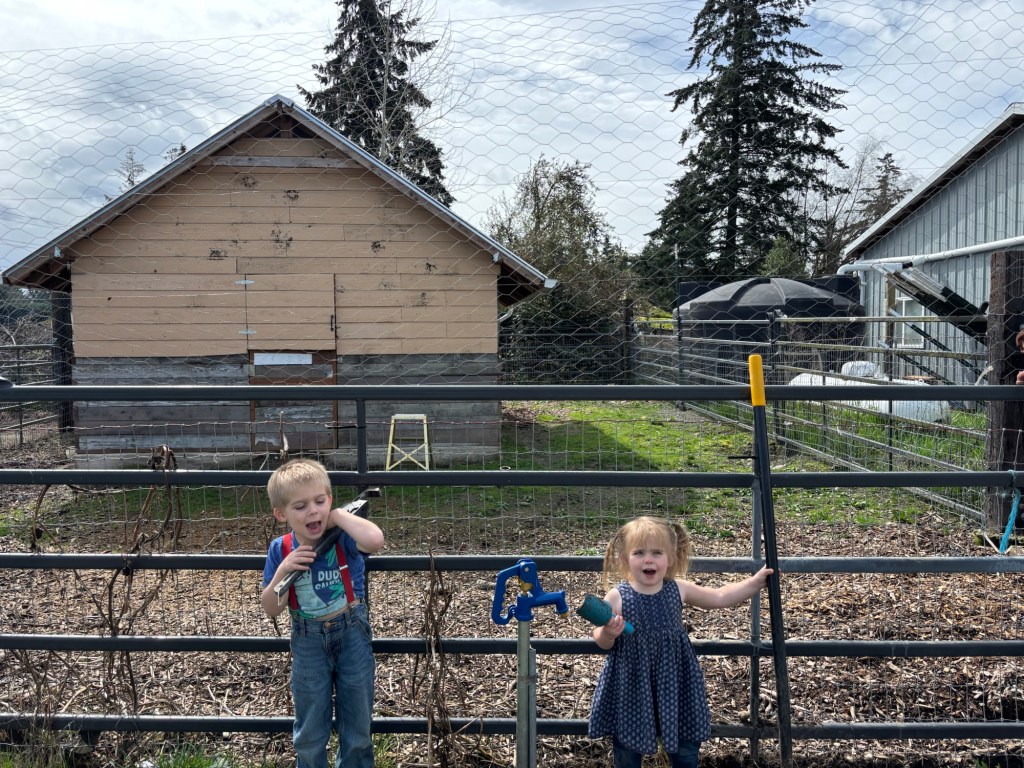
Job well done!
Or, not quite. As it turned out, when we checked the meter, the wheel was still turning, indicating a leak somewhere in the line. We turned all the shutoff valves we installed to determine which branch line was involved, and it wasn’t any of the lines we have installed since owning the farm. We’ve already dug down to the hydrant by the garden multiple times and have never seen a leak there. The logical remaining spot was the hydrant in the barnyard.
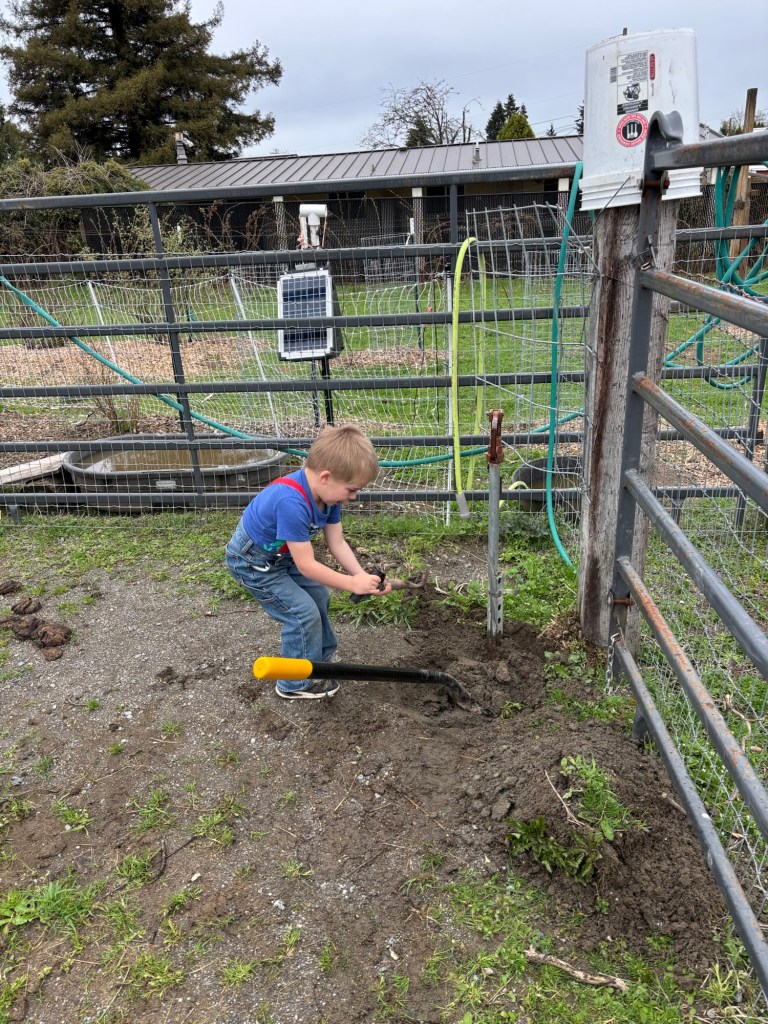
Time for another digging job!
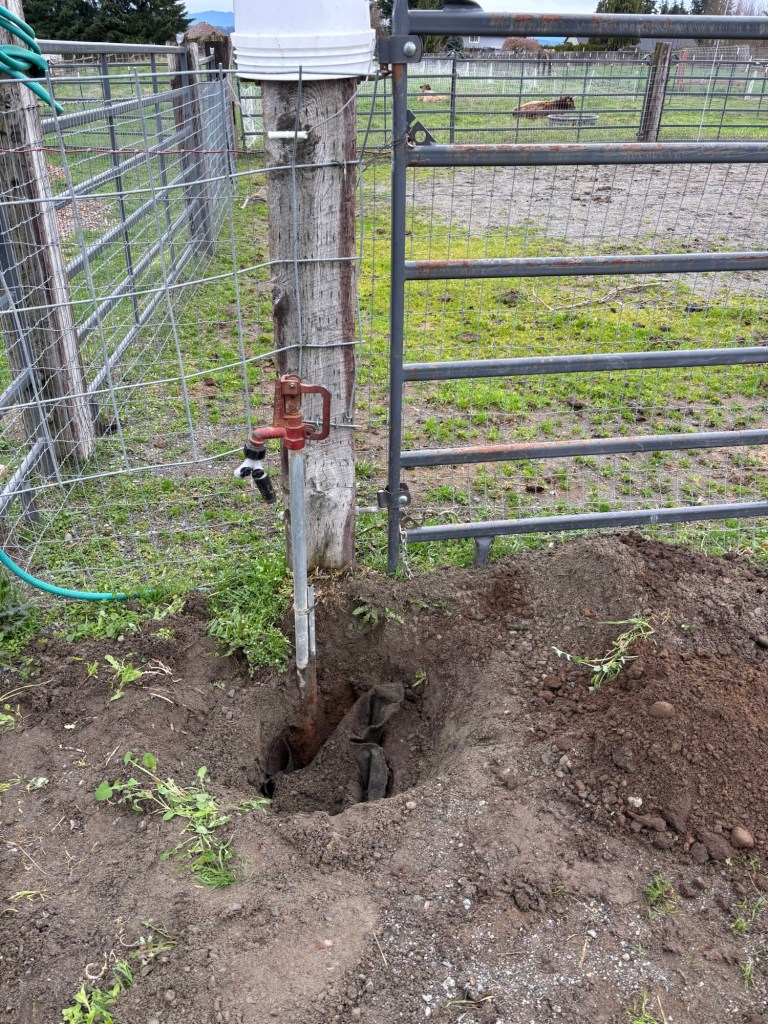
Sure enough…
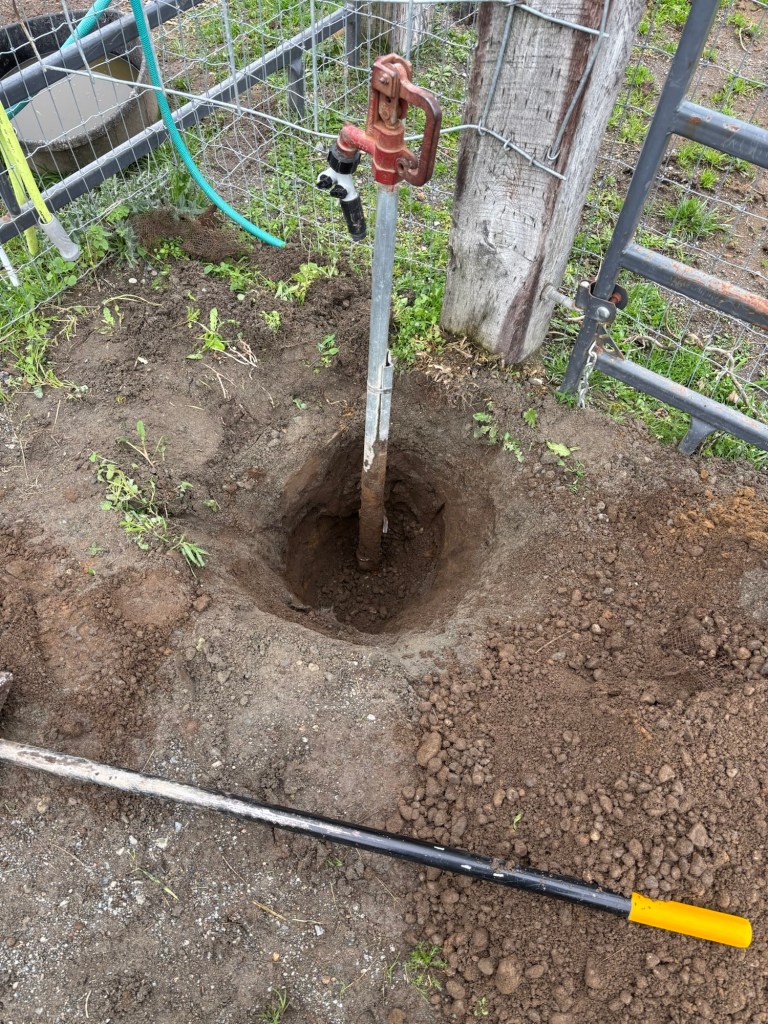
After digging through the pad the previous owner constructed for his hoses (8 inches of sand and compacted gravel, then landscaping fabric, then 4 inches of packed clay) we found the 3 feet (at least) of sand that he had poured in to build the pad on. Some people just love their horses.
Sure enough the hydrant was leaking steadily from the weep hole. The plunger most likely is worn out. Again, old hydrant, can’t find a repair kit, and the nuts on top of the plunger rod are already extended out almost to the max, so we will replace that one as well.
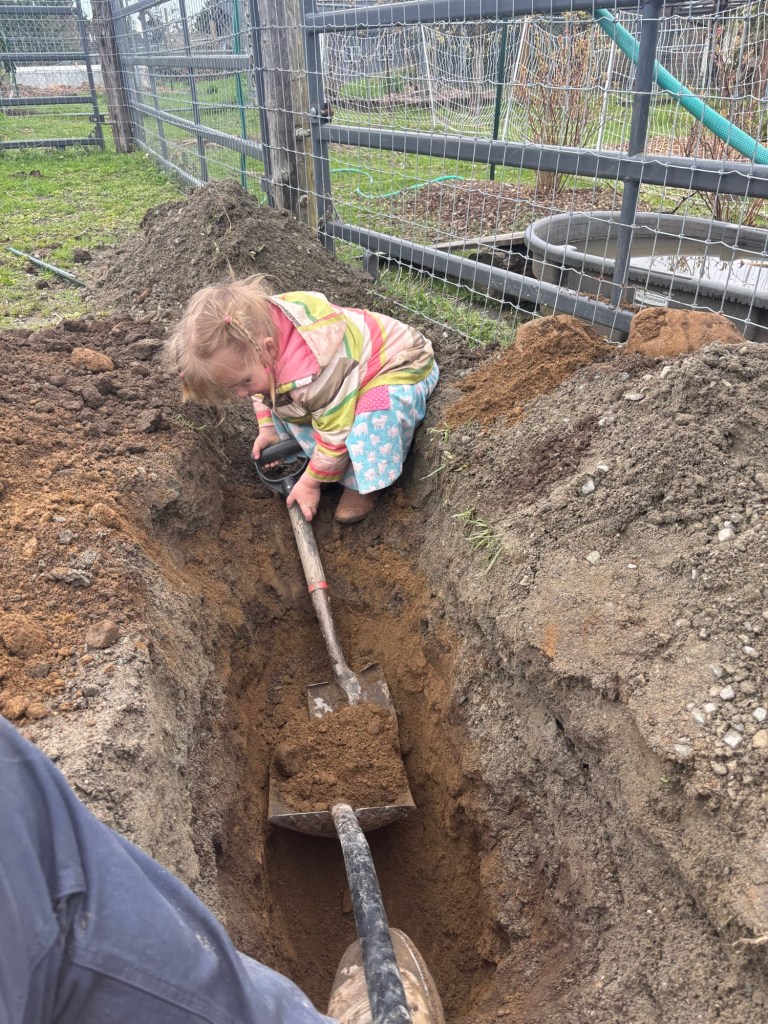
However, once we had dug down to it we started considering whether we really need a hydrant in the barnyard, or in the orchard. At present, there is no water source in the orchard. We have to run a hose over the barnyard fence, which is not exactly ideal from an access perspective (you have to climb or walk around to turn it on and off.
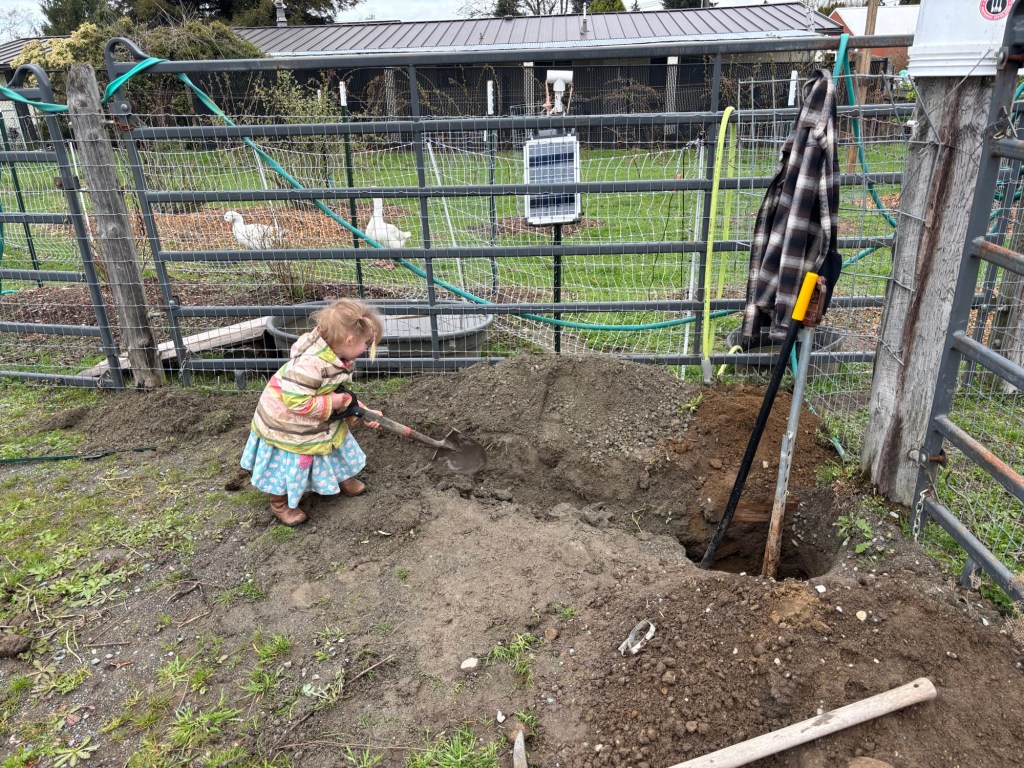
Since the poly pipe is already exposed, and the hydrant has to come off anyway, and we already have a 1″ Poly to 3/4″ MIP Tee, it makes sense to dig 12 feet of trench under the fence, and put in a hydrant in the orchard.
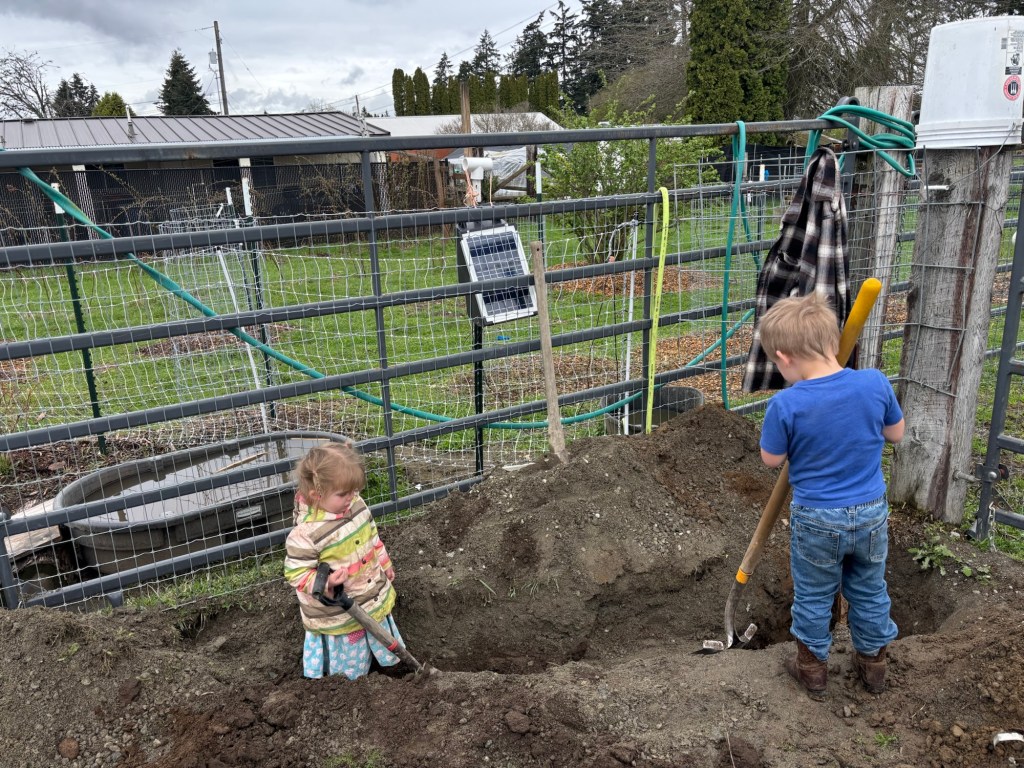
Digging is always a fun time.
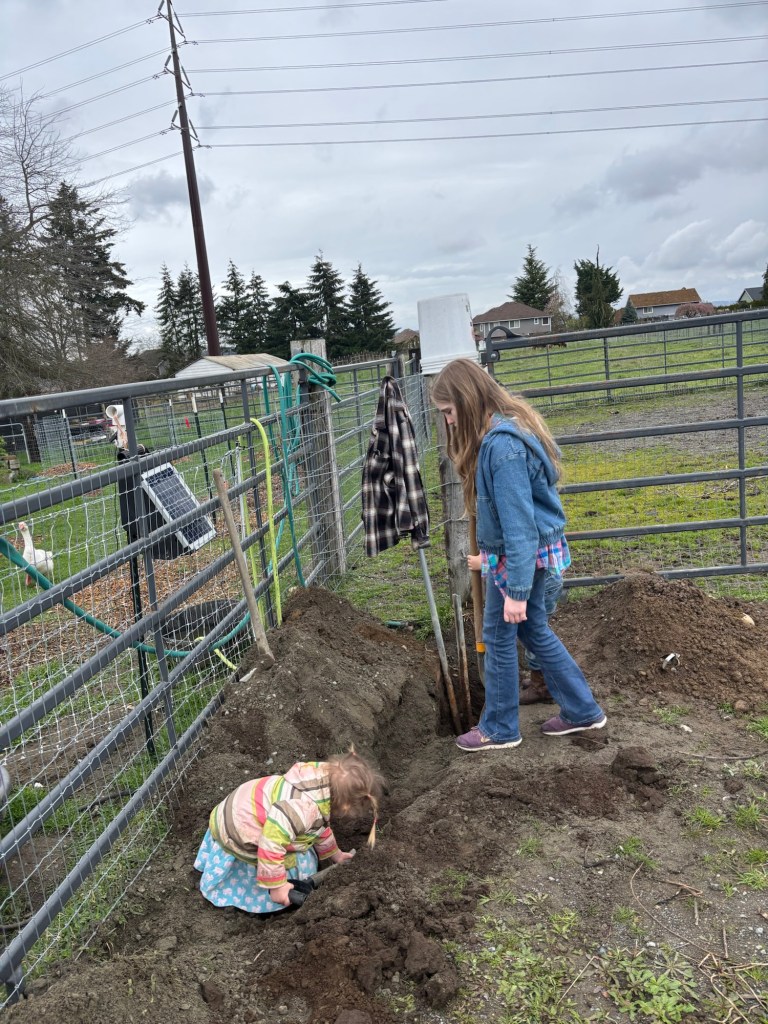
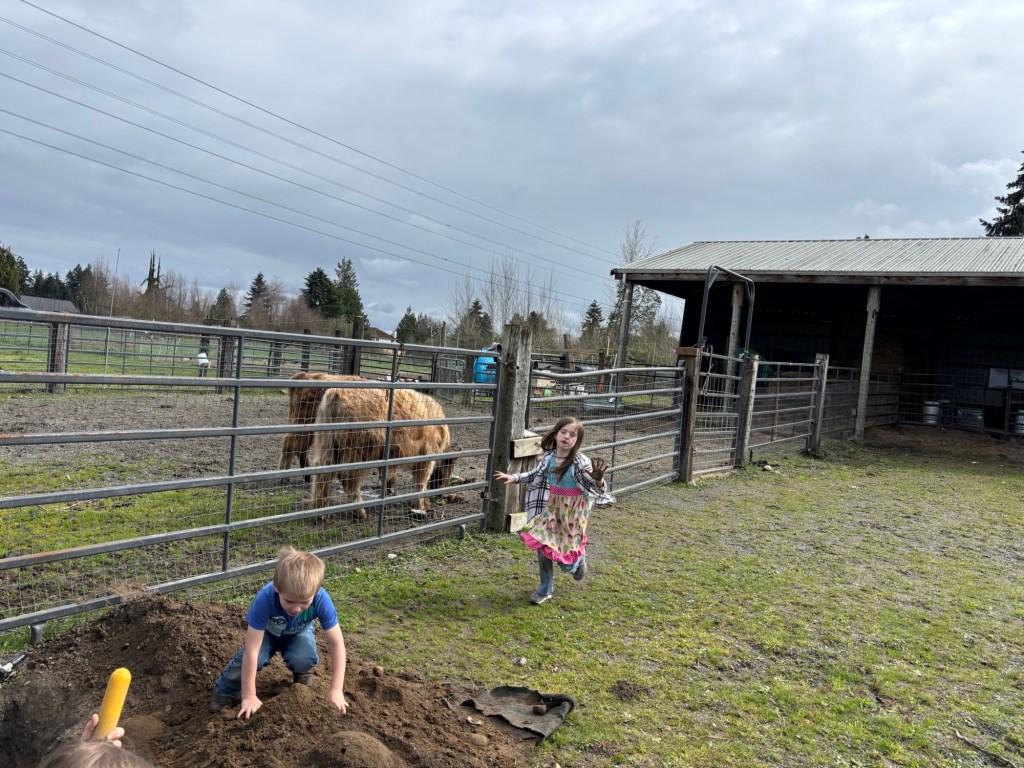
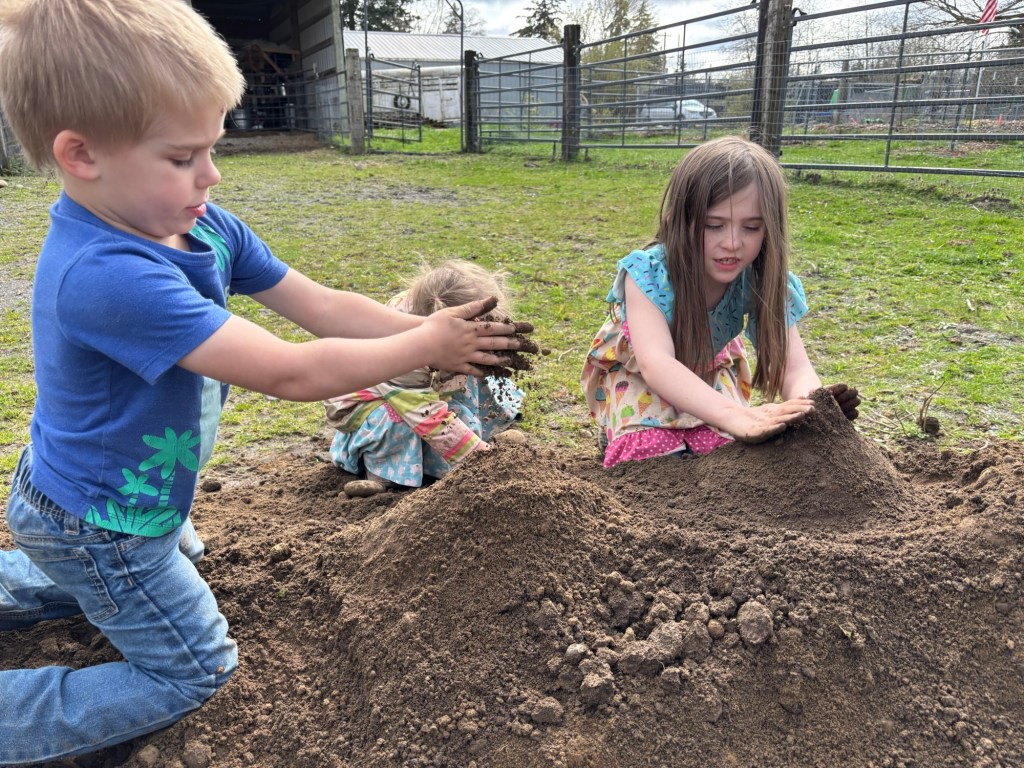
All Kraeger children are natural diggers.
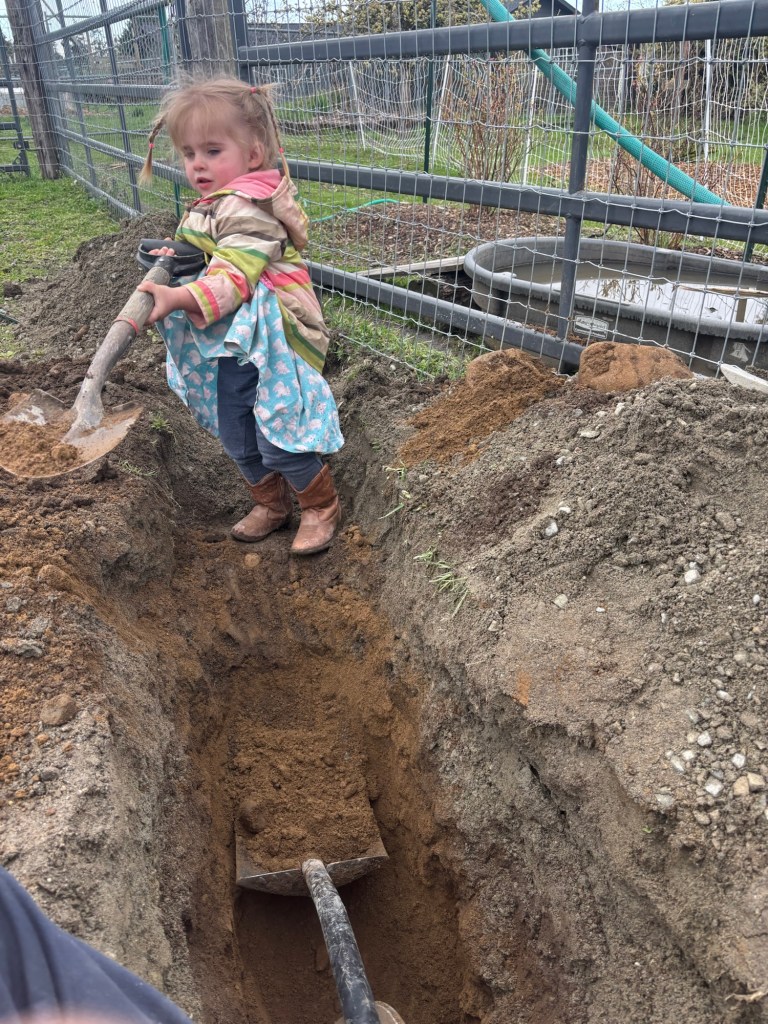
Some more so than others.
After I got the dirt broken to depth inside the paddock, I had Evie clean out the trench inside, while I went and dug the outside portion.
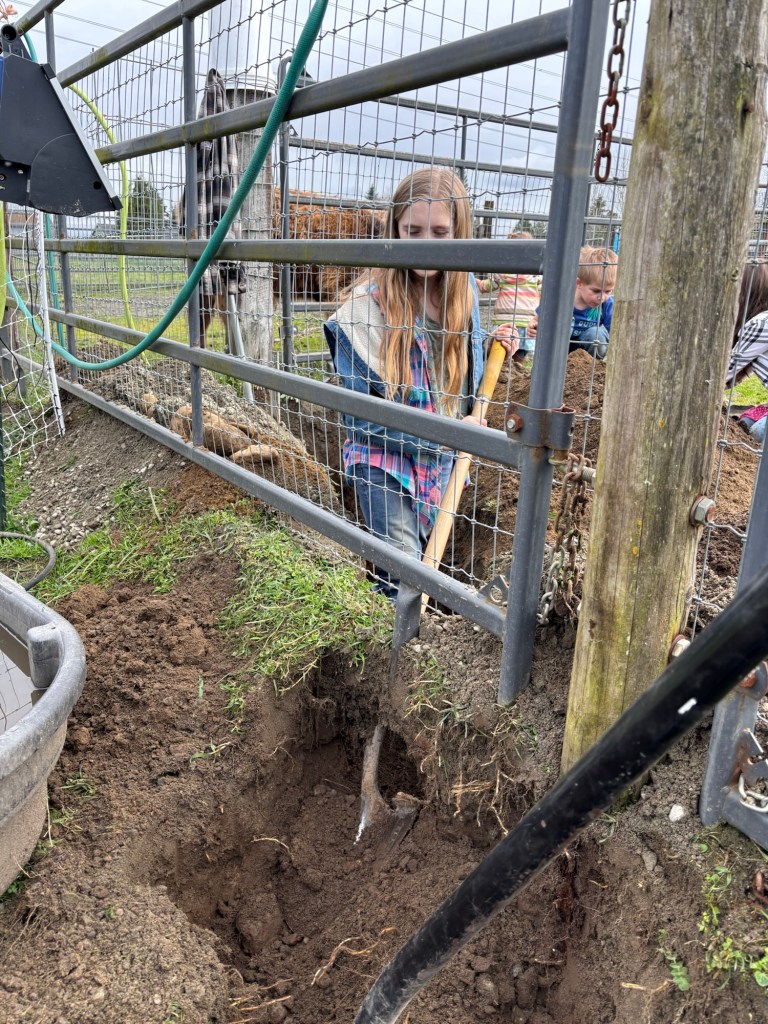
The meeting of the trenches!
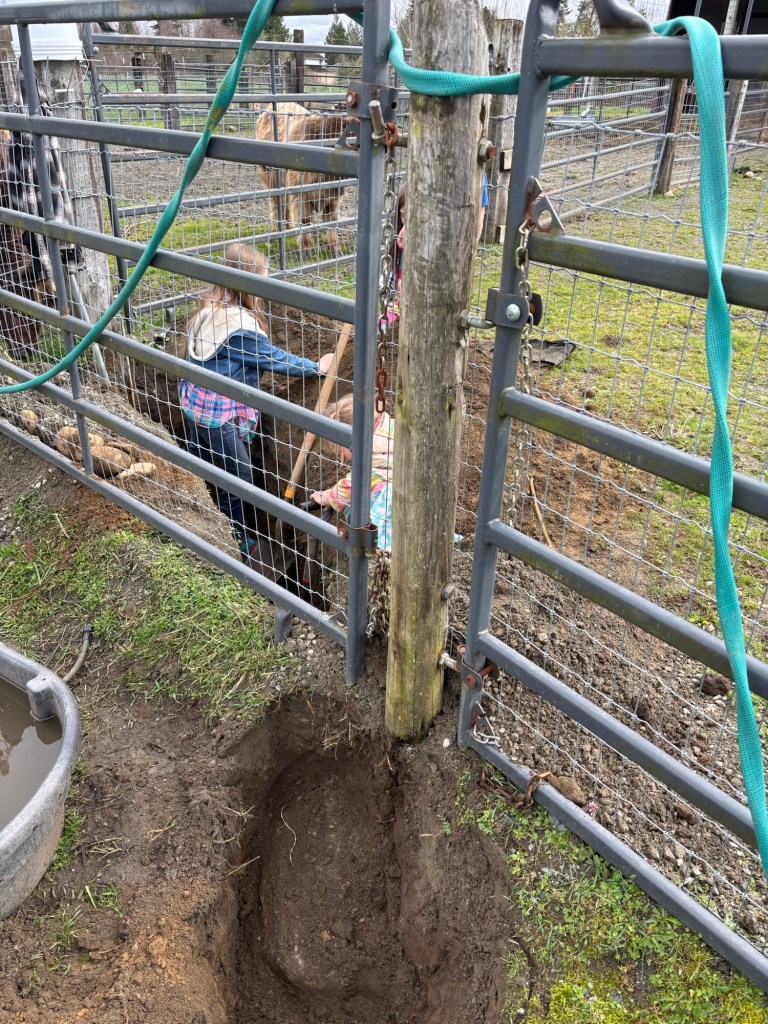
Little inconvenience. Apparently that (untreated) wooden post was originally set in concrete. The post has completely rotted away but the concrete is as strong as it ever was.
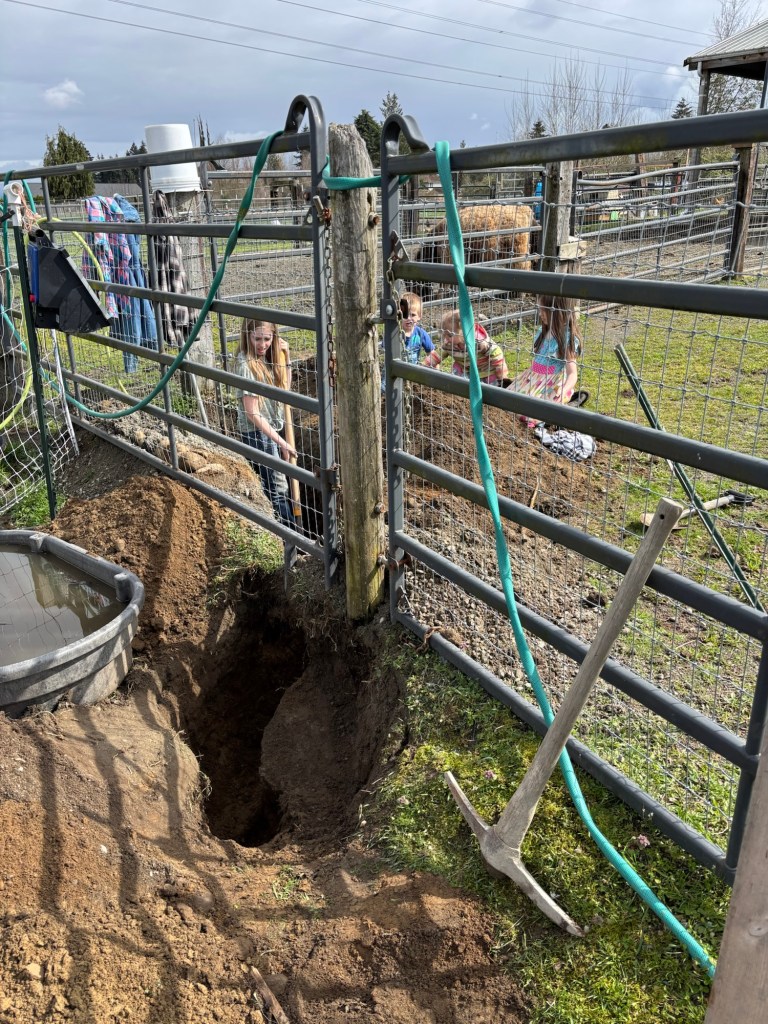
Rather than try to break it up into pieces, I just dug around it. The hydrant will have some stand-off from the fence, which is better for ease of access anyway.
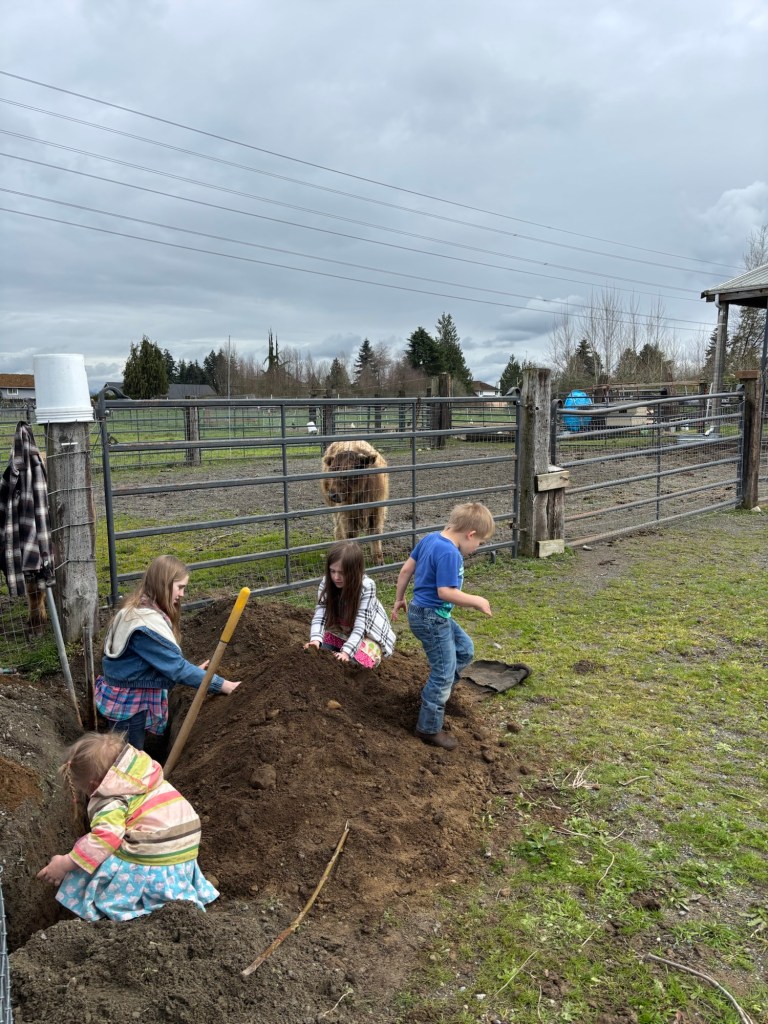
Only about 2 hours of work to dig the whole thing. Do need to try to get the plumbing in this weekend, supposed to have heavy rains on Sunday.
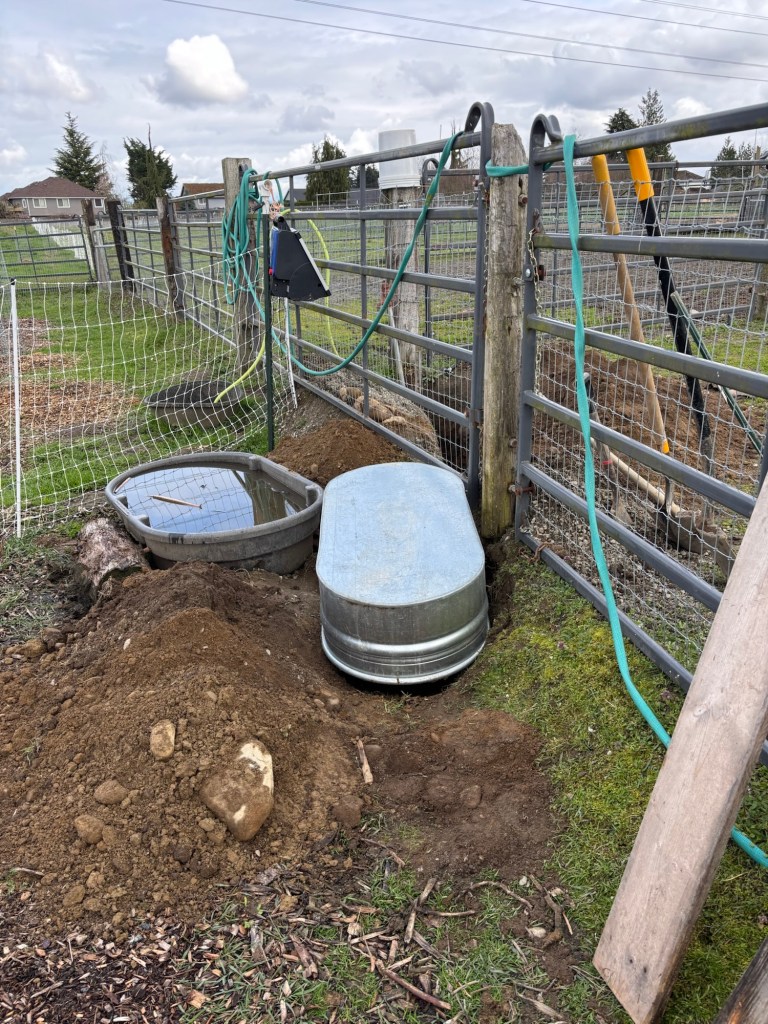
An afterthought, let’s put a cap on this to keep the ducks from falling down into it and not being able to get out.

 Little Farm in the Big City