

While our sauerkraut may have royally failed, we have been having better success with rutabaga, beet and parsnips.
We put them in canning jars with 3-4% brine, and set them first on the kitchen table, and then, when the sunlight was too bright there, on top of the piano.
The beets were quite delicious, sweet and mildly salty. There was one tiny mold spot on top of the brine which I scraped off and threw away, and since I didn’t die of eating the beets, it was probably limited to the surface of the water. We only left the beets about 10 days, before eating them.
The rutabagas were even better. That is, Winnie and Daddy loved them, and no one else liked them at all. To Mommy they taste like nothing but vinegar. To Daddy they taste nutty, mildly sweet with a complex tangy edge and a hint of effervescence, which may sound strange considering it has the crunch of a carrot stick as well. They were the best at about 14 days (64 degrees F) and got steadily more acidic after that until we stuck them in the fridge.
The parsnips no one liked. The taste and texture were just off. We’ll try it next year with carrots and see if they do better. Since we have such a large crop of rutabagas, and it is January, and the kids don’t like them mashed with butter (heaven forbid the economy ever collapses and we are forced to subsist on roots and fruits), we have been experimenting with other things do to with them.
They are quite lovely in scalloped potatoes.
And since we had leftover slices, we tossed some in olive oil and salt…

And put them on the dehydrator.

She has very decided opinions for one so young.

Seppi did most of the heavy listing.

With school going on in the background.
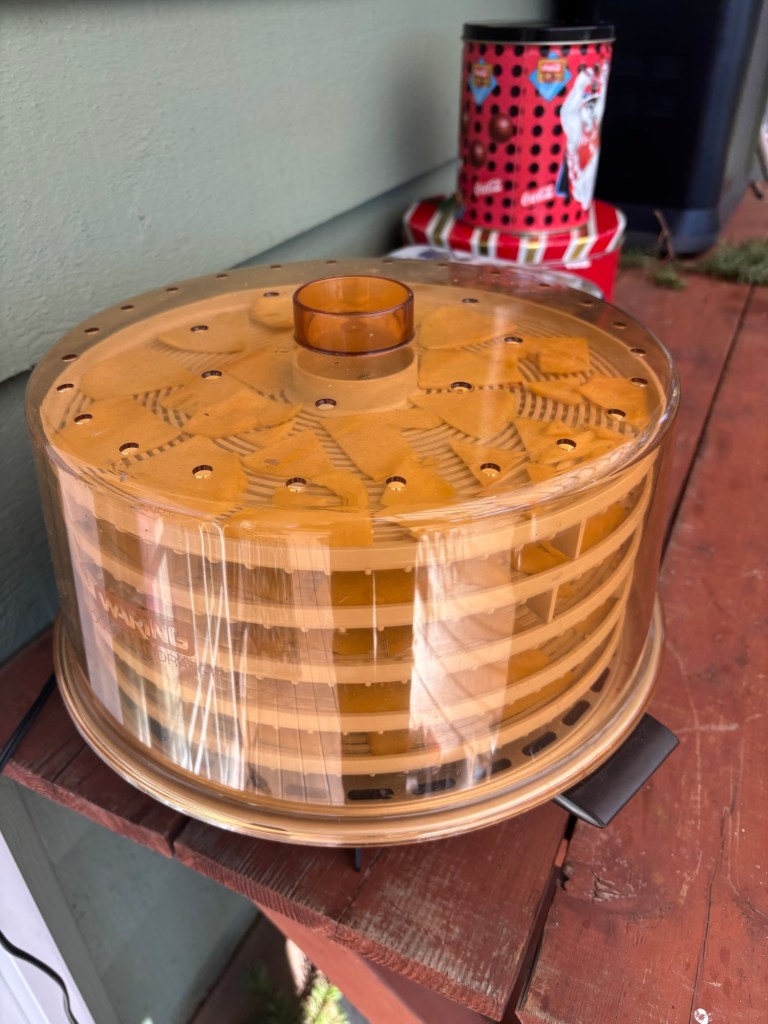
This was a mixed bag. They took about two hours to dry to chip-like crunch, but the top tray had an unpleasant bitter after taste, probably because the glaringly bright sunlight caused the olive oil to go rancid? The lower trays tasted find. Maybe we try this with a different oil, or with no oil at all.
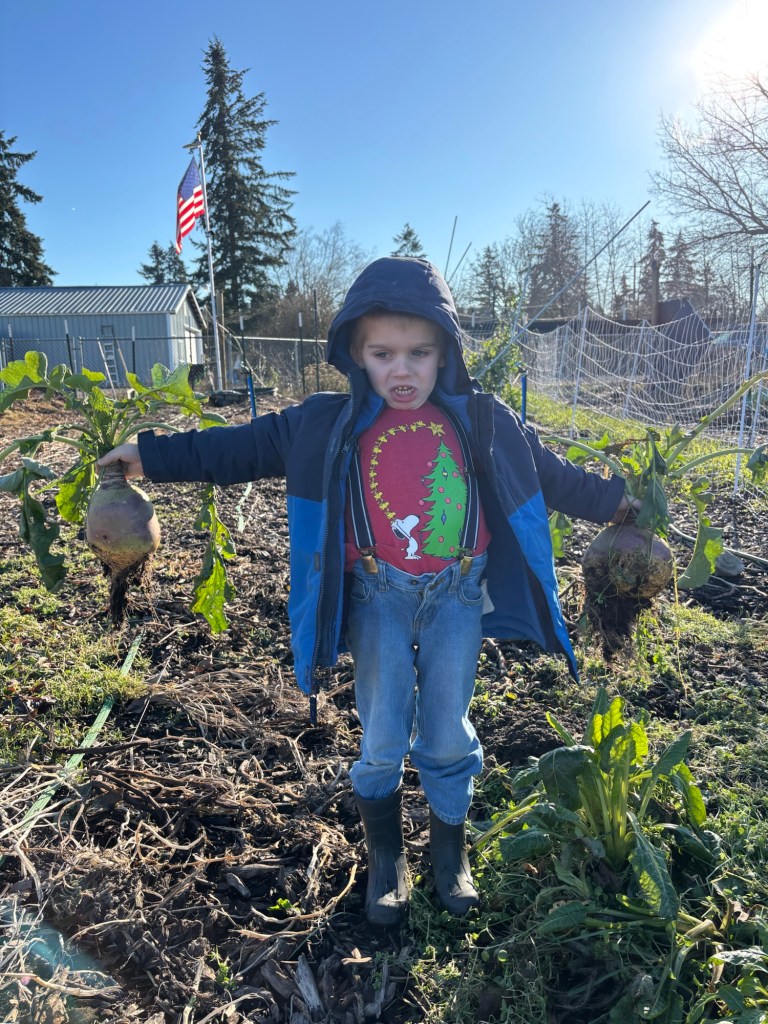
We pulled two more rutabagas and made more rutabaga sticks.

Roughly 2 kg of rutabaga, after all blemishes removed.
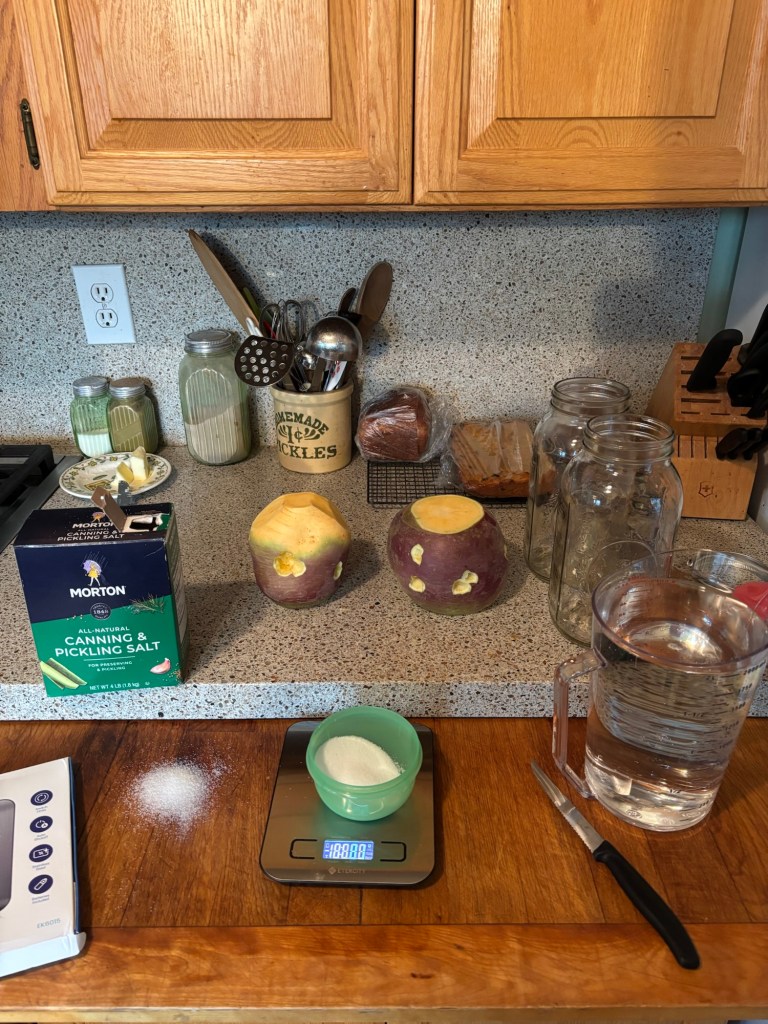
Using 4% brine for the sticks.
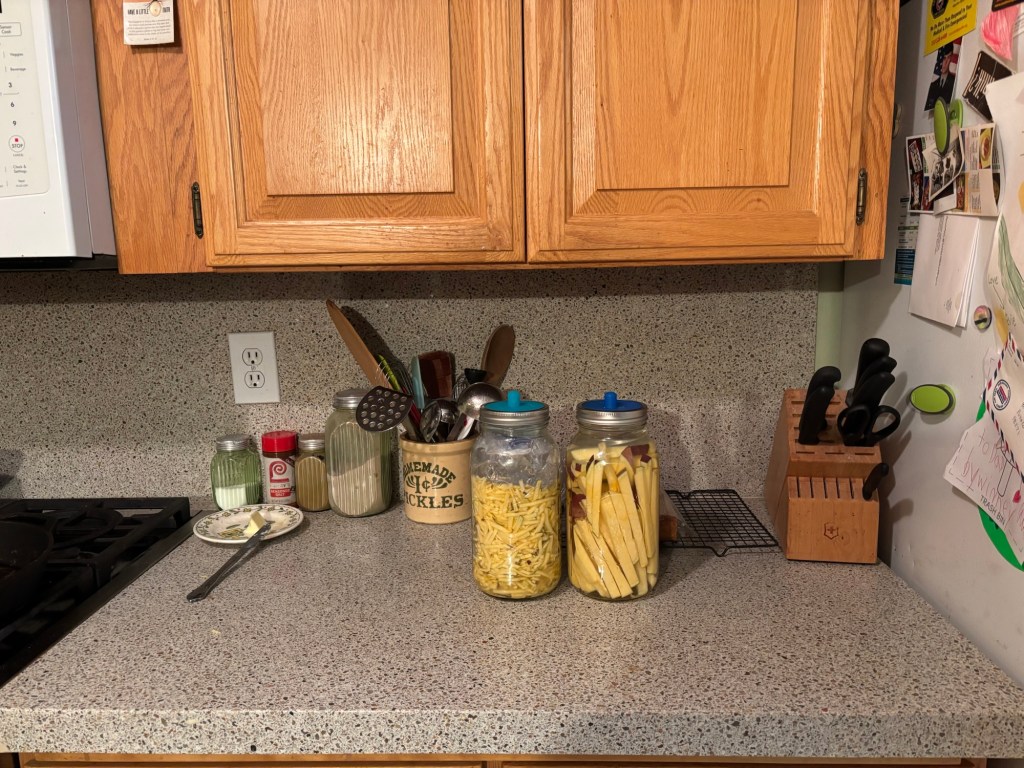
We also shredded about 1kg with the mandolin, and mixed it with 30g of salt (3% by weight) and dumped it in another jar for Sauer ruben. Only 30g, because “Putting Food By” said to do it that way, although I am always skeptical of how little salt it actually is when you weigh it out. We did not tamp it down, (again, according to the instructions) within an hour or two we had two inches of brine in the bottom of the jar, pulled out of the rutabaga by the salt. However, overnight it did not draw out any more fluid, so in the morning I made a liter of 3% brine and filled it up. There is a three-part seal, first a ziplog bag filled with water, shoved into all the nooks and crannies, then a glass weight to keep that down with brine level up to the bag to create a backup water seal, and finally the silicone nipple creating a one-way valve on it all.

And there it is, fermenting away on top of the piano. I would like to find a better place, but right now the temps in the garage are too cold, and all of our closets are full, and anything on the floor would be too great a temptation for small fingers.
While in the garden we pulled some parsnips which Ellie peeled.

And we made into a chicken soup.
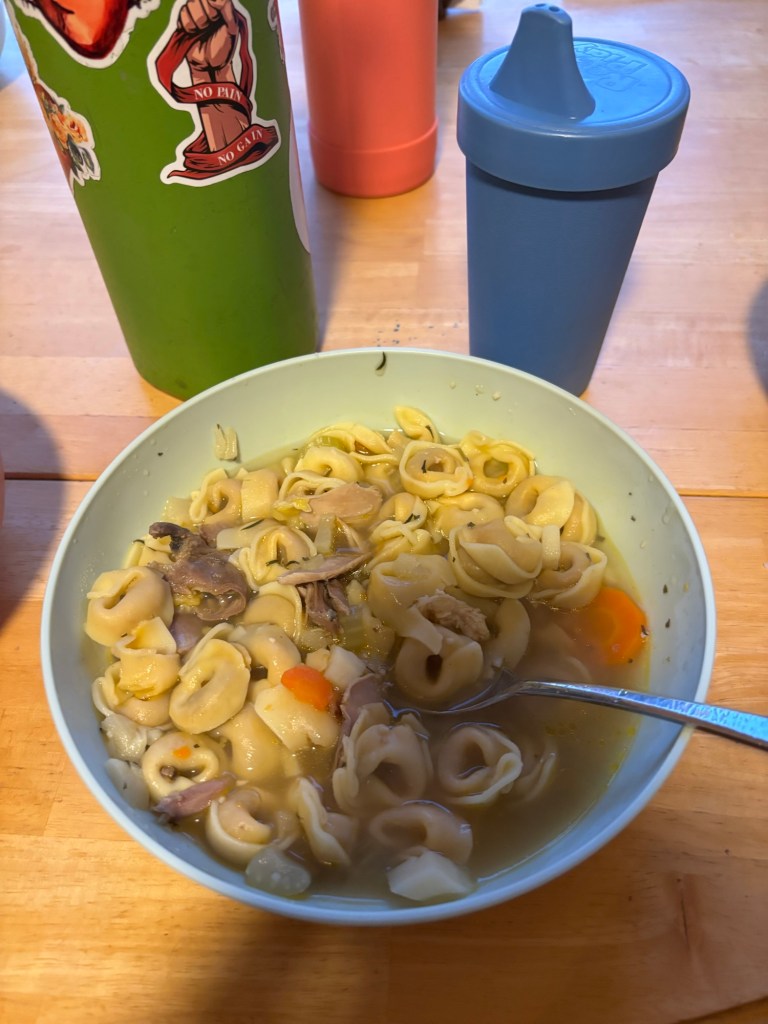
We brined and then boiled one of our retired laying hens (a.k.a. stew chickens) for 2-3 hours, then simmered veggies in the stock, while the chicken cooled. 30 minutes before serving boned the chicken, tossed the meat in the pot and the bones to the hund, bring it to a rolling boil, and drop in the tortellini for 15 minutes.
It was so good everyone except Ellie ate two bowls of it.
Those old stew chickens really know how to flavor a soup.

 Little Farm in the Big City