

One of the most common suggestions we get from people who see our homestead is “You should rent a… [insert piece of heavy equipment here.]”
Whether it is a backhoe, or a skid steer, or whatever, there is some truth in it. A lot of the projects we have done on the farm could have been done a lot more quickly and easily with a machine of some kind.
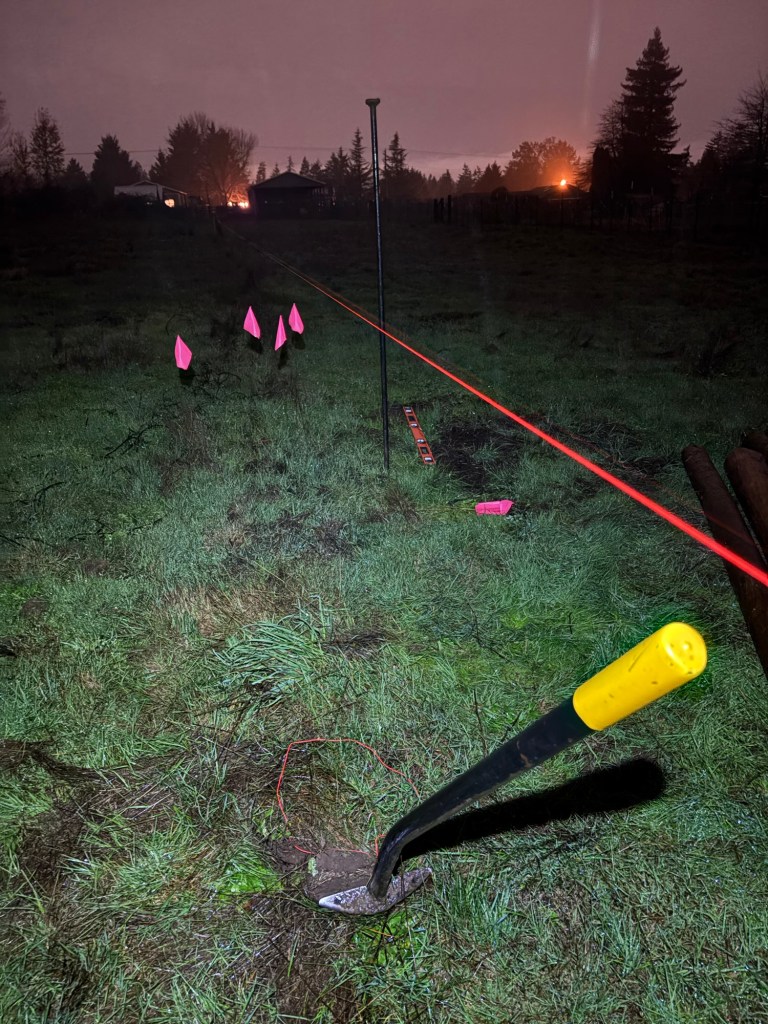
Thus far on the farm all the infrastructure work has been done with hand tools and pure man sweat.
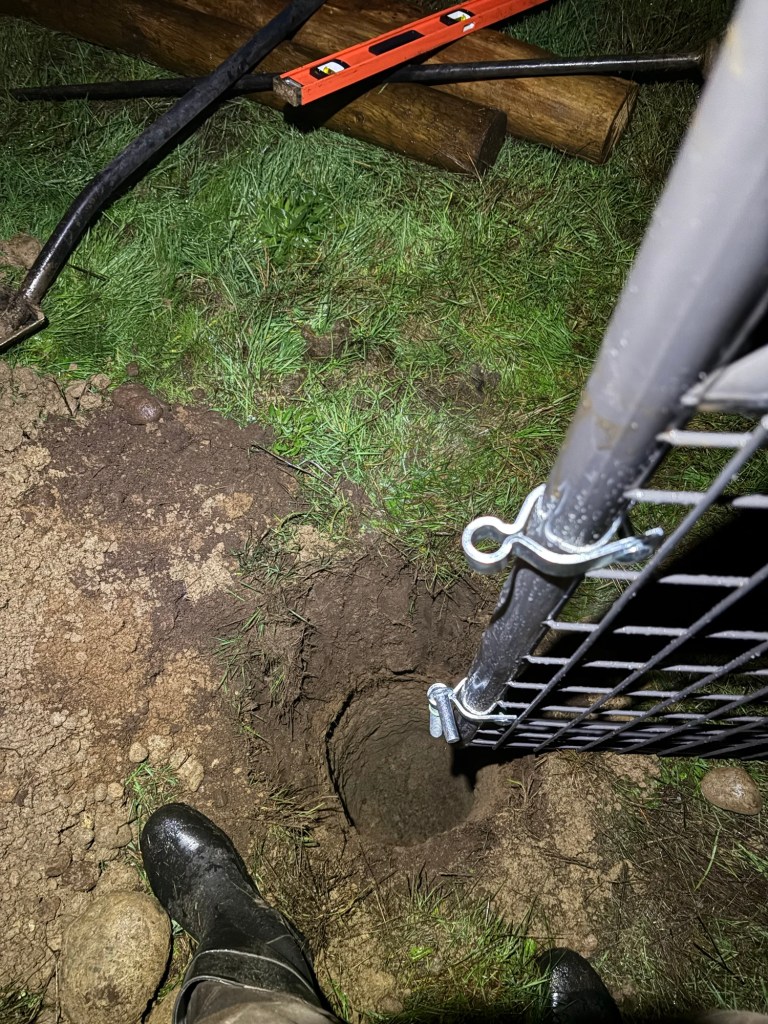
Last Thursday morning (a.k.a. Thanksgiving) was no exception. There I was at 5 A.M. Trying to set in the last fence anchor in the south pasture.
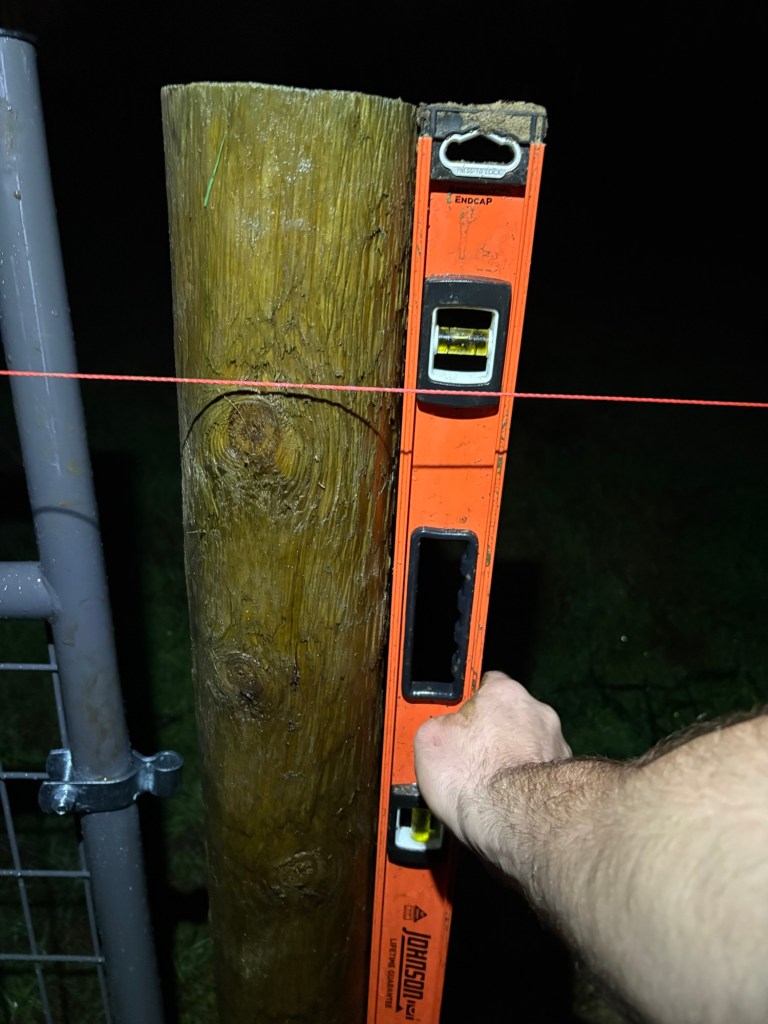
Would it have been easier with a post-hole driller? Maybe. We did not have good luck with the hydraulic post-hole driller the first summer we were on the farm. It kept hitting rocks and skipping, and then all the silt would fall back into the hole as soon as we pulled the auger out.
What is certain is that it is not efficient to rent a hydraulic post-hole driller at 4:30 in the morning, or even the night before. The reality is we don’t know before hand when we will be able to get to any particular task. It might be efficient to rent an auger and drill a dozen holes in an afternoon. It is not efficient for an hour here and an hour there that we can get work done.
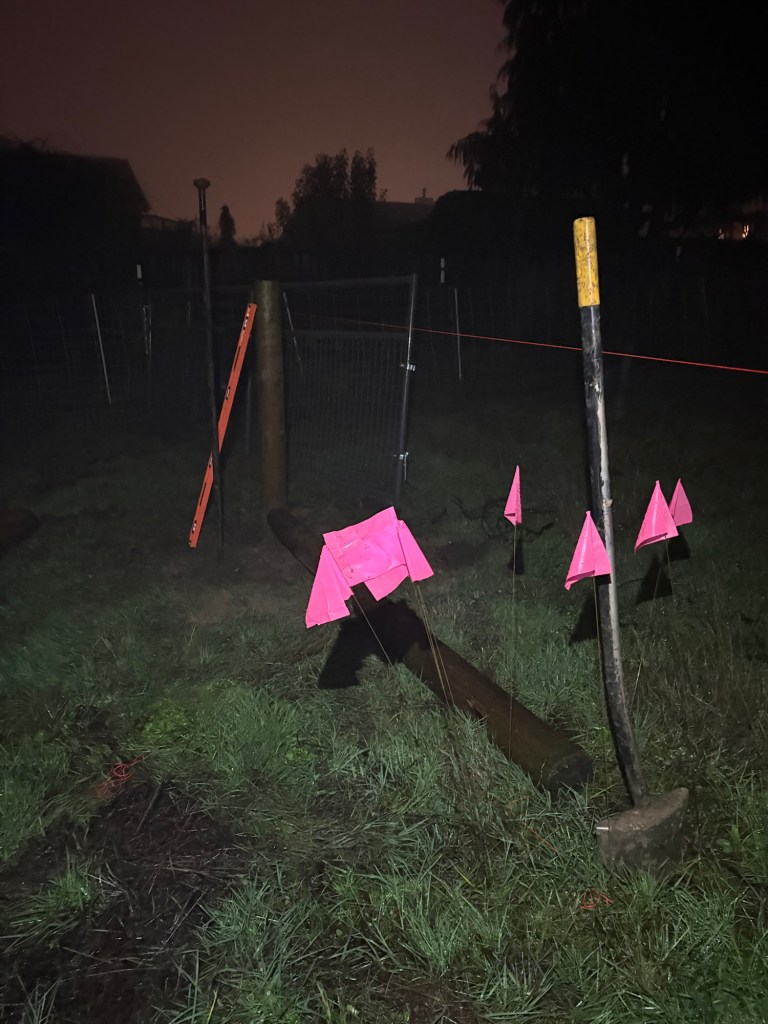
More to the point, digging by hand is good in its own right. It is relaxing, most of the time.
A machine is noisy, digging with a shovel is quiet. I can play an audiobook, or have Jonathan Roumie narrate the rosary.
A machine is sedentary, digging by hand builds and trains the body, and hardens the will.
Which, if I may be allowed to digress, is the measure of a strength and conditioning program. Anyone can learn to put up weight in the gym. This is usually a symmetrical weight, specifically designed to be gripped and lifted, in a clean and comfortable environment. There is nothing wrong with this. Indeed it may be an acceptable substitute when there is no real work do be done, or to prepare for real work. However, if your workout program does not prepare you for this kind of work, you might need a new workout program.
This may sound odd, but think about it. In order to dig a 48″ deep hole with a shovel, I have to sit on my knees and hinge all the way forward until my chest is almost on the ground. I then have to reach down as far as I can into the hole with one arm, extended by a shovel handle, while the other arm locks the end of the shovel to the body. I then need to press the end of the shovel against the wall of the hole by rotating the torso and scrape the load of dirt up the side of the hole by extending the knees and hips while maintaining the isometric counter rotation in the torso and shoulders.
A man should be able to dig a hole for an hour or so before breakfast, generating high levels of force at extreme ranges of motion, and still be able to be present for his family or coworkers or customers for the rest of the day. A hundred years ago this would have been normal. Now it is almost unheard of, but why does it need to be out of the ordinary? Anyone can develop a level of strength that was considered commonplace a hundred and fifty years ago.
My buddy used to wear a shirt that said “Today I do what others won’t. Tomorrow I will do what others can’t.” Ability is the result of action over time. A workout program should develop ability, and ability is measure by:
- Strength. How much force can you generate?
- Mobility. How far from your neutral position can you generate that force without hurting yourself?
- Stamina. How long can you generate force?
- Resiliency. How quickly can you recover?
If your workout isn’t developing these traits, you might need a new workout.
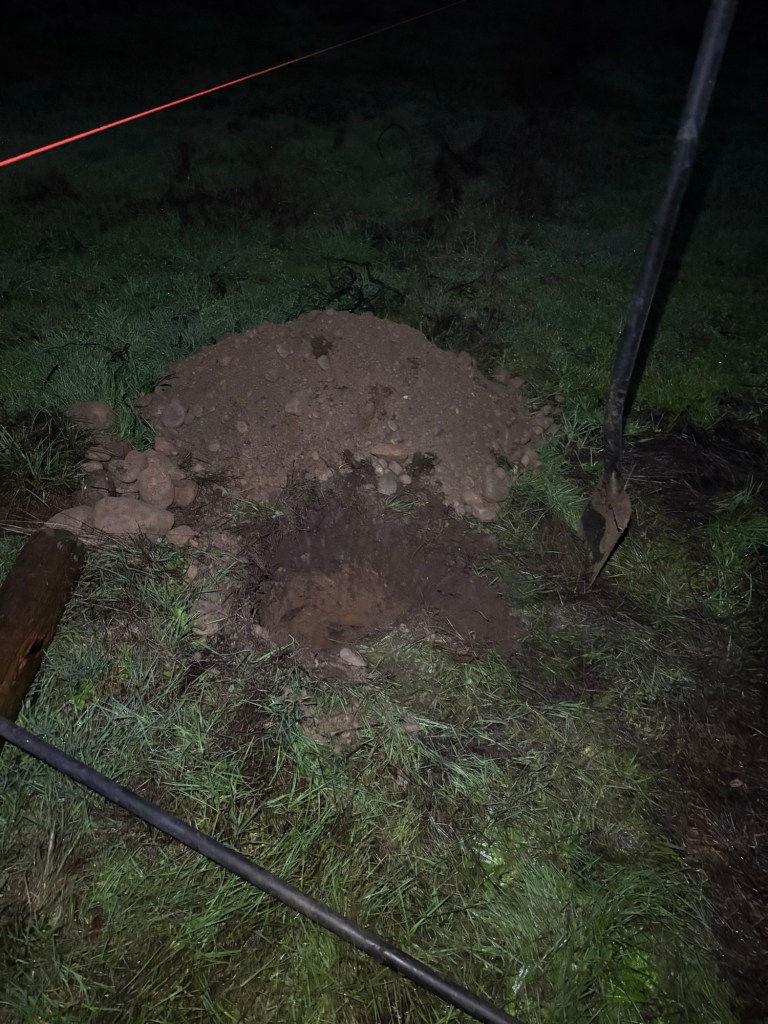
Since we didn’t have to be anywhere early on Thanksgiving, (Mass was at 9) why not get a start on the second hole for this anchor?
It did not go so well.
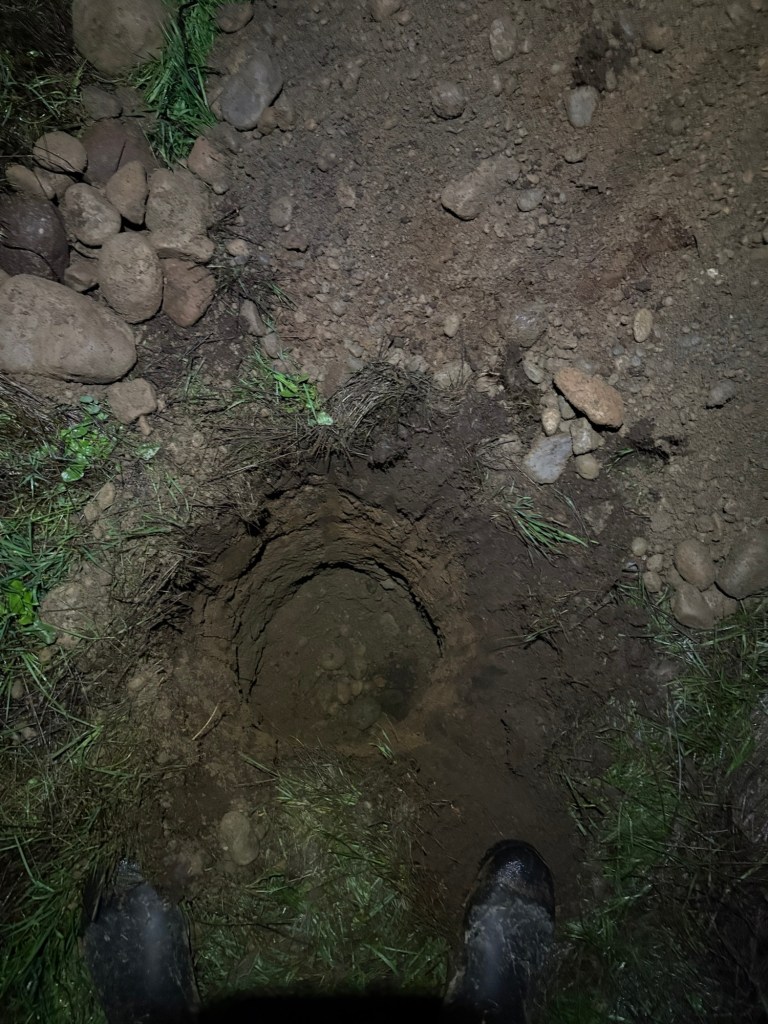
Although these two holes were separated by only 8 feet, there was a huge difference in soil texture. The soil in the second hole was riddled with rocks.
Every shovel load had to be chipped off the bottom, often with the bar instead of the shovel, and then scraped up the side. With so many rocks the rocks role down the head of the shovel and get caught between the shovel and the wall of the hole. This creates a gap that allows the dirt to fall through back to the bottom of the hole.
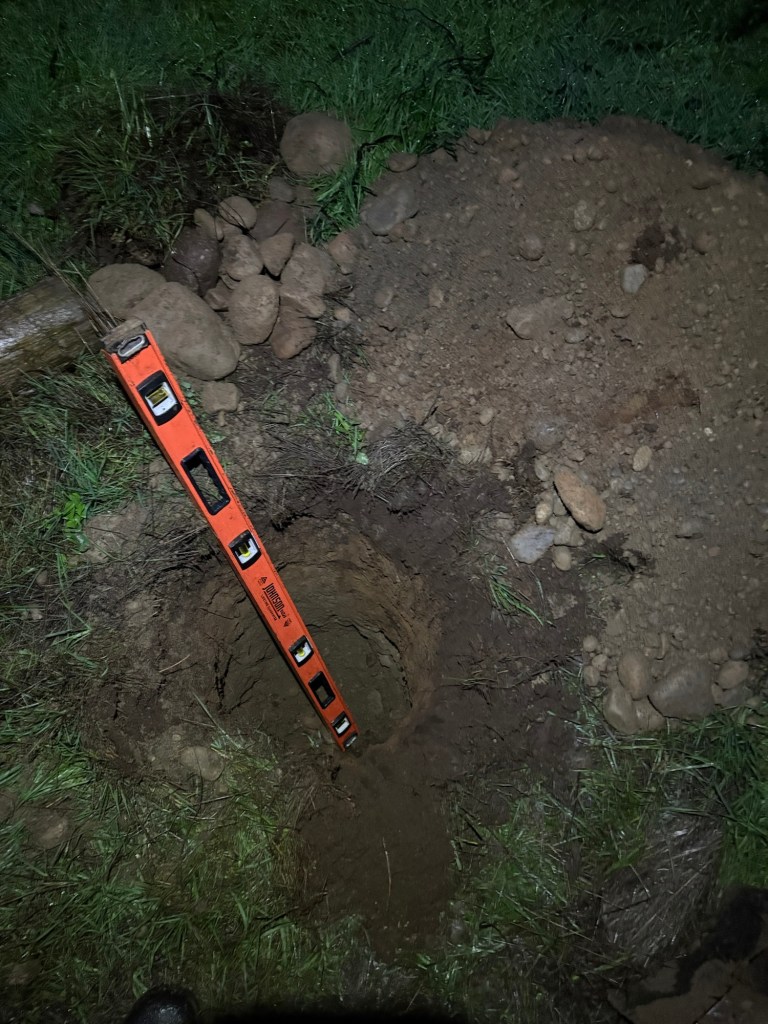
After an hour or so, I had only made about 2 feet of progress, so I called it quits and went home for the day.
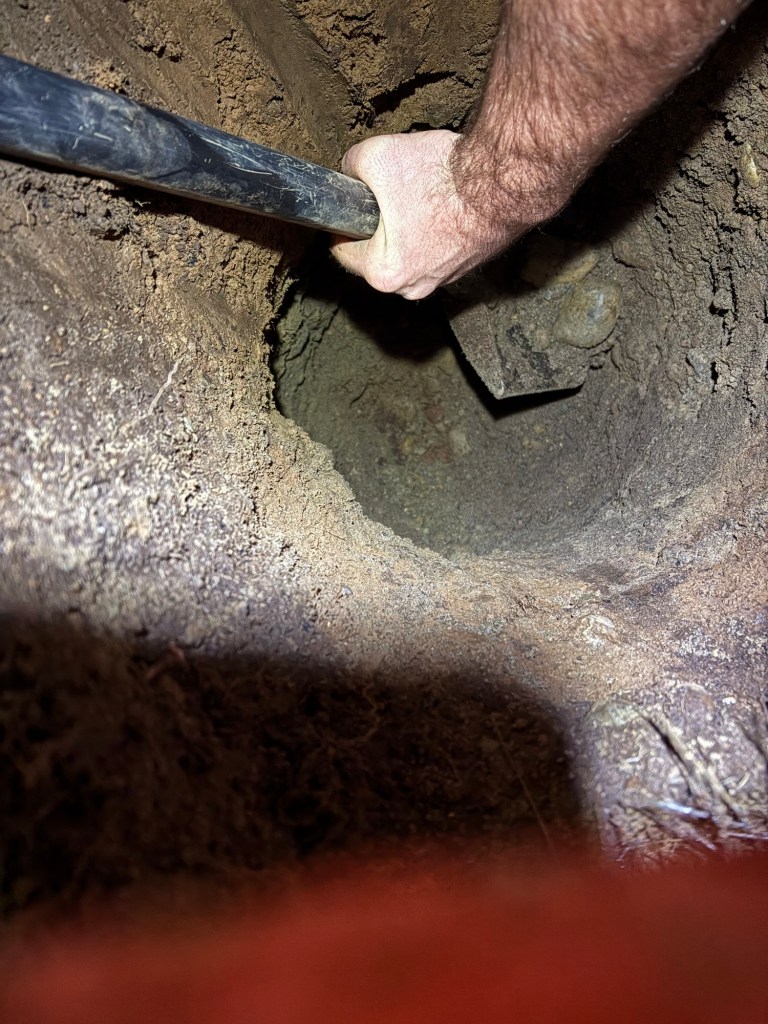
Friday after Thanksgiving was a workday, so I had limited time, but was still able to get the hole finished.
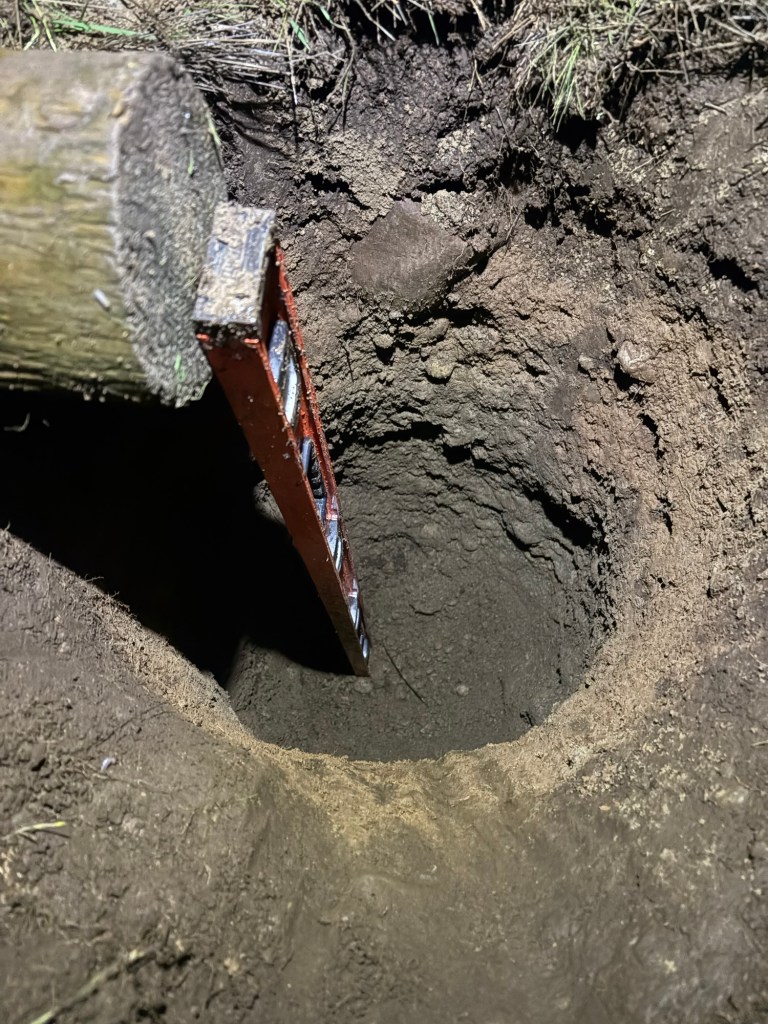
46 inches down. You can see how the hole is wider below the first foot. This is because all the scraping of debris out of the hole undercuts the silt and rock in the lower half of the hole, which makes subsequent scrapes harder and harder. You may wonder why I don’t use the double-shovel post-hole digger. The answer is that in order to close the shovels, the handles have to spread at least a couple of feet at the top. This means in order to reach 4 feet of depth, the top of the hole has to be two feet or more across, which more than doubles the amount of dirt I would have to move per hole.
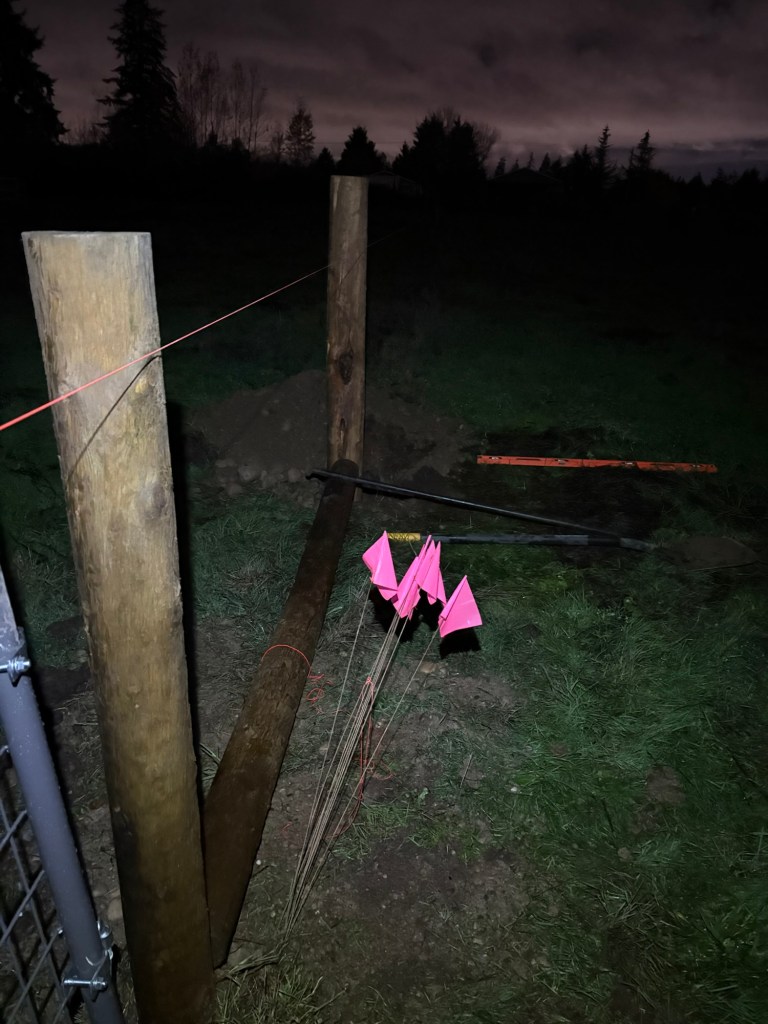
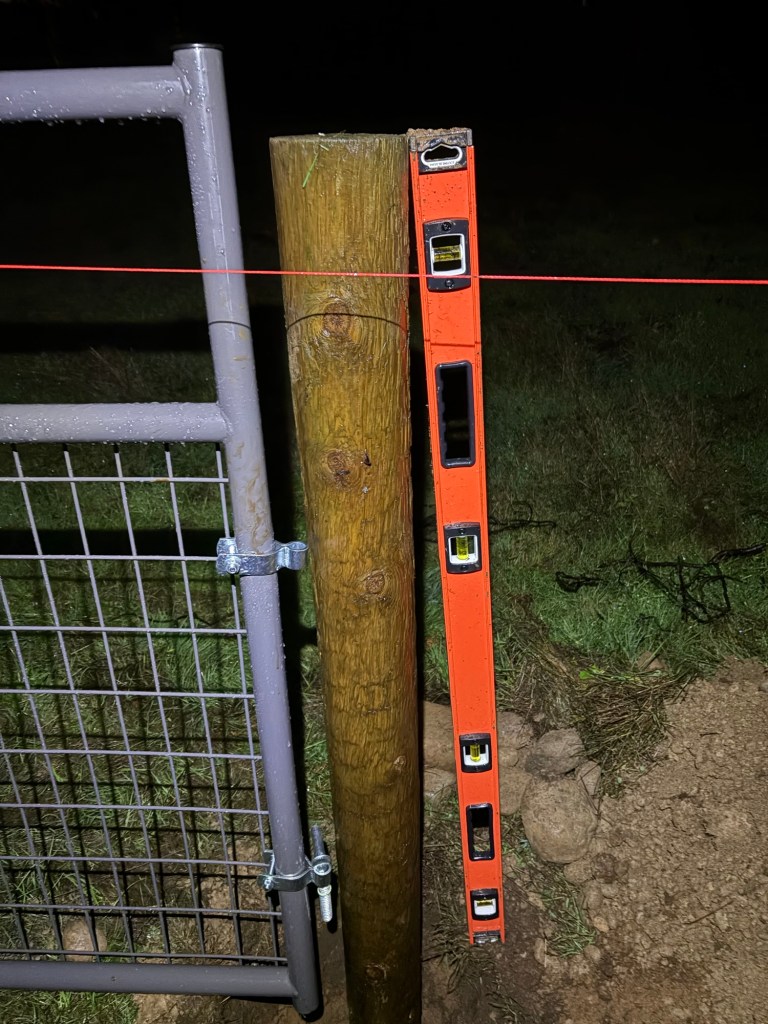
As it was, I was able to get the hole dug and the post set in place, and at least the bottom of the post filled in, before leaving for work.
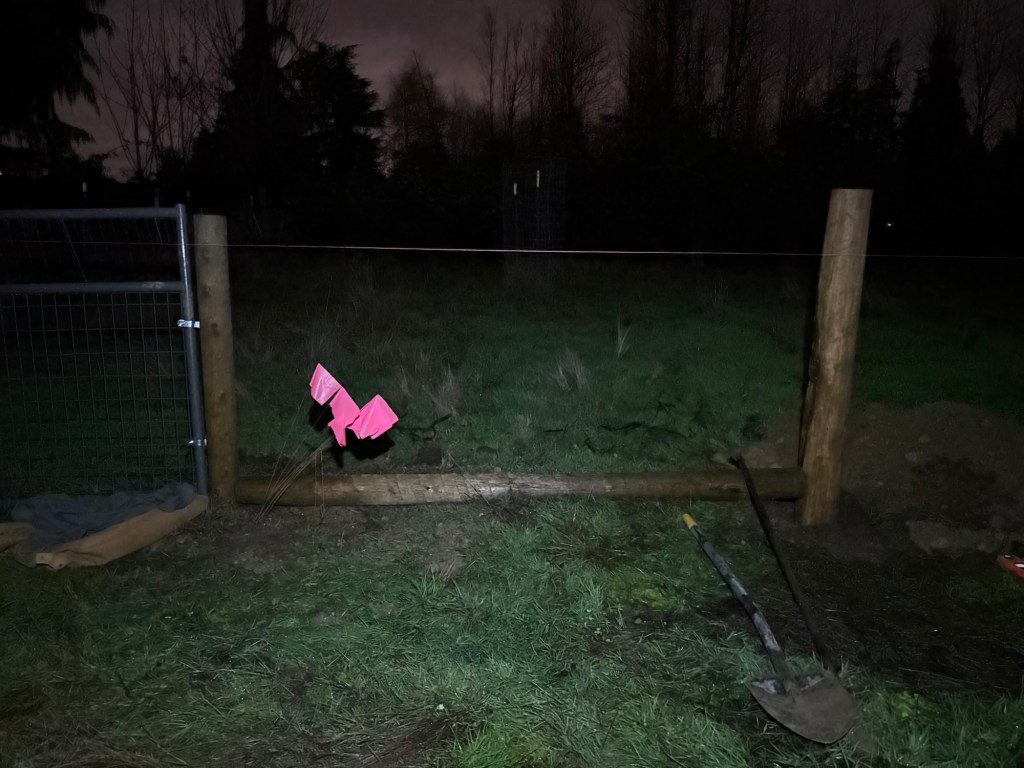
The hole wasn’t all the way filled in, but this was what I had time for.
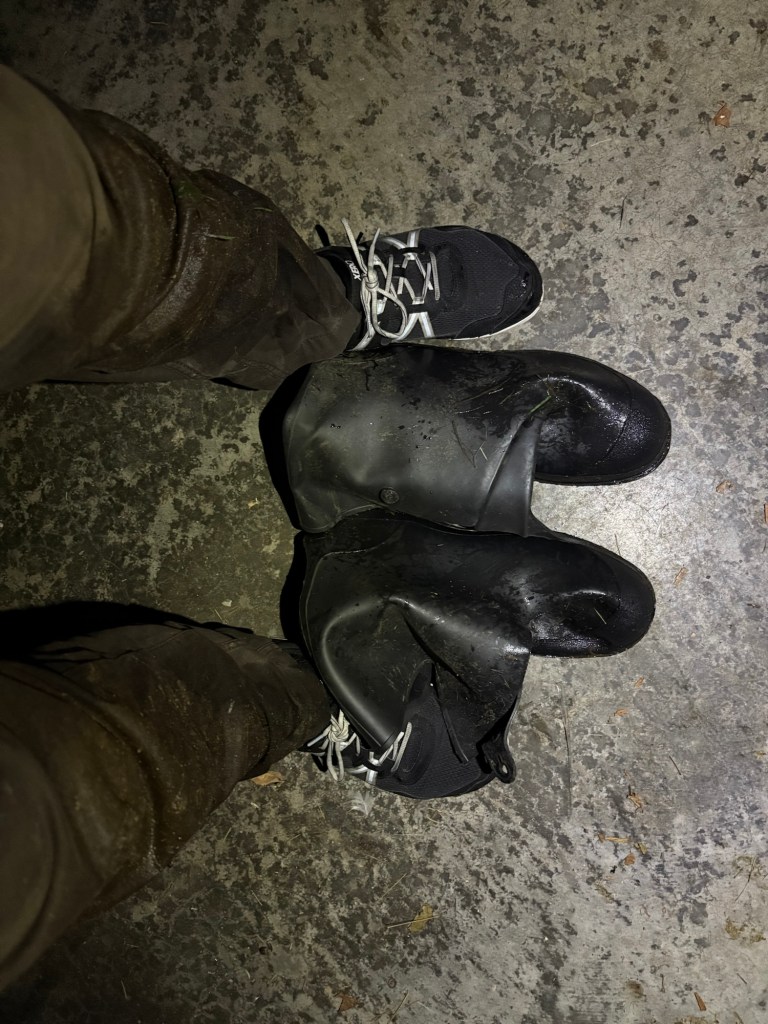
Time to get cleaned up for work.

 Little Farm in the Big City