
We have moved the animals on. After about 10 days at the east end of the north pasture, we have shifted them to the north side. This is the worst and least productive part of the pasture. We have decided to mob graze it this fall/winter. That is, instead of moving the animals through fast and furious to maintain minimum grass height, we are going to let them stop here for a while, and let them beat up this one corner of the pasture, feeding them hay and feed on pasture. This is a cost benefit decision, originally Uncle Adam’s idea. It will damage this corner of the pasture for a long time, potentially taking it out of rotation for a year until it recovers fully, but it will preserve the rest of the pasture that produces more and better grass to graze in the spring and summer.
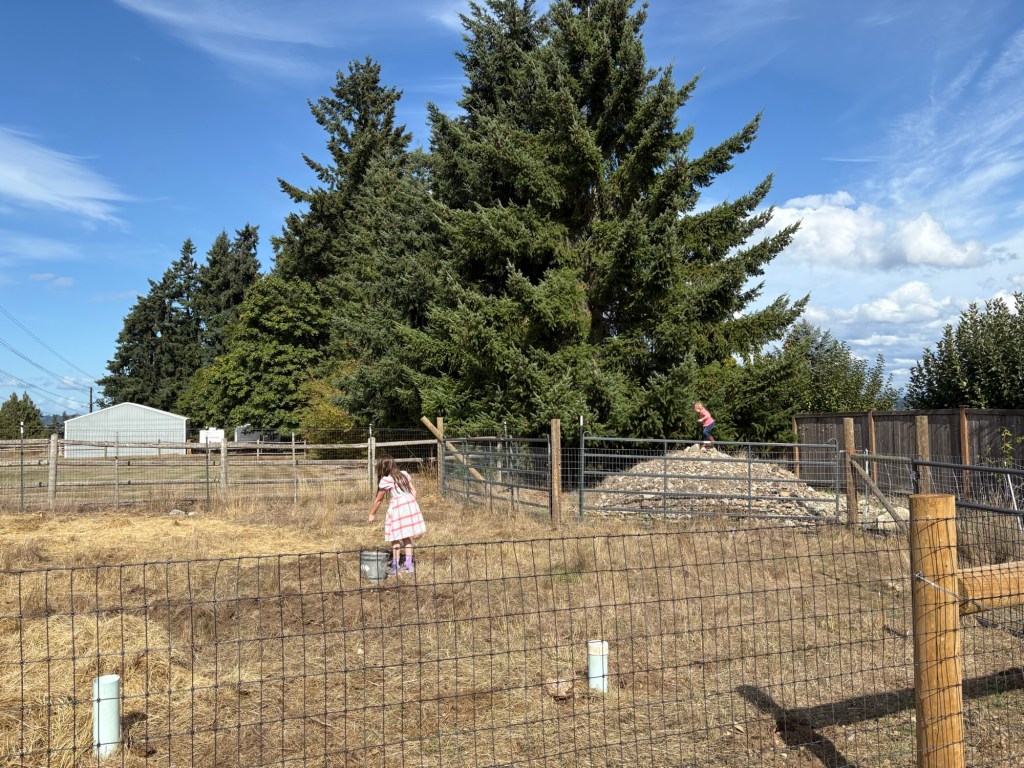
This will hopefully encourage them to stomp and root organic matter into the ground. However, with the pigs, there is an added challenge.
They are meishans, so they may root less than other breeds. That does not mean they do not root at all. There are many bare, disrupted patches of soil in the paddock they spent the last few weeks in.
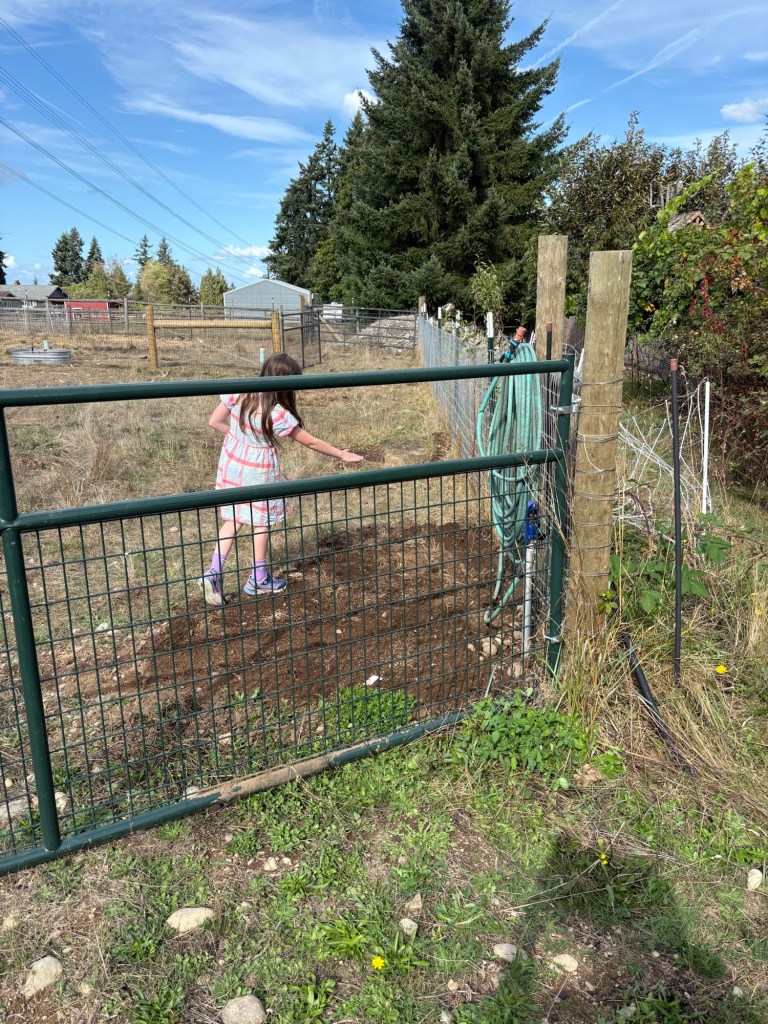
The worst is here next to the hydrant. So we spread them all with a Northwest pasture blend from the local feed store and the remnants of a bag of daikon radishes. I know, not very scientific, but it is what we can afford right now, in terms of time and money.
Although, writing this a week later with the benefit of another week of rain, I have noticed that literally every bare spot in the pasture, whether we seeded it or not, is green with tiny little plant sprouts, most just getting to the true leaf phase. This bears out Joel Salatin’s statement from one of his regenerative pasture classes on the School of Traditional Skills, that there is usually no need to seed. Every cubic foot of soil has hundreds, or even thousands of seeds already buried in it, just waiting for the conditions to be right for it to germinate. When the piggies go through and use their little noses to push off the top layer of soil, they expose new seeds in the top 1/2 inch of soil to water and warmth, triggering them to go into their growth cycle.
Of course, the problem is that we don’t know what kind of seeds they are until they have sprouted. For all we know we could get another stand of hemlock. This is why soil disturbance should generally be kept to a minimum, and why we are re-seeding the exposed soil with pasture species that we want to perpetuate, to shift the population density toward grasses and edible forbes.
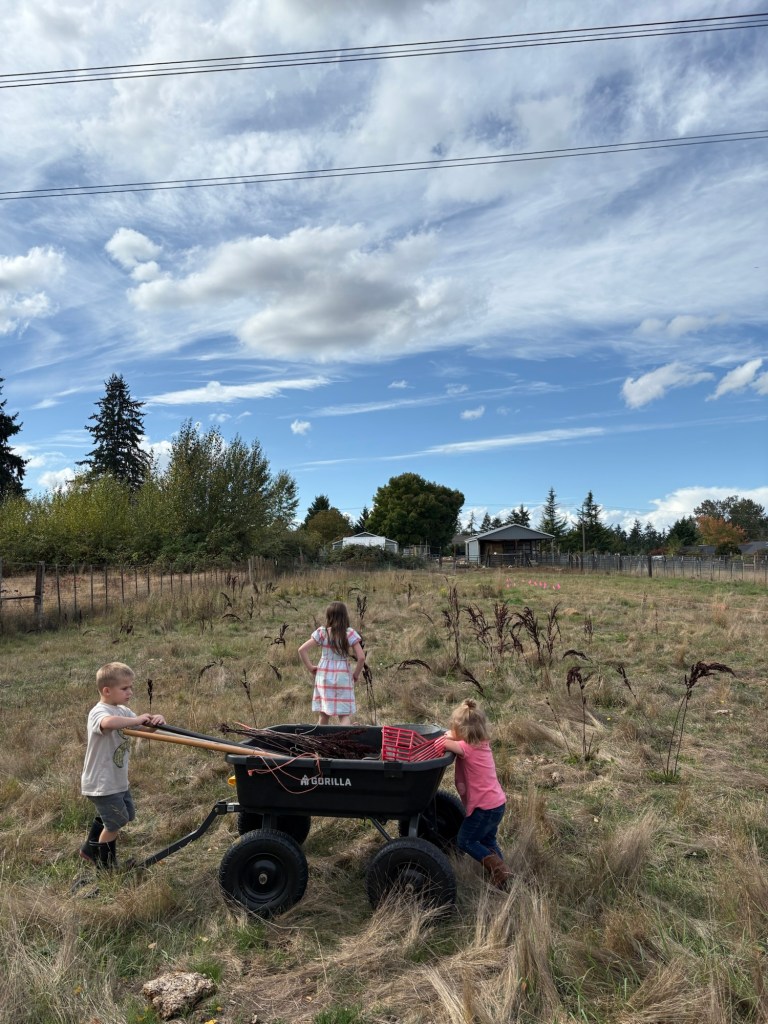
The next step was clearing out these weeds. We had been under the impression that they were tansy ragwort.
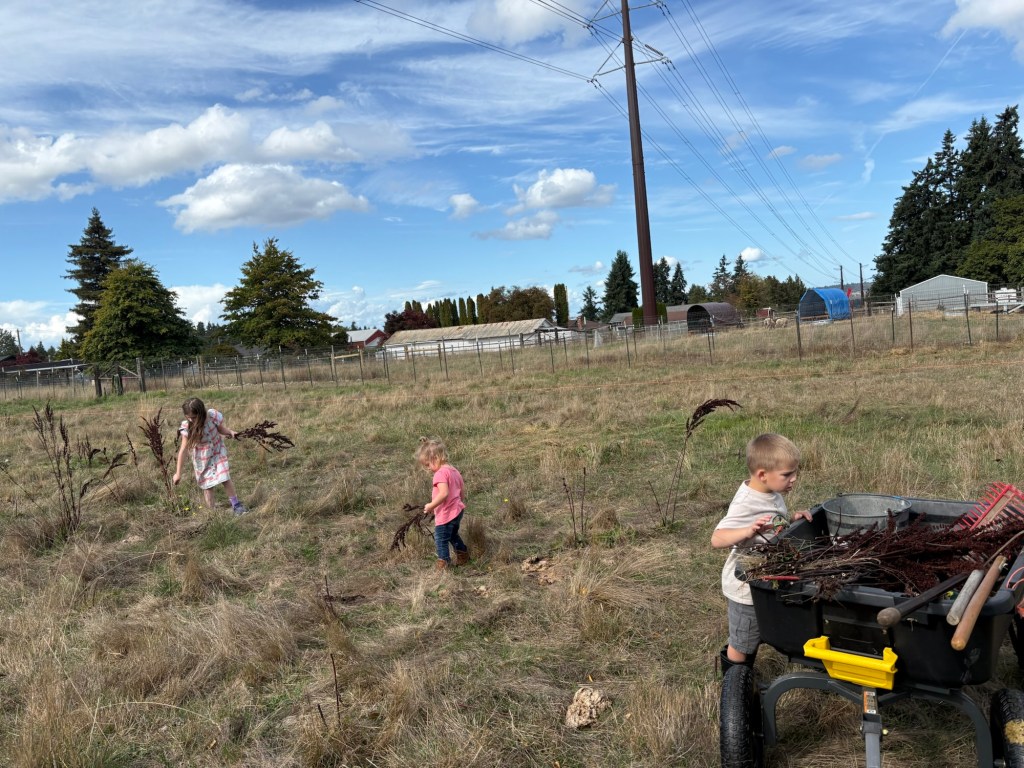
They were not. More on that at the end.
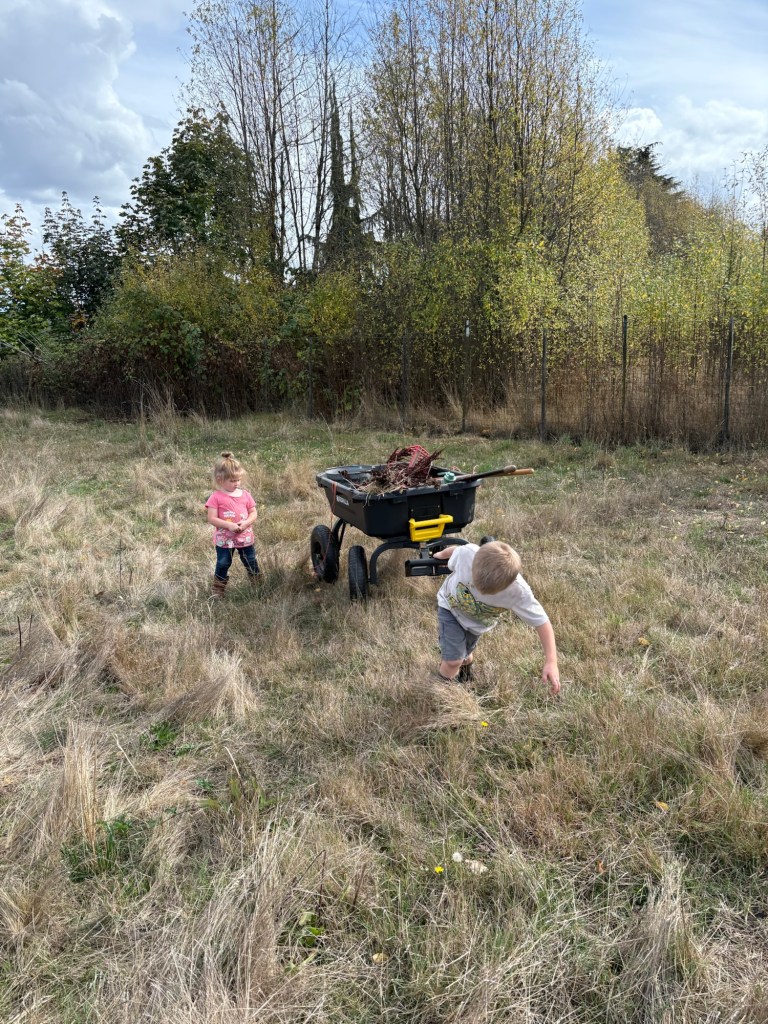
So we went through and cut them all down, taking care not to spread the seeds if possible.
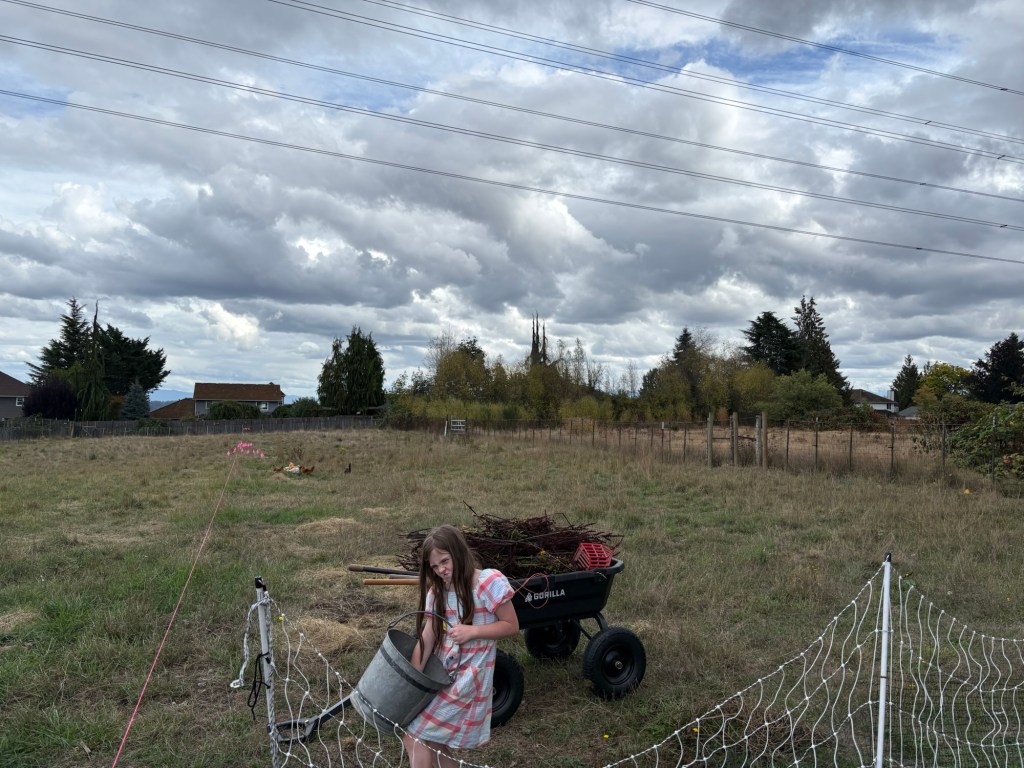
Again, there were a few small bare spots in this section of the field from when the pigs were much younger. We seeded them as well.
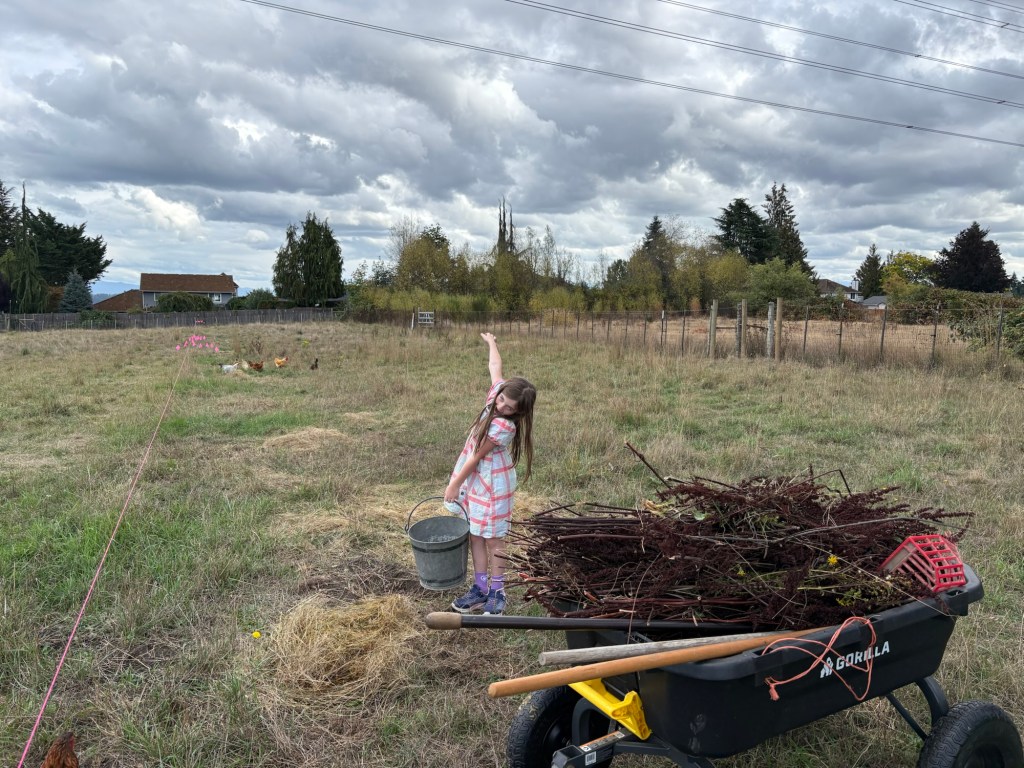
And just like that, a clean, bare pasture with not a tall brown weed to be seen.
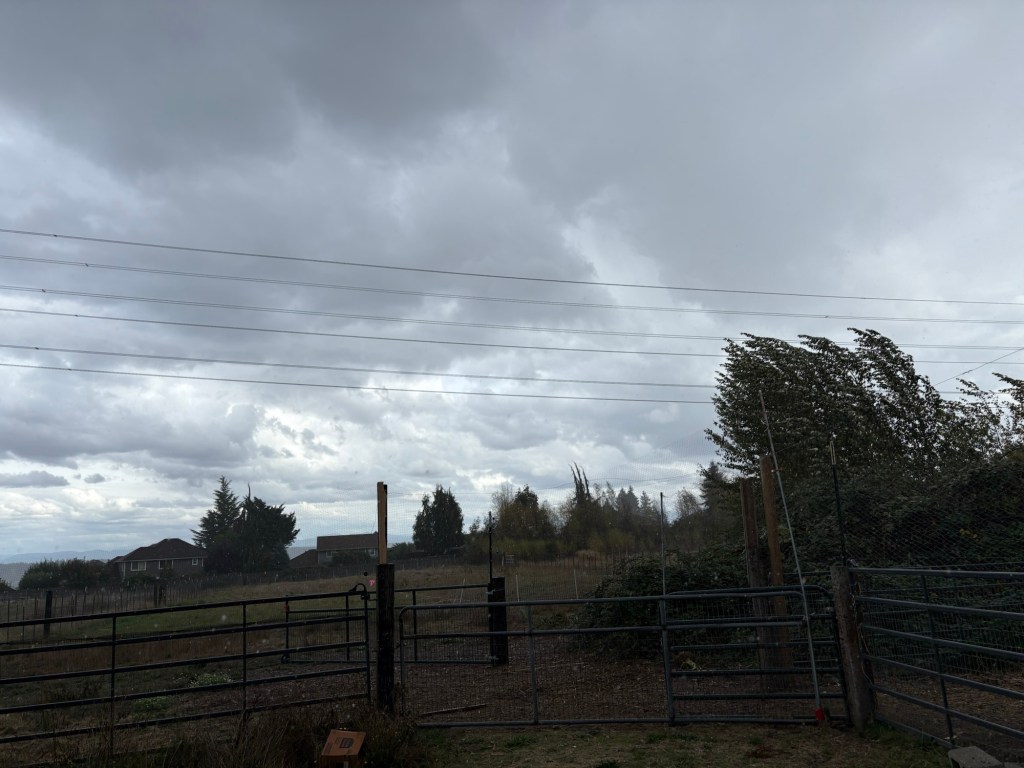
No sooner finished than about a 10th of an inch of rain blew through, watered all our seeds in nicely for us.
So now, on to the saga of the curly dock. The next day was a work day for Daddy, so between patients I looked up pictures of the weed we had been cutting down, and discovered that it is not the dreaded tansy ragwort that everyone in Western Washington is all stressed about. (In the process I verified what tansy ragwort looks like. We do have a few plants here and there, but nothing like so much as we had of the tall brown weed.)
The tall brown weed is called curly dock. It is a perennial, edible, though bitter weed with apparently some nutritional and medicinal value. People actually sell the seeds!
Well, if you want seeds, don’t buy them online. Come on over, I’ll get you a few thousand seeds for free. We aren’t going to go out of our way to grow this one, as it appears more than willing to do all the work for us. We did harvest some of the seeds to grind into gluten free flour, and we may experiment with baking with it. We will let you know.

 Little Farm in the Big City