

When I was a boy, I found a lot of four-leaf clovers.
I also found a lot of five-leaf clovers. I found six- seven- and eight-leaf clovers. I had whole blank books filled with clovers I found and taped in for posterity. I wonder whatever happened to those books. It is unlikely posterity will ever discover them.
I remember my Dad telling a grownup friend about this one day after church: “What would you say about a boy who can find a dozen four-leaf clovers a week?”
The grownup friend responded, “I would say he is spending too much time looking for four-leaf clovers.”
I rather resented this remark, as I never, in fact, looked for four-leaf clovers. I just found them. They jumped out at me like they wanted to be found. I could be walking along in any lawn, and suddenly I would just notice the clovers that didn’t fit. I did not understand it at the time, but later realized that it is a trick of my subconscious mind to keep scanning for patterns that my conscious mind has decided are important, so that they just appear without effort on my part.
When I was in my twenties, after my Afghan deployment, I wrote a blog in one of my old blog sites about this very skill. The skill honed in summers of finding multi-leafed clovers stood me in good stead when I was hunting IED’s. My eye would gravitate towards the patch of dirt or pile of rock, or line running up the mountain side that was just slightly different from the rest, and thus I was very successful at finding IED’s (and not getting blown up by them).
This skill has once again come in handy.
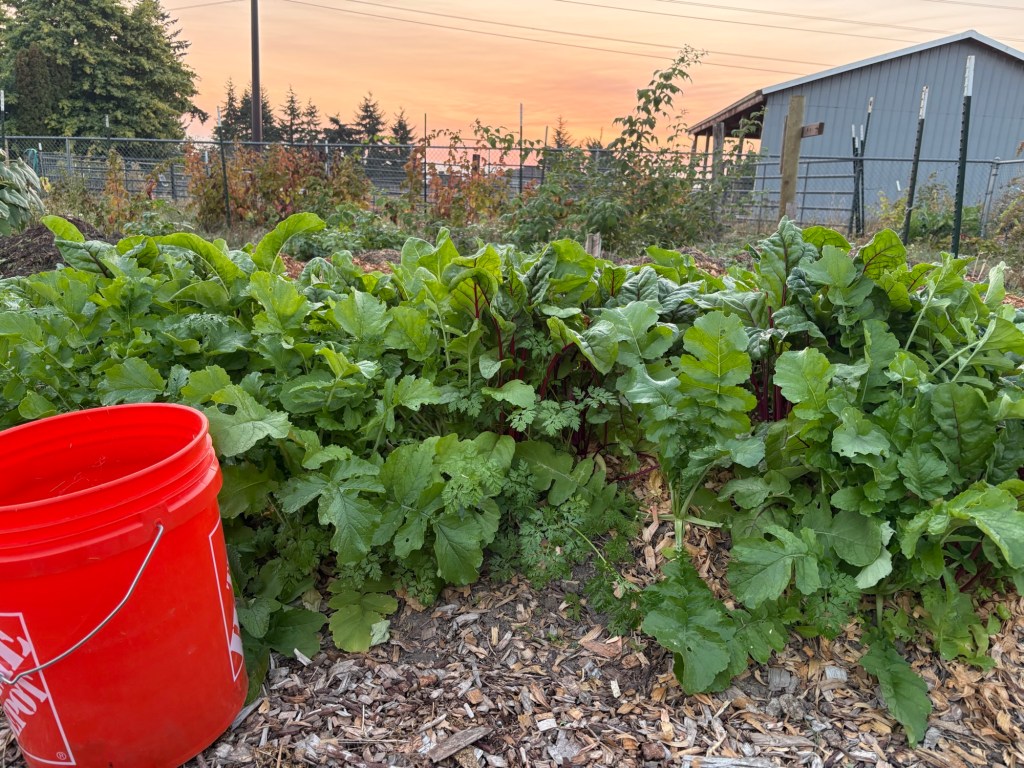
I had a few hours Saturday morning and spent them weeding the garden. It needs it. The most pressing task was the hemlock that sprouted up last week. It took about an hour and a half to pull it all out of the Swiss chard but I got it cleaned out.

Then I turned my attention to pulling other weeds out of the collards and kale. These are mostly self seeding borage and buckwheat, with a thick scattering of bindweed. These are non-toxic so they go in a bucket to be fed to the cow and the sheep. Then as I was returning from the compost, something caught my eye. It was a familiar leaf shape…

Hemlock in the carrot patch!
This is a far bigger problem, because carrot and hemlock are distant relatives.
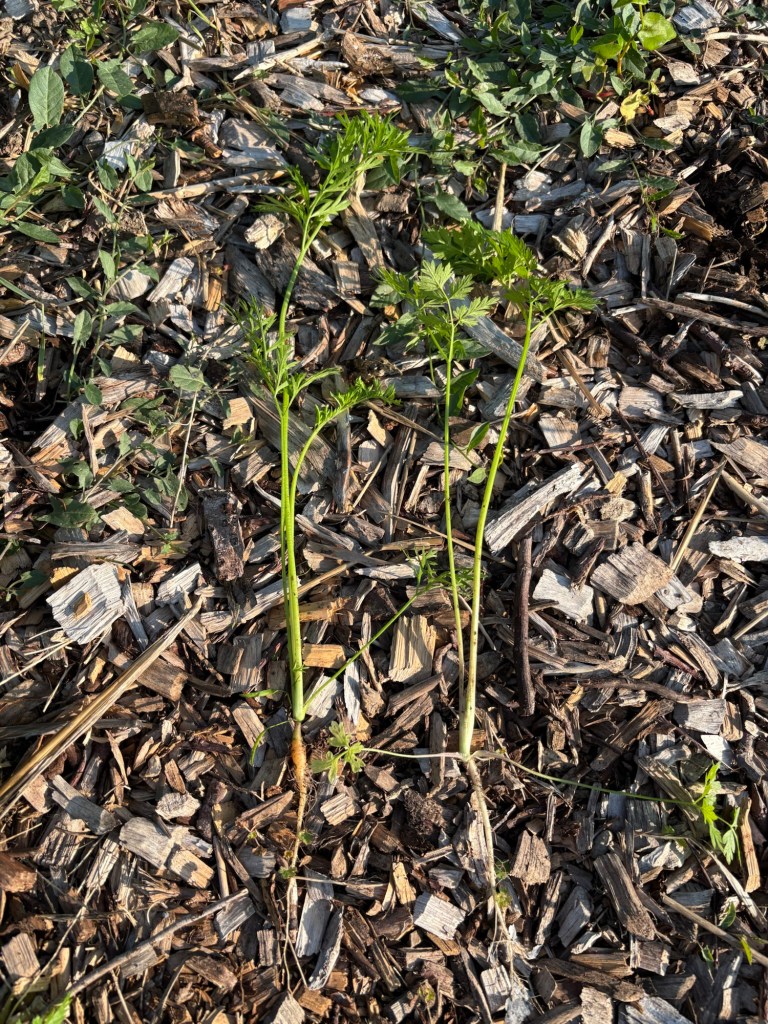
Carrot and hemlock next to each other. You can see the similarities, but also the differences. The hemlock has the telltale purple spots, and the lobes of the leaves are wider. The stems are also hollow. On the other hand, because we do not eat the carrot leaves, only the roots, there is less risk of inadvertently including a hemlock leaf in a harvest.
Unfortunately, we are not done with the hemlock, for sure. This will require constant vigilance, and regular weekly weedings for at least another year. The average hemlock plant when mature drops tens of thousands of seeds per season. The critical thing is to get the plants pulled out while still young, before they can flower, and to keep them suppressed. Just like we have almost no hemlock in our pasture now after two years of constant vigilance, we will be able to root it out of the garden, but it is highly disappointing that we will not be able to harvest dirt from the chicken yard again unless we can somehow get control of all the hemlock plants in the neighbor’s property.

 Little Farm in the Big City