

It isn’t quite fall yet, but don’t let that stop us.
The winter garden crops are coming in strong.
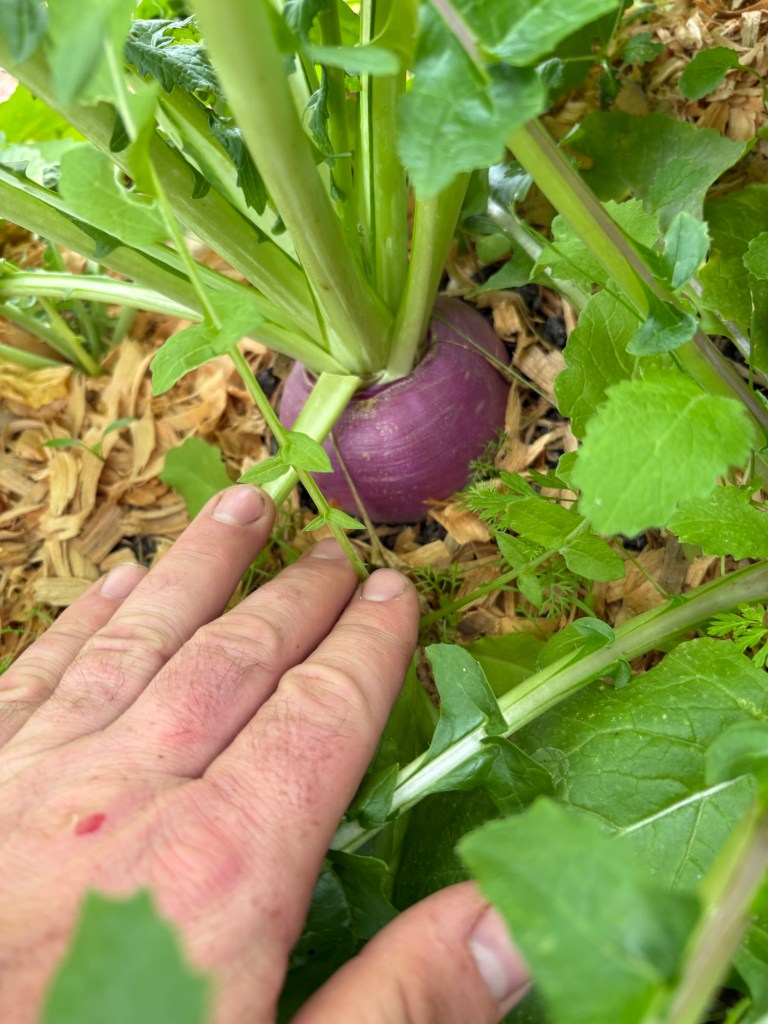
With the issues we had this summer with rodents chewing the sprinkler hoses, we are experimenting with getting most of the hoses off the ground.

It seems to be working well so far, but it requires support every 20 feet or so, which is doable on the row that had wheat this summer, because it has a t-post on each side, every ten feet. However, the other rows don’t have this, so they are still irrigated with ground laid hoses.
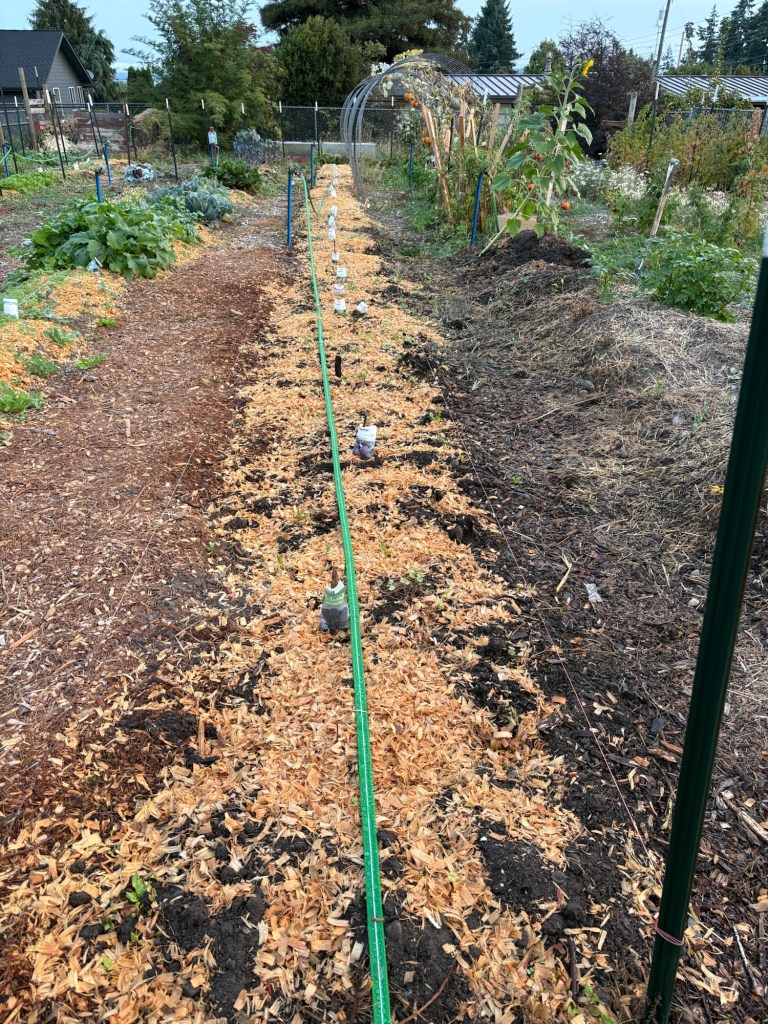
The combination of nice, warm soil temps with regular watering, and they are off to a great start.
So are the weeds.

In addition to bindweed, our nemesis here on the farm, many of the rows we just turned over are coming in thick with borage, buckwheat and nasturtium. This is really our fault because we did not stay ahead of these plants, and we let them go to seed.

So that translates to several hours worth of work pulling out all the little borage starts around the winter brassicas.

Lesson learned for next time. Although, apparently a cabbage can resprout from the roots. Here we have three little and one large red cabbage trying to grow where we harvested the big one a few weeks ago. Unfortunately, this is where wheat is going in (God Willing) next Monday, so it has to come out. Also, I’ve always heard you shouldn’t grow cabbage in the same plot more than one year in a row as they can accumulate diseases and pests. Pity. I like plants that have a strong will to live.

Tomatoes are still coming in, but not as nice as they were. There are more splits and few that are worth saving, despite the fact that we are not watering them anymore.
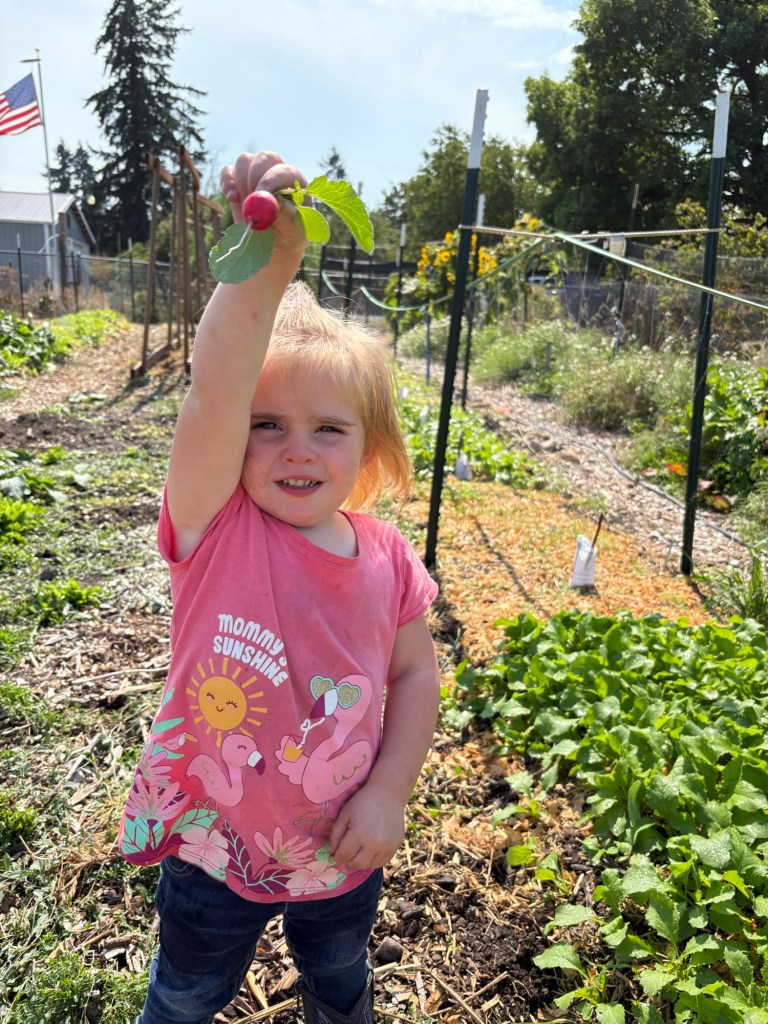
Radishes are one of our big success stories this year.
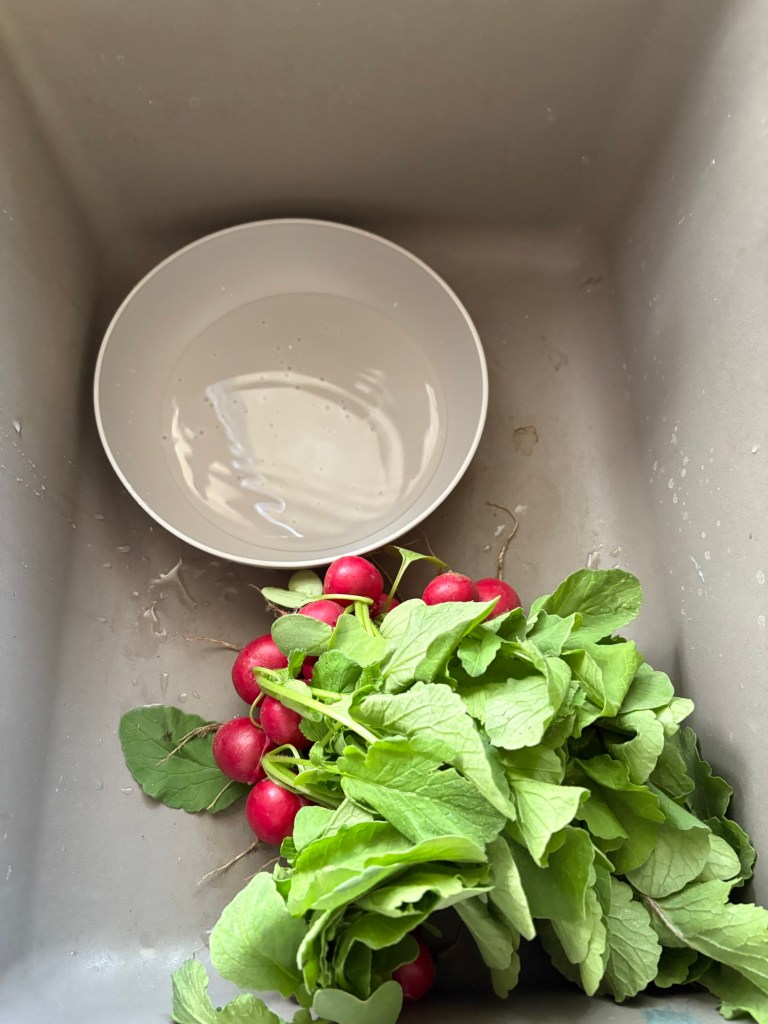
This first bunch we rinsed and trimmed, and then brined (2.5%).
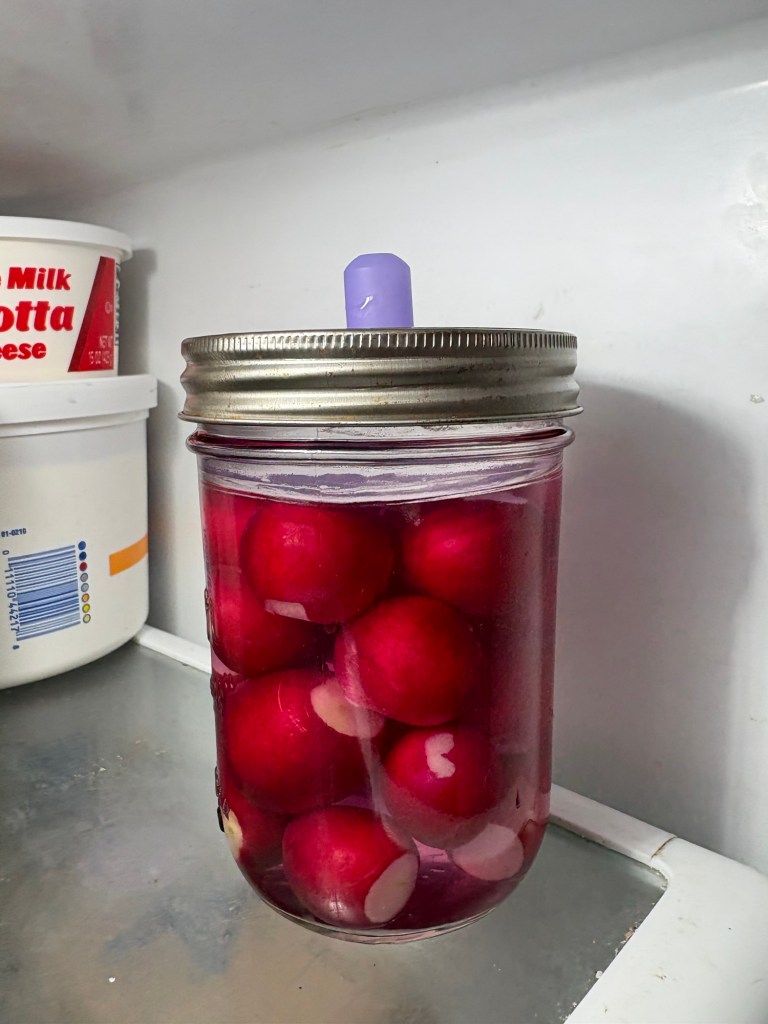
We added a few tablespoons of the brine retained from the last batch of sauerkraut to get them a head start lactofermenting and they are now in the basement at the farm, right next to a half-gallon of sauerkraut.
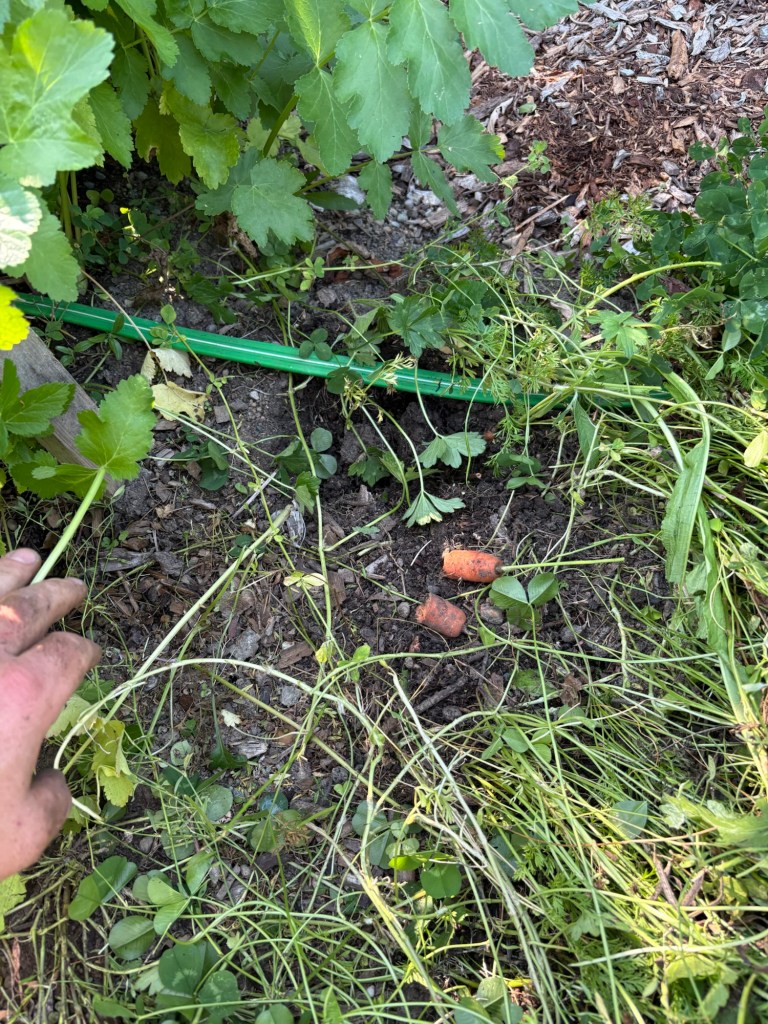
The carrots were disappointing this year, but that’s not their fault.
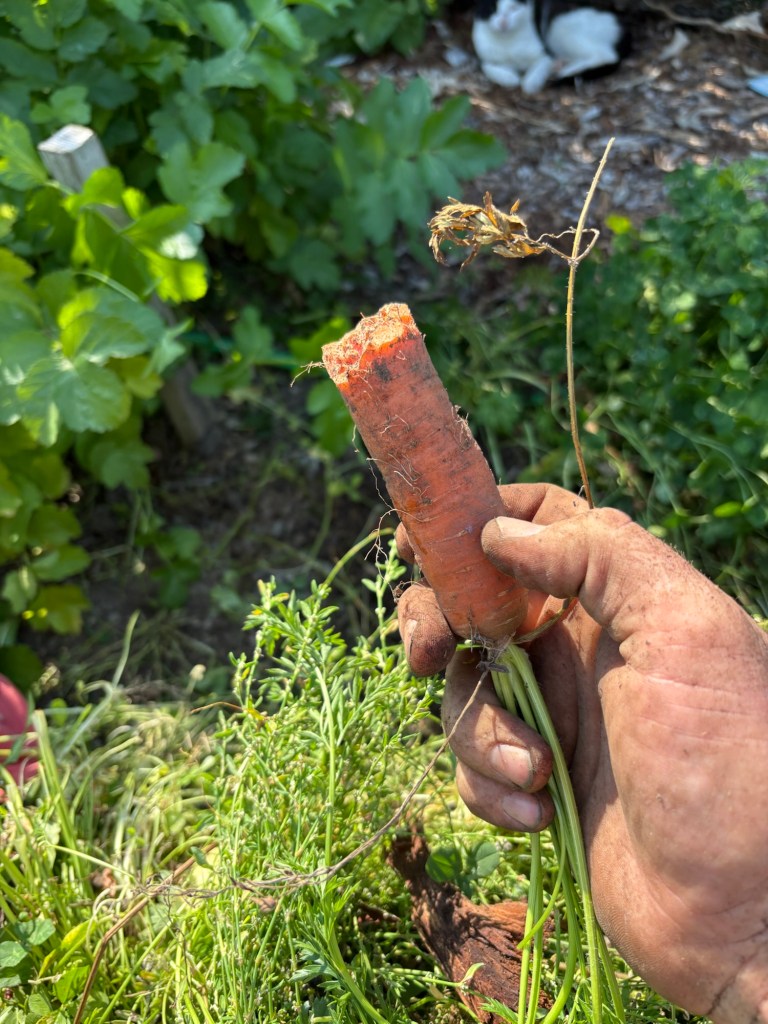
90 percent of them were bitten off below the ground, like this.

We dug up all the remaining patch trying to salvage what we could.

Not a great haul.
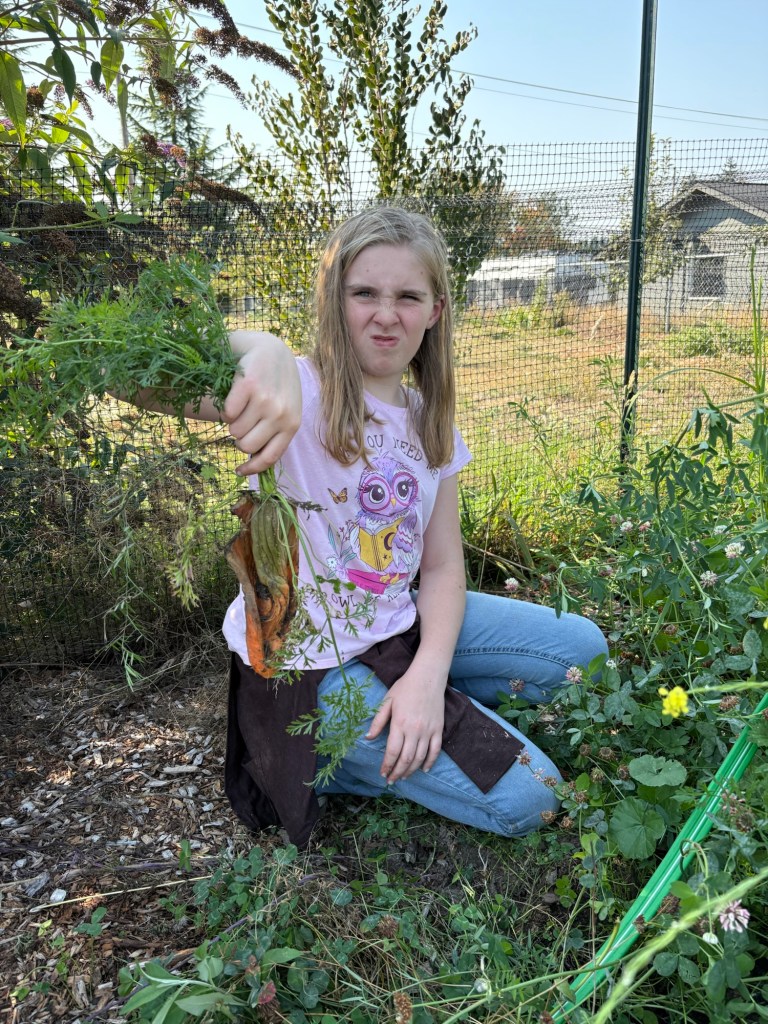
Just, no!
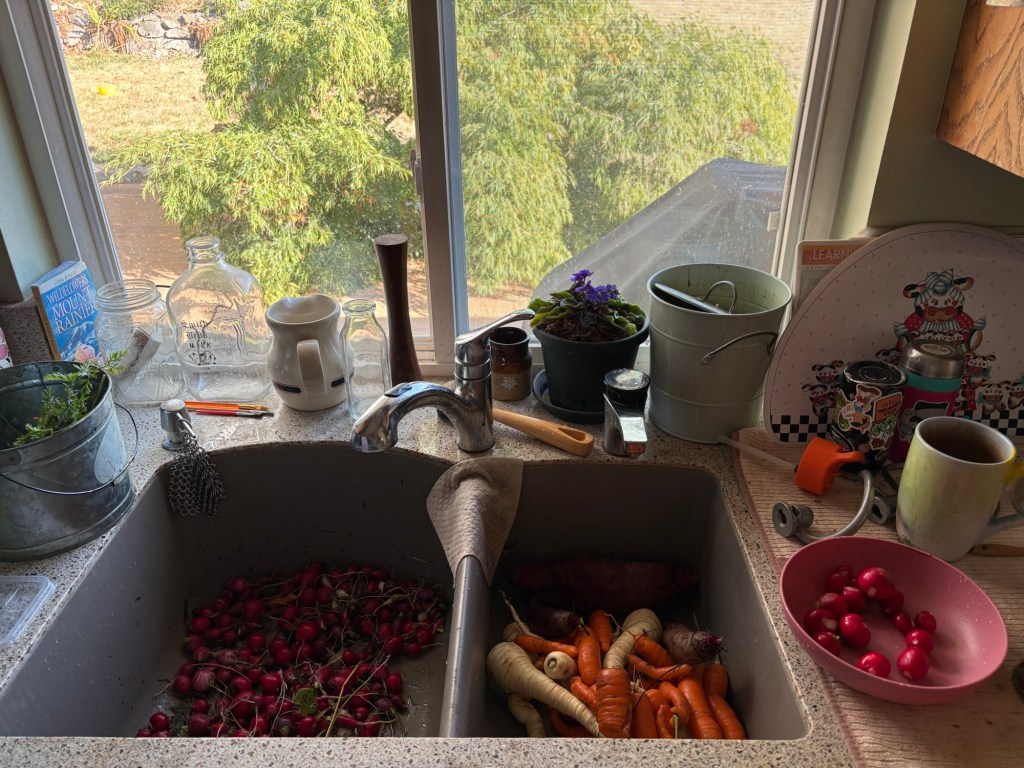
We dug some parsnips as well, and peeled and cubed the parsnips and carrots together. Those are blanched, vacuum sealed and frozen to be used for soups this winter. We also blanched and froze a couple of beets that somehow found their way into the carrot row.
The giant haul of radishes, too much even for Daddy to eat in one sitting (without undesirable gastrointestinal consequences), we pickled. Daddy tried to learn how under Mommy’s watchful eye.

And Winnie’s counsel and advice.
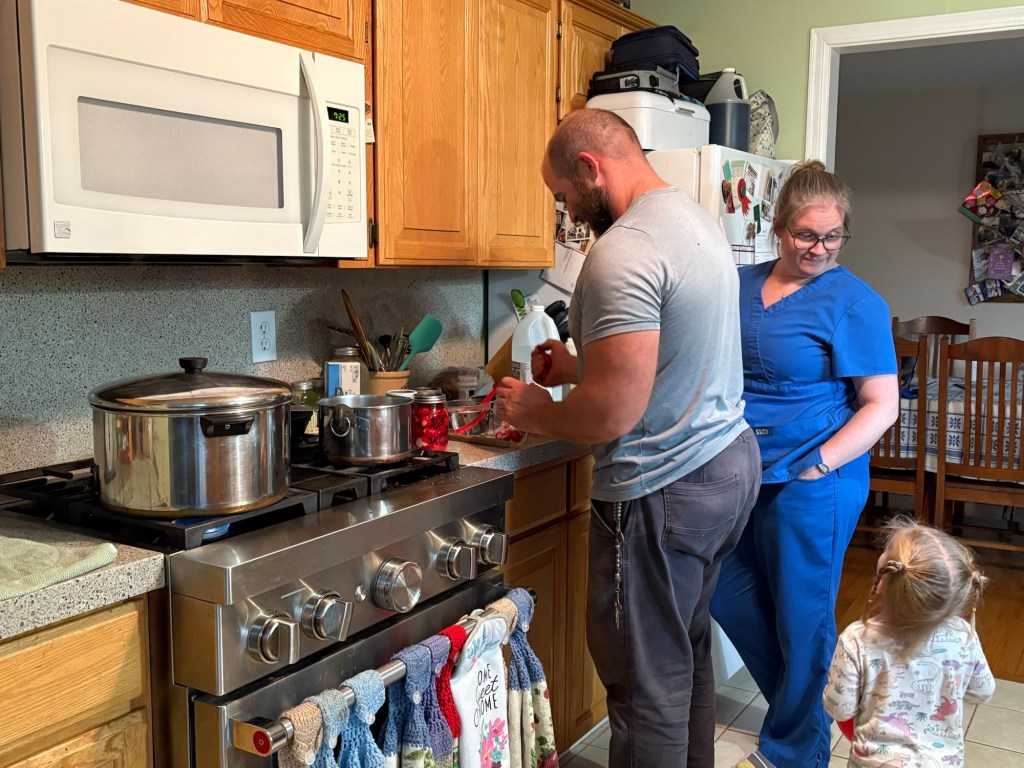
And we learned why the stock pot is not ideal as a water bath canner.

To get enough water over the tops of the jars we only had about half an inch between the surface and the rim. This is what happens when we try to save time.
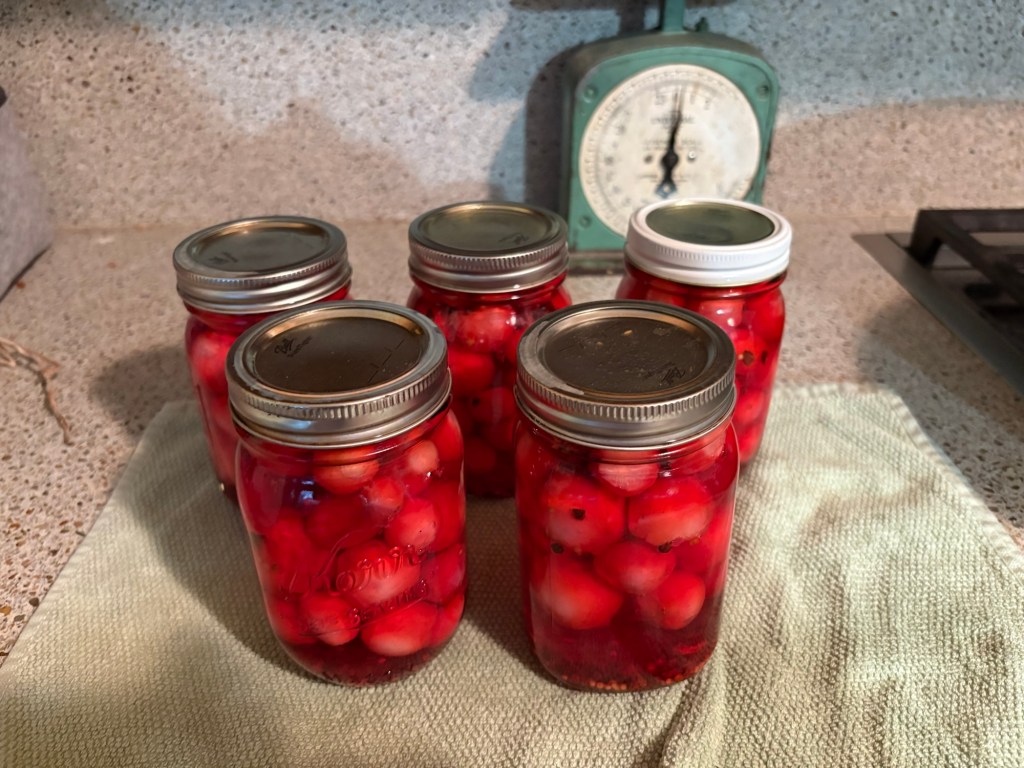
But eventually we had 5 pints of pickled radishes that should be ready to eat in October.

 Little Farm in the Big City