

We are deep into the dry season. The rainstorm at the beginning of August was nice, but it didn’t last long. The pasture is dry and grasses are not growing fast enough. We are still moving the sheep through the pasture, but with very large paddocks, only for one day. We are also feeding hay and greens on pasture.
What greens, you ask?
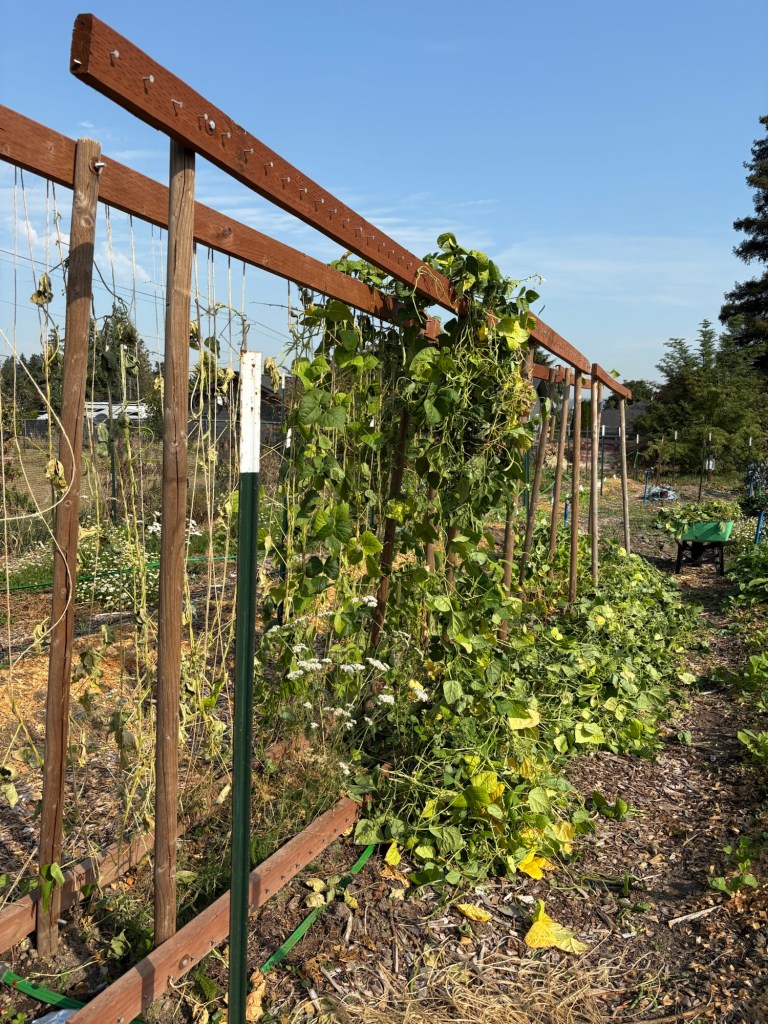
Well, virtually everything that we weed out of the garden. In this case, we pulled out the string beans at the end of the season, to make way for the winter wheat.

See?

This turns into a large wheelbarrow of greens. This could go on the compost pile, and that would be a good thing, but right now, the greater need is to feed the animals.

Another source of greens is the two willow trees on the farm. During the summer we are able to harvest these and feed them to the sheep to offset their dry hay consumption.

Food scraps from various sources forms a valuable supplement to the pig food as well.
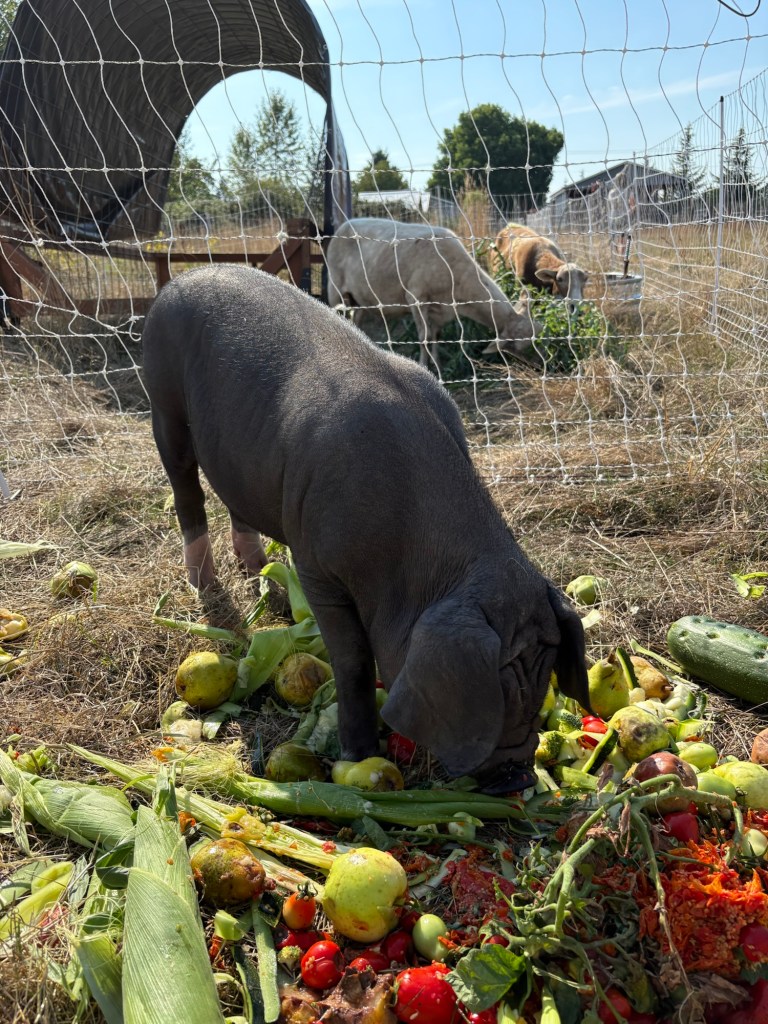
These two little piggies are growing quickly.
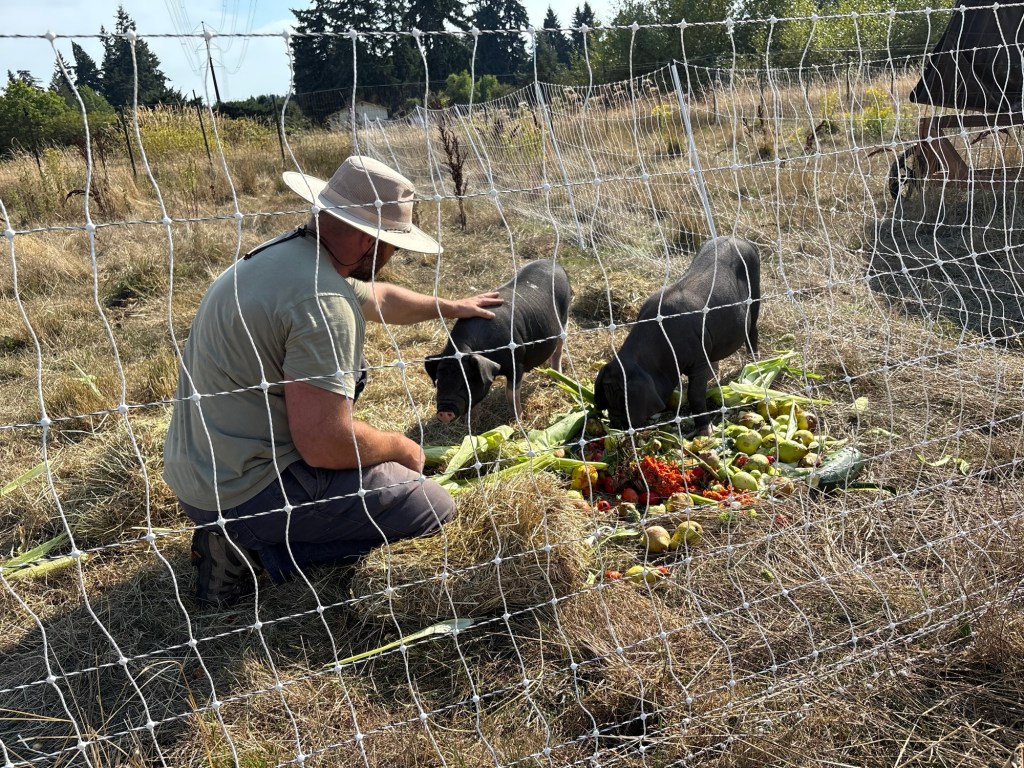
They are still a little jumpy.
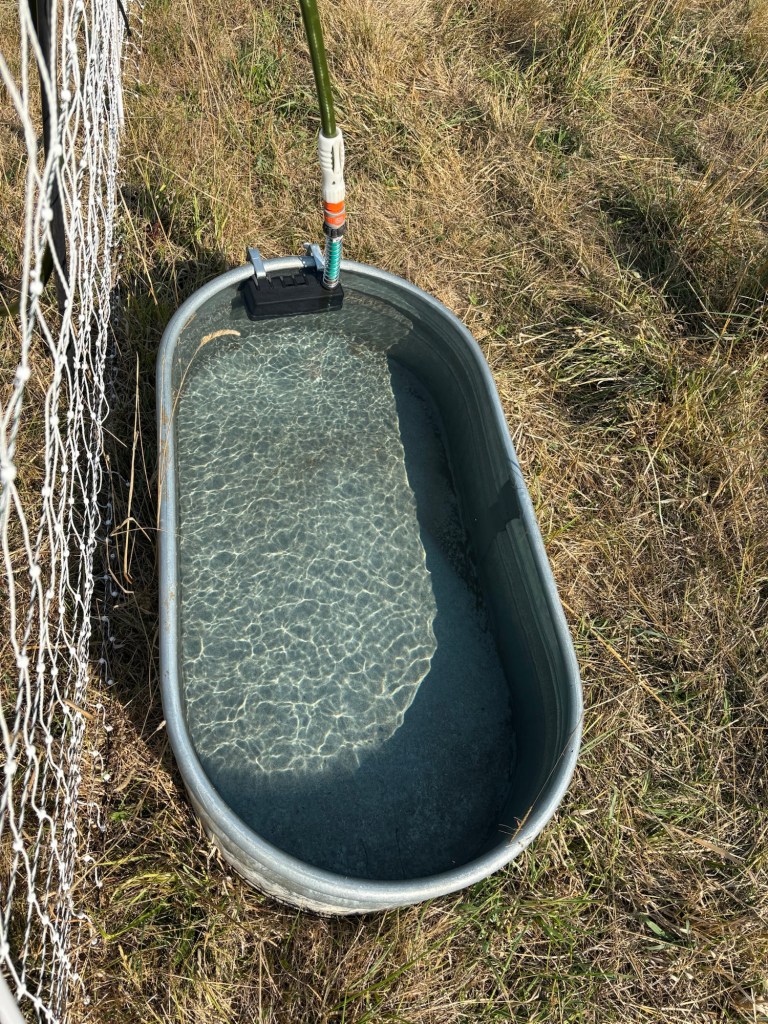
Watering the animals is a major part of the pasture management as well. This water trough overflowed most of the day on Monday. The float valve did not stop the water from flowing.

We tried shifting the location of the float valve and hooked it back up.
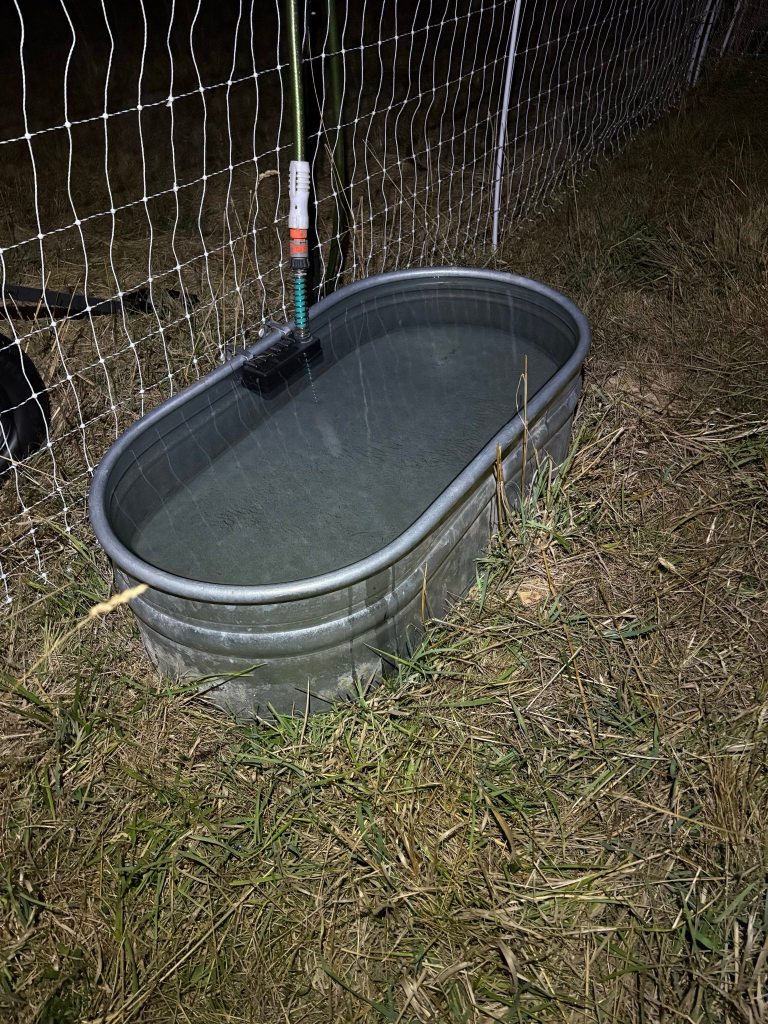
Unfortunately, this didn’t work either. It is one of the cheaper plastic floats. Now we have to take it apart, see what’s wrong with it and see if it is even serviceable.

Worst of all, it drained the last of our rainwater reserve for the year. Now we have to water the animals on city water until the rains return.
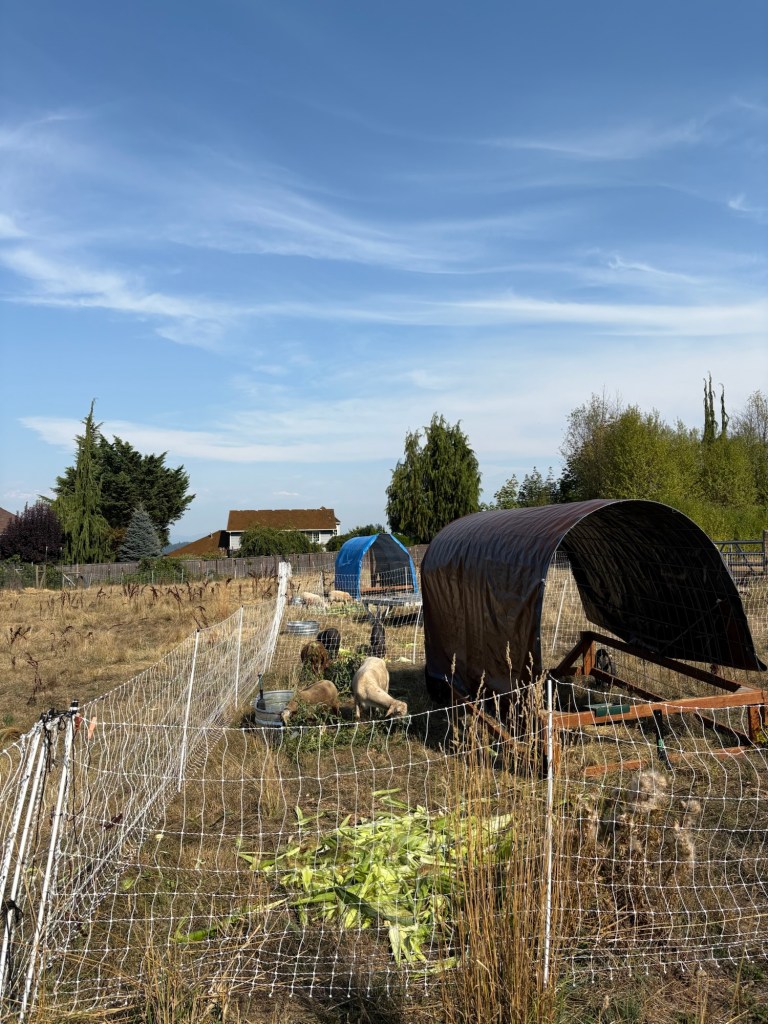
Animals fed, back to the barn.
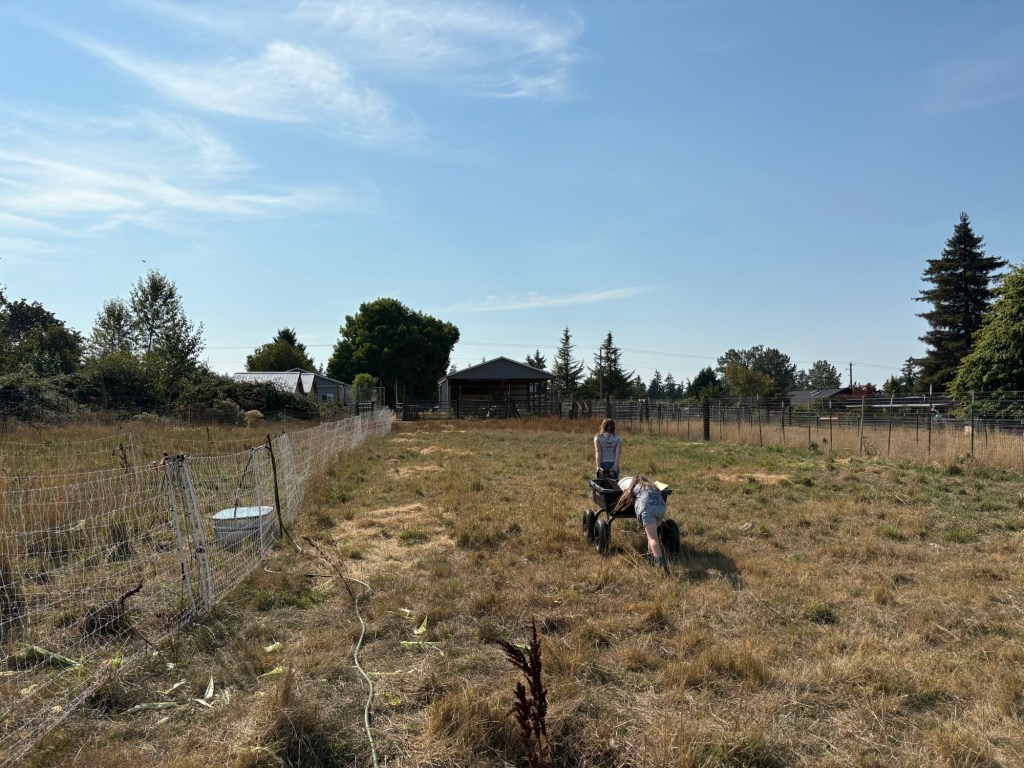
As we talked about earlier, the pasture is greening, and is recovering, but slowly. We have a limitation on carrying capacity during the summer months and the limitation is water.
So we are looking at a couple of short term and long term options. Short term, we might turn the old laneway north of the house into a sacrificial paddock. It is small enough that we could irrigate it and shade it, we could put the animals on it during the dry months, let them beat it to pieces, and then seed it and rest it over the winter until the next summer. The downside is that it is really quite small and out of the way, there would be no rotation so we would need a solid de-worming schedule for the sheep, and it would be very expensive, in terms of water, de-wormer, seed, and shade infrastructure.
Another option would be to see if our neighbor next door will let us run animals in his cotton wood grove during the summer. This would more than double our pasture footprint, and provide shaded grazing area with leaf forage. The downside is that we would need to put in the infrastructure; we would need to cut trails for the electric netting; moving netting through woods is a royal pain; there is no water there so we would need a mobile water solution; and we are not sure how much we want to invest in a property that is not ours, especially since he is not getting any younger, and will likely sell it in the next few years.
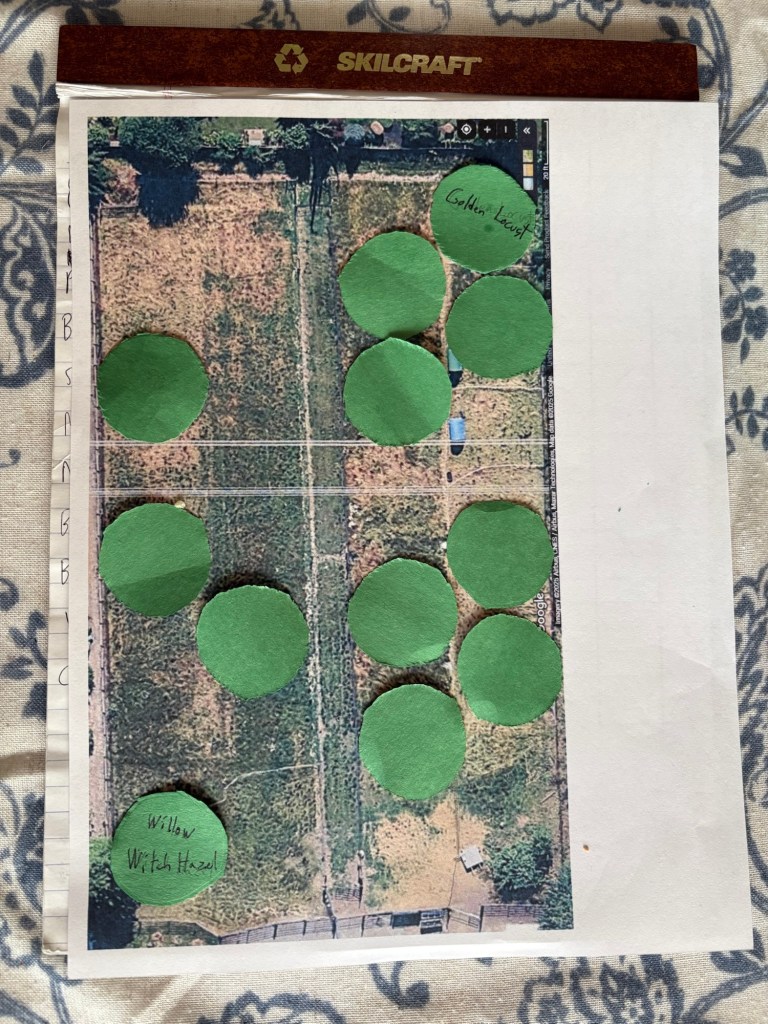
Long term, we are still tossing around the idea of planting trees and transitioning to a silvo pasture. This has been a dream since we bought the place but there are some real challenges to it in terms of cost and labor hours. Prepping the soil takes time, then planting takes time. Every tree or cluster of trees we plant needs to be sheet mulched and caged so the weeds don’t compete as much, and the animals can’t browse them to death before they are established. Then we have to figure out how to water them once a week all summer. Also, it will be 5-10 years before they are providing any serious shade, but this is a good reason to get on this sooner rather than later.

But we have the beginnings of a framework. This is a sketch showing areas that must be kept clear of roots, branches or both. Next, we need to plot out trees and canopies, making sure we have enough shade, but not too little. Because in Western Washington virtually all pasture forage grasses are cool season grasses, we can probably tolerate in the 40-60% range of shade. Then we have to determine species and cultivars, source and price them, and plot and prep the soil, ideally 2-3 months before the trees arrive.
We’ll see.

This is an unorthodox bit of fencing right here.
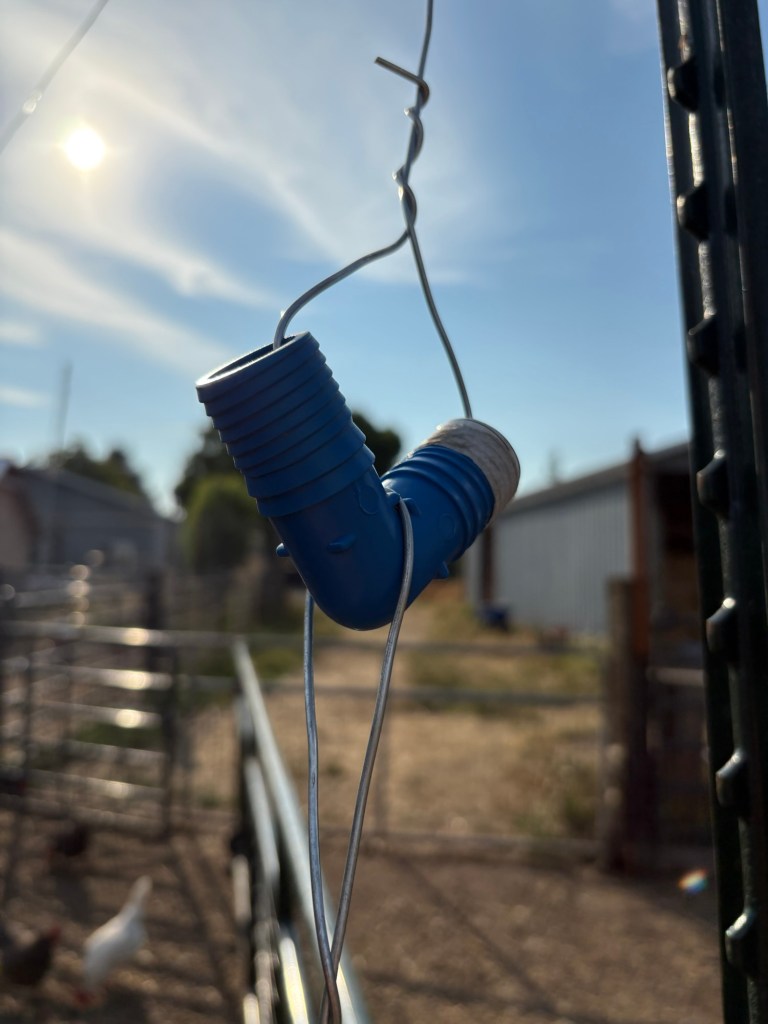
That’s a poly stab fitting, but it was all I had, and it works as an insulator to keep the hot wire up out of reach so people don’t accidentally lean on it.

 Little Farm in the Big City