

Cows like to scratch. They will scratch themselves on anything available. If the only thing available is their mobile shade/shelter, they will scratch themselves on that.
It that shelter is covered with a light duty tarp that hangs over the edge of the frame, they will eventually wear through tarp and shred it.

Like this.
We need to be quick about fixing this especially since we are getting into the hot months and the cows/sheep are going to need some shade. This time, we want to get a tarp that is the right size so that doesn’t overlap the frame and wear through. We also want it to be detachable, not zip-tied in, so we can quickly take it off and put it back on if needed for wind storms.

So we got a package of these little carabiners in bulk.

The tarp size is 10′ x 16′.
It was a fairly simple matter to clip it down to all the grommets. Honestly, 10×14 would have been plenty big enough and left a foot gap on the bottom to let the breeze through.
Getting it into the paddock with the steers was far more challenging. As soon as I opened a gap in the netting they trotted through it, and finding themselves in the open pasture, commenced to kicking up their heels, charging from one end of the field to the other.
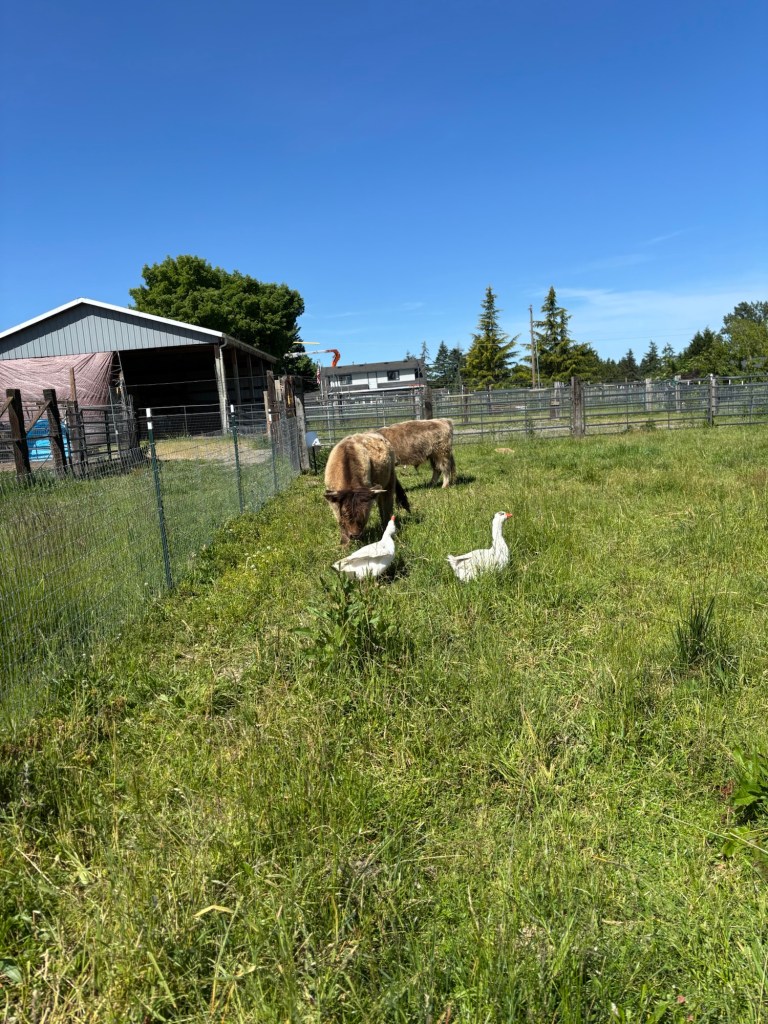
The gander tried to assert his claim to this corner of the pasture.

That didn’t go as he had planned.
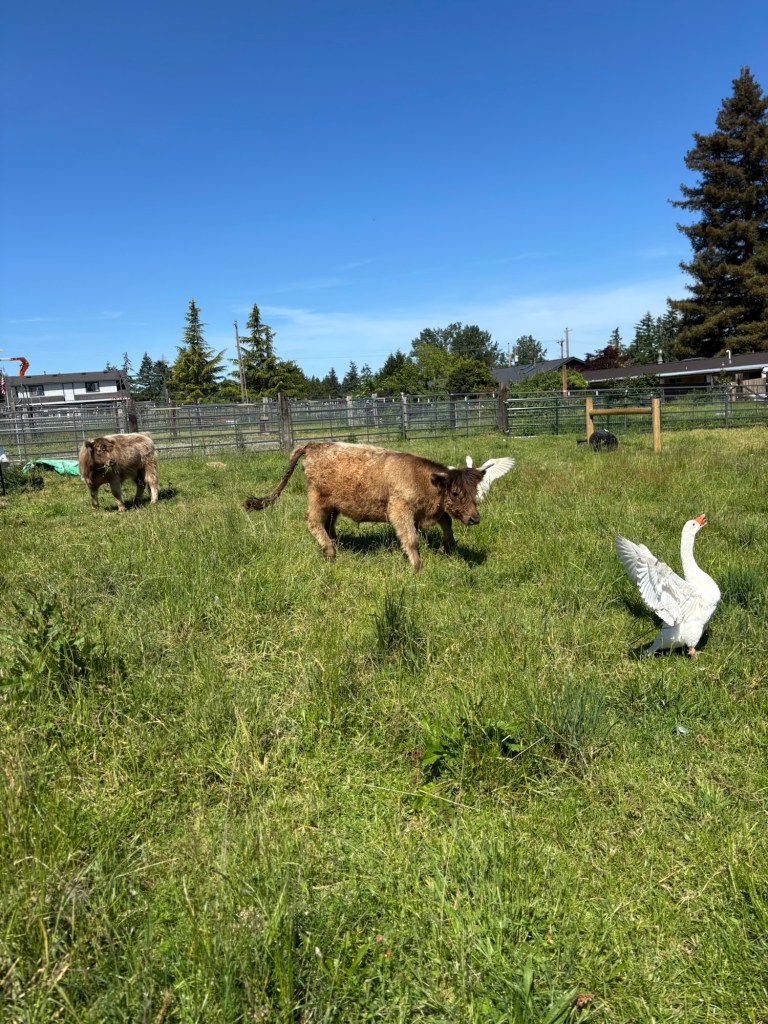
Fergus don’t play around with no geese!
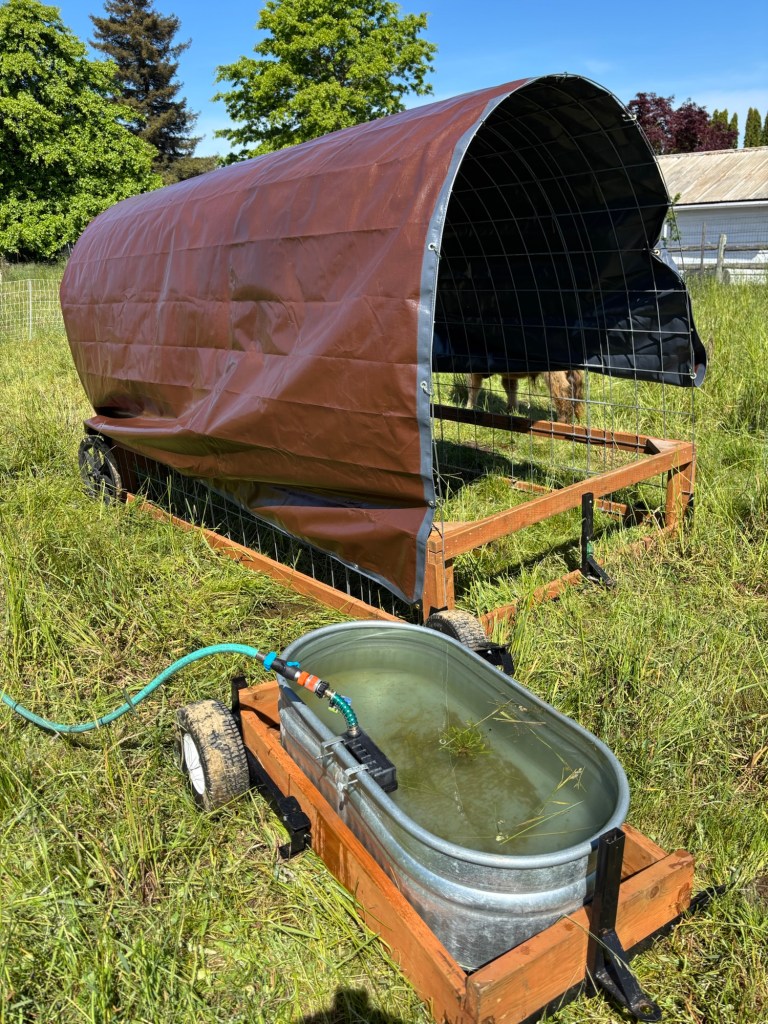
But, eventually I got them back into the paddock. I also had a chance to hook up a quick release float system to the stock tank. This is in an effort to improve the efficiency of morning chores. Currently, the part of chores that takes the longest is filling up the water. If you have to walk to the other side of the field, turn the water on, and fill up 25 gallons worth of tank, then turn the water off again, it can take an extra 10 minutes, which adds up when you still have to get a workout in and get to work on time. With this system, there is a shut-off valve at the end of the hose, so the hydrant can remain in the on position all the time. To move the water, all we have to do is to shut off the water at the hose end, disconnect the hose at the float valve, move the water to the next paddock (making sure that it is level, or tilted toward the float valve) and then reconnect the hose and turn on the shut-off. Done.

 Little Farm in the Big City