

Last year we tried an experiment, to see if we could increase the output of our worm bins. We added potash to the mix to increase potassium content, but unfortunately, the wood ash killed off a large number of the worms (too alkali, I expect). So we tried shredding up a straw bale and putting that in to soak up some of the alkali, but the straw bale took up so much space it ended up filling both bins, which have been living on our deck ever since.

As you can see in the bin on the right, the straw still hasn’t broken down effectively, unlike in our compost pile, where the straw has broken down quite rapidly in just a few months. The reason, I think, is that it was not compressed down enough to get good contact with the rest of the mix, left too much airspaces, and didn’t retain water uniformly.

However, as you can see, the worm populations have bounced back.

As always, a messy process, but there’s about 25 Lbs of 95% pure screened worm castings for our garden.
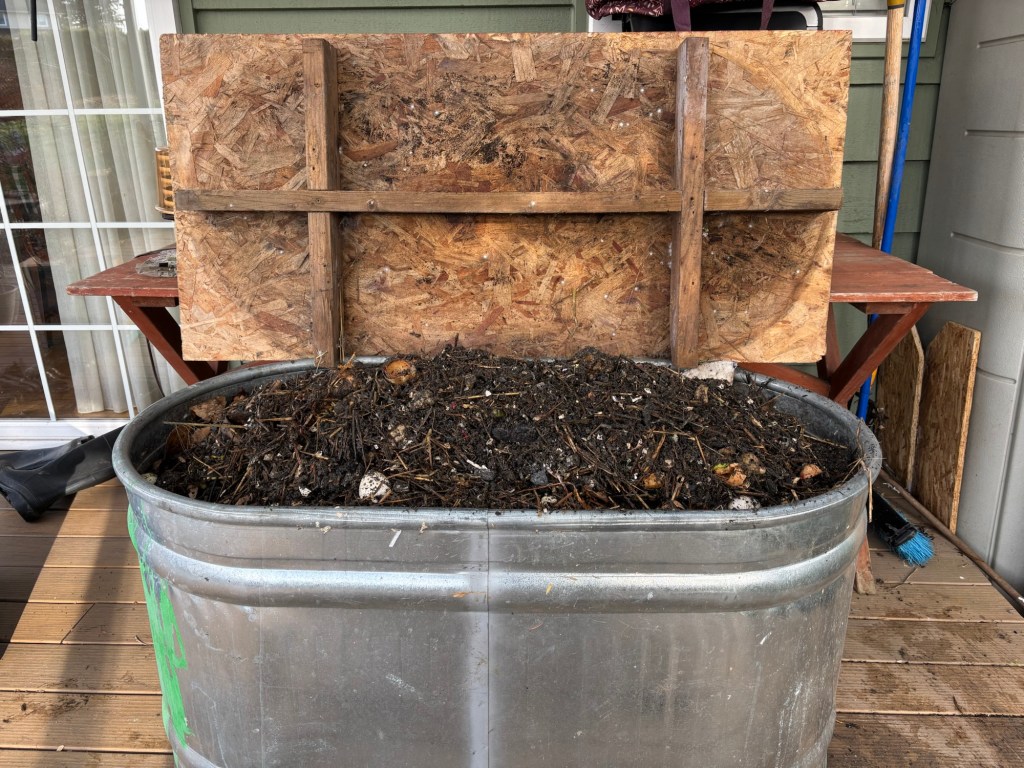
And the content of both bins has been consolidated back into one bin, which will take up less room and leave us more space on the deck going into summer.
Ironically, I read recently that while potash can make a good addition to potassium deficient garden soils, it should not be added to compost because it will shift the pH of the pile towards alkali which favors bacteria that metabolize nitrogen into ammonia, favoring losses to off-gassing, rather than retaining it for the garden.

 Little Farm in the Big City