

About a year ago Daddy and Seppi and Winnie were out in the north pasture near the beehives.

The small ones have grown a lot in the last year.

They are become less small…
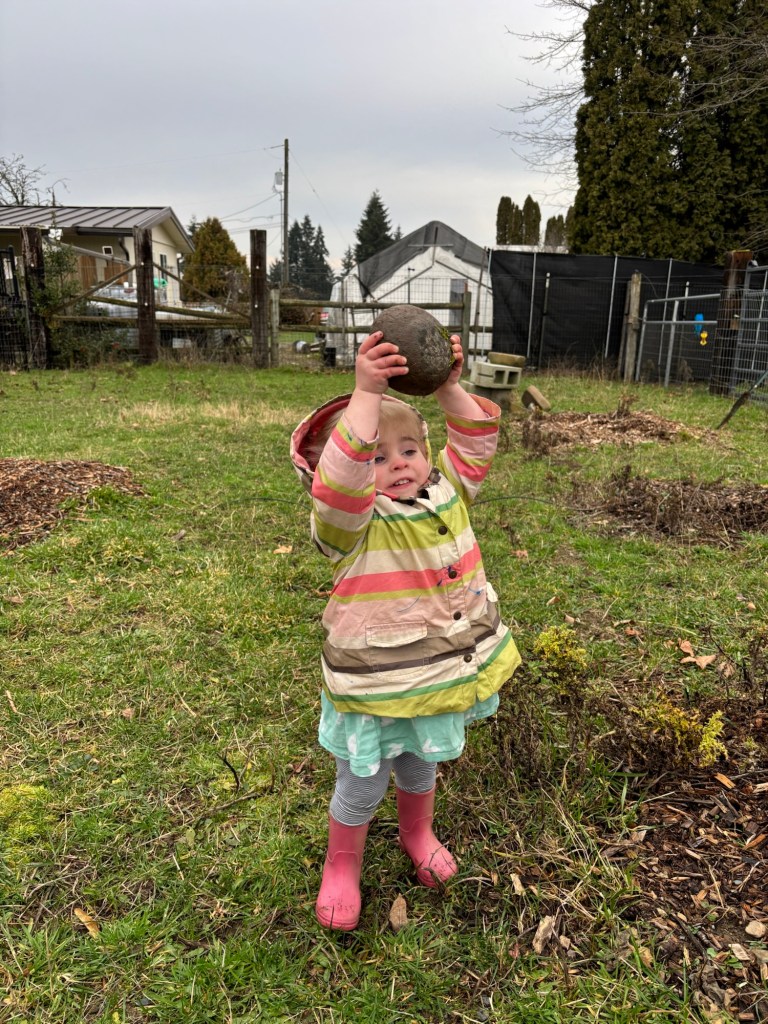
More mighty.

We have to revamp our tree protection system this year, for a couple of reasons. For one, I didn’t like the three-sided chicken wire wrap around three t-posts that we did last year. It is resource intensive (uses three t-posts) and is unnecessarily large, and also unwieldy to open up, which makes weeding around the trees next to impossible. We grow a lot of thistles in that area, which have a tendency to grow up into the mulch. They need to be rooted out periodically.

This year we have about 20 new trees, mostly figs, mullberries and currants, that also need protecting. The sheep did a number on them last fall, which is not likely to damage them permanently as a one-time event, but will certainly kill them if the geese get after them in the spring when they bud out. 20 trees, with three T-posts per tree is a lot of money if we have to buy it new.

So we need to find a way to get the same job done with only one t-post per tree. We can then take posts from the trees that currently have three, and spread them out among the other trees, with a few more scavenged from around the farm.

I thought this guy had died in the drought, but apparently not. Already leafing out, in January? Bold strategy.

We’ll get him caged before we let the animals in the north pasture.

First step is putting cardboard around every tree. A nice thick layer of heavy cardboard this year, hopefully to keep the thistles at bay a little longer to let the trees take advantage of the early spring growth before they have to compete.

Seppi’s birthday present from Grandma, a red oak tree. It’s name is “Larry.” Larry definitely flourished last year, even if some of the other trees didn’t.

Thick, unbroken layer of cardboard is the key, we have found. Grass and thistles will work their way right in the cracks. This little red willow got pretty baked last year, but seems to be bouncing back in the cold wet. There are a number of new young shoots, but the really critical thing is the part that you can’t see: the roots. A tree with a well established root system will thrive. A tree with poor or shallow roots will die in the 60-90 days of no rain every summer.

Next step is wood chips.

Lots of wood chips.
At this point, Winnie got too “told” and went inside to play, so it was just the mans outside to finish the job.
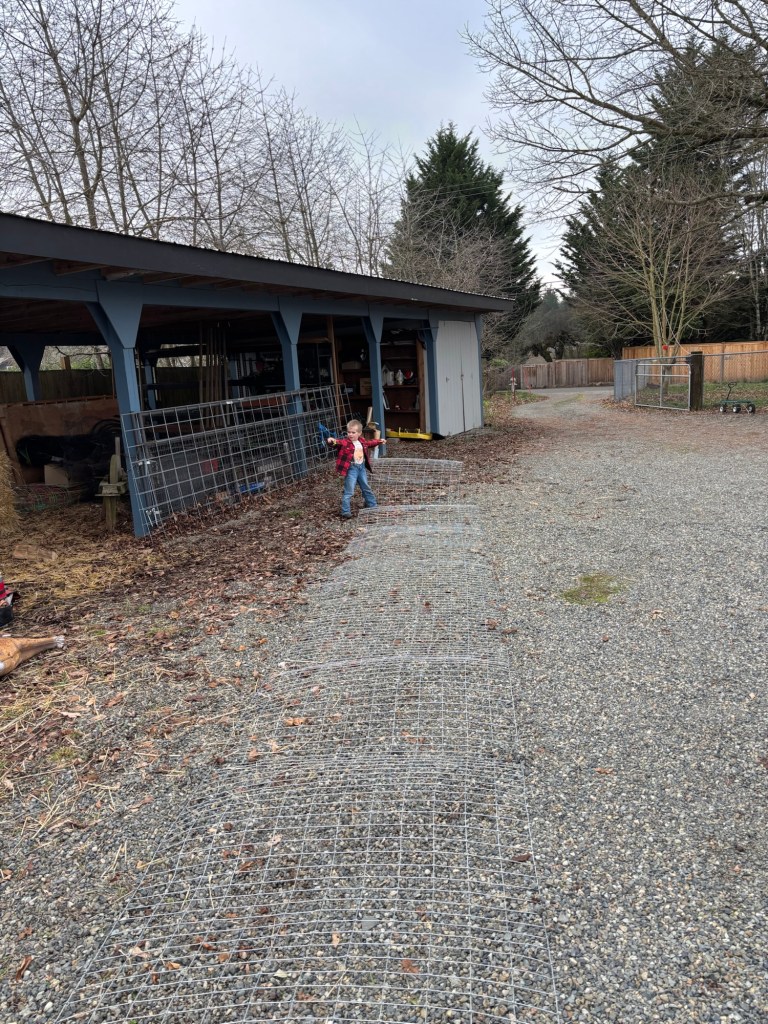
Seppi was most excited to get a chance to use his new measuring tape he got with his tool set for Christmas. It’s a real measuring tape, and he measured real fence, for a real job. (We cut the no-climb in 74″ segments for a roughly 2′ radius.
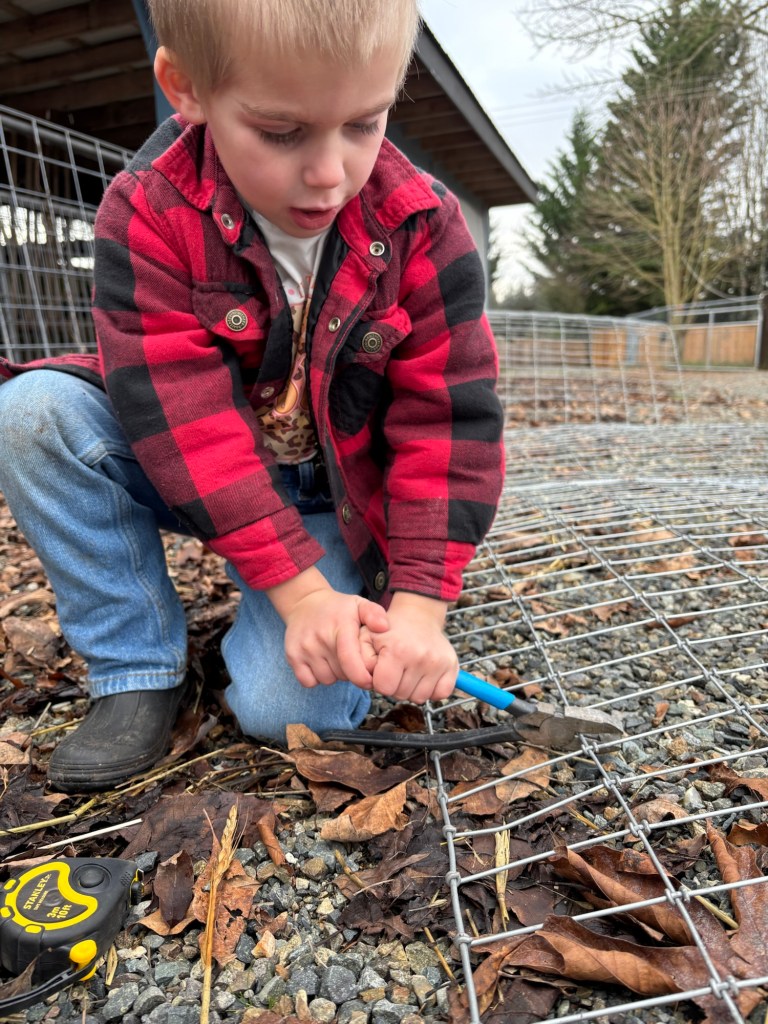
He tried his best to cut the fence, but…

Try as he might, (and with all his might)…

He is just not quite strong enough yet.

So he contented himself with flipping the segments after they were cut.
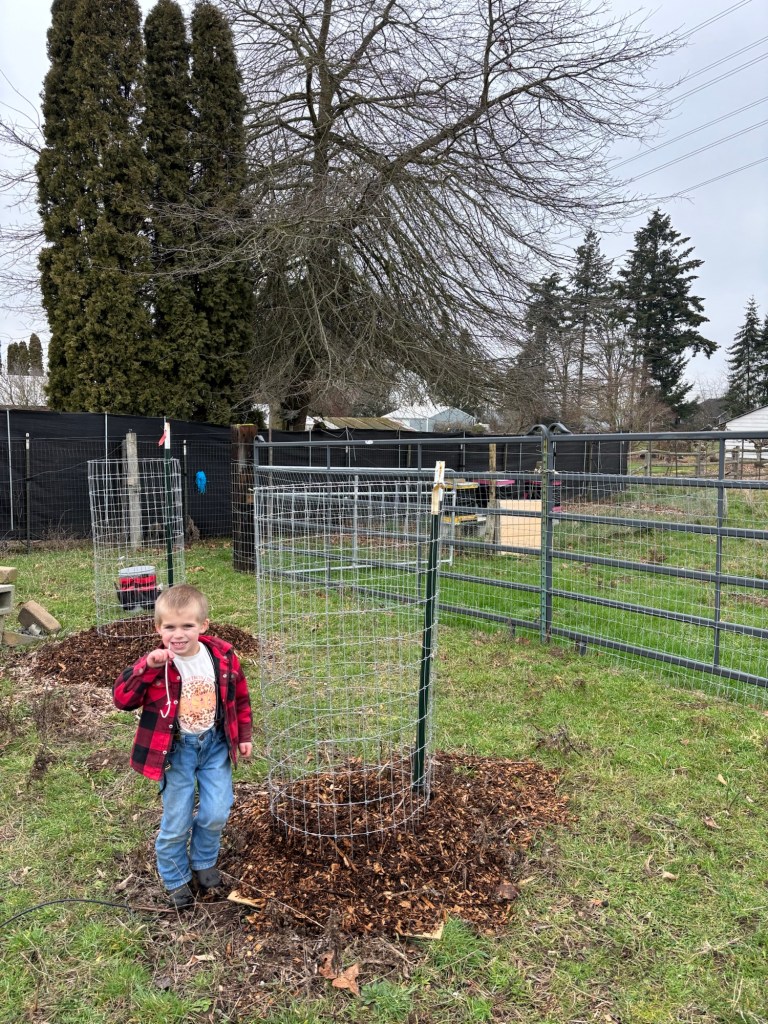
This is the finished product. The basic idea came from the book “Trees of Power” by Akiva Silvers, with my own twist on the fastening. One end of the fence is wired to the post directly. The other end is secured with three simple wire twists for easy opening if we need to weed or prune. I would have liked to have use thumb hooks, but, again, that would have gotten expensive.

Three willows, two witch hazels, one oak, and three figs mulched and caged.
Now for the other twenty trees… we are going to need more no-climb.

 Little Farm in the Big City