

One of the possible resources we can gain from slaughtering an animal is the hide. With the sheep, because they are a dual purpose breed, they have a fleece that can be shorn for wool, though not (I am told) as high of a quality as from a dedicated wool breed. We opted not to sheer our mostly wild sheep, since we did not have the infrastructure to pen and wash them, and had neither the time nor the equipment to card and spin it.
Still, it seems a pity to waste a hide with such warm fluffy wool (they really were quite fluffy) so we decided to make the attempt to cure the hide for sheepskin rugs. (Evie wanted to make a muff out of them, unphased by the knowledge that no one wears muffs anymore, and sheepskin is not what they are typically made of).

Uncle did the first scraping for us, and salted the hide to cure overnight.
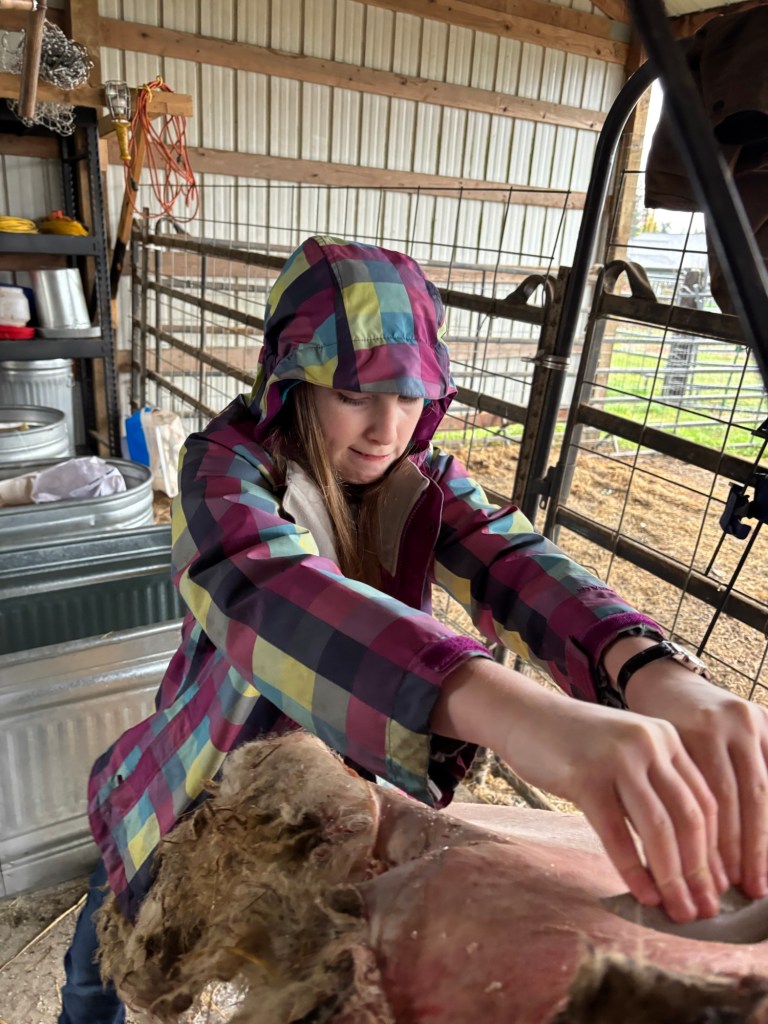
On Saturday (1/4/2024) Evie and I helped him with the second scraping.

We got the skin side pretty darn clean, I thought.

Salted it very heavily (50Lb bag of salt from the Chef Store is almost gone between the skins, the prosciutto and the sauerkraut) and left it folded over the weekend.
Monday, yesterday we tried to move on to the next step, which is soaking the skins for 6-8 hours in warm salt water (1/2 Lb salt/gallon H20). Getting the concentration with 40degree rainwater was going to be a bit of a challenge, so we boiled 10 gallons of water with 15lbs of salt (it’s a lot of salt) in the stockpot over the propane burner and poured that over another 20 gallons of cold water. The result was 30 gallons at the correct concentration.
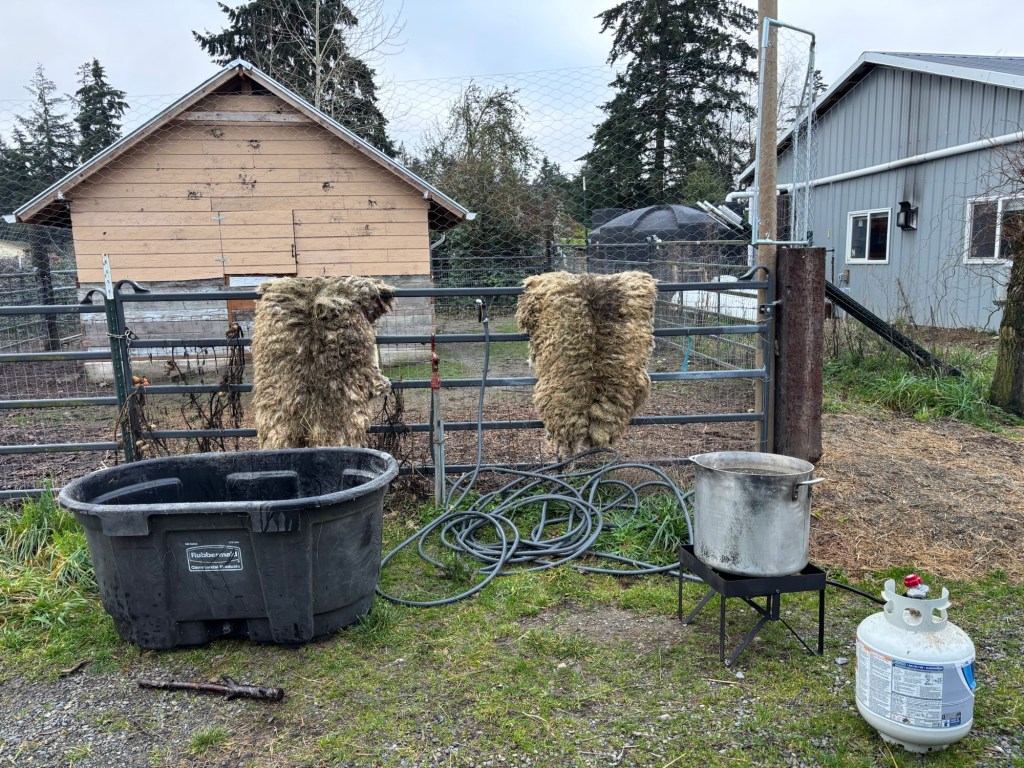
Despite several attempts to clean the wool with a curry comb and a garden hose, they were still thick with hay and caked manure. What can you expect? They have been in the barn for the last couple of months, which is not a recipe for clean sheep. They are shorter than the cows so when eating at the same bale feeder they get all the chaff from the cows dropped on them, which mixes in their wool, and then they lay down in the muck pack, and get manure caked in their belly hair.
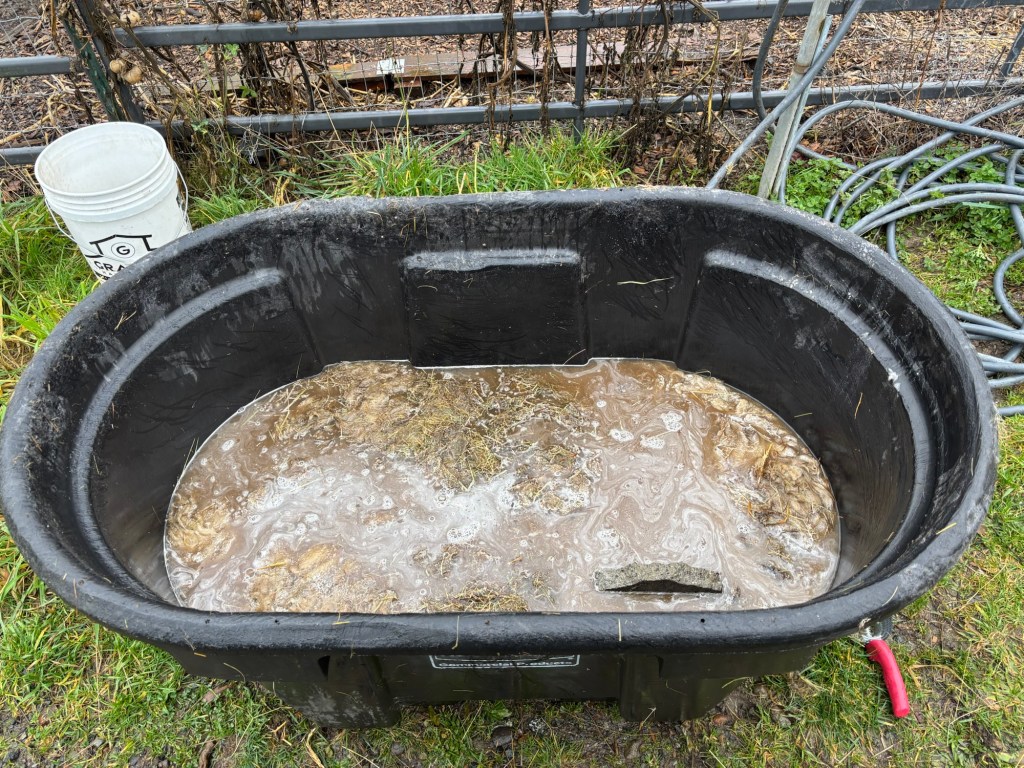
As soon as we dropped the skins in the water was so gross that we dumped it and repeated the process.

It was no use. This morning, this is what the skins looked like.
The next step is washing dawn soap and rinsing well. I decided to cut our losses. It would take 10-12 hours of work at least to get them clean enough to be useful and we have better places to spend that 10-12 hours.
Rest in peace, sheepskins.
So next time maybe we clean the sheep first, or slaughter them when they are on pasture, and therefore cleaner. Or treat them as dual purpose sheep and harvest the wool for sale to hobbyists. Maybe not try to cure a hide with 4-6 inches deep thick, tangled wool.

 Little Farm in the Big City