

You never can tell with Western Washington. Last year it was hot and dry through late September, this year we had a cold, rainy week in mid-August. This has played havoc with some of our delicate dry crops, particularly Adam’s runner beans and our cannellini beans. We love cannelini beans, and Mommy cooks them into a minestrone a couple of times a month, usually. We have been trying to grow them since we bought the farm. Last year we discovered a good way not to grow them (straw bales), and this year we got a great crop of them.

The easiest way to harvest dry beans is to leave them in the ground until they are completely dry, and then cut the plants down and hang them up somewhere dry to dry out even more, and then when they are drier than my sense of humor, put them in a sack and beat them with a stick. Then simply pour the beans out of the sack and winnow them a bit, and there you are.

That’s why dry crops are not often grown on any large scale in Western Washington. Dry weather at the end of the year is not guaranteed.

With the week of heavy rain and colder temps, our cannellini beans became damp, the ends of many of the pods started molding, and a good handful of bean seeds began sprouting in the pods, so Monday morning, the first non-rainy day we could manage it, we picked all the cannellinis.

Again, ordinarily we would just let them dry and then thresh them, but as damp as they were, and as damp as the weather is right now, we felt they would mold or sprout (or both) if left unshelled, so the girls took a couple of hours and shelled them.
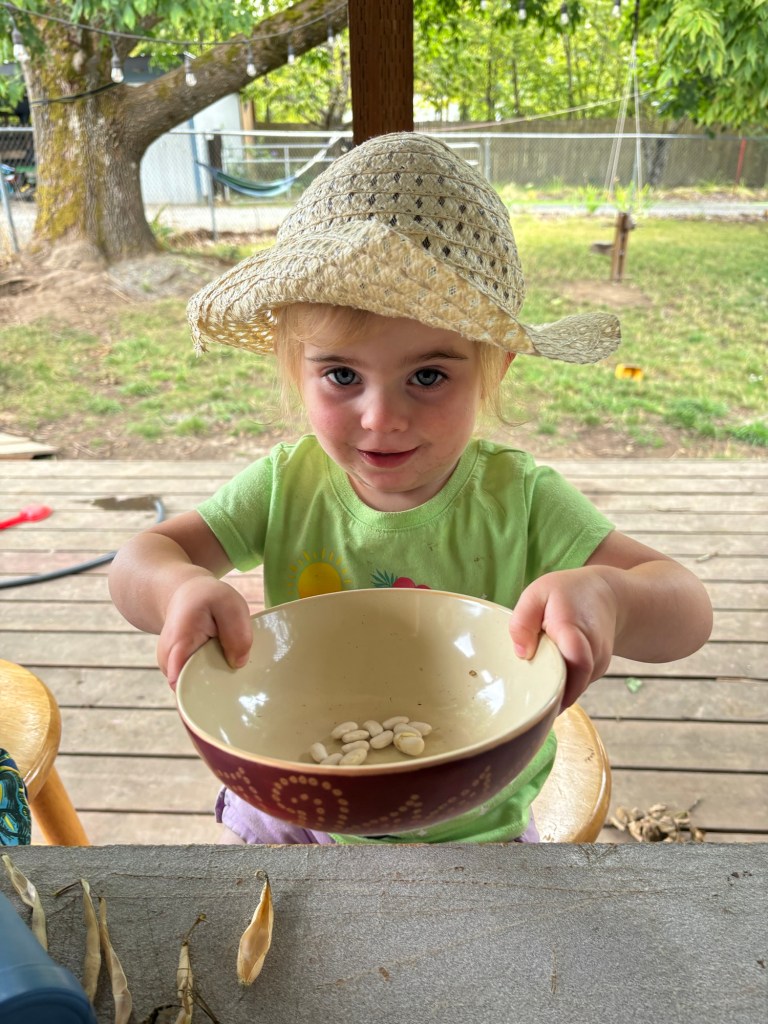
This is a good job for a Winnie.

Trying on Daddy’s boots. They fit perfectly!
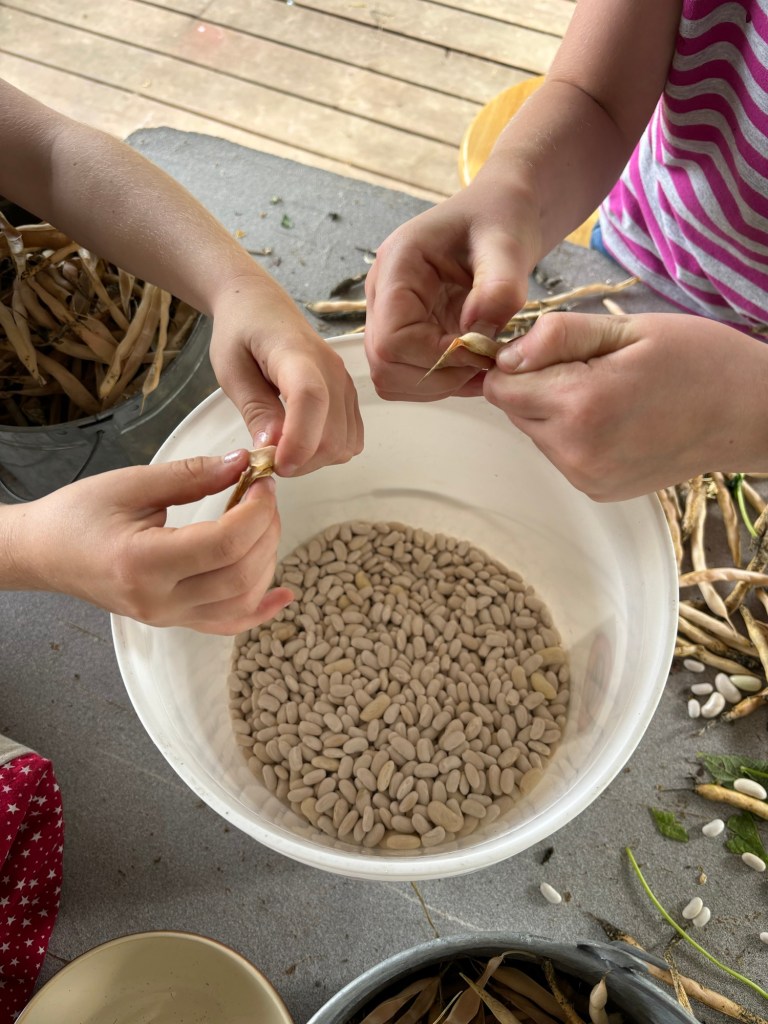
As per tradition, the girls listened to several episodes of Saint’s Alive

And voila!
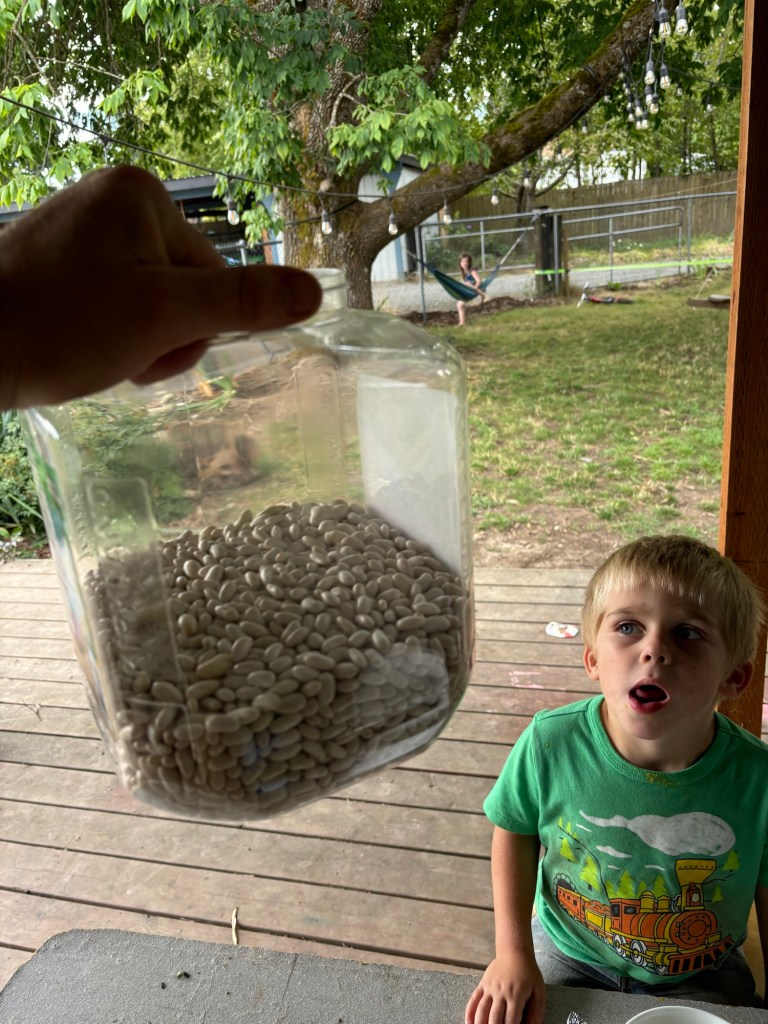
That’s a lot of beans. Considering we planted only a few ounces of bean seeds, and got about 10 LBs. Actually, we should weigh them to see how much we got. We aren’t great at quantifying our harvests. Now, we will store them dry until we get time to pressure can them. Once pressure canned they will be ready simply to dump into a stew whenever we need to make one, which is great for quick stews in the afternoon.

 Little Farm in the Big City