

Thursday, the Feast of the Assumption, was a very busy day. We slaughtered two ganders, two roosters (for stew meat), five older hens (also for stew meat) and 27 Cornish cross meat birds.
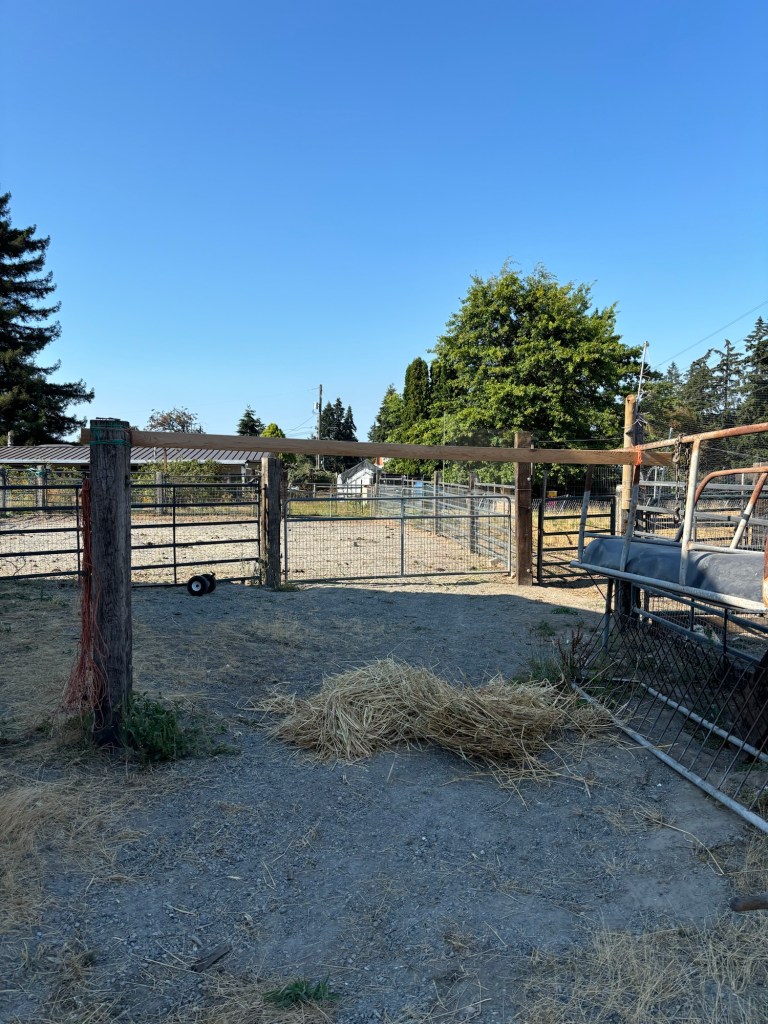
The work started the night before with setting up the kill station. We learned from last year it is good to have space, because we still didn’t have any restraining cones and they flop about considerably when suspended on strings. The straw is to soak up the blood, as much as possible, and we hoped that keeping the bloodiest part of the process around the end of the barn from the rest of the process would keep the flies and wasps away from the butchering table, which it did pretty well. Turns out, we ended up needing the restraining cone after all.

The kids helped by bringing firewood for the scald station. We ordered a propane scalding pot, but it still hadn’t arrived so we went old school, putting Mommy’s 50 gallon stock pot on a wood fire. Which worked well, though the pot is now irreparably black.
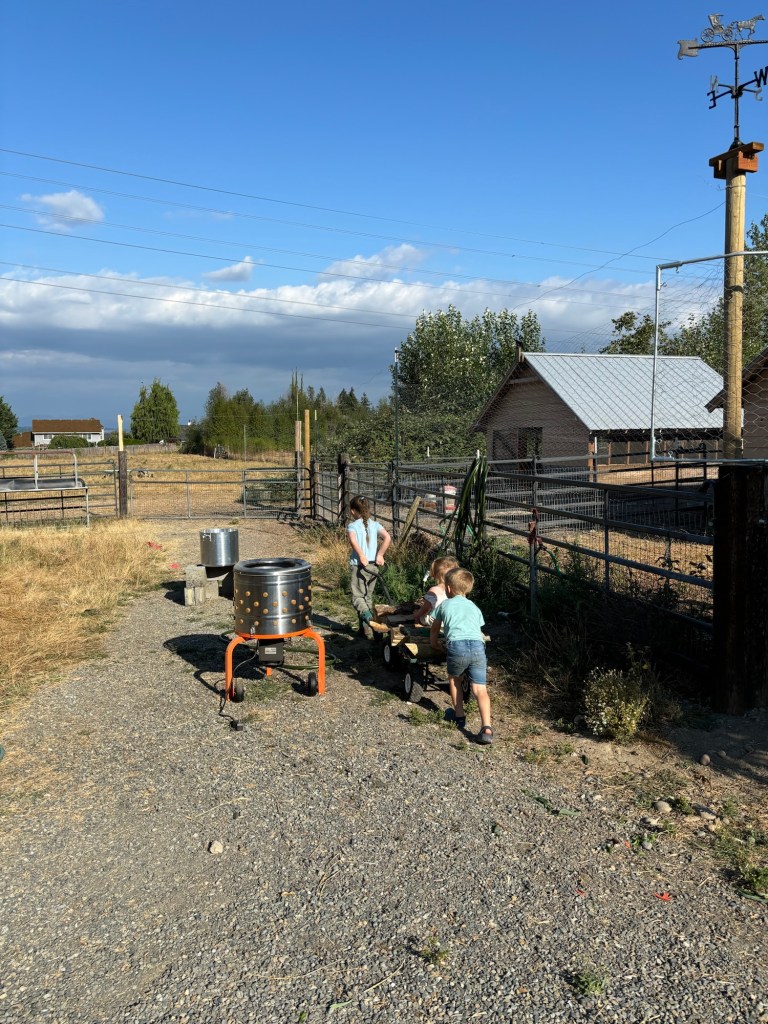
And the plucker set up next in line.

As I said, the kids helped. Except when Winnie Wandered Off (sounds like that should be a book in the “Where’s Waldo” series) and tried to climb in the ben with her cows.

She was very happy to help carrying the eggs to the shop as well.
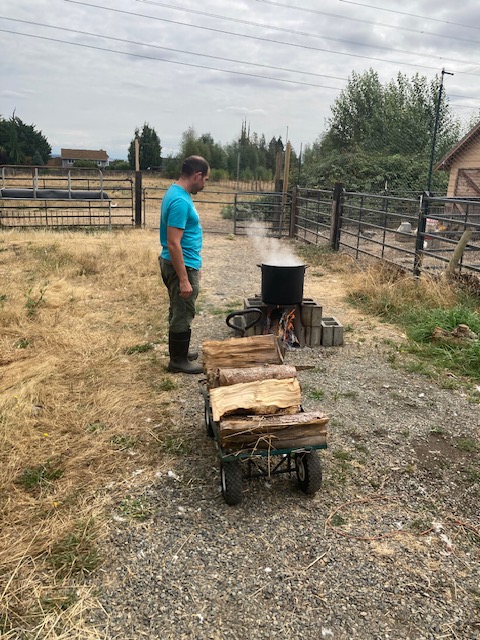
By the time we arrived at 7:30 Thursday morning Uncle already had the pot bubbling. We processed the geese and the stew birds first, and learned that the plucker does not pluck a goose worth a darn. In fact, they plucked best when still hanging directly after they stopped flapping.
One of the things we learned last year was that it’s better not to despatch the birds by chopping the heads off like we did when we were kids. Rather, they seem to die more quietly and pluck more easily when we hang them upside down until they pass out (2-3 seconds for the heritage birds, considerably longer for the Cornish Cross) and then cut the throat and let them pump out the blood on the straw pile.
In fact, with the Black Australorpes we had the fastest and cleanest pluck on one of the hens that we didn’t even scald. This did not work with the Cornish cross.
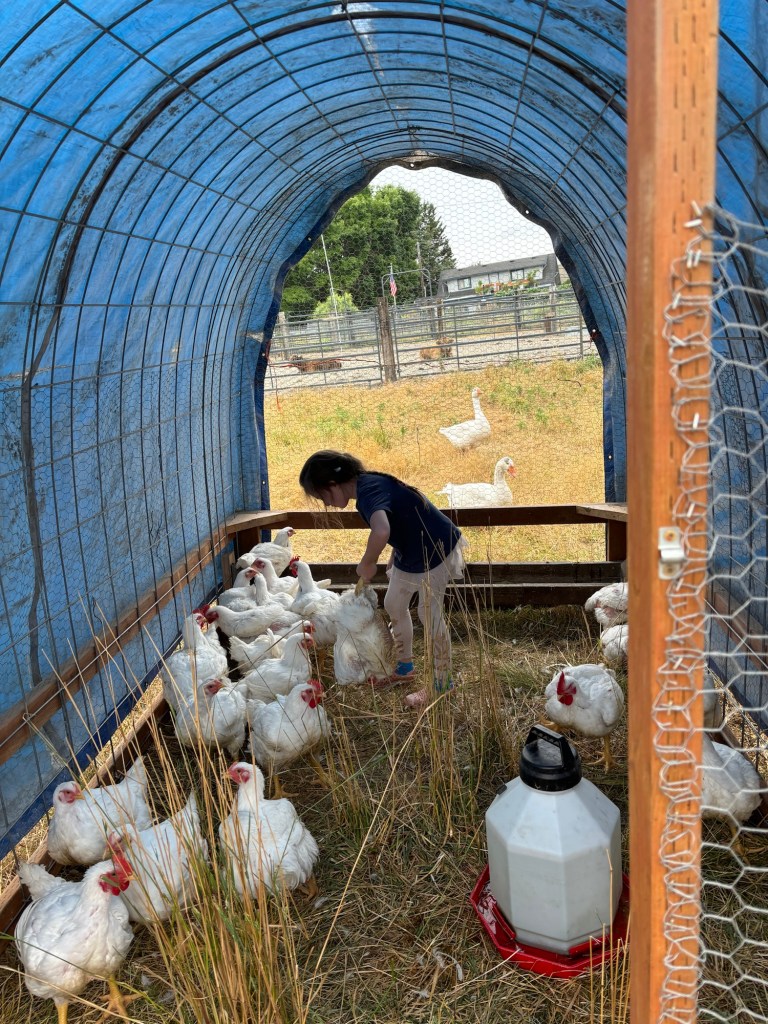
Here you can see the two remaining geese, the breeding pair, meandering around the pasture watching looking for opportunities to steel feed from the chickens.
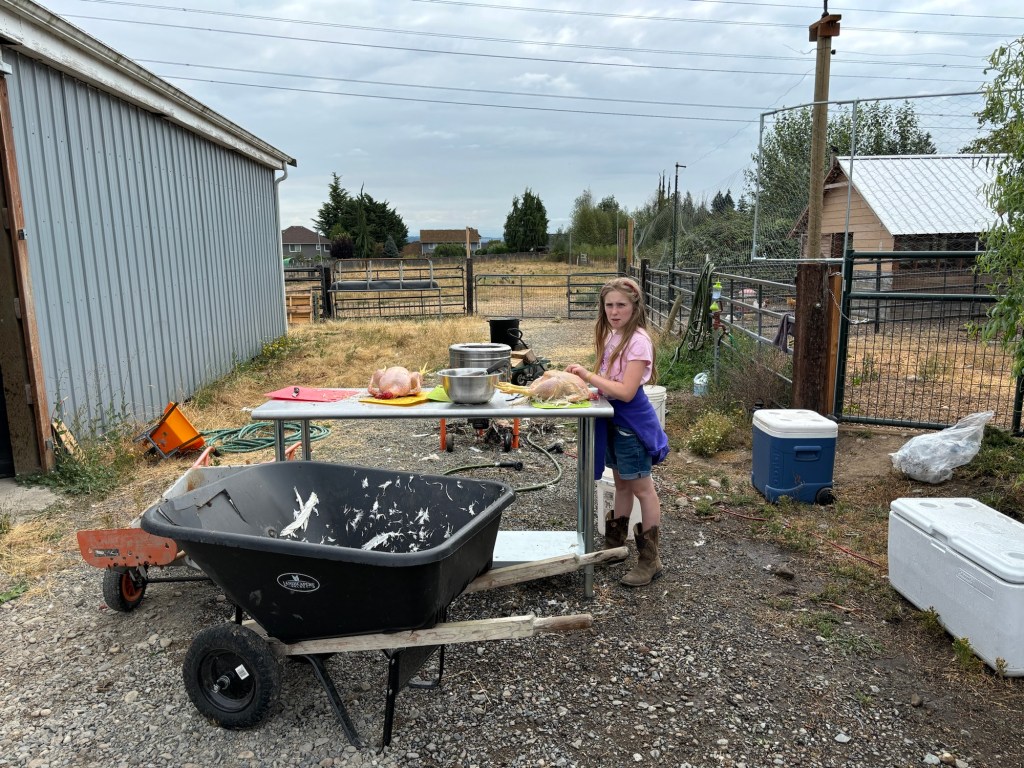
Evie insisted on plucking one of the birds all by herself for our parish priest, and she did quite a good job of it, even though it was far more difficult than she had expected.
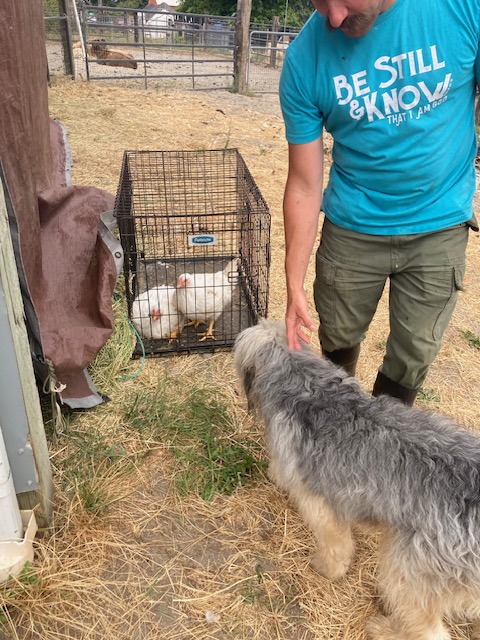
Poor Gunther. The two little kids can open the yard gate by climbing up the fence, but they are less excited about closing it fully, so he kept getting let out of confinement and running over to help, but it appeared no one appreciated his efforts, and his boss kept having to lock him back up again.
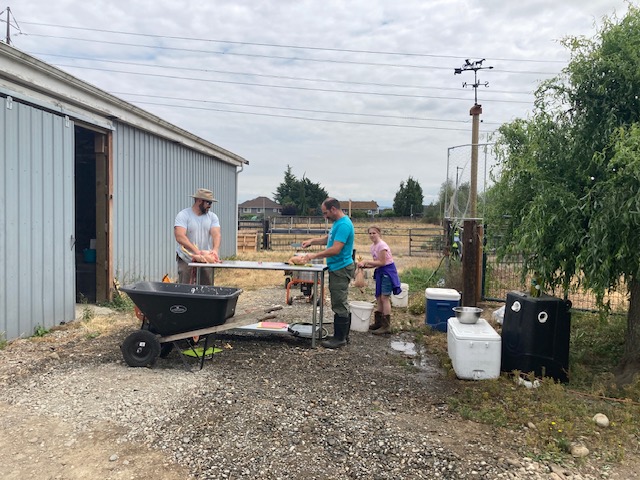
All told it took about 10 hours, from start to cleanup. We made a few observations about the meat birds this year. They were a bit more fragile this year than last year. Several broke their wings just flapping while bleeding out, and the plucker damaged the carcasses so quickly that we had to do the majority of plucking by hand. There are a number of potential reasons for this. We got the chicks from the same local store, but there is no way of knowing if they got them from the same or a different nursery (the store won’t say, we called and asked). So we could be working with a different breeder, different genetic line. We also fed them at will this year, meaning they always had feed in the trough, whereas last year we fed them a weighted ration on a by-week schedule, and they often had periods without feed in the trough. Last year we didn’t have an enclosed tractor, so the birds had more room to wobble around. This year we enclosed the chicken tractor because we lost so many (20%) to predators last year, but the downside is that they had less room to walk around and scratch and peck. It is also heavier and harder to move, so they didn’t get moved in the evening unless Adam or Ryan was available.
We will need to think about how to adjust for next year.
For this year, we have a freezer full of birds waiting to go out to customers and benficiaries. We still have one or two unsold, if you are interested in buying one ($2/LB) contact Kathleen).

And we have a few months worth of chicken soup, and a couple of geese carcasses.
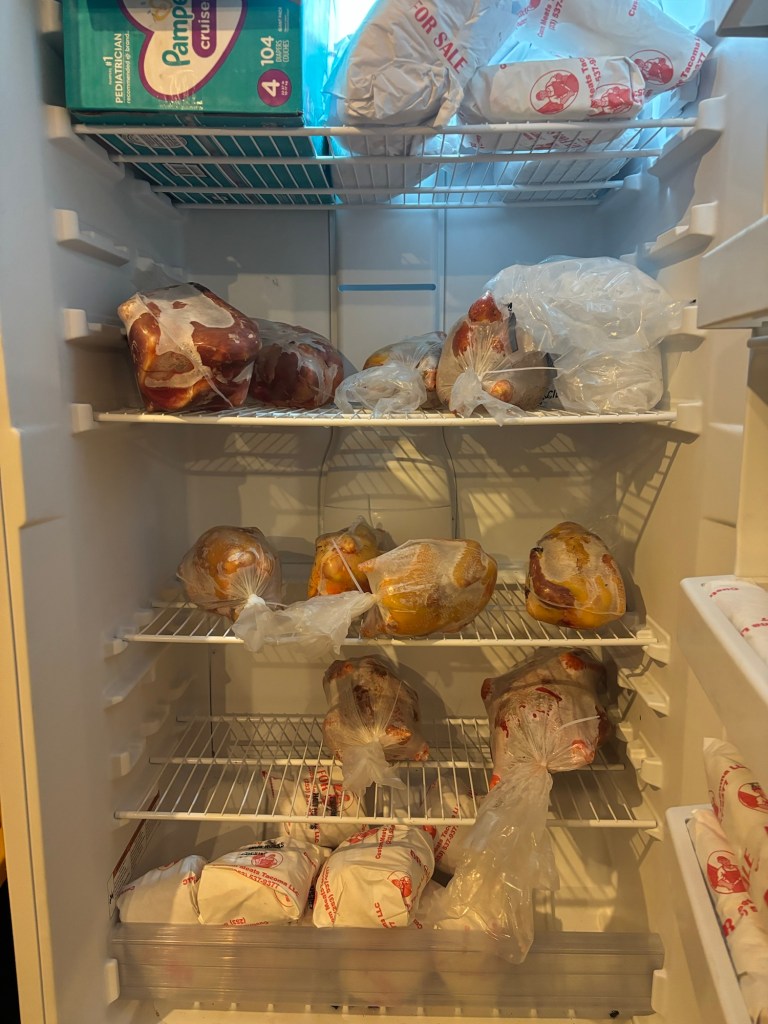
They are older geese, so we will have to see how they taste. They might end up as soup as well, but who knows?
We don’t really know. We’re just kind of winging it.

 Little Farm in the Big City