

Early this year, in January, I think, we had two big willow trees on the farm cut down from some 30-40 feet tall to about 6 feet tall.
There were several reasons for this. Both were in inconvenient locations. One was shading the garden and slowing the soil warming in the spring. The other was blocking access we needed to get the water tank into location behind the shop.
They both wanted pruning and were full of dead branches and one dropped rather a large limb on our driveway behind the cars during a wind storm. We wanted them at a height that we could conveniently, or at least feasibly, prune on our own without having to bring in a tree service.
And also, we wanted to see if the cattle would eat them as food. Apparently, in Europe in many cultures people have been feeding tree forage for hundreds of years, particularly in areas with heavy forestation or limited grasslands, or drought prone areas. Trees produce more biomass per acre than grass does, and have deeper roots than grass, and so can access water deep underground that grass cannot reach. However, trees regenerate more slowly than grass, and some trees, particularly certain breeds of willows, have high levels of tannins that most grazers will not eat as the bulk of their diet.
Since we finished our last round through the pasture, the cows and sheep have been living in the barnyard, eating hay, and waiting for the return of the rain. Hopefully next year we will be able to irrigate the pasture behind them with harvested rainwater, but for now, this is the best we can do. But just to continue the tree experiment we have started cutting willow branches and feeding them.
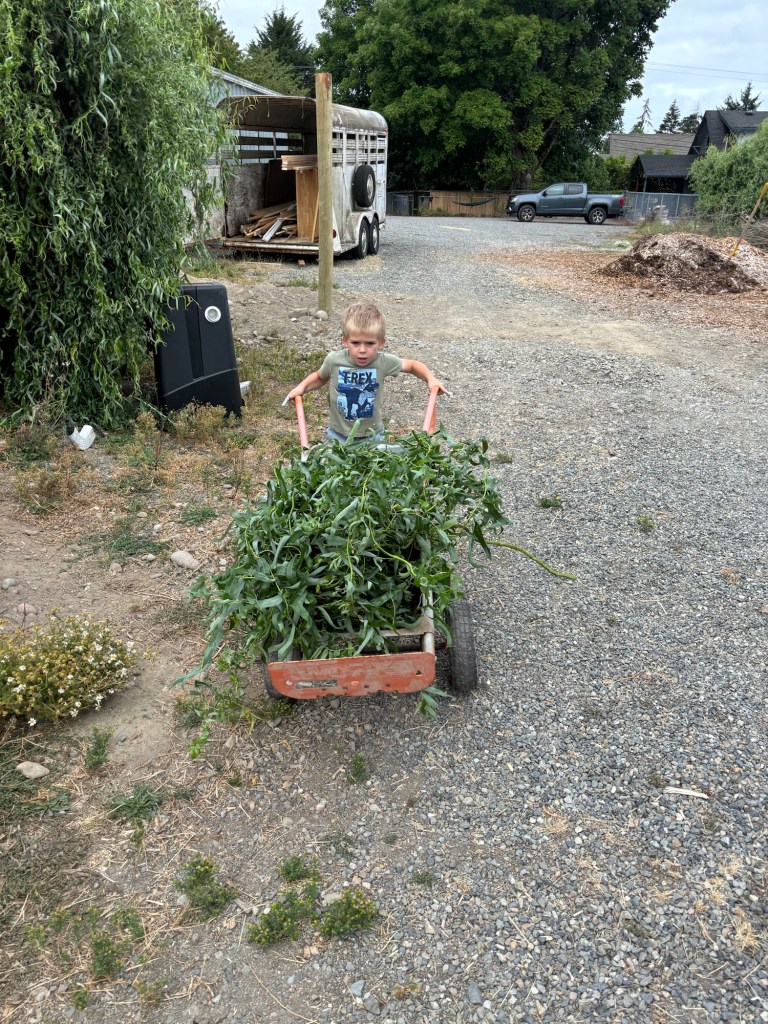
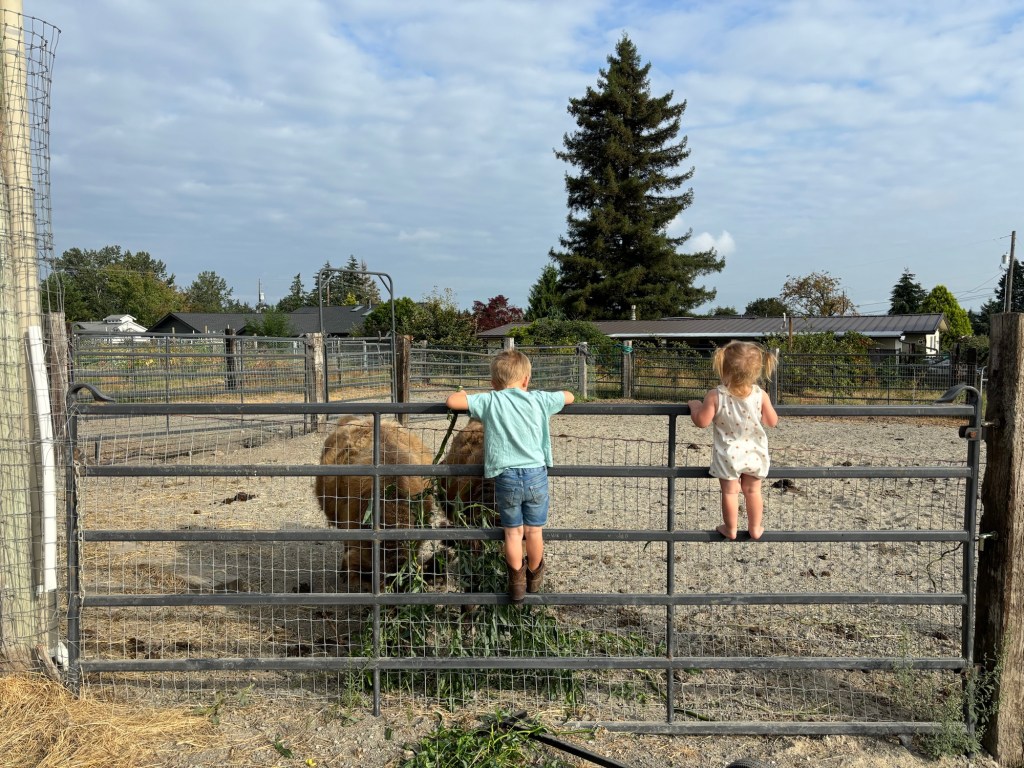
So far so good! We have been cutting a pile of branches daily and feeding it over the fence.
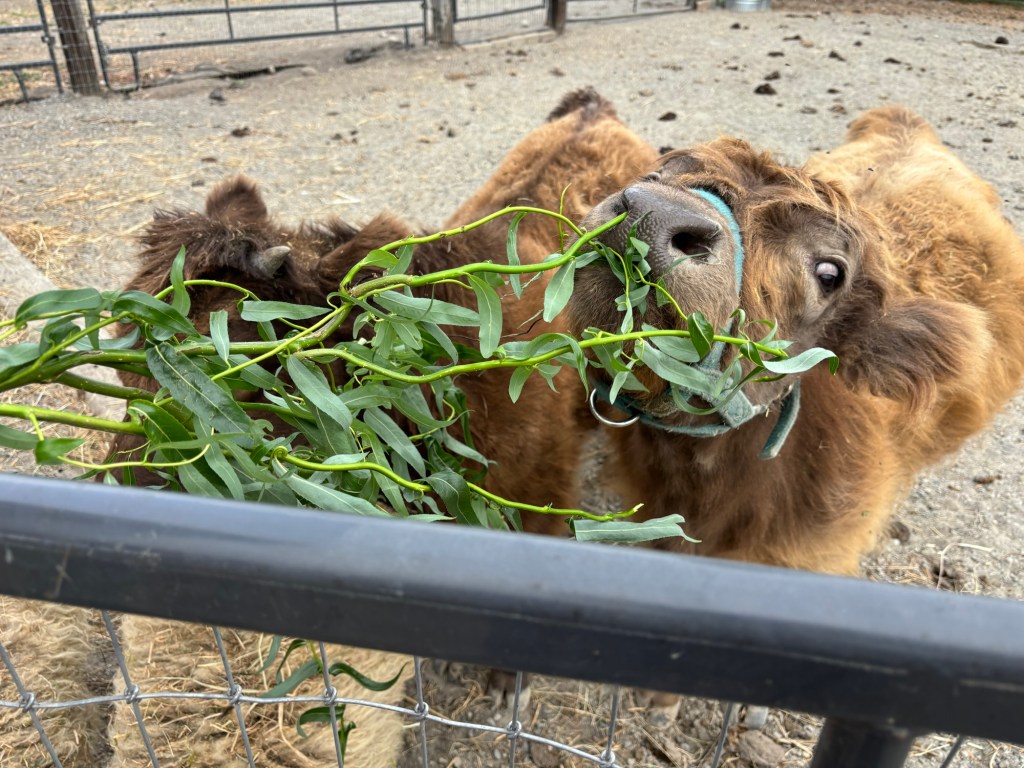
The cows and sheep both eat the leaves off like candy, in addition to their hay.
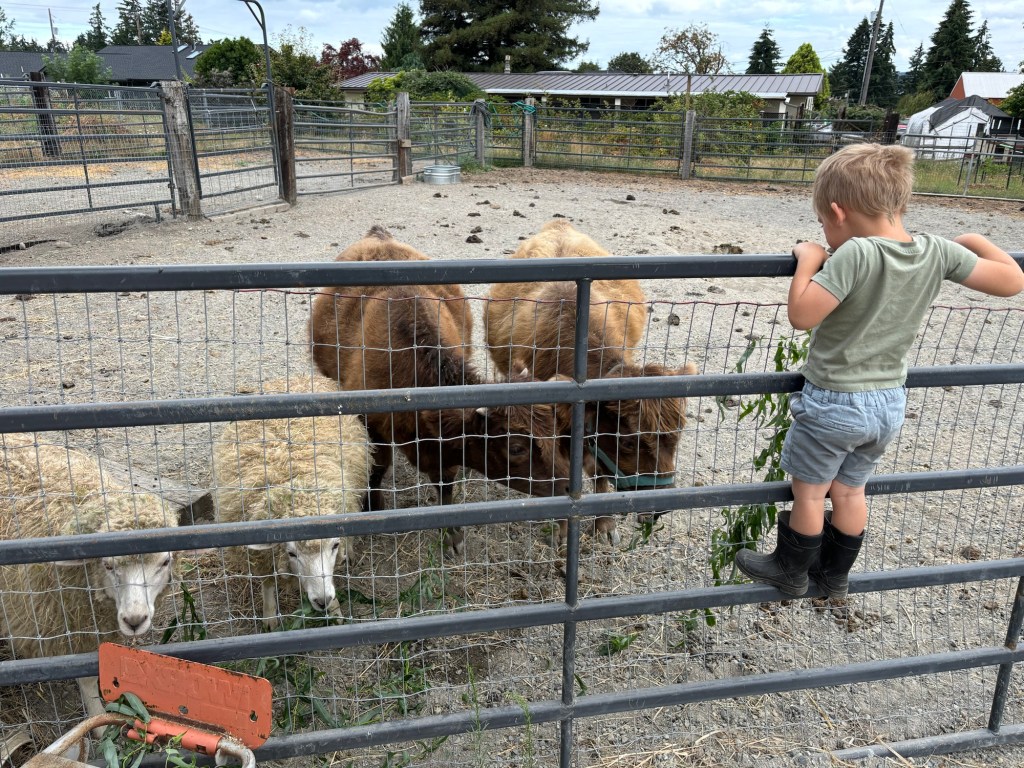
And the kids love feeding them their tree treats.
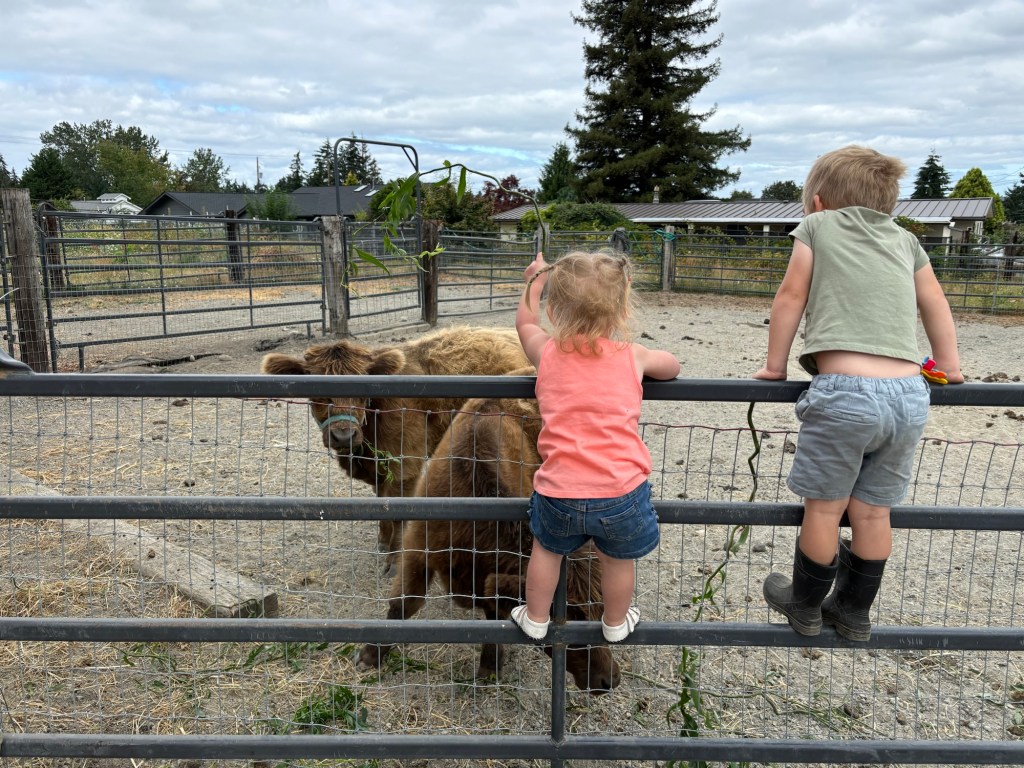
Of course we don’t have enough to get them over the dry season, but it’s a good argument for continuing on the silvopasture route, slowly adding a few trees to the pasture here and there.
Although, of the dozen trees that we planted out there last year, only two are thriving, so we need to rethink the preparation, planting, mulching and irrigating of pasture trees before we invest anymore effort or money in that direction.
For now, we learned that they will eat and enjoy some amount of the native curly willow, (and, incidentally, the neighbor’s cottonwood as well) and it’s fun for the kids. We’ll call that a win.

 Little Farm in the Big City