

When I was a kid, my Dad and Grandpa had a fencing wagon. It was a large flatbed that pulled behind a tractor, always disorganized, loaded with a jumbled rack of wooden fence posts and rolls of wire, stacks of step-in metal fenceposts, buckets and bags of insulaters and gate handles, usually a few fencing pliers, a post maul and some hammers, all just kind of stacked in there wherever they happened to be set. It was rare that we didn’t have to search for tools, especially fencing pliers, when it was time to take the fencing wagon out. Every year, at least once per year, but usually twice, it would go out behind one of the smaller tractors, making the rounds of the fields. There were always tree limbs down in the spring, or places where deer had kicked the insulators off jumping the fence. Sometimes there would even be places where the fence was cut by snow-mobilers in the winter, though this didn’t often happen in our neck of the woods.
One of my older brother’s major projects after he took full charge of the farm was going through and replacing all the fence on the whole farm. This was a huge job, but since then his “fencing wagon” is a bucket full of insulators and some pliers. He walks the property, replacing the insulators where needed and here and there splicing a wire.
Farmers are always splicing things together to get by, but wherever possible, there is a lot of sense in taking the time to do it right the first time. To that end, on Monday I put in electric fence running down both sides of the North Pasture. Now, rather than moving the solar charger every day, and trying to power 400+ feet of electrified netting off one solar charger, we will just clip it into a hard wire wherever we want it to be.
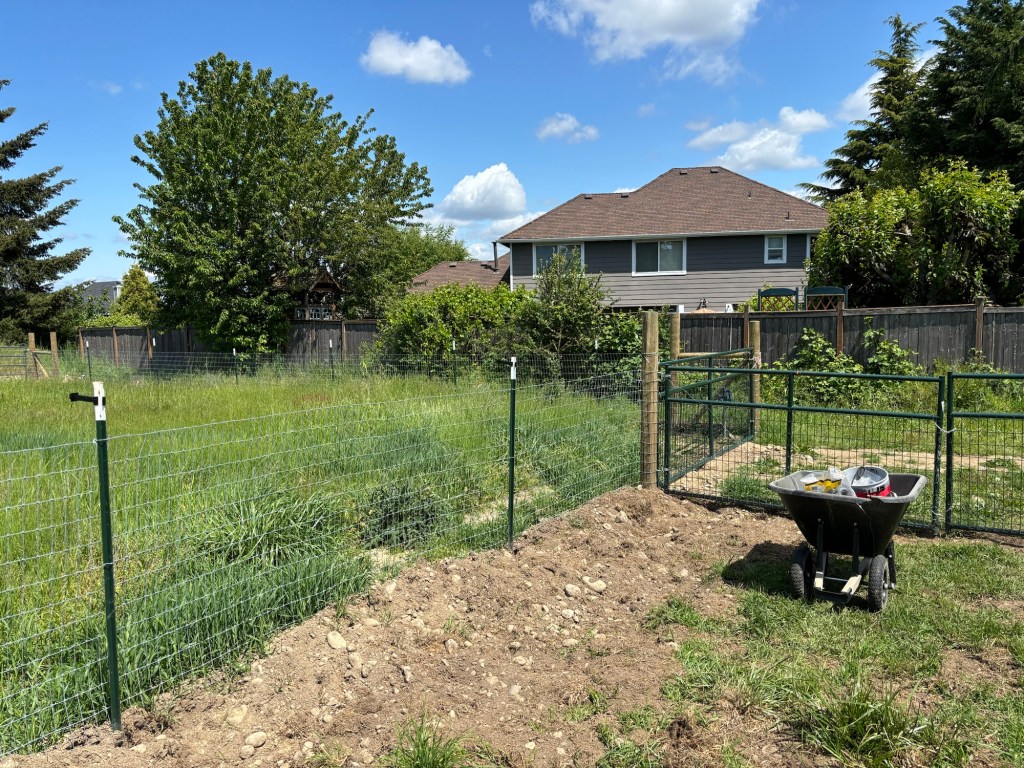
A smaller farm, a shorter fence, a smaller “fencing wagon.”
That was suprisingly hard to push, the roller was not on an axle, and the friction of the spool against the wheelbarrow was higher than expected. So a good workout.
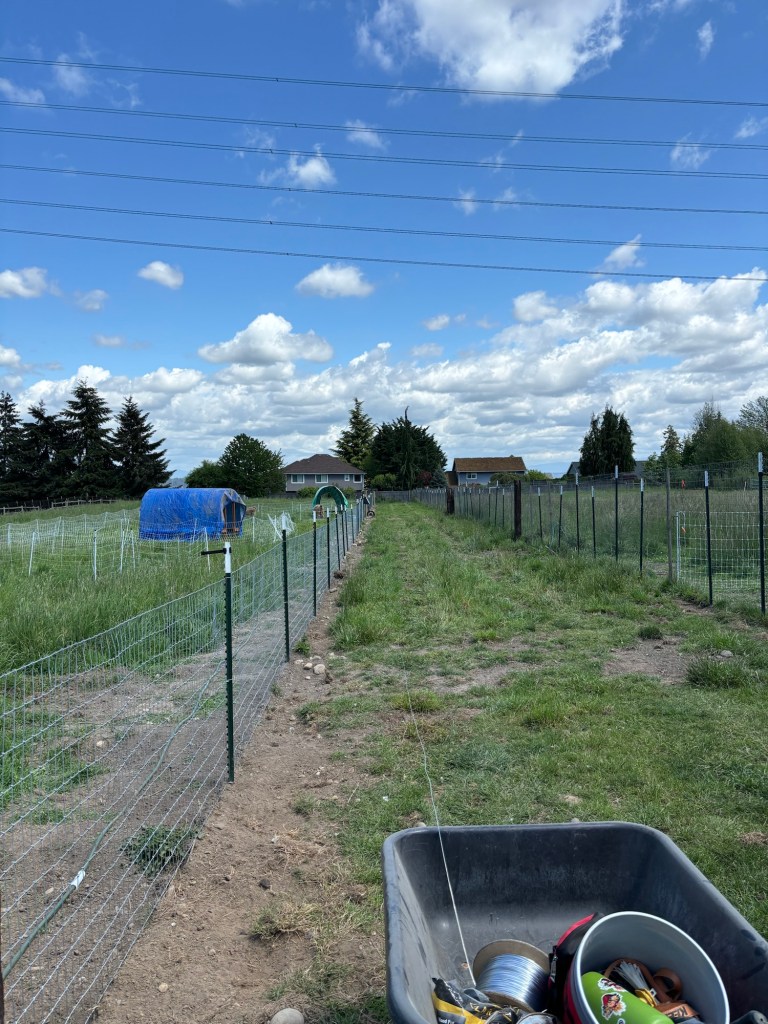
330 feet of wire rolled out.
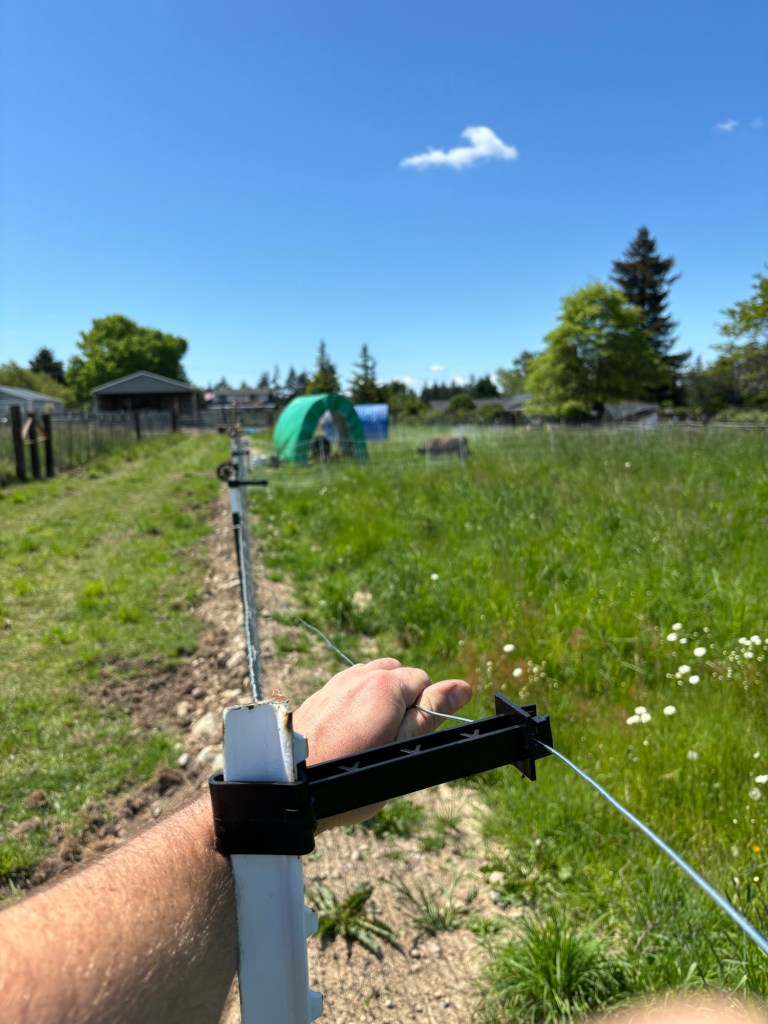
Then set in the insulators.

Tensioned using a ratchet strap (yes, they do make fence stretchers. We even have one, but it is only 300 feet of straight pull, this was plenty strong enough for that.
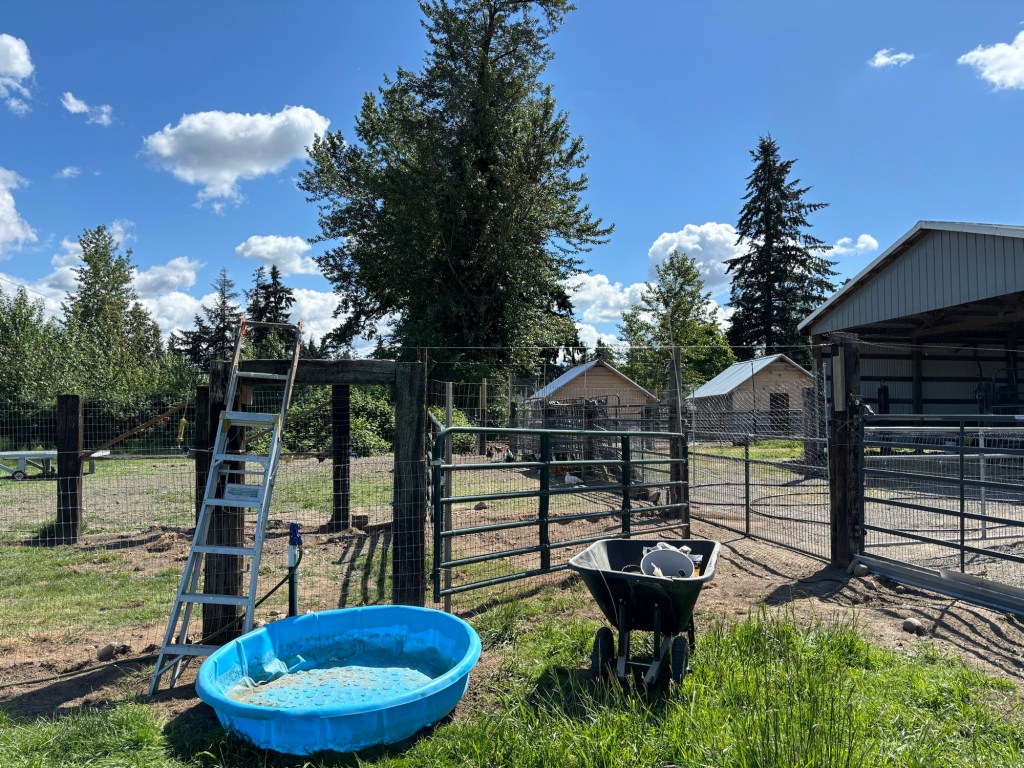
Setting the bypass over the gate. Unfortunately this has a hot hook. That is, the electricity goes over the gate and ends in a gate hook, which will have electricity on it even when unhooked. This is not how I was trained. Growing up the gate hook should always be cold when unhooked so that it didn’t drain electricity on the ground when laid down. Here, this gate hook can’t actually reach the ground, so it should be okay.
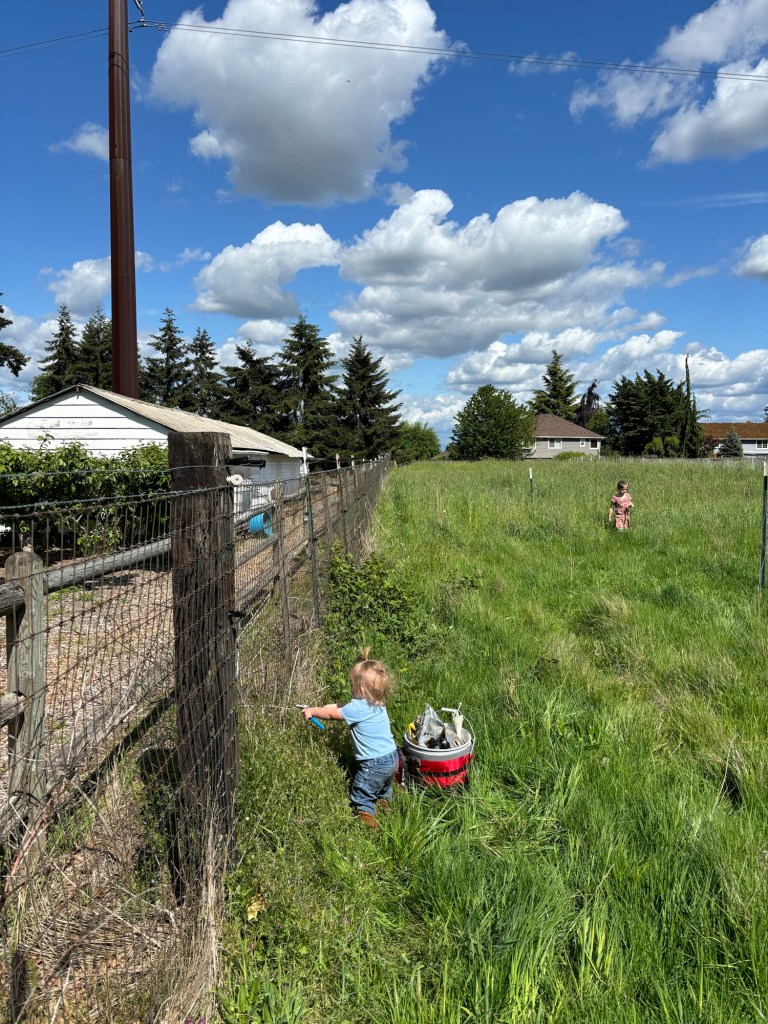
What would I do without my helpers?

This is one of the best things ever.

All done in the back of the pasture, heading back to the shop.

Ellie’s signature photography: pictures taken from behind with a finger smudge in the frame.

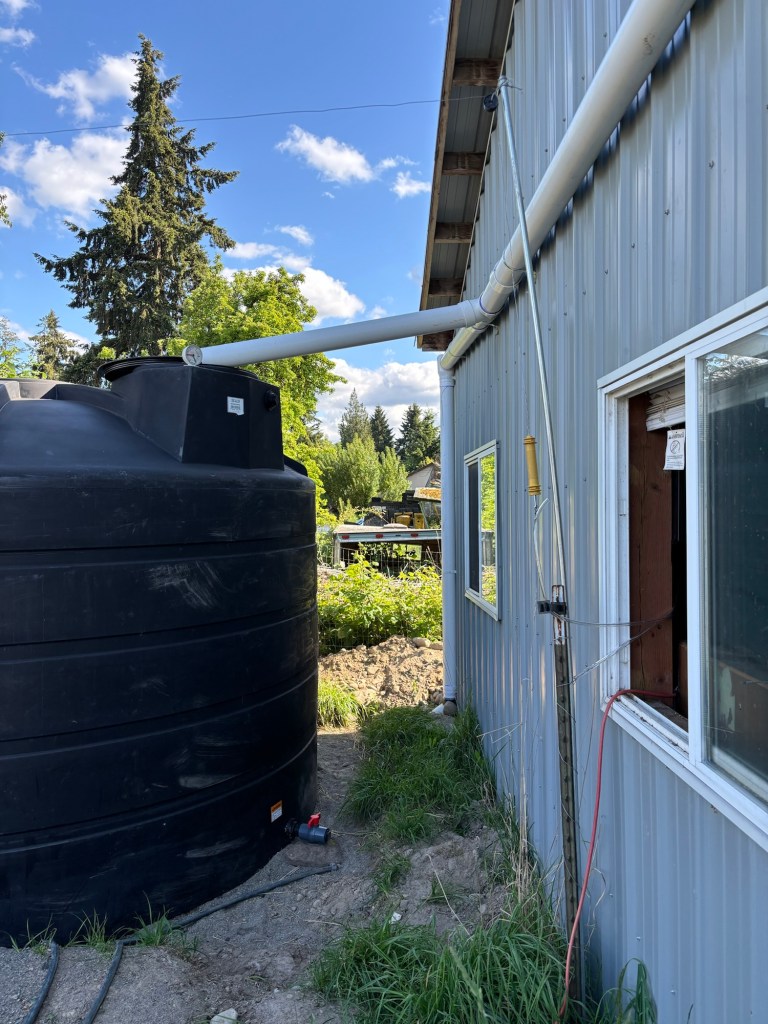
Set up a gate hook outside the shop window so we can cut power off to the whole system without having to unlock the shop.
Now to get the electric netting hooked up…
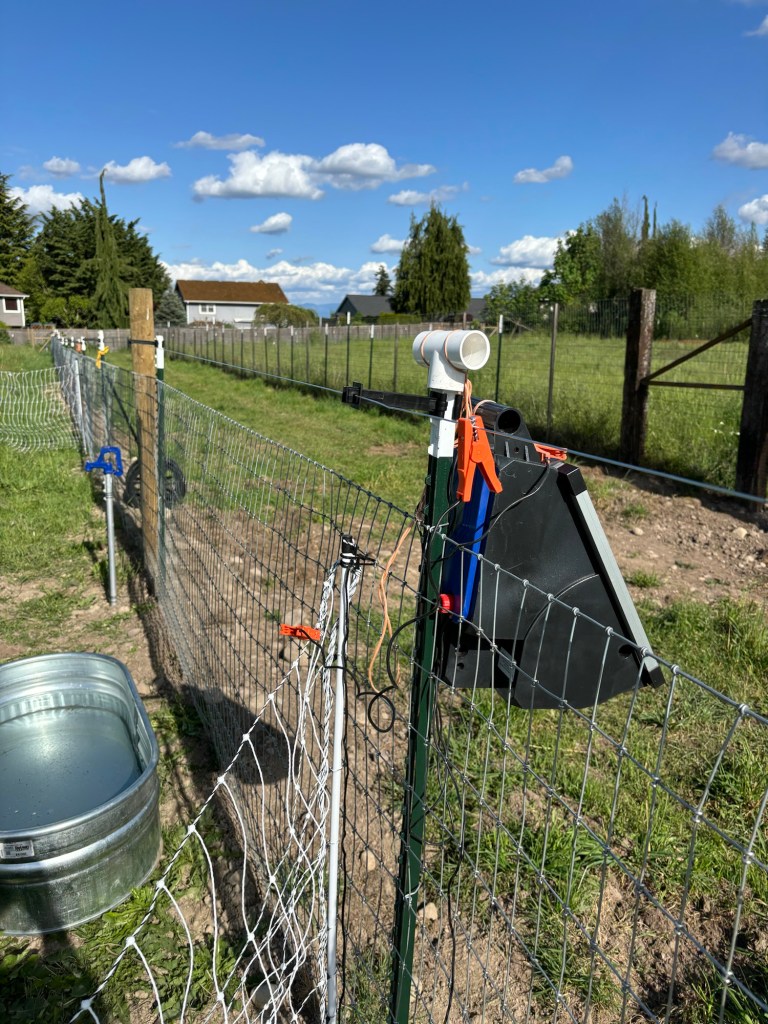
The alligator clips make it so easy.
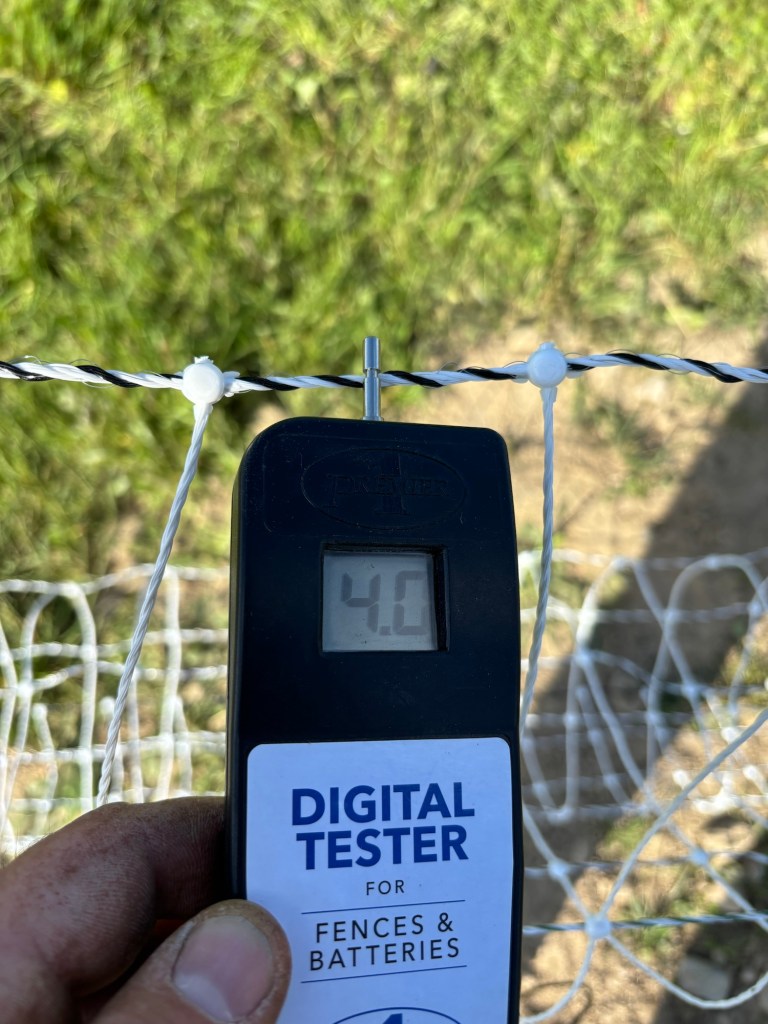
And tested. 4000 volts, roughly twice what it had been on the solar charger.
Since then, with the rain increasing voltage leak, it has been reading around 2.0, but still enough to give you a little buzz. As long as the cows and the sheep get a little negative reinforcement every time they nose up against it, and we don’t let them run out of feed, it should work.

 Little Farm in the Big City