

One of the ongoing projects here at the farm is a rainwater capture tank to catch rainwater from the roof of the shop. It is quite a large tank, so we have been preparing the bed with some care.
Uncle has been doing most of the digging for the last few weeks. He has been screening the dirt, keeping the dirt for gardens, and tossing the stones aside. There can be no large stones against the bottom of the tank, because the stones could gradually wear a hole in the bottom of the tank.
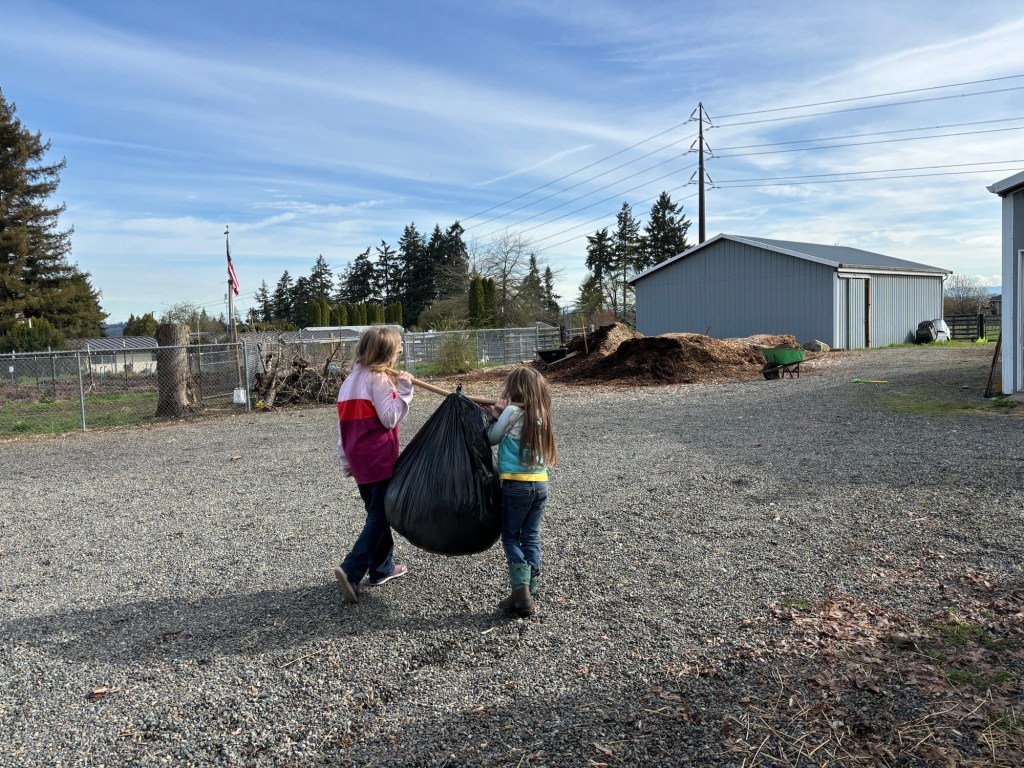
Teamwork!
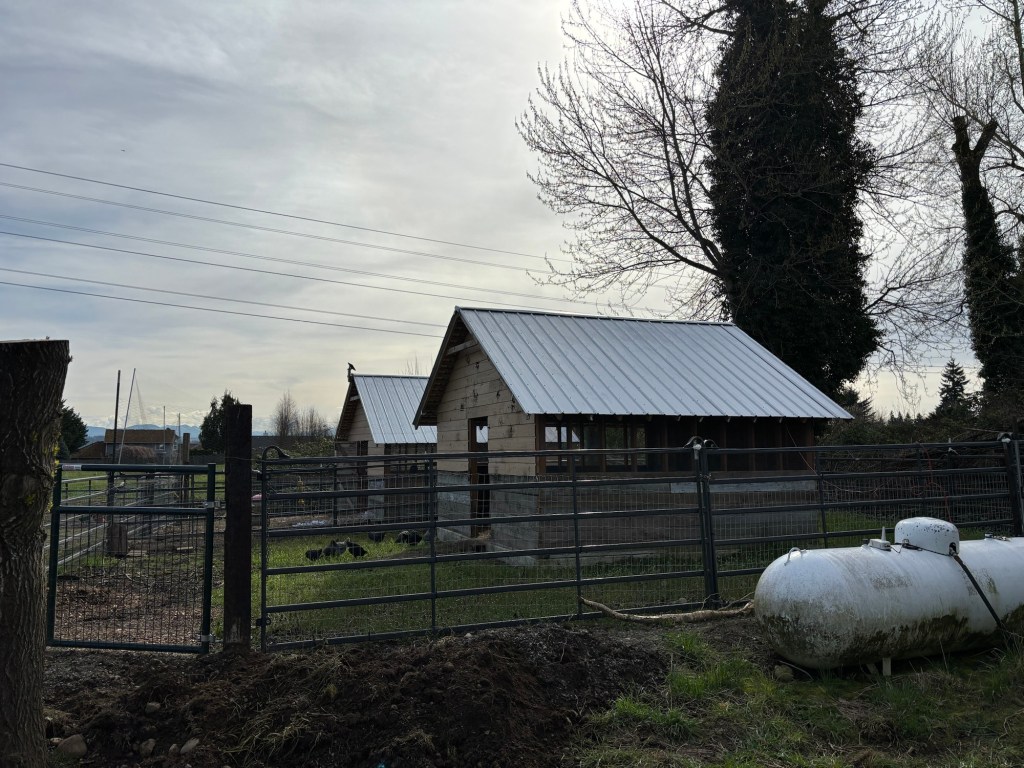
The pullets are enjoying their yard, and being outdoors.
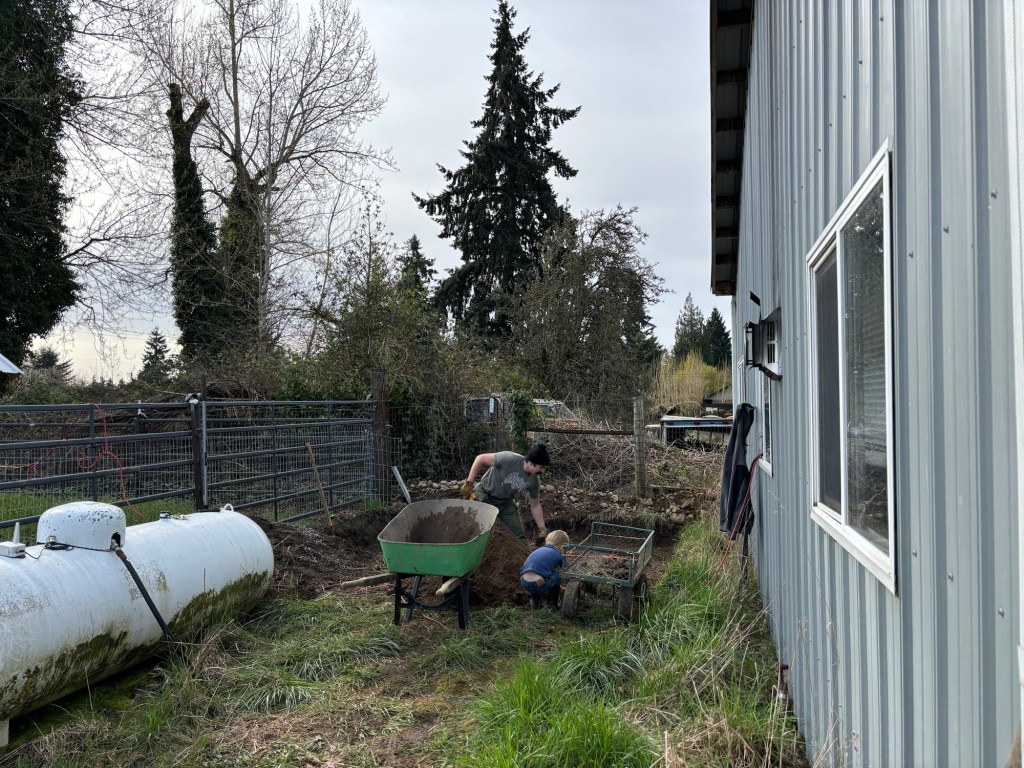
It’s a big pit, about 18 – 24 inches deep, depending on slope, 12 feet by 12 feet.

Seppi: “Dada! Look at me! I am so strong!”
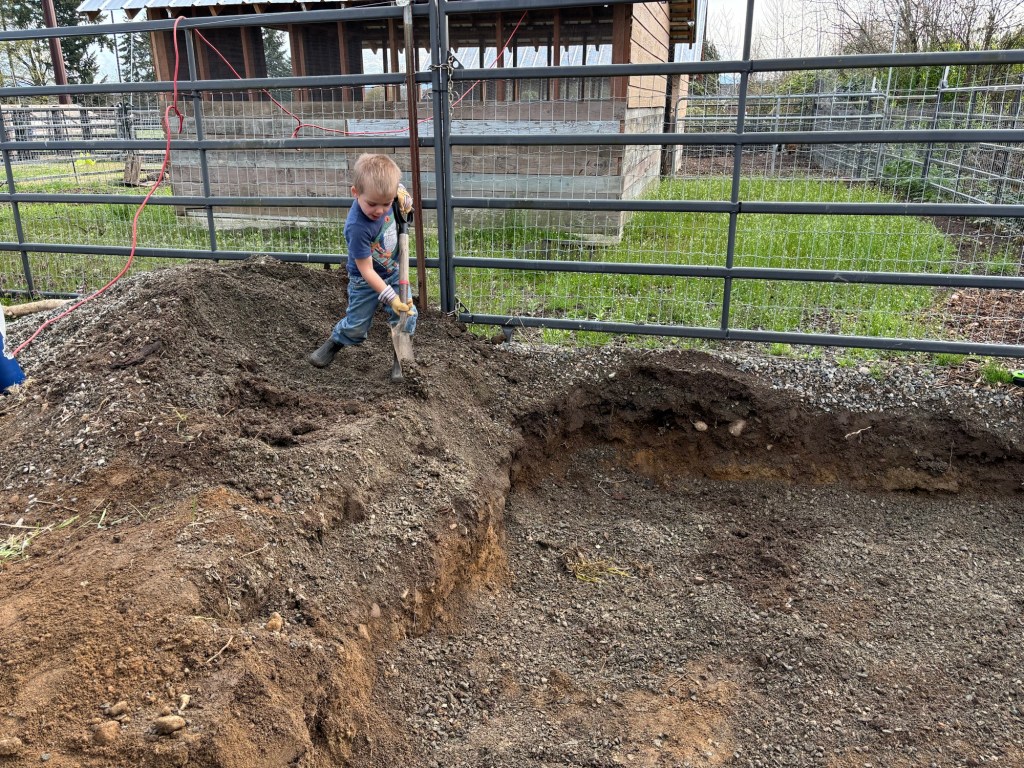
Just like a little mini Papa Doug. This boy was born to dig.
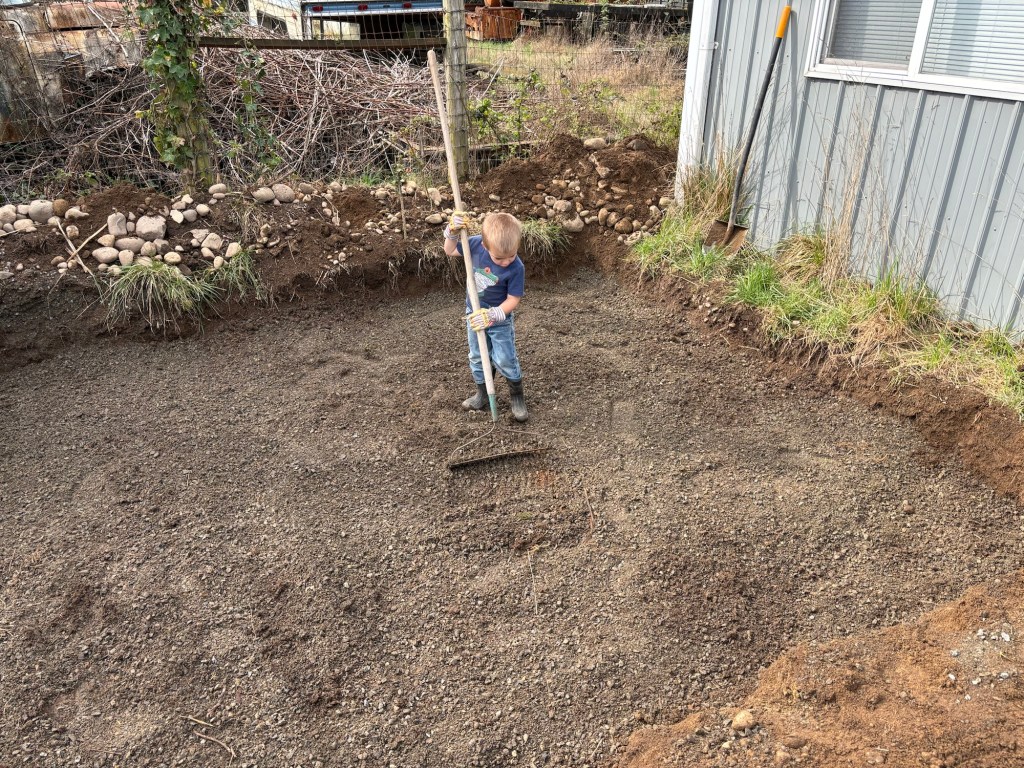
After tossing in about 3 inches of gravel, we raked it out generally flat and smooth.

Mommy and Winnie compacted the crushed stone layer, while Daddy loaded up a load of sand.

The first load of sand filled it about another three inches.
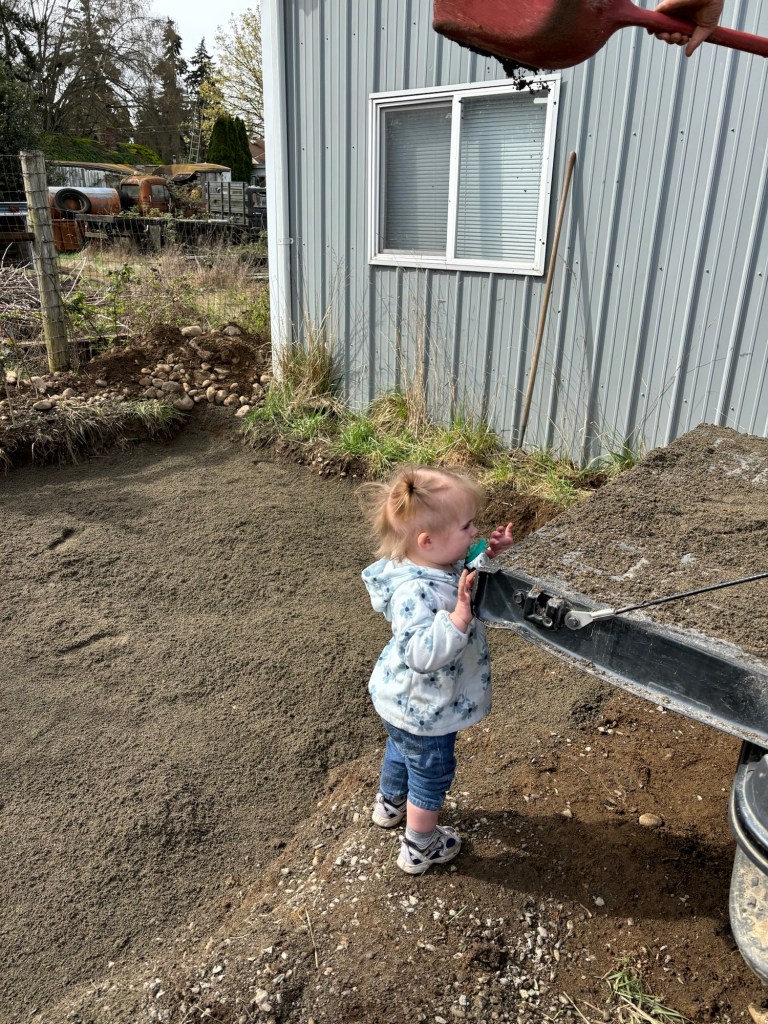
Watch out, Winnie Girl!
Then Mommy leveled and compacted that load while Daddy loaded up the next load of sand.
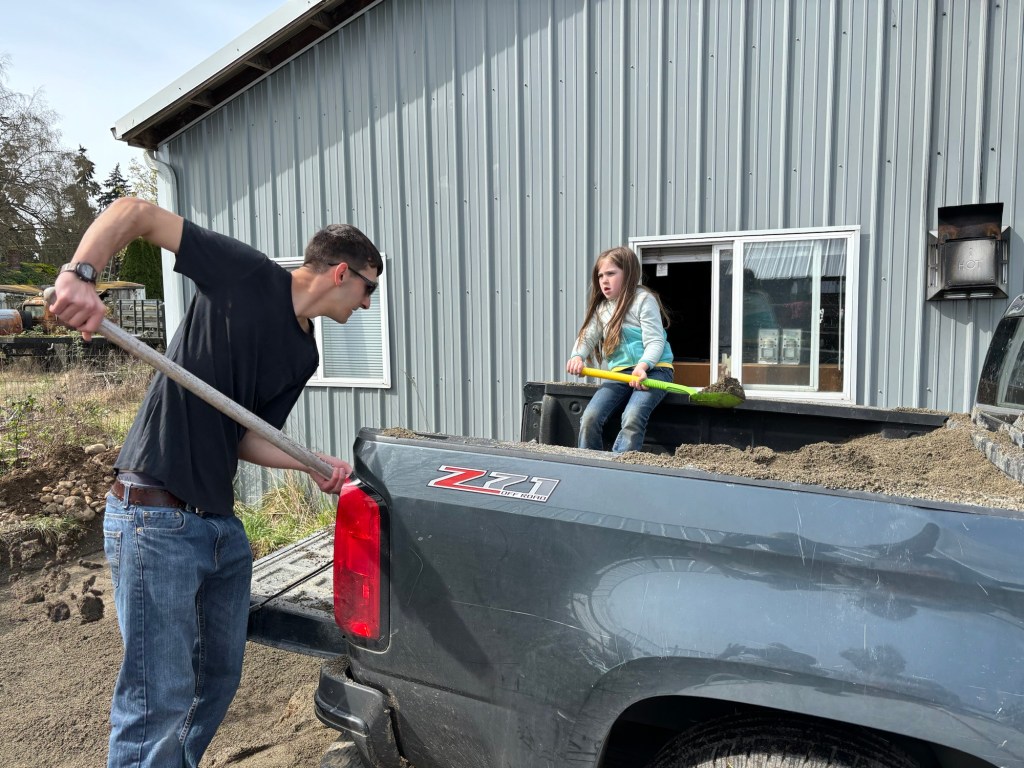
Our friend Daniel came over to chat and borrow a roto-tiller, and stayed to help with the project.

The second load of sand.

After another three inches of sane, we racked it out and compacted it.
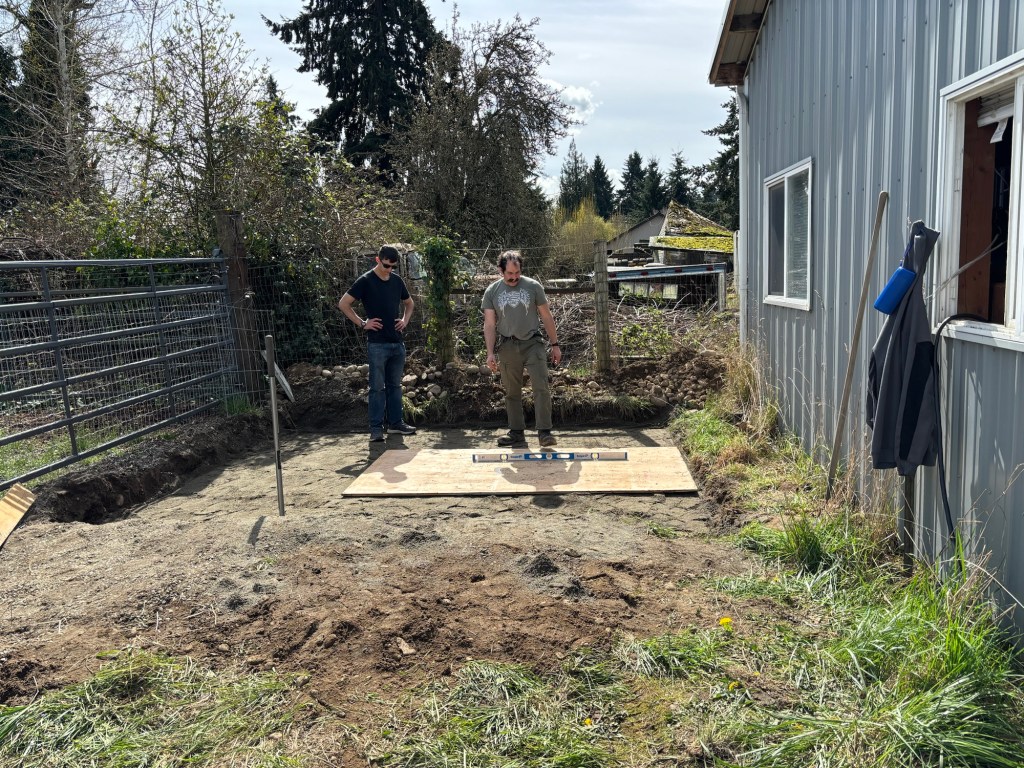
Then our resident engineer got out the high tech tools of the trade to level the pad to within 3% of level.*
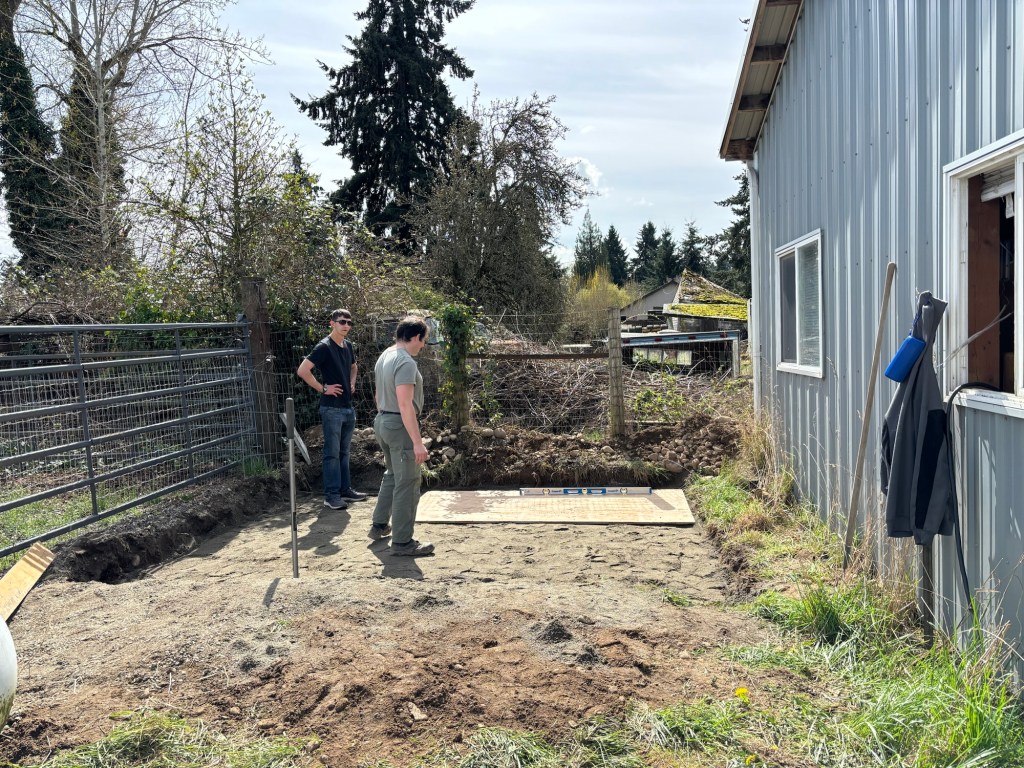
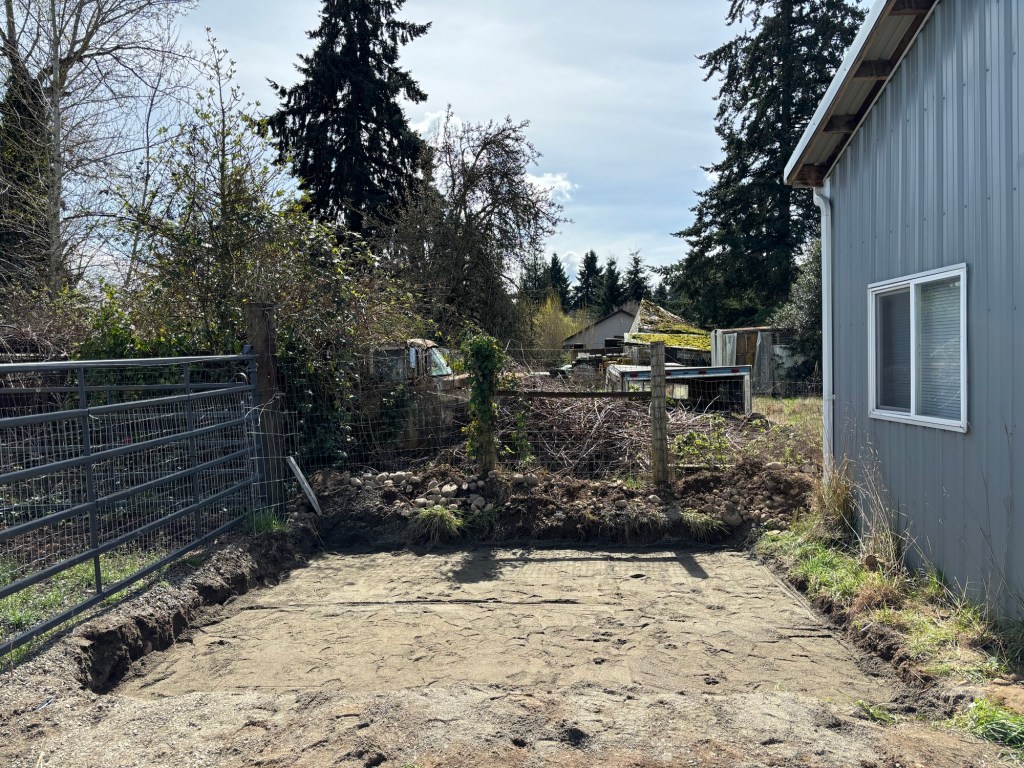
Now we just have to wait for the tank to arrive, and figure out how to get a 700 lb tank off a flat bed truck, across the driveway, between the propane tank and the shop, and onto the pad by hand.
Now for the math.
The tank weighs 700 Lbs empty and holds 5050 gallons of water, for a total filled weight of 41,110 Lbs.
The tank is 10′ 9″ in diameter, for a radius of 5.375′, which yields a total surface area of 90.72 suare feet.
This yields a finished weight of 453 LBs/square foot.
The manufacturer’s installation page recommends:
“For tanks that weigh less than 800 lbs/sq.ft. when full, a base made of firmly, even-compacted earth, sand/gravel, brick, wood, or pea gravel is acceptable.”
So we are well within tollerance there.

Moving sand is a favorite passtime, but it doesn’t always go according to plan, especially when the load weighs more than you do.


 Little Farm in the Big City