

Monday and Tuesday of this week we only got about an hour each day to do any farm work, between weather and school, inside chores and runny noses. We used that brief time to get caught up on some tasks that needed doing in the orchard.
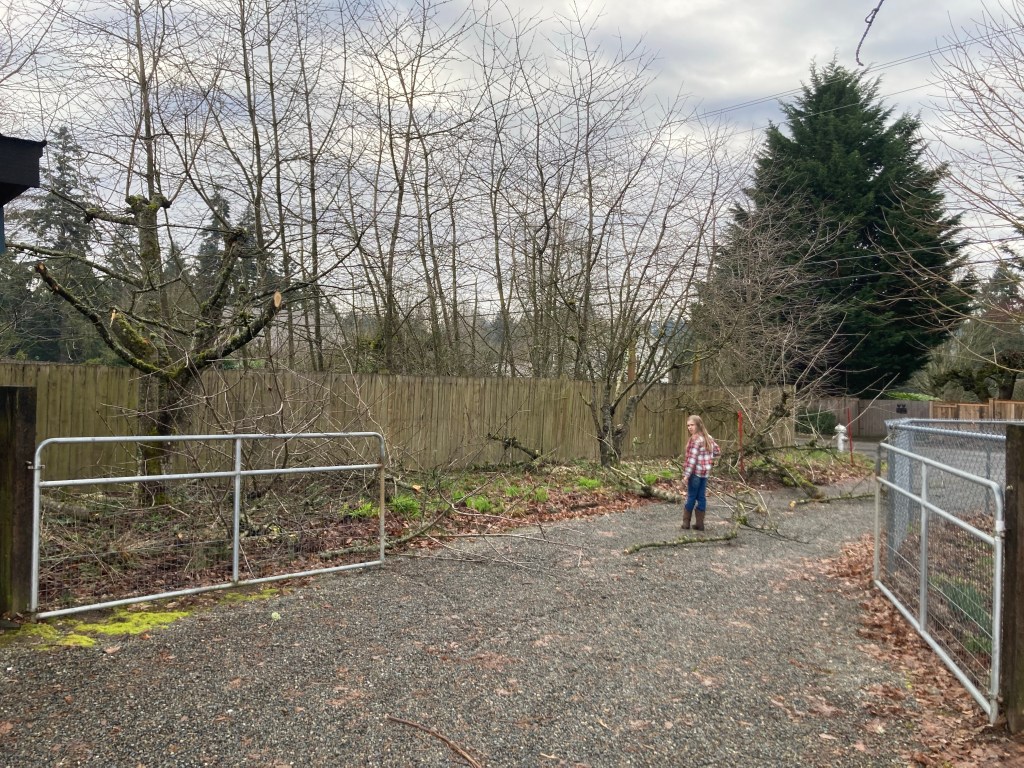
The orchard, by the way, is not a separate location on the farm. There are fruit trees scattered here and there, in various places and come spring more will be scattered in more areas. It is a way of turning a border or margin area, such as a fence line or the edge of a driveway, into a productive stand of fruits, nuts, berries, fodder, wood products or what have you.
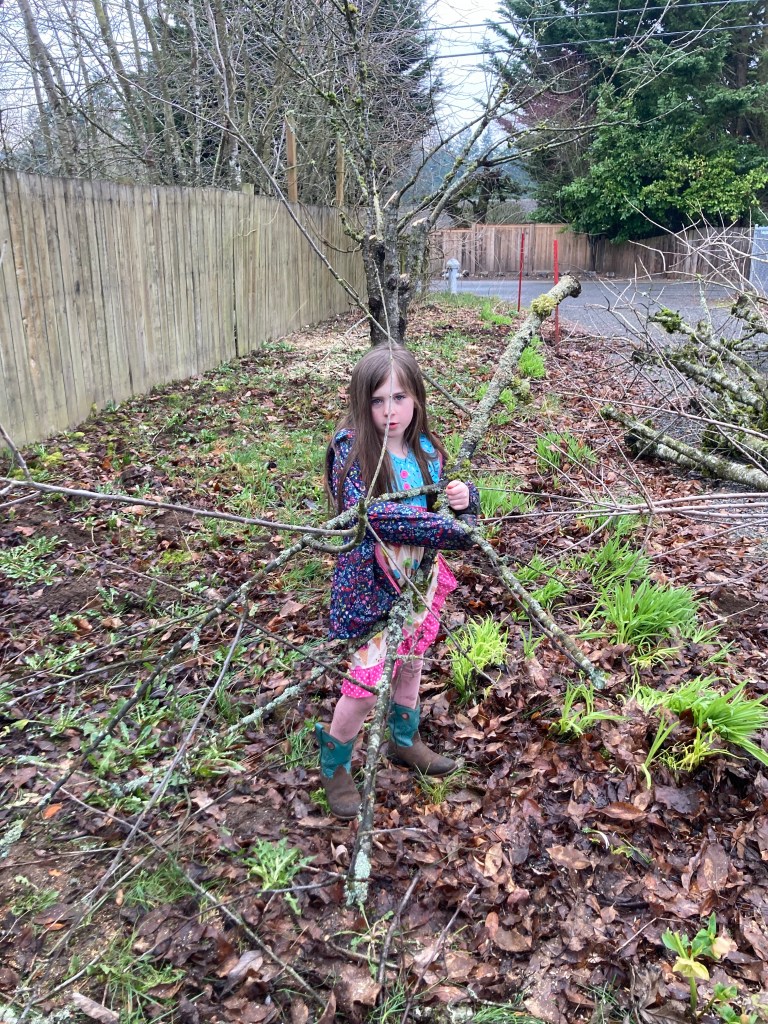
Along the front drive we have two old cherry trees that have been let run wild for who knows how long. They are large, with thick bases, and clearly at one point were trained into their current shapes, but since then have been allowed to do pretty much as they pleased. Last year we got two cherries off the two of them, which might have been a combination of factors, such as a late spring frost, or the predominance of vegetative growth, or the fact that they are completely shaded out all summer by the neighbor’s trees.
They were pretty thick, and what used to be laterals (30 years ago or so) are now 8 inch diameter trunks. The goal is, if the tree survives, to be able to prune it from the ground without a ladder from here on out. So Ryan was pretty aggressive about removing tall trunks (left one on the easternmost tree) and any crossing or redundant branches.
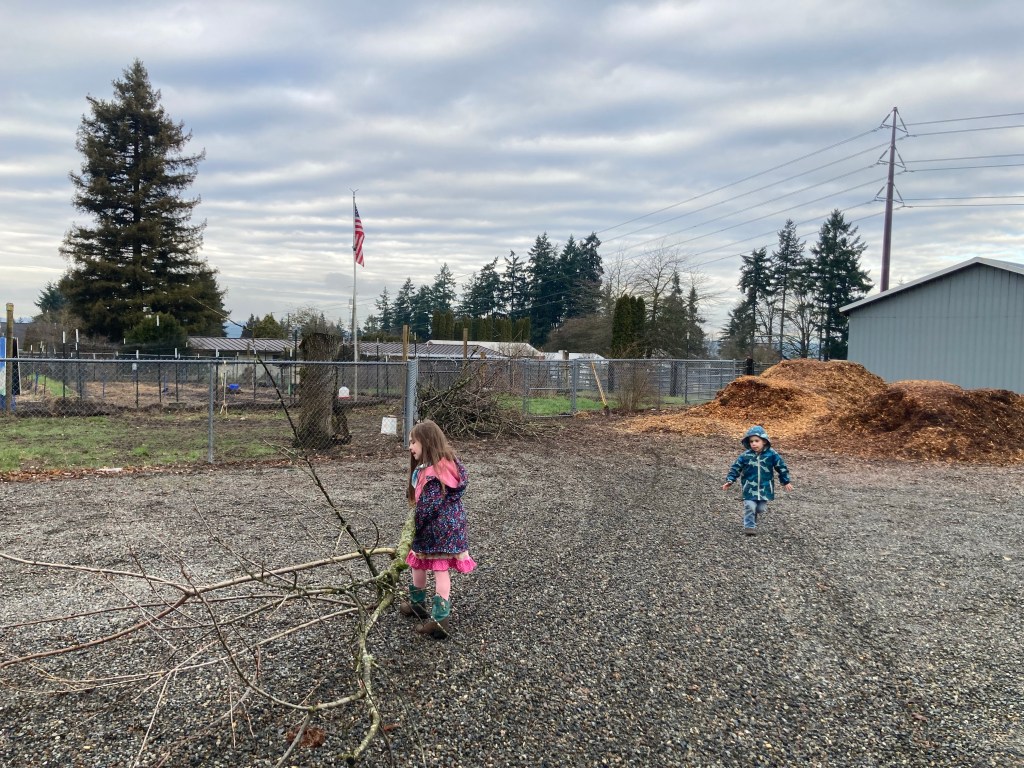
The kids were excited, expecting to get a bonfire out of the deal. They were disappointed to learn that this wood is too wet and needs to be seasoned for a while before it is worth burning. Some of the larger logs are worth trimming and seasoning slowly for use in wood turning projects, or for smoking planks.
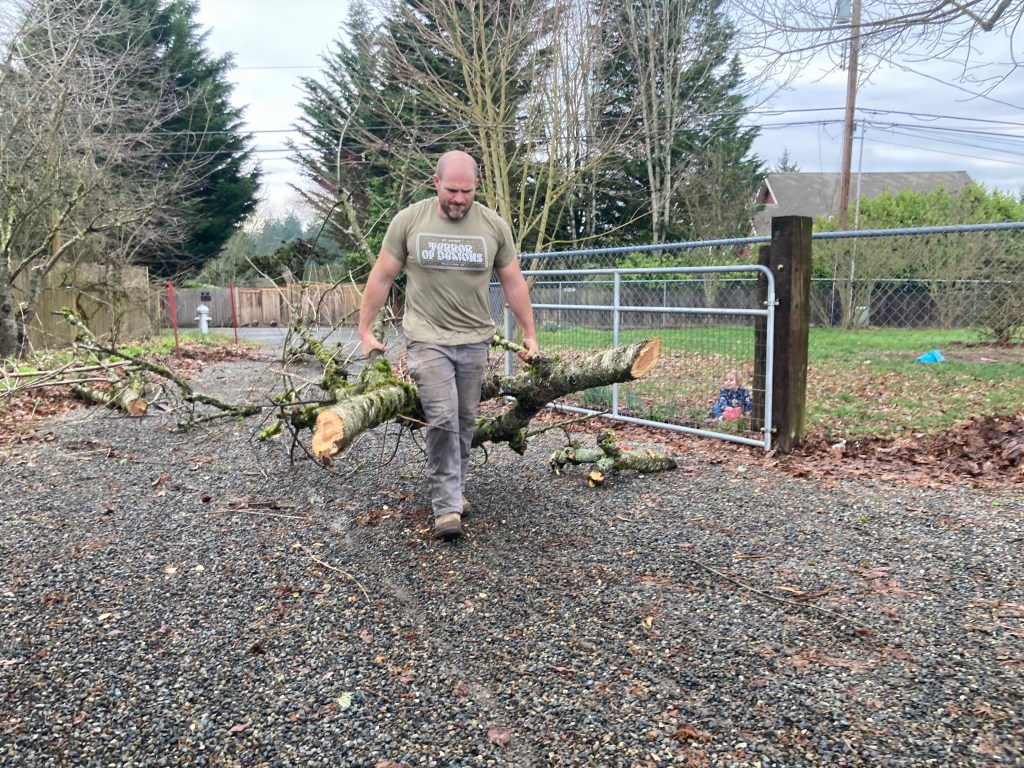
After the cherries, while we still had the chainsaw out, Ryan coppiced the three old elderberries.
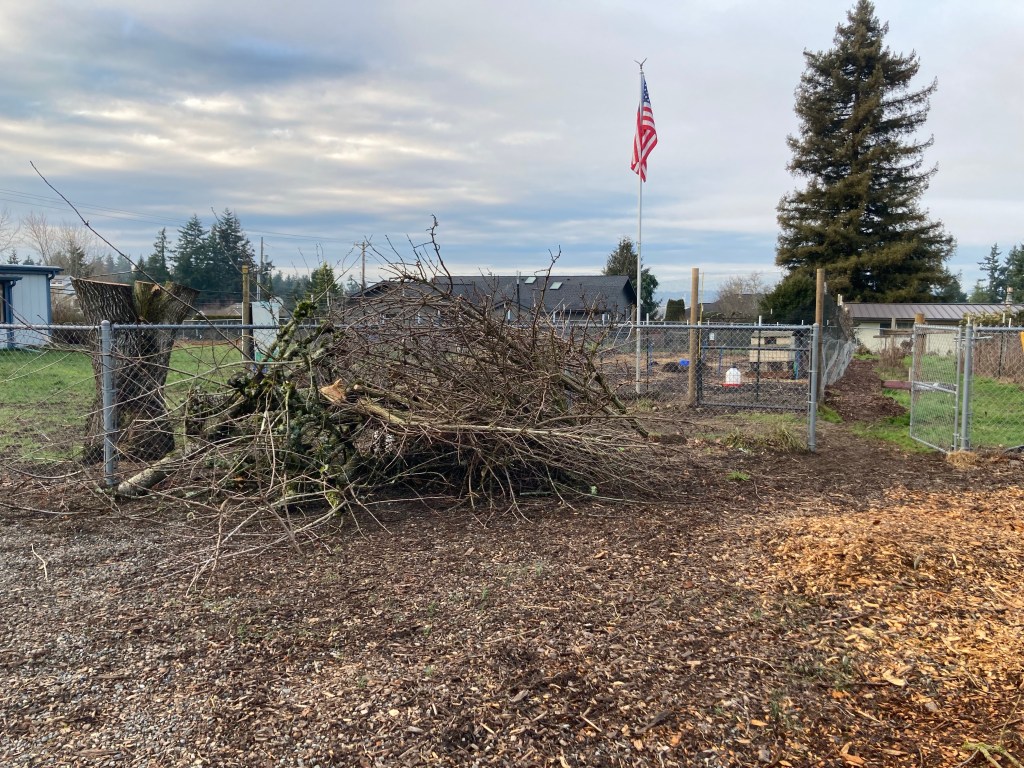
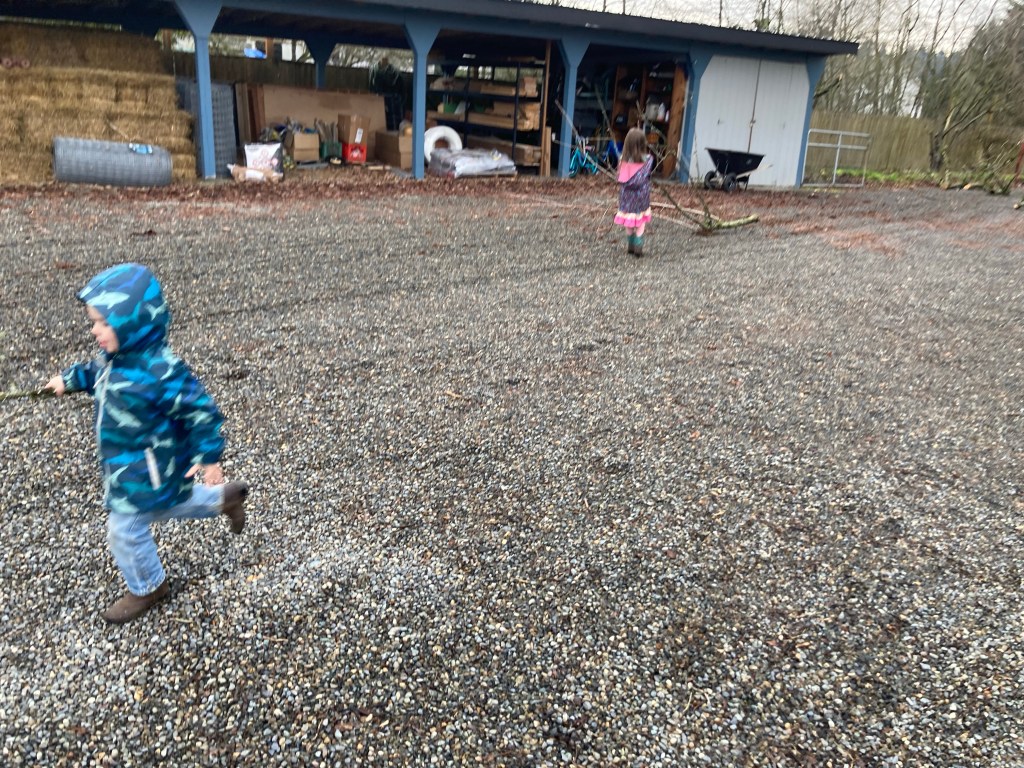
So now we have a big pile of cherry and elderberry brush, which will be a bonfire eventually, but in the meantime makes a good play spot for the kids.
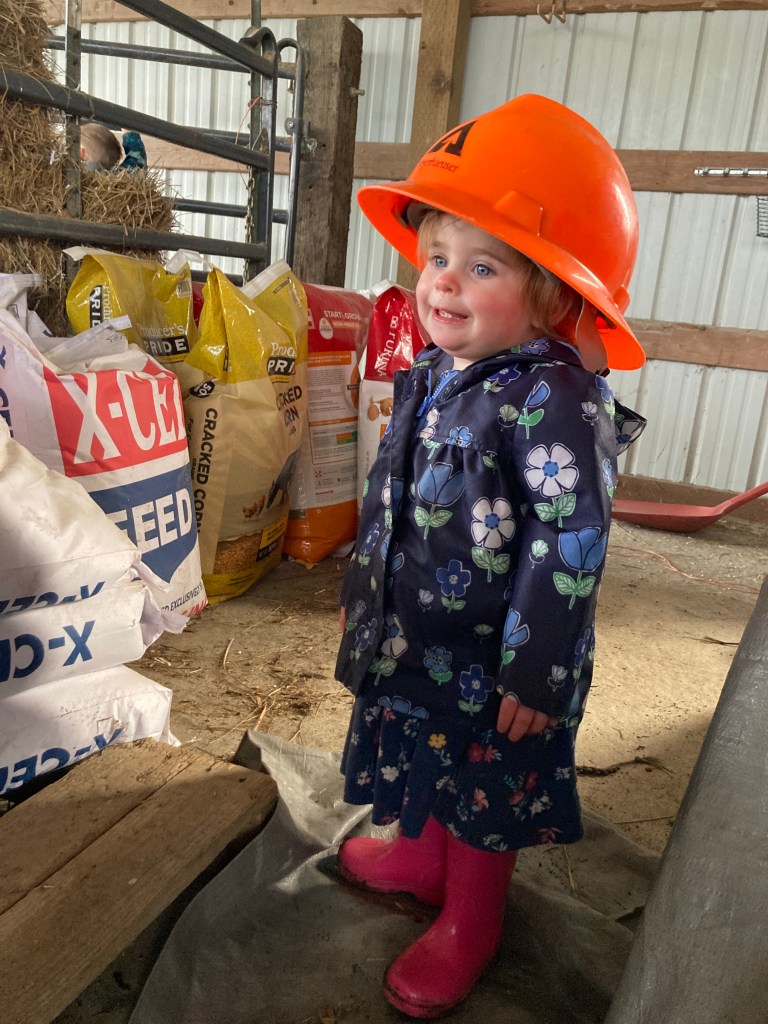
Safety!
Then on Tuesday we pruned the orchard trees on the north lawn. These are all trees we planted last year.
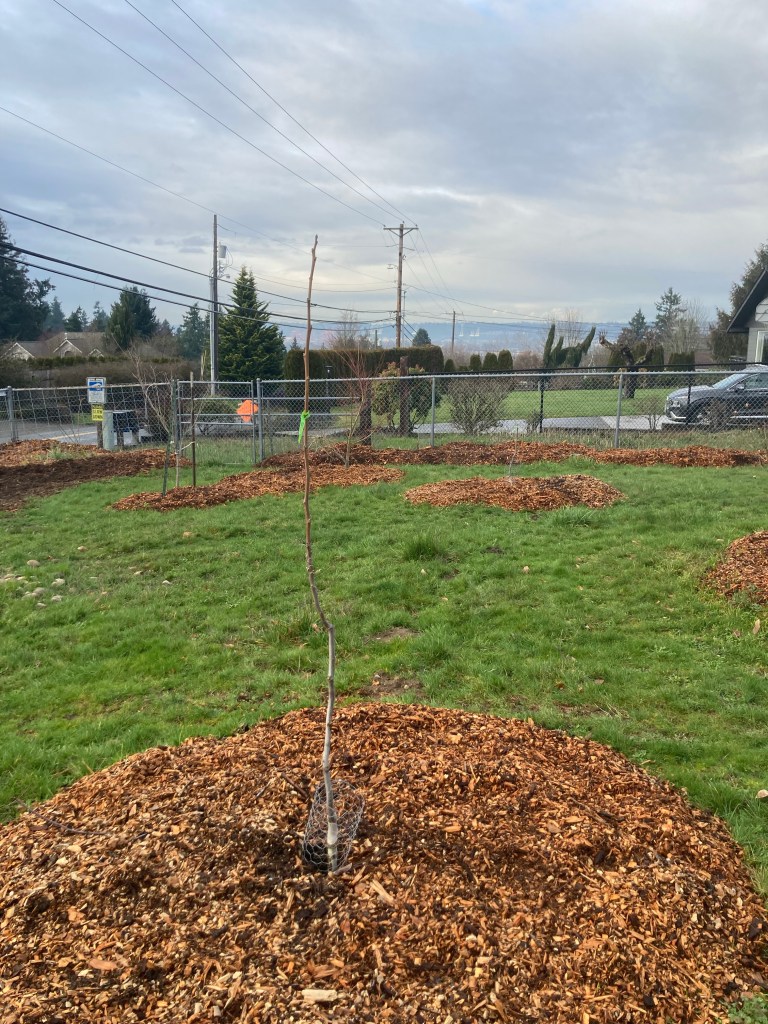
This is one of two franquette walnuts, a carpathian walnut that we planted. It did really well last year, putting on a massive 3 feet of growth, more than doubling in height with a single relatively straight leader, no laterals at all. We think it is sitting right above an underground water channel that runs from there to the two willows, and from there to the cottonwoods on the neighbor’s property. However, it seems unlikely its roots would have reached 6 feet or more down in a single summer.
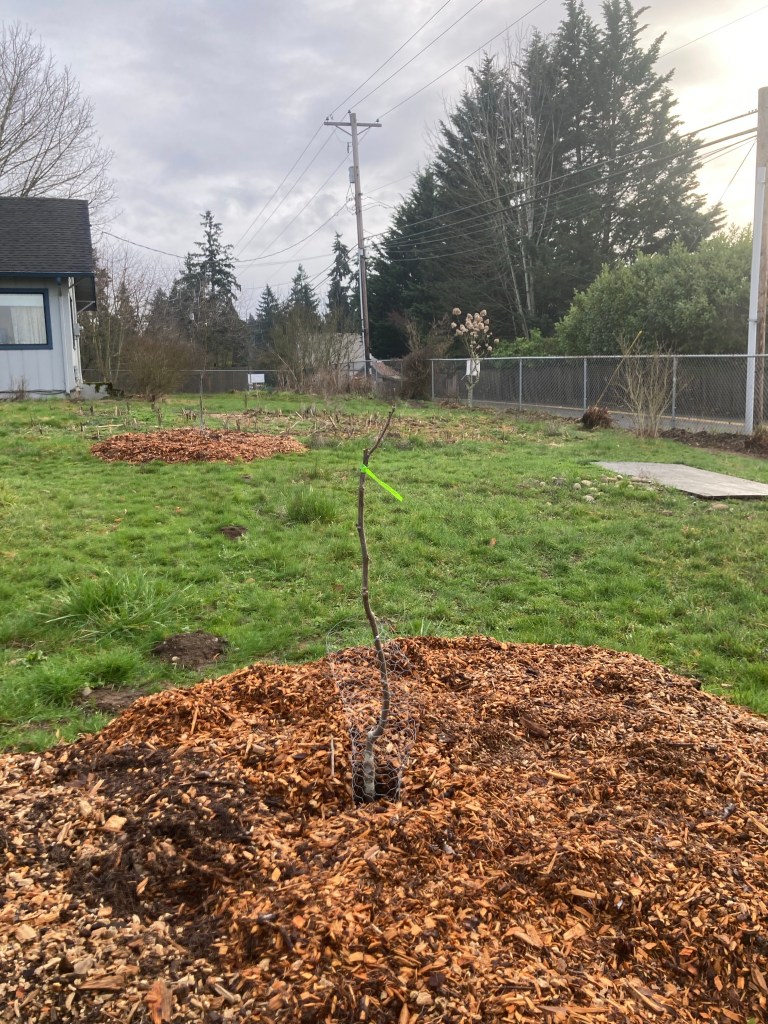
Compare that to the other franquette walnut, bought at the same time, from the same nursery, planted on the same day. This one put on only about a foot of growth, with three or four stubby laterals. Ryan pruned off all but one to try to encourage more upward growth prior to branching.
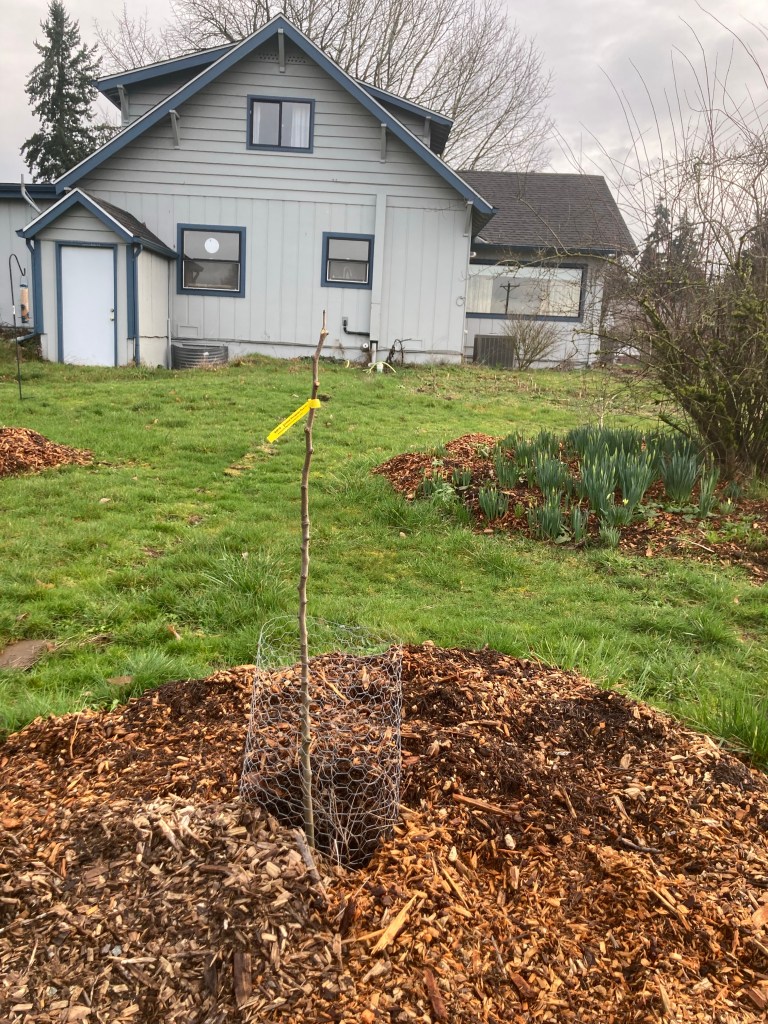
Next our Commice European pear, which has a nice, straight central leader. We pruned of all the laterals and cut back the leader just a little to encourage some more upward growth. We will select the laterals from among the branches that sprout from the upper sets of buds this year.
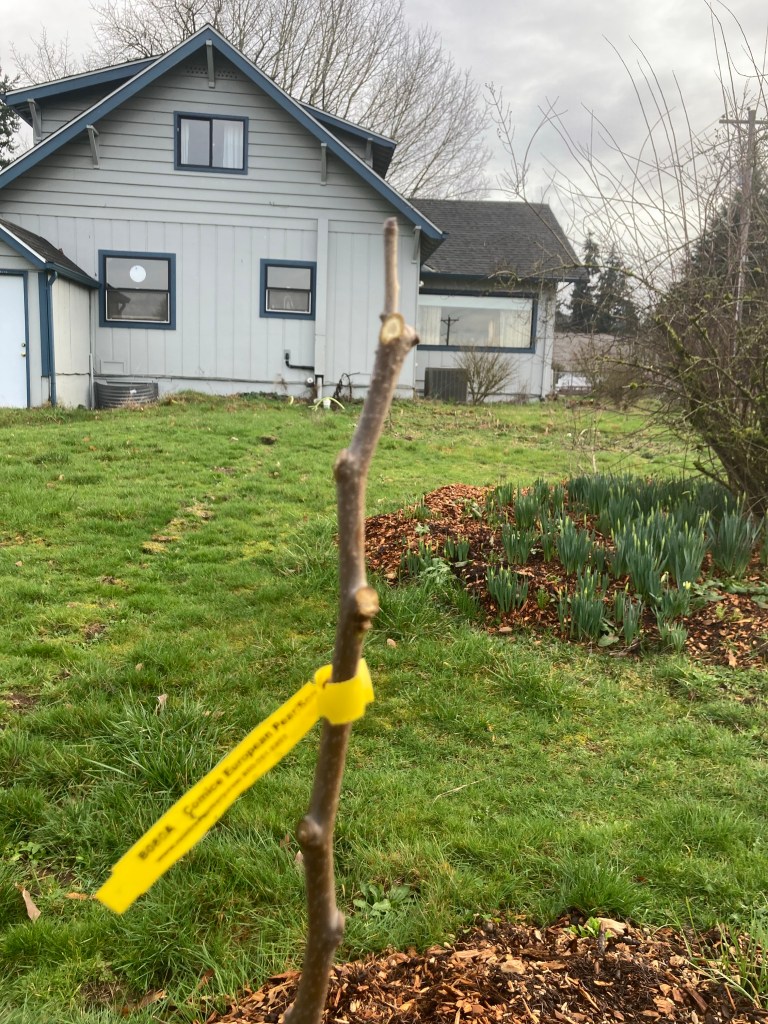
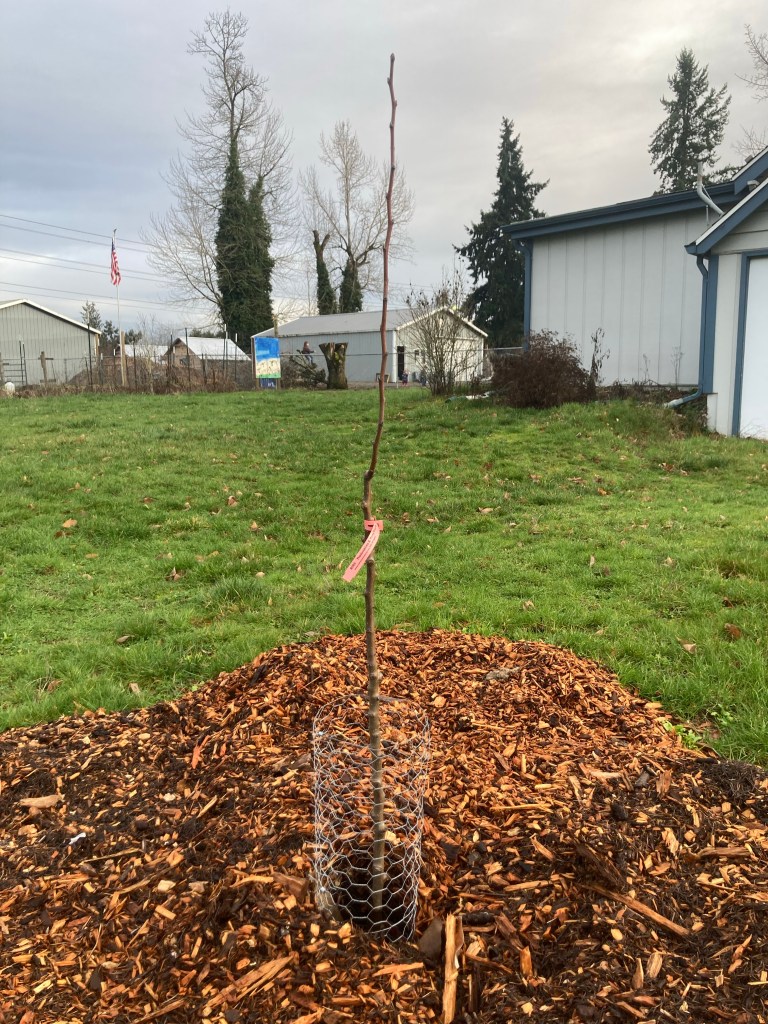
Next the Theilershime E. Perry Pear, beautiful tall central leader, we cut the laterals back because they were all about knee to hip height and we want the first level of branches to be about stomach to chest height for easier harvest.
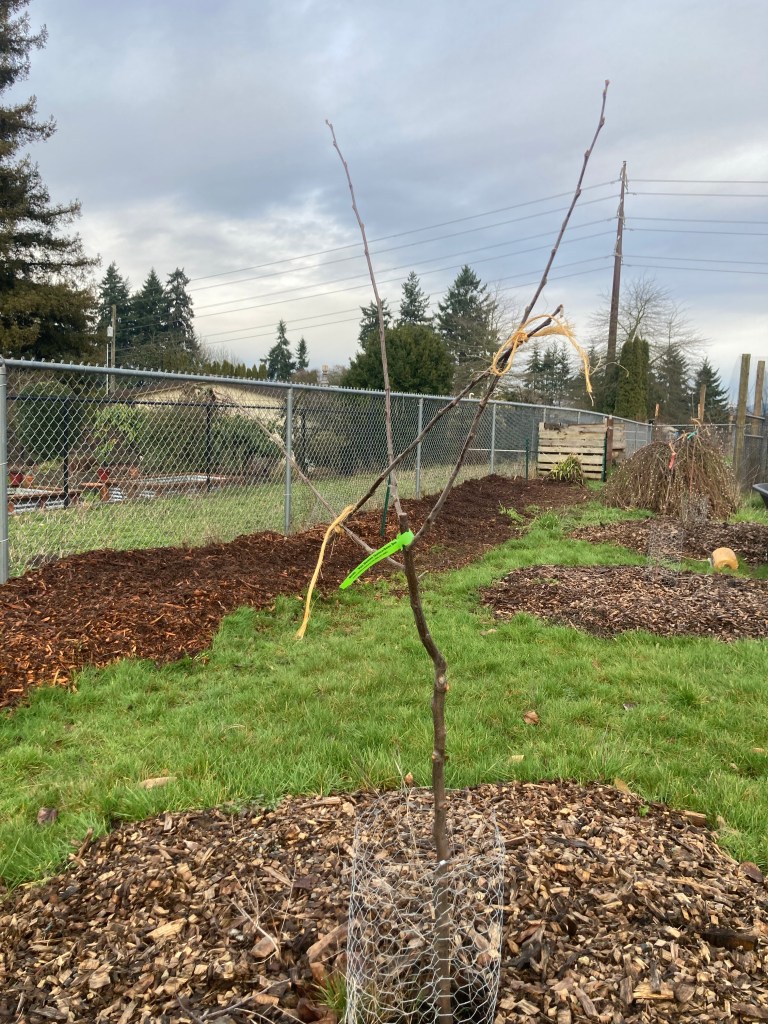
This Van Deman quince has kind of a quirky shape. Two long laterals are competing for the position of leader. We made a spreader to begin the process of ankling one of them down, but eventually we will need to increase the angle and get it closer to horizontal. Is you look closely there is a little twig sticking off the trunk to the right just below the two laterals. That is the only thing that looks like it might fill in that south facing space, so I trimmed it back to a bud to see if it will take the hint and grow out to balance the other two laterals. If so, that will form a nice three-way bottom tier, about mid chest height from the ground.
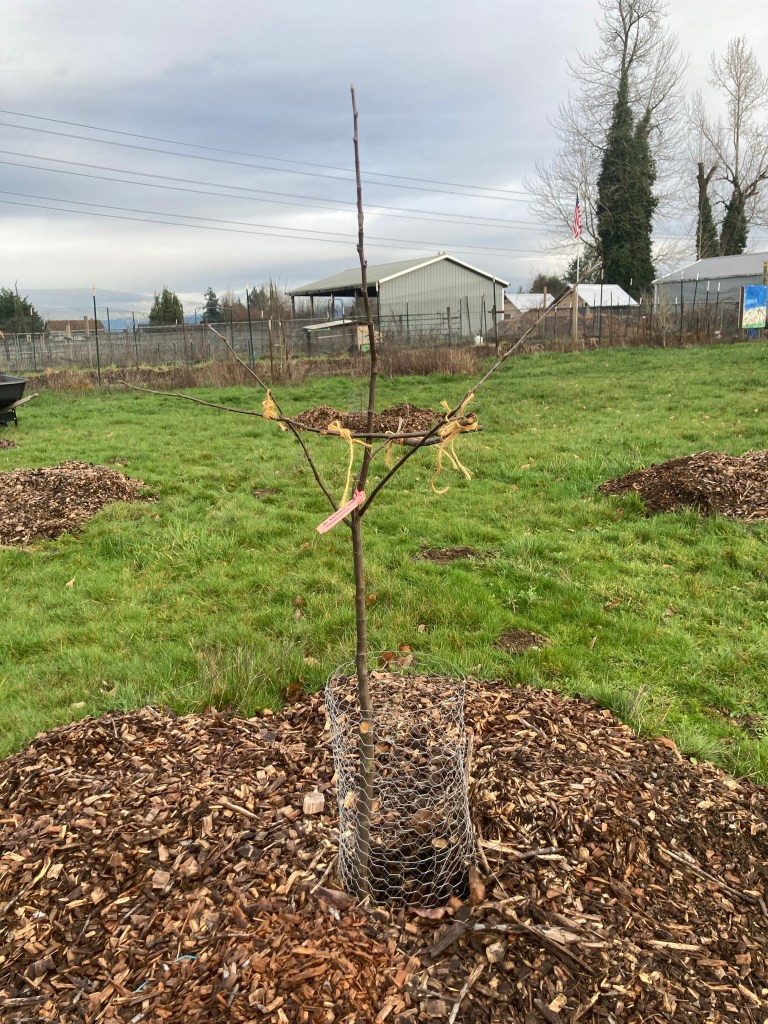
This Havran Turkish Quince already had such a beautiful three-way set of laterals (vertically oriented, as I have found is the way with quince) that I decided to keep them, despite their being a little too close to the ground. This is suppose to be a dwarf quince, meaning eventually I want to keep the main scaffold pruned to no higher than 6 feet off the ground. If I have a top tier at 6 feet, a lower tier at 4 feet, then this tier at 3 feet is just going to be in the way. It is likely we will have to cut them off eventually anyway, but they look so nice right now, and I wanted to play around with different ways of making spreaders.
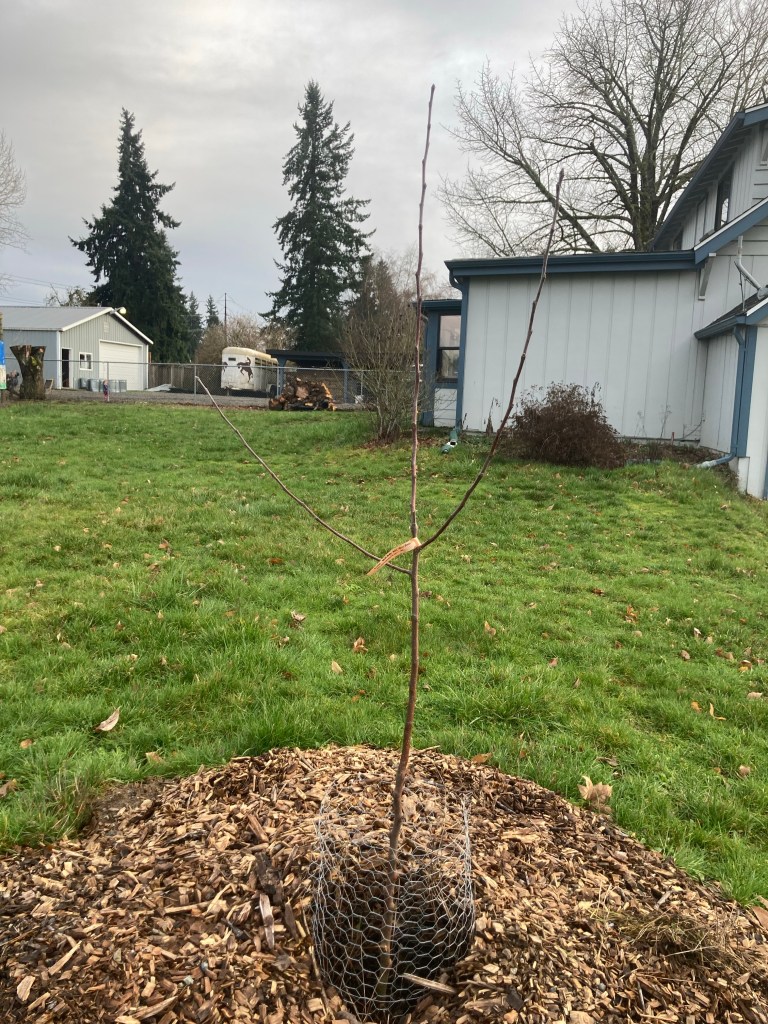
And then there is this guy: our Wolf River. We bought this because we found an old Wolf River tree at a homestead we visited when we were looking to buy land and were impressed with the size and taste of the apples. Unfortunately, when we planted it last year, the rabbits girdled it before we got the fence up around it. Adam, however, found that our neighbor had a Wolf River, and he got some green twigs from the neighbor and grafted them on to form a bridge, which saved the tree. Indeed, it grew as well as any of the others. Trimmed it back to a strong central leader and two laterals. Would rather have three or four laterals on the first tier, a little higher up, we will see what sprouts this year.
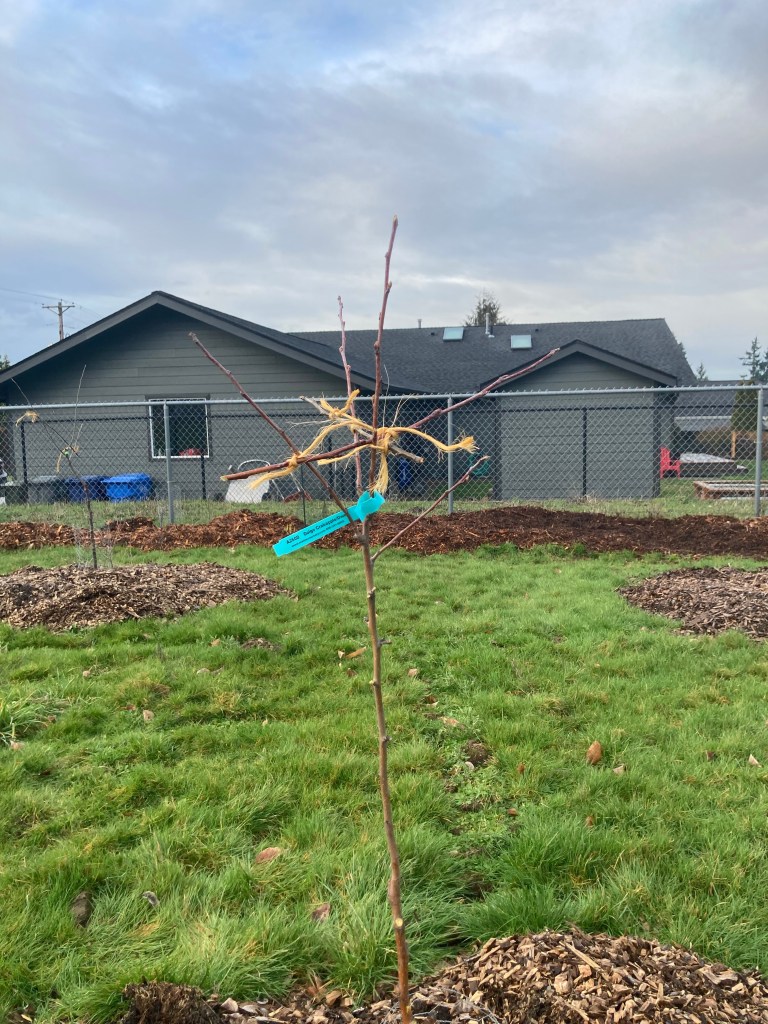
The Dolgo crabapple is primarily for pollenation, although it is reputed to have fruits sweet enough for cidering or cooking into jams, jellies and syrups (high pectin content). Here I created a bottom tier structure, utilizing some perhaps unnecessarily complex spreaders to angle the west and north laterals away from vertical.
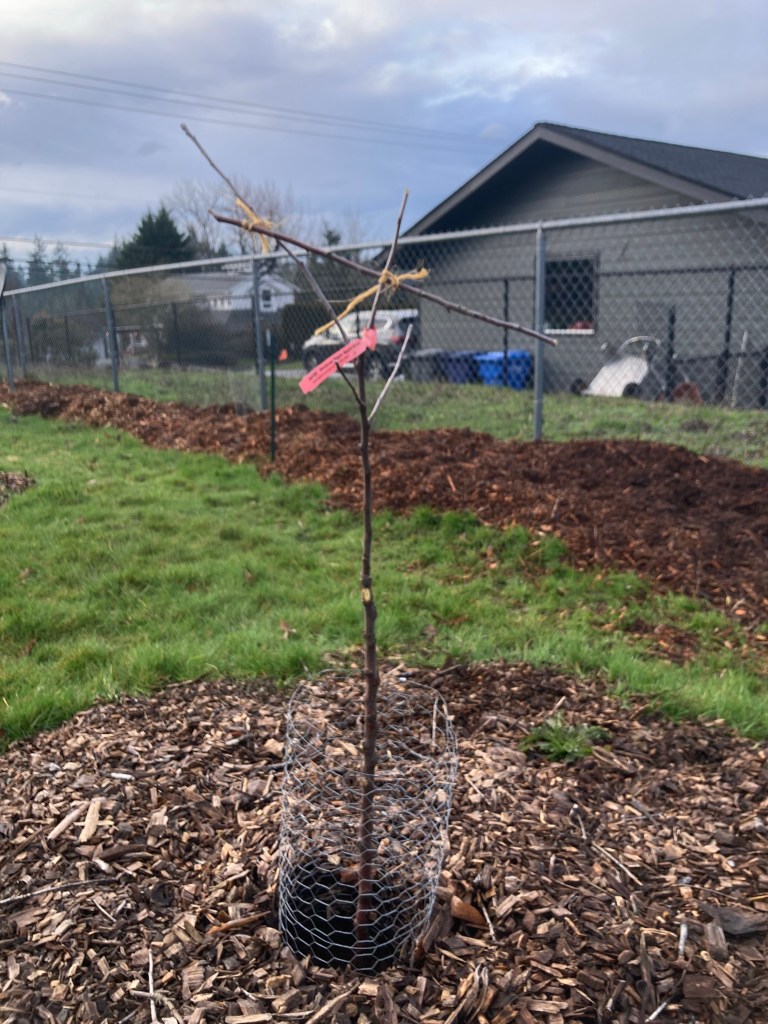
Here we have a little dwarf pippin, because pippins are such delightful snacking apples. We have a nice pair of north and south facing laterals, and then put a spreader on the east and west facing laterals. We may have to cut these back harder, or angle them more aggressively to prevent them from having apical dominance over that weak little leader. That could lead to a forked tree shape. While there are tons of great old apple trees that have a naturally forked shape, there are also tons that split in half during ice-storms and whatnot.
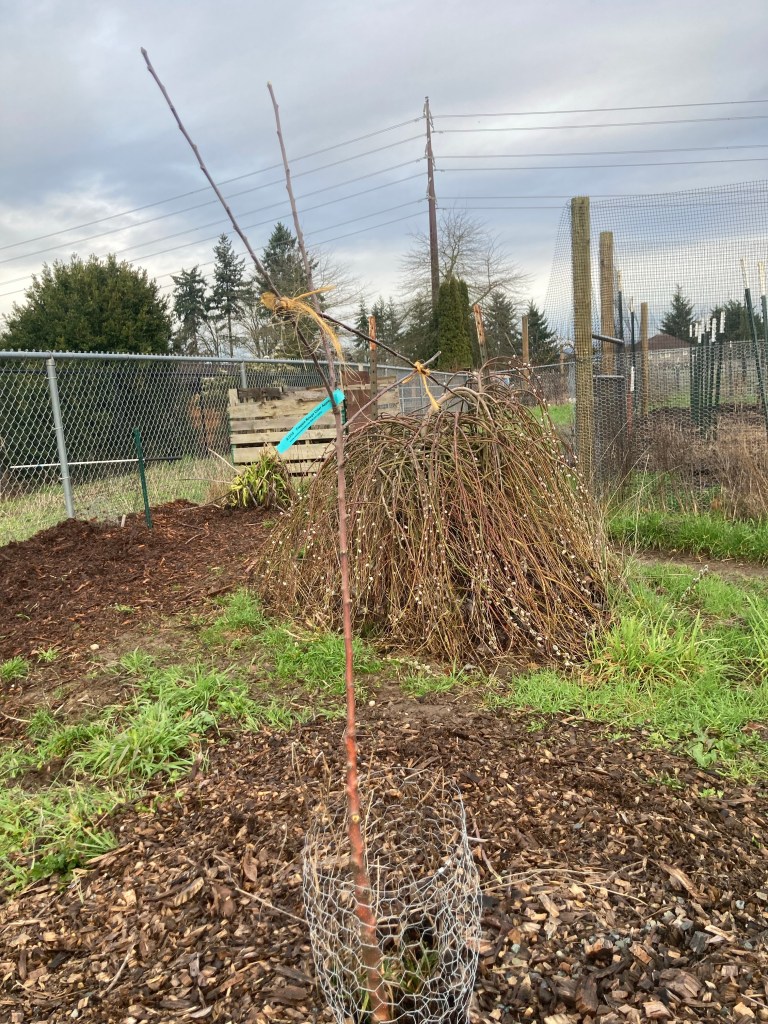
And finally the Frequin Rouge Cider apple, (a.k.a., the Freakin’ Rogue!) another dwarf, only two small laterals really declared themselves but there are some promising buds above and below that might shoot out to form a nice little first tier, and the leader is not bad looking.
I want to make it very clear, I have no idea what I am doing here. I read several books on pruning, watched a few apple trees, and made a lot of mistakes on the braeburns at our house, but other than that, this is just an experiment, and this is sort of my experiment journal where I am recording what I did to each tree, and my thought process behind each one. Hopefully this will allow me to keep learning and growing as an orchardist in the next few years.

 Little Farm in the Big City
2 thoughts on “Orchard work”