

When we had the pigs butchered last fall we made sure to ask the butchers to save us the lard. Why?
Because that’s the homesteading thing to do.
Apparently you can cook with it, bake with it, make soap and candles with it, and all kinds of other things. We have only just begun researching what sorts of things you can do with lard. We figured the first thing to do was to secure the resource, then we will figure out what to do with it later.
Since we brought home all the pork, it has been living in a pair of boxes in the freezer, and we just haven’t gotten the time to render it all. But since Monday both Ryan and Kathleen had the day off, we decided that this was THE DAY!
In case you’ve never rendered lard before, it is not a one-person job. It’s more friendly with two.
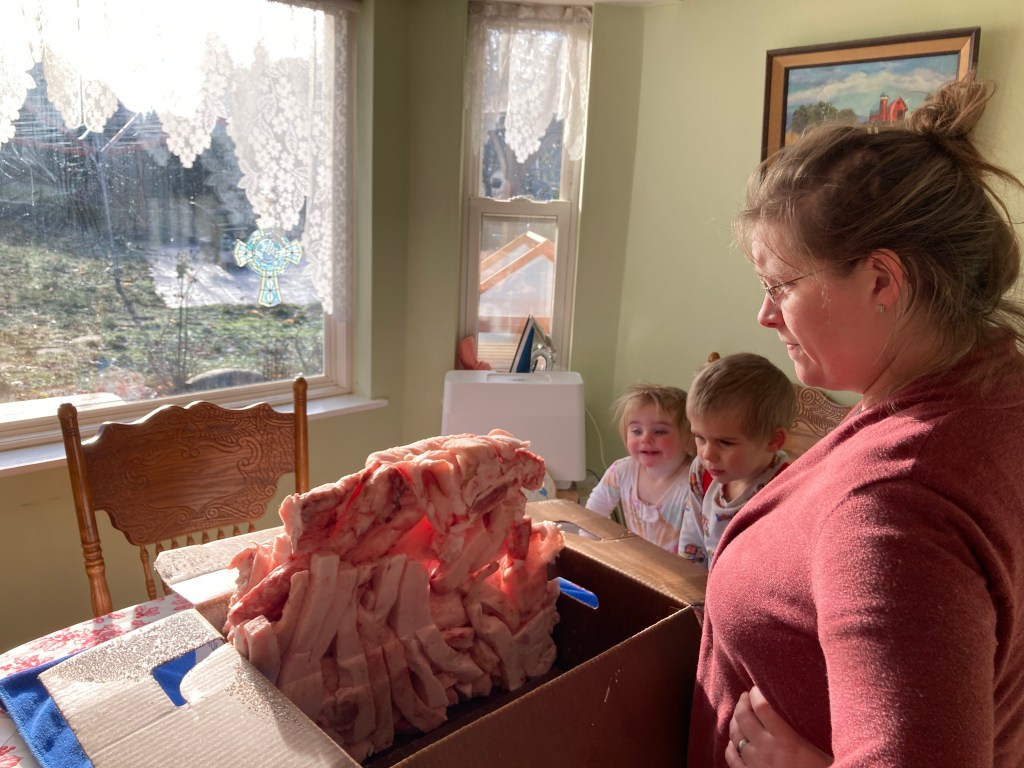
Oh, by the way, did we mention it was in the freezer?
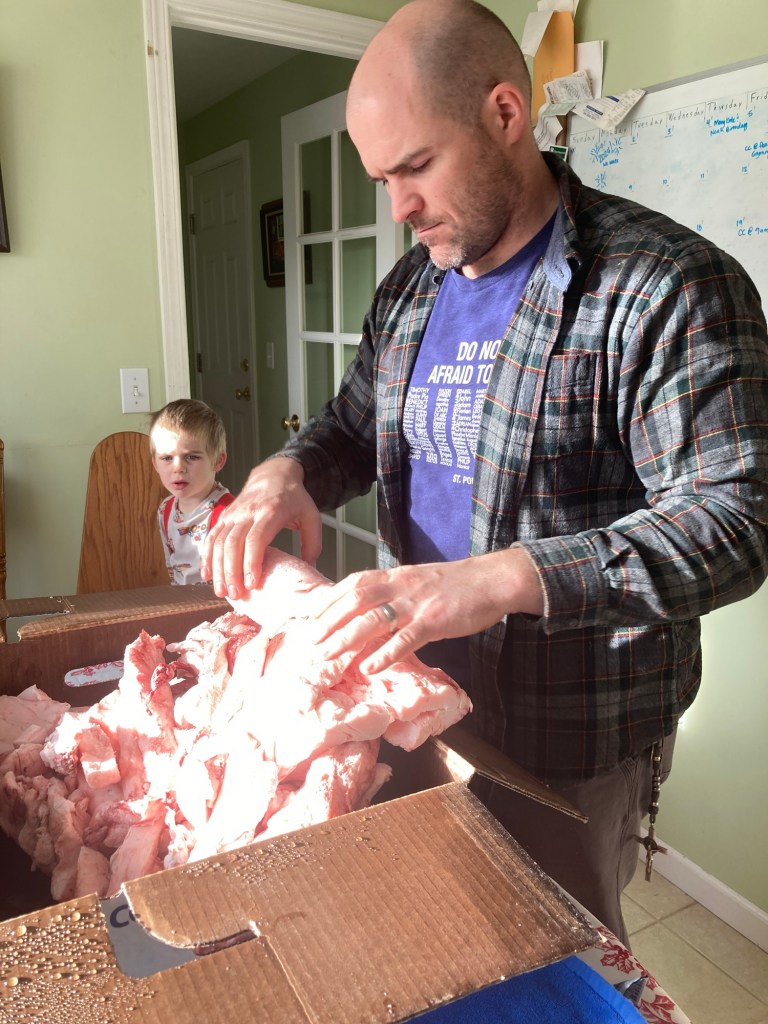
Ryan, tearing apart frozen chunks of lard with his bare, chilled fingers.
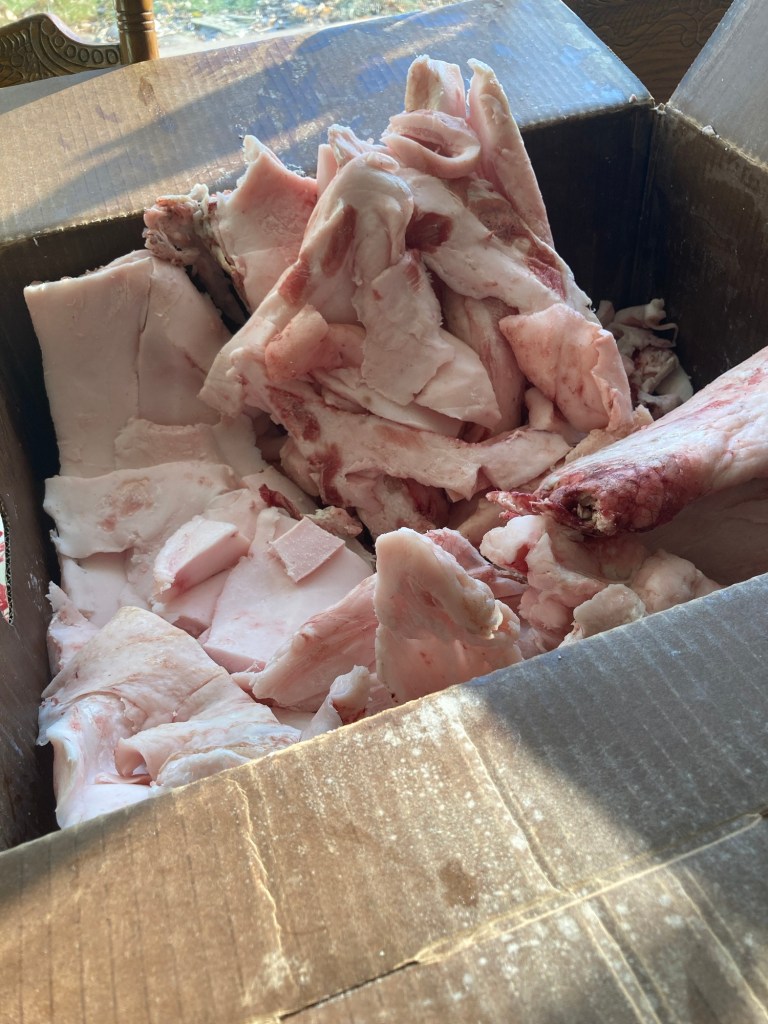
Note to self, next time, take it out of the freezer the night before.
We used Kathleen’s Grandpa Joe’s old meat grinder to grind it. (He was a professional butcher and would no doubt be amused by the whole project.) The grinding was the most physically demanding part of the process. That’s why Kathleen married Ryan, it turns out. She looked at his arms and thought, “Yeah, he’ll do. He can probably grind up some frozen lard in a pinch.”
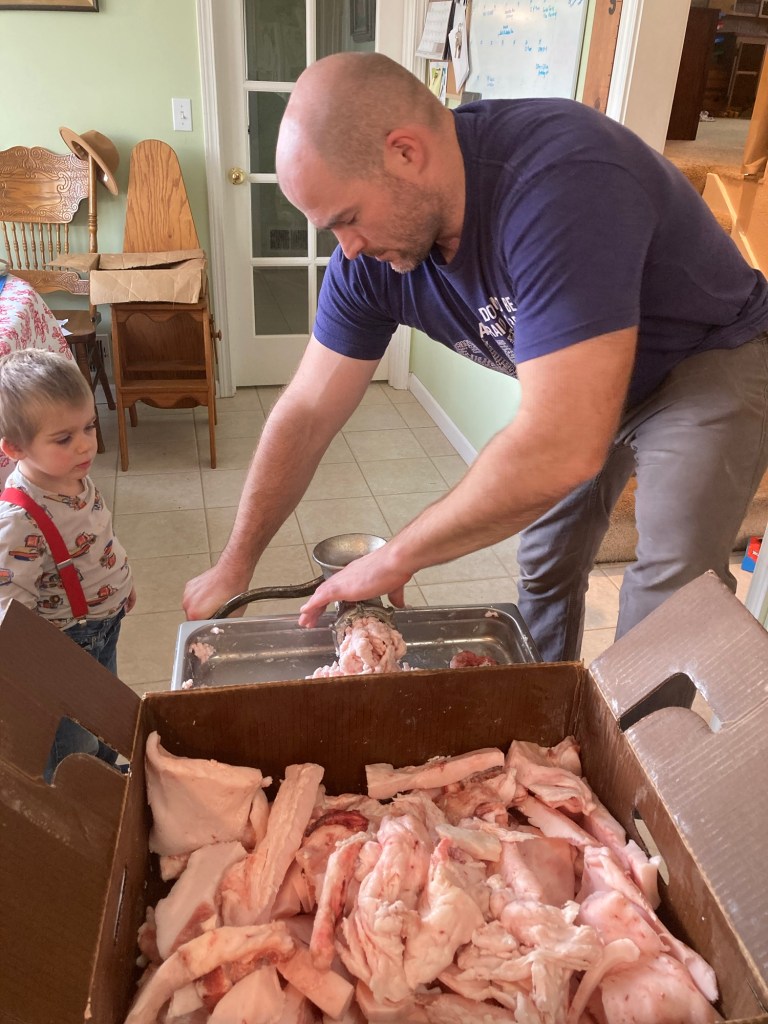
Seppi, of course, had to try his hand at it. It’s a good job for a Seppi.

Of course he couldn’t even get the crank to turn, but he’ll grow into it. He’s got a lot of biggering to do.
Miss Ellie was our resident candid camera. She takes pictures with an abandon and gusto and profligacy possible only in the era of digital cameras.

Poor Winnie was sad because she could not be picked up all the time during this project.

Pure, ground up lard. There are two kinds of lard on a pig: There is regular lard which is found on the back, butt and belly. There is also leaf lard, which is a sheat of fat that grows inside the abdominal wall over the belly (similar to the omentum in humans?) This leaf lard is finer and whiter, with a more delicate flavor. That is, it doesn’t taste like straight up pork sausage.
Unfortunately, since we didn’t butcher these pigs ourselves, we weren’t able to separate them out, and all the lard was thrown in boxes together. We were not able to identify which was which with full confidence, so, it all got rendered together. Lesson learned for next year.

Rendering takes the longest because it has to be done very slowly. First the fat is melted, and then heated slowly. As it heats you can add more fat, and more fat, and more fat until the pan is full to within an inch or two of the top.
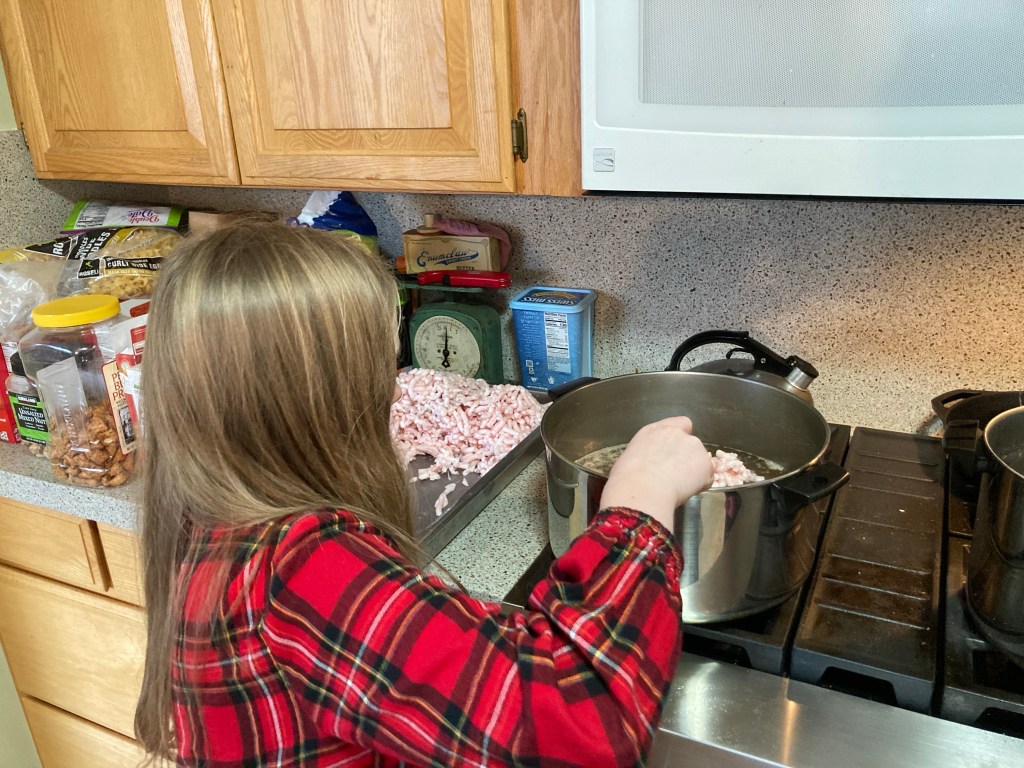
If done carefully, there is very little bubbling, and a well-supervised and mature 8-year-old can help.
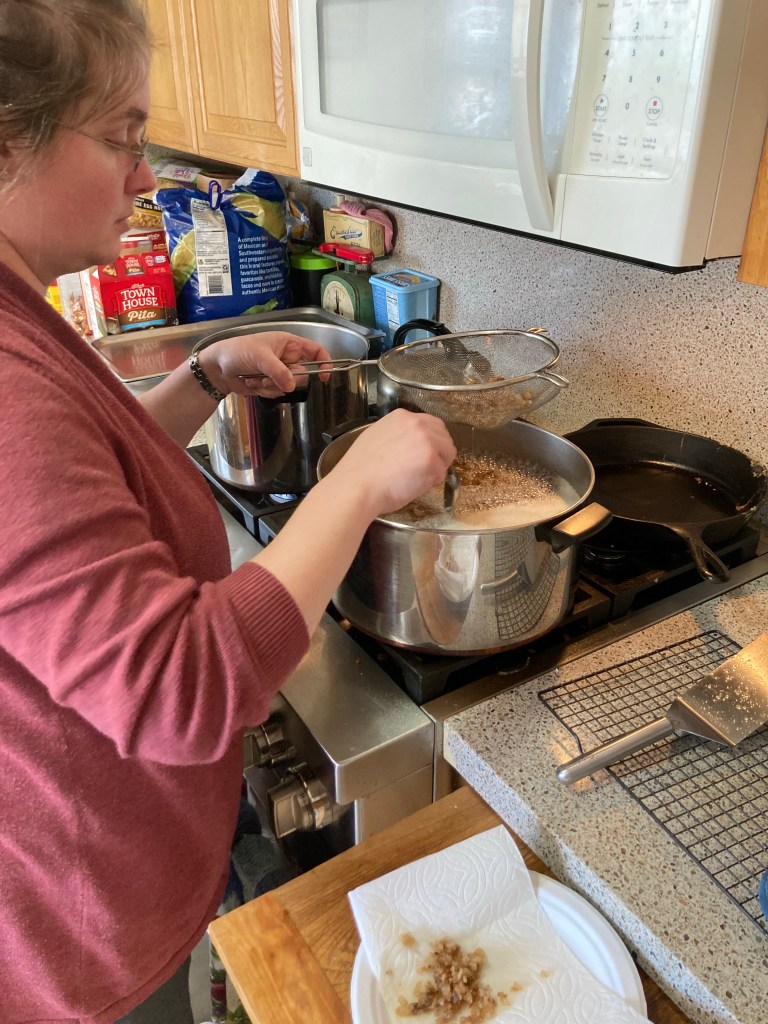
Once the pot is full and the fat has come to a boil (it takes about 20-30 minutes) it is turned to a simmer. After a few minutes you can begin to strain out the cracklings. These are bits of meat, fascia and other impurities that are in the raw fat, which are now essentially deep fried shreds of pig. In “Little House” Ma preserved these and used them as flavoring in corn bread. We decided this was a bridge too far for this time around and put them in a bucket to feed to the chickens.

Raw fat.
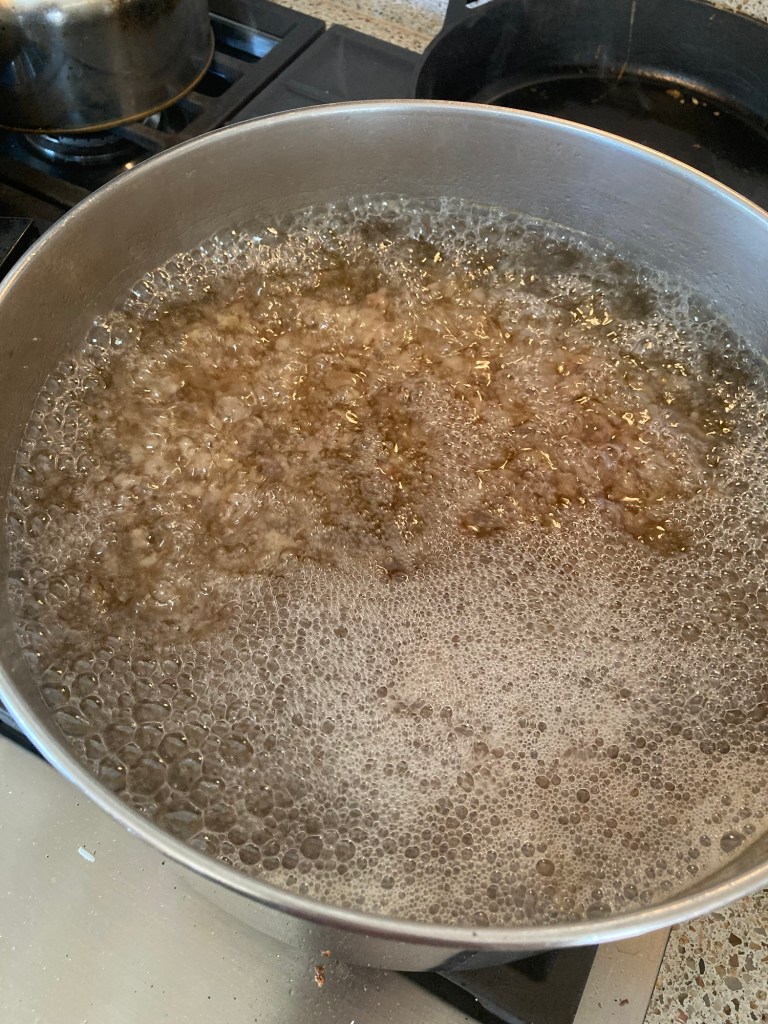
Boiling fat.
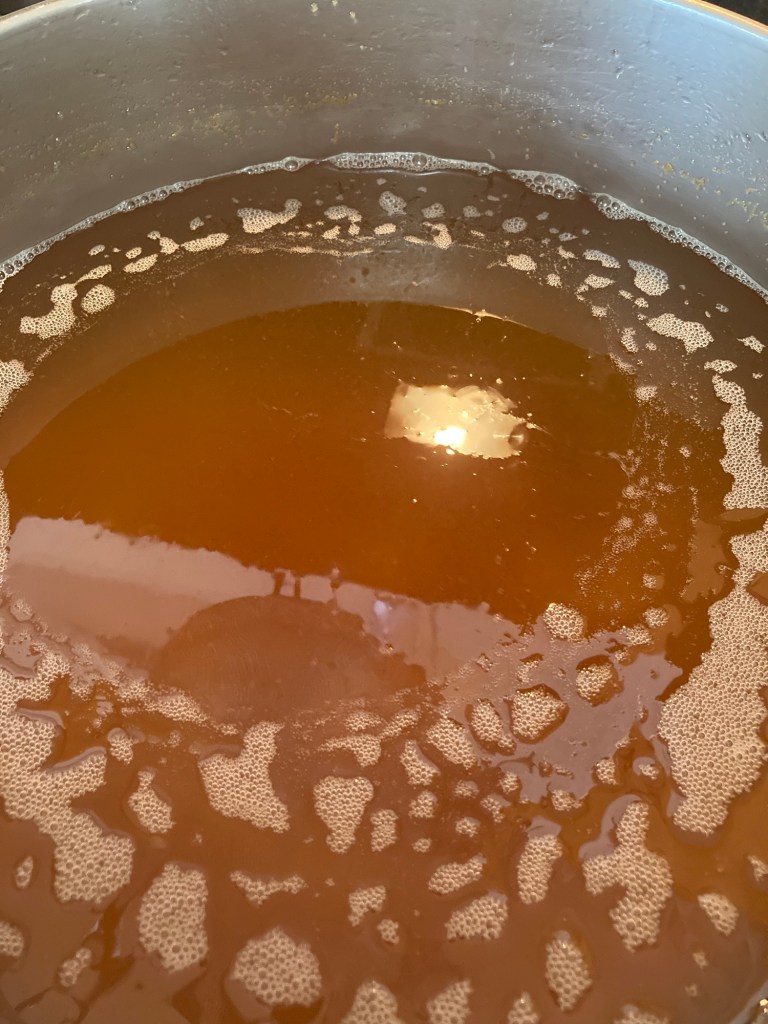
Rendered lard.

The most dangerous part of the process is ladeling the hot (>300 degrees F) fat from the pan into the jars, through four layers of cheese cloth.

For this part, the smallest and fastest moving children were banished upstairs with a movie.
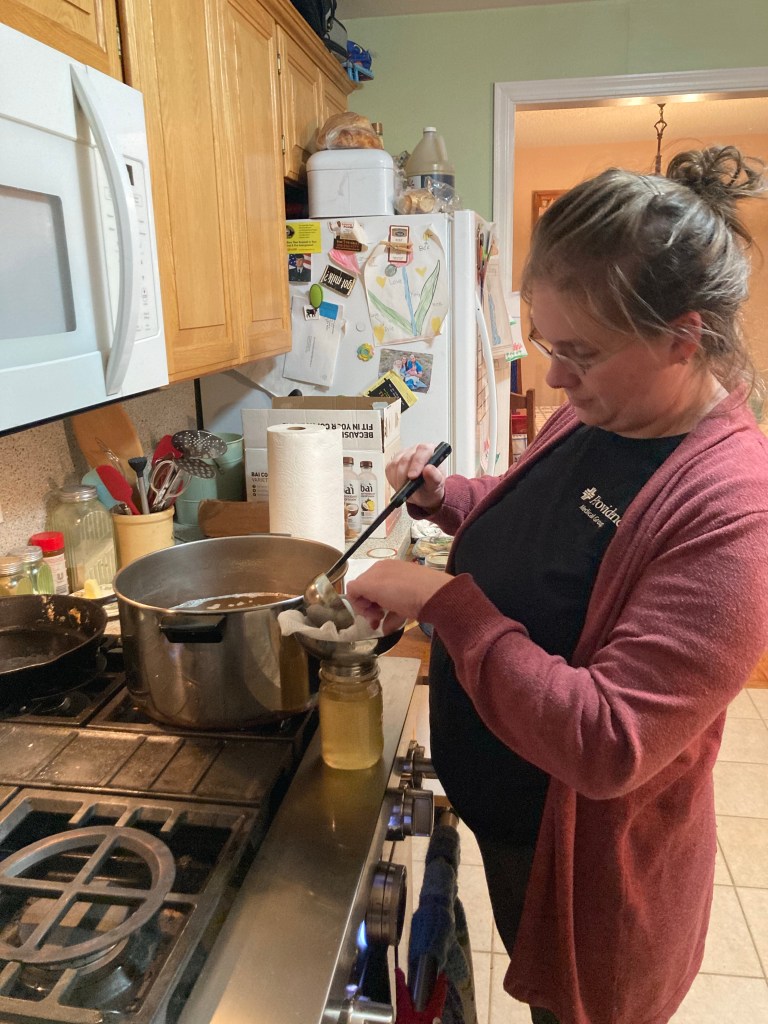
The cheesecloth strains out the smallest impurities so that what goes into the jar is as close to pure as we can get it.
The initial batch had an amber yellow color, which (we think) means it had a lower percentage of leaf lard and higher percentage of regular lard.
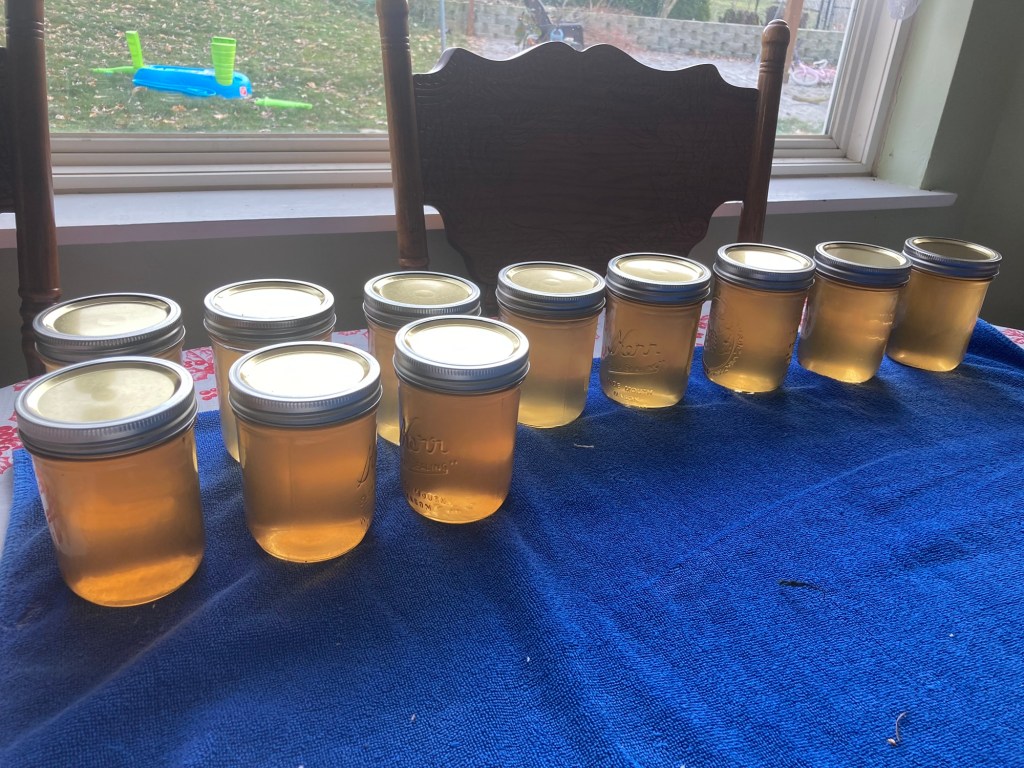
Hard to tell in this light, but some of the later batches had a lighter, almost white color.
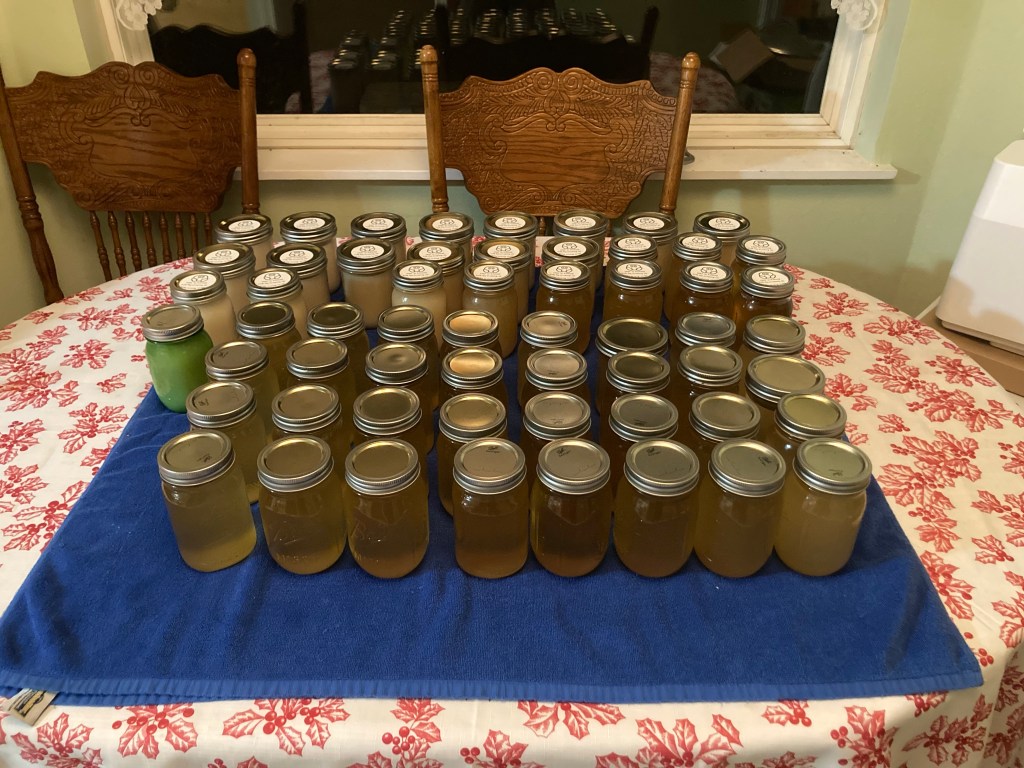
The green lard is not, in fact, green. It just got poured into a green canning jar.

Of course, by next morning, all of it had turned white and solidified. 58 pints total, 56 of which sealed.
Now to figure out what to do with it all… Maybe talk to our Hispanic friends at church?

 Little Farm in the Big City
1 thought on “Good Lard!”