

One of the major projects on the farm — in fact, you might almost say the major project on the farm — is finishing the perimeter fence around the pastures. This is the major project because without a perimeter fence there is no pasture. To do intensive rotational grazing there are two things you absolutely must have, and those are containment and water. (Shelter is a third, but here in the PNW that can often be a portable three side run-in and we’ll worry about that later as the Special Operator said when he dove fast first out of the burning airplane without a parachute).
The pasture fence answers both needs, containment and water because there is a trench (sort of) dug along the line where the fence will eventually be, and in that trench we are planning to run one inch poly pipe, and set a frost free hydrant at the east and west end of both pastures, and another one in the middle of each pasture.
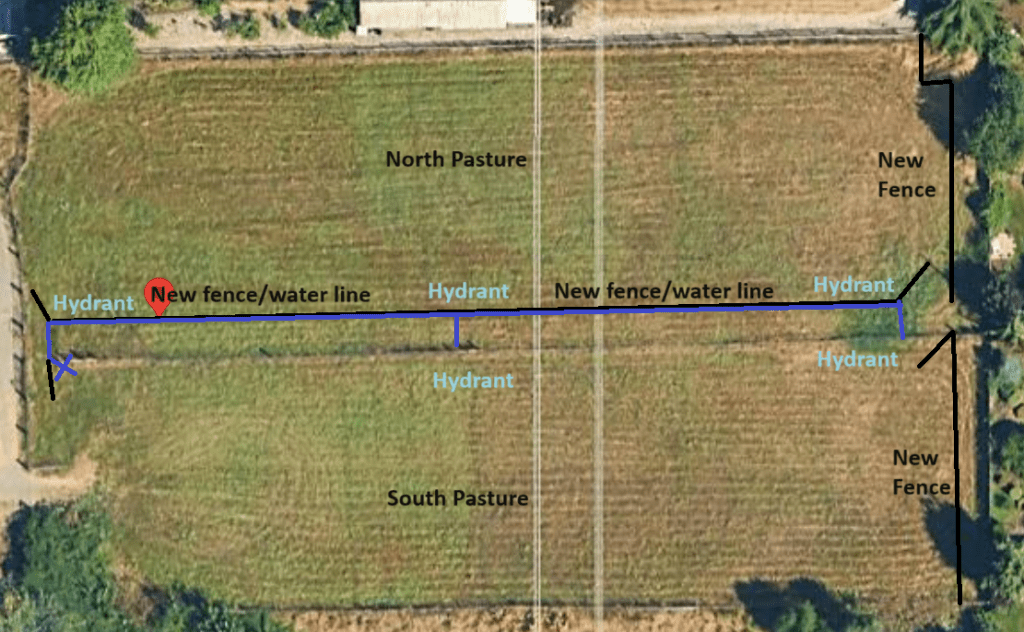
The new fence will create a lane between a north pasture and a south pasture, close off the corners so our animals can’t get out (very important), create a wildlife lane so the local wild animals can get around the east end (also very important), allow us to plant trees, bushes and vines along both lanes, creating a permaculture food hedge, and run animals in a circuit around the inside of both pastures. The water line with hydrants at multiple locations will make it so our portable stock tanks are never more than one garden hose away from water, and eventually, when we build the infrastructure, will will be able to fill them during the dry summer months with rainwater stored from roof runoff during the winter months.
Sounds magical, right? But because this is the longest term project on the farm, it is also the first to get shoved to the back burner when something needs to be done urgently, like harvesting, planting, feeding, watering, preserving, etc. Pretty much anything.
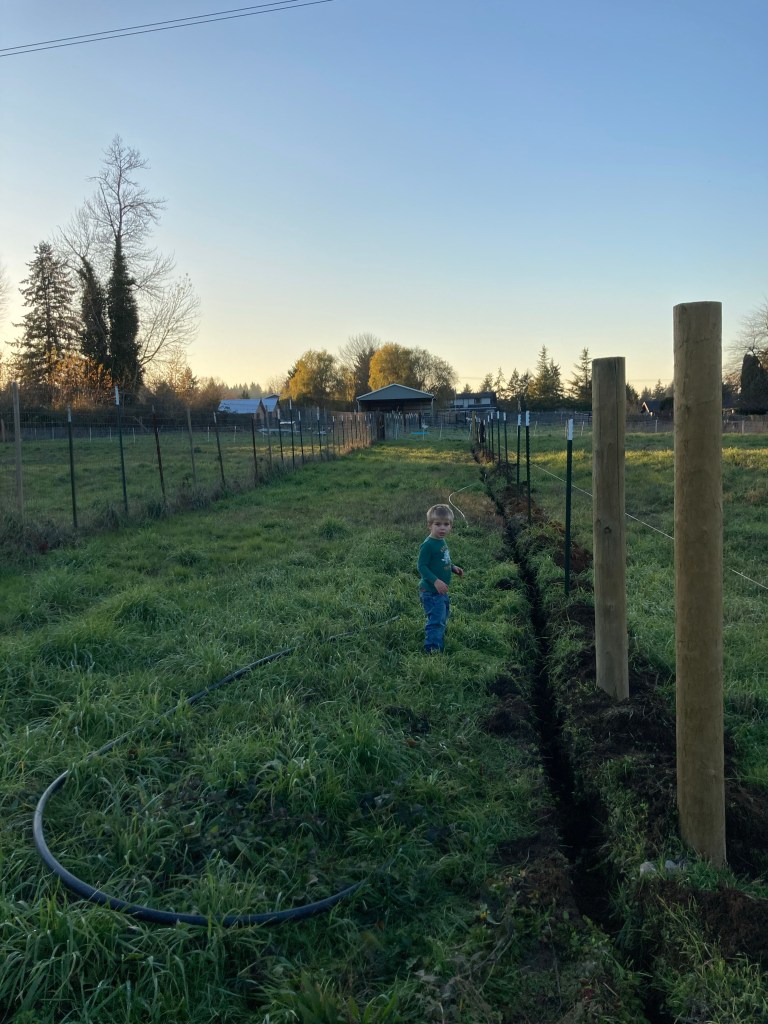
The trench is already dug for the water line, but there are so many rocks stuck in the bottom of it, not to mention all the silt that the trencher left behind, that we have to go along it foot by foot and clean all that out by hand before we can run the pipe. We’ve made a good deal of progress on Saturday, though. That’s what Ryan and Adam were up to in the frosty morning before sunrise. Then in the afternoon Seppi and Daddy got out on the trench again for about an hour and a half.

He may be small, but he is strong!
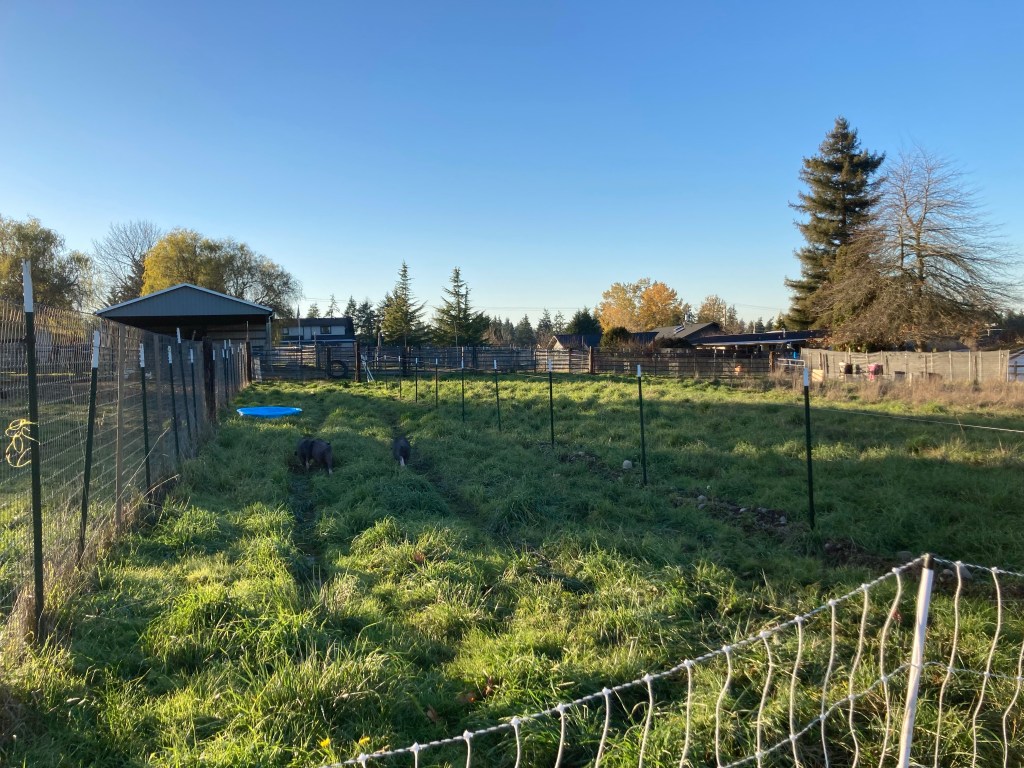
We let the pigs out of their yard to roam around in the grass, behind some electrified netting. They thoroughly enjoyed it, and immediately began chomping on grass.
It was warm in the afternoon, mid fifties, and we were digging hard and fast, covering the ground one section at a time. It isn’t even really diggin until we hit a stone buried int he bottom of the trench and have to lever or dig it out. Poly pipe cannot rest directly on stones or they will wear it out and create a leak eventually. I want this pipe to last 30 years before I have to dig it up and replace it.
The sun started to sink low, we dug fast, trying to get to the corner of the last gate before it dropped behind the horizon.

We didn’t quite make it. Still had about 25 feet to go when the light failed. More importantly than the light, the temperature dropped about 15 degrees almost instantly, and Seppi got real cold real fast.
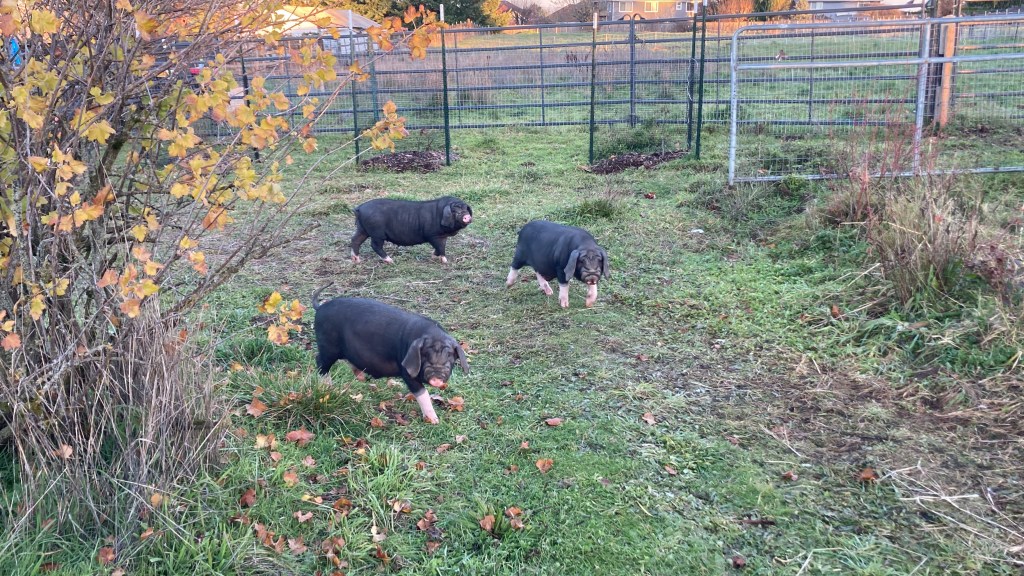
So we put the piggies back in, and fed them their feed ration.
And then we went home.
Getting close. Probably about 50 total feet of trench to clean out, and then we can lay and bury the line. We will need some conduit for the branch lines crossing the lane, so they do not eventually get crushed by vehicles driving over them.
Then we have to dig the holes for the hydrants and put them in with valves so we can shut off sections of the line if they develop leaks (saves having to dig up the whole line if we ever develop a leak in one section.
Then we finish the H braces.
Then we stretch the fence.
Then we hang the gates.
Then we are ready so Mommy can get her cow, in 5 easy steps.

 Little Farm in the Big City